
Spina Bifida / Tethered Cord Surgery Package
Assistance
Consultation
Services
Opinion
Care Coordination
What will your treatment cost?

See the cost breakdown by option, hospital and city →
| Surgery Name | Cost | Room | Hospitalization |
|---|---|---|---|
| Spina Bifida / Tethered Cord Surgery Package | 6500 | Twin Sharing / Single | 4-7 Days in Hospital (incl. 1 Day PICU if needed); Total Stay in India 3-4 Weeks |
✓ Inclusion
- ✔Paediatric neurosurgeon and anaesthesia fees
- ✔Intra-operative neuromonitoring (as quoted)
- ✔Operating theatre and microscope charges
- ✔Hospital room (and PICU if included) for package days
- ✔Routine medicines and dressings
- ✔Satyug coordinator, interpreter and airport pick-up
✗ Exclusion
- ✖MRI, urodynamics and specialist consultations
- ✖Shunt or other additional procedures
- ✖Dural graft material if needed
- ✖Extra days in PICU or ward
- ✖Orthoses, catheters and physiotherapy after discharge
- ✖Hotel, flights, visa fees and meals
Know More About Procedure & Surgery
Spina Bifida & Tethered Cord Release Surgery in India
Spina bifida is a birth defect in which the spine and spinal cord do not close completely during early pregnancy. In its open form (myelomeningocele) the nerves are exposed and must be covered soon after birth. Many children – and some adults – also develop a tethered spinal cord, where the lower end of the cord is stuck to surrounding tissue and is stretched as the child grows. Tethered cord release (detethering) frees the cord to protect walking, bladder and bowel function. In India these operations are done by paediatric neurosurgeons with nerve monitoring, paediatric intensive care and urology support.
📖 What are Spina Bifida and Tethered Cord?
The spine forms from the neural tube in the first 4 weeks of pregnancy. If the tube does not close, the result is spina bifida. In the United States about 1 in every 2,800 babies is born with it (CDC), and rates are higher where folic acid supplementation and food fortification are limited. Taking folic acid before and in early pregnancy reduces neural tube defects by up to 70%. Myelomeningocele is closed surgically within 24–72 hours of birth to prevent infection; about 8 in 10 of these babies also develop hydrocephalus needing a shunt or endoscopic treatment, and many have a Chiari II malformation (see foramen magnum decompression (Chiari malformation)).
A tethered cord occurs when the base of the spinal cord is fixed by a thick filum terminale, a fatty lump (lipomyelomeningocele), a dermal sinus, or scar from the earlier closure (re-tethering). As the child grows, the cord is stretched, causing back and leg pain, weakness, foot deformities, worsening scoliosis and bladder or bowel problems. Untethering surgery aims to stop further damage; nerves that are already badly damaged may not fully recover, so timely surgery matters (StatPearls: Tethered Cord Syndrome; NINDS).
🖼️ Understand It in Pictures
Open spina bifida (myelomeningocele) in a newborn
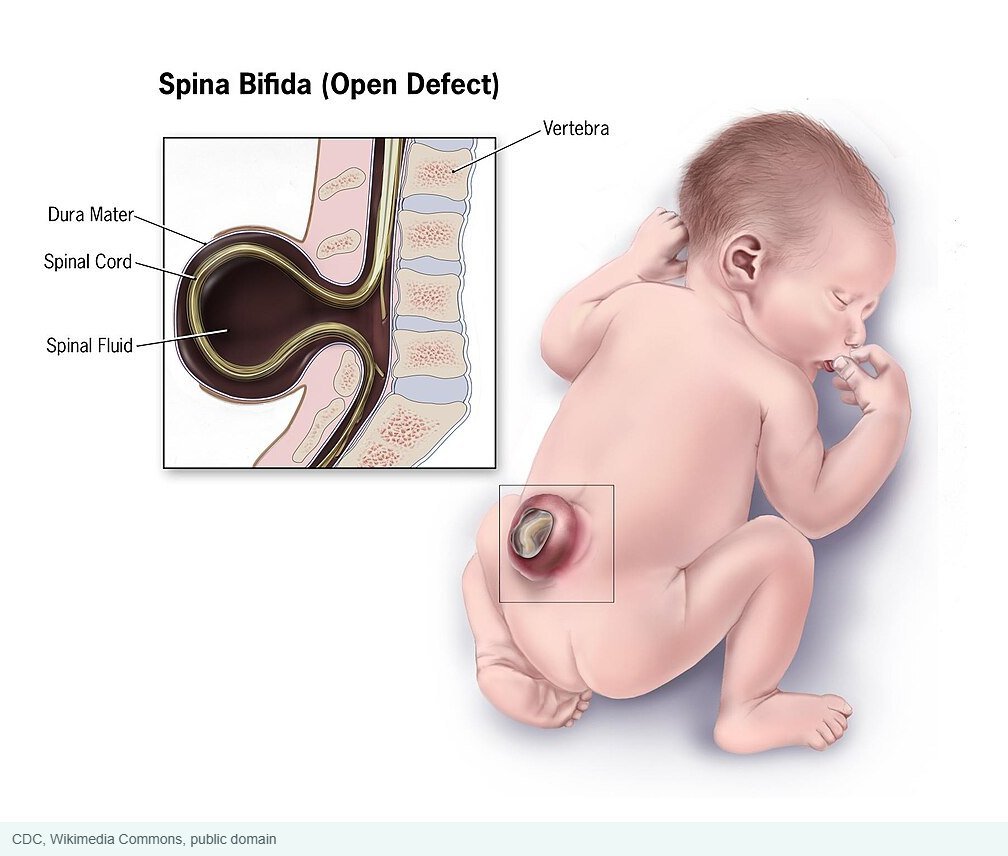
From hidden to open spina bifida

🩺 Conditions Treated
⚠️ Warning Signs of a Tethered Cord
- ➤Back or leg pain that worsens with bending or growth
- ➤New weakness, tripping or change in walking
- ➤Foot deformity (high arch, club foot) getting worse
- ➤Bladder problems: wetting, infections, poor stream
- ➤Constipation or bowel accidents
- ➤Rapidly progressing scoliosis
- ➤Skin signs on the lower back: dimple, hair tuft, fatty lump
- ➤Numbness in the legs or saddle area
🔬 Tests Before Treatment
| Test | Why it is done |
|---|---|
| Whole-spine MRI | Shows the level of the cord, filum, lipoma, syrinx and Chiari malformation. |
| Brain MRI or CT | Checks hydrocephalus and shunt function. |
| Urodynamic study | Measures bladder pressure and function before and after surgery. |
| Spine and hip X-rays | Scoliosis, bony defects and hip position. |
| Ultrasound of kidneys and bladder | Looks for kidney damage from high bladder pressure. |
| Neurological and orthopaedic examination | Baseline muscle power, sensation and foot shape. |
| Blood tests and anaesthesia review | Fitness for anaesthesia; latex allergy precautions. |
🏥 The Procedure — Step by Step

⚖️ Types & Techniques
| Procedure | What is done | Typical use |
|---|---|---|
| Myelomeningocele closure | Nerves placed back, dura and skin closed | Newborns, within 24–72 hours |
| Filum terminale section | Thick filum cut through a small incision | Tight filum, occult tethering |
| Lipomyelomeningocele untethering | Lipoma separated and reduced, cord reconstructed | Spinal lipoma |
| Re-tethering release | Scar released from earlier repair | Worsening after MMC closure |
| Split cord malformation repair | Bony or fibrous spur removed | Diastematomyelia |
| Shunt or ETV (separate) | Treats hydrocephalus | Raised pressure in the brain |
| Fetal surgery (selected centres) | Repair before birth | Selected pregnancies; not covered here |
📅 Your Day-by-Day Plan in India
| Day | What happens |
|---|---|
| Day 1 | Arrival in India ✈️, airport pick-up and hotel check-in |
| Day 2 | Paediatric neurosurgery consultation; MRI and urodynamics if needed |
| Day 3 | Urology, orthopaedic and anaesthesia reviews; admission |
| Day 4 | Surgery with neuromonitoring (3–6 hours) |
| Days 5–7 | Lie flat, wound checks, then sitting and walking; PICU for 1 day if needed |
| Days 8–10 | Discharge; bladder care and physiotherapy plan |
| Days 11–28 | Hotel stay, stitch removal and follow-up; fitness-to-fly; flight home ✈️ |
🌱 Recovery After Treatment
🏆 Success Rate
| Outcome | Result |
|---|---|
| Back and leg pain after untethering | Improves in most patients |
| Motor function | Stabilises in most; improvement in some |
| Bladder function | Improves less often; stabilisation is the main goal |
| Re-tethering after lipoma surgery | Occurs in a minority over years; may need repeat release |
| Shunt need after prenatal vs postnatal repair (MOMS trial) | 40% vs 82% |
🩹 Risks & Possible Complications
- •Spinal fluid leak or pseudomeningocele (may need repair)
- •Wound infection or wound breakdown
- •New or worse leg weakness or numbness (uncommon with monitoring)
- •Worsening bladder or bowel function
- •Meningitis (rare)
- •Re-tethering in the future as the child grows
💰 Cost of Spina Bifida and Tethered Cord Surgery in India
Tethered cord release in India starts from about USD 6,500. Estimated cost range (USD), final price per hospital quote: tethered cord release USD 6,500–9,500; myelomeningocele or complex lipomyelomeningocele repair USD 7,500–12,000, depending on the lesion, neuromonitoring, PICU days and length of stay. Shunt or other procedures are quoted separately.
Price examples from hospital listings in Delhi NCR:
| Hospital / Option | Cost (USD) | Stay | Notes |
|---|---|---|---|
| Spina bifida surgery, Delhi hospitals (Aakash, Venkateshwar, BLK-Max, Max, Manipal Dwarka, Fortis) | from 8,000–9,000 | 5–10 days | MediGence hospital starting prices, Oct 2026 |
| Spinal cord detethering, Delhi NCR hospitals | from 7,500–9,000 | 2–5 days | MediGence starting prices, Oct 2026 |
| Tethered cord release (Satyug estimate) | 6,500–9,500 | 4–7 days | Simple filum section costs less than complex lipoma surgery |
| Comparison – Germany | 17,000–22,000 | – | Bookimed, Oct 2026 |
| Comparison – Turkey | 11,500–33,000 | – | Bookimed, Oct 2026 |

📋 What the Package Includes
- ✔Paediatric neurosurgeon and anaesthesia fees
- ✔Intra-operative neuromonitoring (as quoted)
- ✔Operating theatre and microscope charges
- ✔Hospital room (and PICU if included) for package days
- ✔Routine medicines and dressings
- ✔Satyug coordinator, interpreter and airport pick-up
- ✖MRI, urodynamics and specialist consultations
- ✖Shunt or other additional procedures
- ✖Dural graft material if needed
- ✖Extra days in PICU or ward
- ✖Orthoses, catheters and physiotherapy after discharge
- ✖Hotel, flights, visa fees and meals
✈️ Your Medical Travel Process with Satyug Healthcare

| Step | Details |
|---|---|
| 1. Send reports | Whole-spine and brain MRI (images on CD or link), previous operation notes, urodynamic and kidney ultrasound reports, X-rays, and videos of the child walking. |
| 2. Free opinion & quotes | Within 48-72 hours you receive opinions and cost estimates from 3-5 leading hospitals to compare. |
| 3. Choose hospital & doctor | We help you compare surgeons, success data, room options and total cost – with no hidden charges. |
| 4. Medical visa | The hospital issues a Visa Invitation Letter (VIL) and we help with the e-Medical visa for the patient and up to 2 attendants. |
| 5. Travel & arrival | Free airport pick-up, help with a local SIM card and currency, and a hotel or guest house close to the hospital. |
| 6. Treatment | A coordinator and interpreter stay with you for admission, tests, surgery and ward stay, and help with bills and insurance papers. |
| 7. Recovery & follow-up | FRRO registration if needed, fitness-to-fly certificate, discharge summary, and teleconsultation follow-up with your surgeon after you return home. |
🎒 Travel Checklist
- 📌Valid passport (6+ months) for the patient and attendants, plus 10 passport-size photos each
- 📌e-Medical visa / medical visa and the hospital’s Visa Invitation Letter (VIL)
- 📌MRI images and reports, urodynamics, previous surgery notes, the child’s birth certificate and both parents’ consent documents
- 📌Yellow fever vaccination certificate (mandatory for travellers from African countries)
- 📌Polio vaccination certificate where applicable
- 📌Cash above USD 5,000 (or equivalent) must be declared to Indian Customs on arrival; carry an international debit/credit card
- 📌FRRO registration within 14 days if your visa or stay requires it (Satyug helps with this)
- 📌Comfortable clothes, phone charger, adapter, and a list of emergency contacts
⭐ Why Choose Satyug Healthcare?
❓ Frequently Asked Questions
➤ How much does tethered cord surgery cost in India?
➤ When should a tethered cord be operated?
➤ Can the damage be reversed?
➤ How long will we stay in India?
➤ Is the surgery safe for small children?
➤ What is neuromonitoring?
➤ Can the cord become tethered again?
➤ Does spina bifida occulta need surgery?
➤ Will my child need a shunt?
➤ Can adults have tethered cord surgery?
➤ Can spina bifida be prevented?
➤ What reports do you need?
➤ Can both parents travel with the child?
➤ Do you provide an interpreter?
Medical disclaimer: This page is for general information and does not replace a consultation with a qualified paediatric neurosurgeon. Treatment plans and costs are confirmed only after the patient is examined and tests are reviewed. Sources: CDC: Spina Bifida data and statistics; NINDS: Spina Bifida and Tethered Spinal Cord Syndrome; StatPearls: Myelomeningocele; StatPearls: Tethered Cord Syndrome; Adzick NS et al., A randomized trial of prenatal versus postnatal repair of myelomeningocele (MOMS), N Engl J Med 2011; WHO / CDC folic acid guidance; MediGence and Bookimed price listings (accessed Oct 2026). Image credits: Spina bifida types: Centers for Disease Control and Prevention (CDC), Wikimedia Commons, public domain (https://commons.wikimedia.org/wiki/File:Spina-bifida.jpg). Infographics and banner: Satyug Healthcare.
✍️ Written & reviewed by Vikram Kashyap, Medical Consultant, Satyug Healthcare · Last updated: October 2026
Frequently Asked Questions
About USD 6,500–9,500 for tethered cord release and USD 7,500–12,000 for myelomeningocele or complex lipoma repair, depending on the hospital and stay.
Spina bifida and tethered cord release surgery in India from USD 6,500: myelomeningocele, spinal lipoma, tight filum. Paediatric neurosurgeons, free opinion.


TOP HOSPITALS
Special High-quality Hospitals


HAPPY PATIENTS
What Our Patients Are Saying





























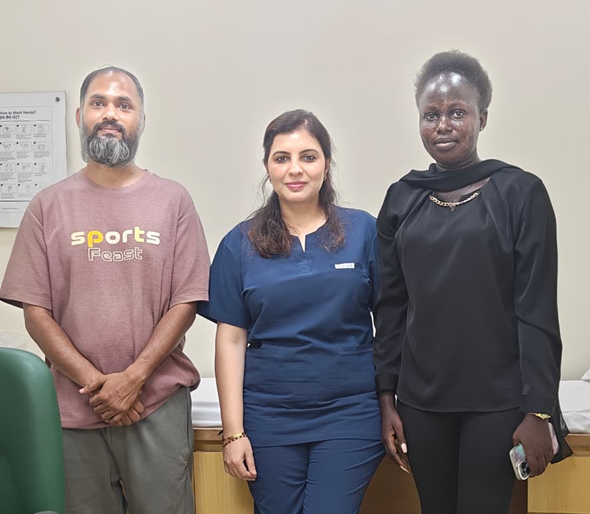
Our Gallery



Get a Free Quote
Tell us what you need and share your medical reports. Our medical team prepares your treatment plan and cost estimate.
- Free medical opinion on your reports
- Your quote within 24–48 hours
- Help with visa invitation letter, travel and airport pickup
- Coordinators available on WhatsApp
Prefer to talk? Call +91-8860606766 or WhatsApp us.
Thank you! Your request is received.
Reference . Our medical team will send your free quote within 24–48 hours by e-mail or WhatsApp.
Chat on WhatsApp now