Assistance
Consultation
Services
Opinion
Care Coordination
What will your treatment cost?
Prolactinoma Pituitary Gland Tumor
Released Date: 2025-03-01

1. Prolactinoma
Prolactinoma is a benign (non-cancerous) tumor of the pituitary gland that leads to excess production of prolactin, a hormone responsible for milk production in women. It can cause hormonal imbalances, affecting both men and women.
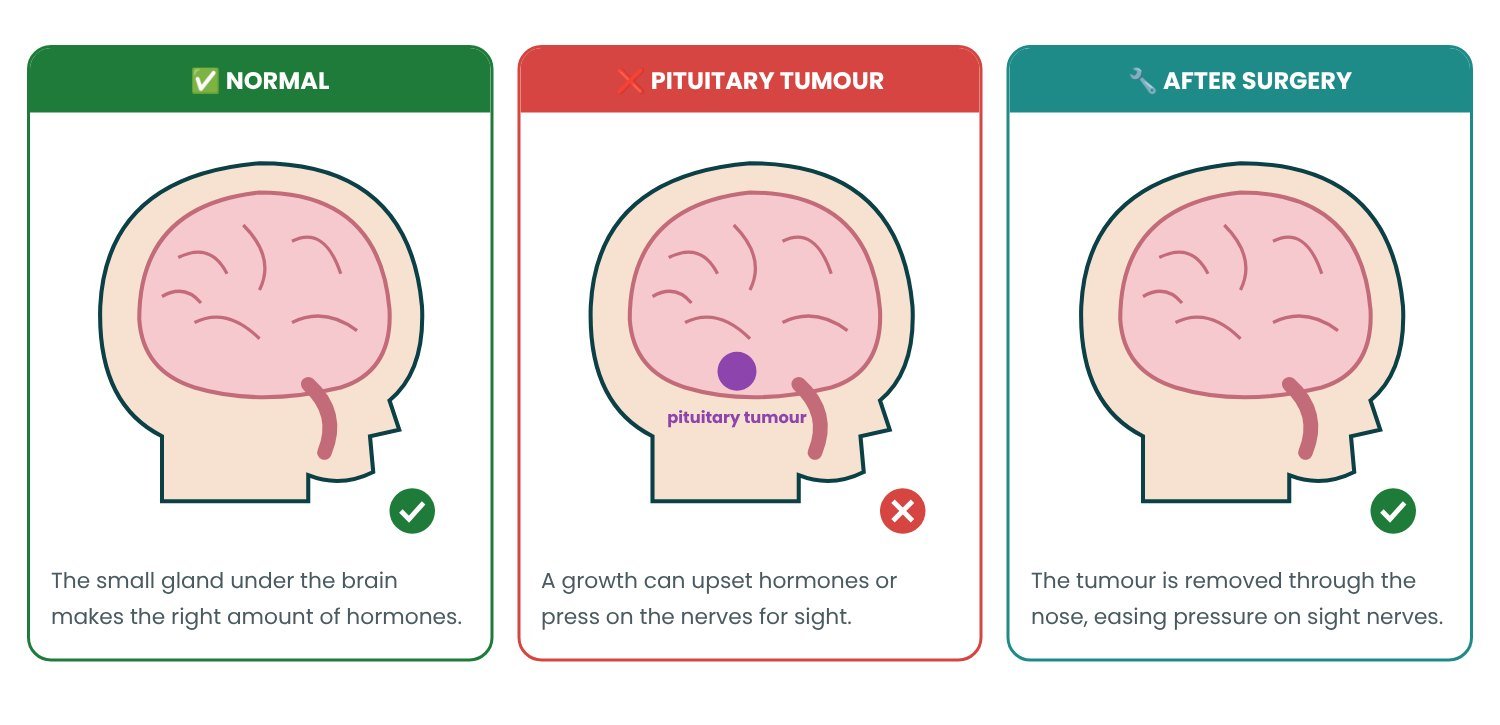
🖼️ Understand It in Pictures
Normal pituitary vs pituitary tumour
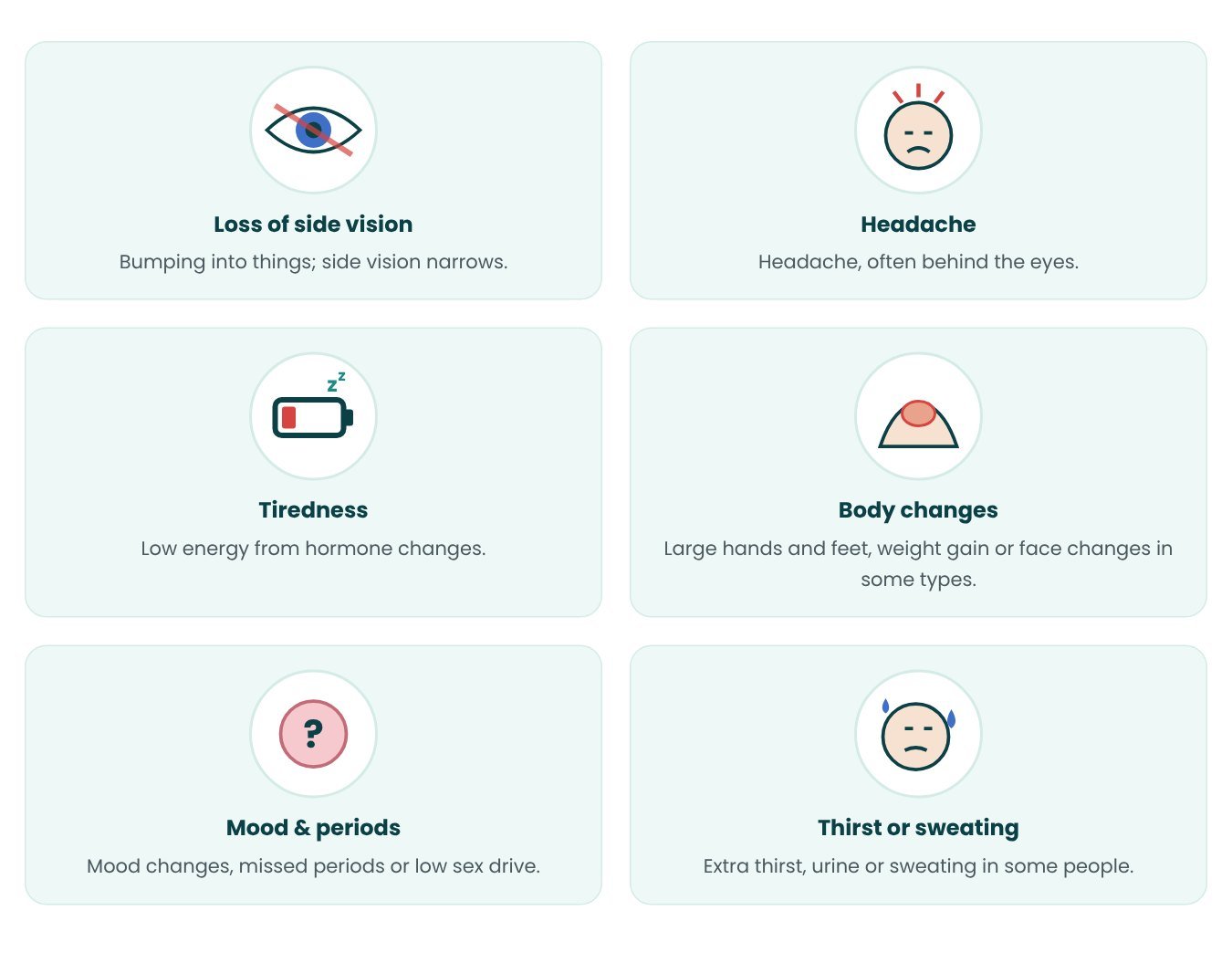
👀 Symptoms in Pictures
🩻 Scans & Tests — What Doctors See

🎬 The Treatment Journey in Pictures
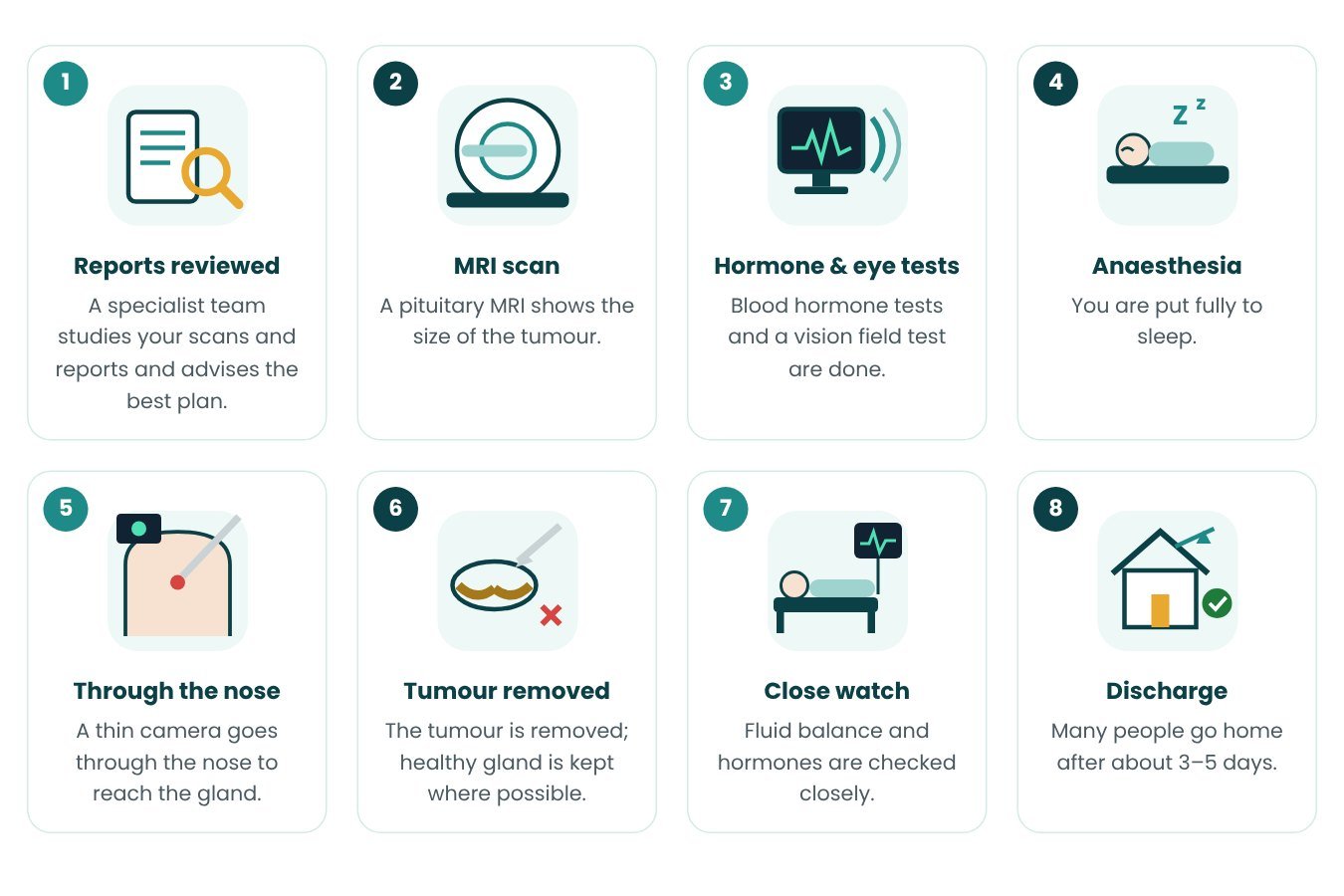
📅 Recovery at a Glance

Drawings: Satyug Healthcare (simplified, not to scale). Photos: Wikimedia Commons; author and licence under each photo.
2. Types of Prolactinoma
Prolactinomas are classified based on their size:
- Microprolactinoma: Tumor smaller than 10mm in diameter.
- Macroprolactinoma: Tumor larger than 10mm in diameter, often causing more severe symptoms.
3. Causes of Prolactinoma
The exact cause is unknown, but potential factors include:
- Genetic mutations.
- Pituitary gland disorders.
- Hypothalamic dysfunction.
- Certain medications (e.g., antipsychotics, antidepressants).
- High estrogen levels.
4. Symptoms of Prolactinoma
In Women:
- Irregular or absent menstrual periods.
- Breast milk production (galactorrhea) without pregnancy.
- Infertility.
- Reduced libido.
- Osteoporosis (due to low estrogen levels).
In Men:
- Erectile dysfunction.
- Reduced muscle mass.
- Infertility.
- Breast enlargement (gynecomastia).
- Headaches and vision problems (if the tumor is large).
General Symptoms (Both Genders):
- Vision disturbances.
- Headaches.
- Fatigue.
5. Diagnosis of Prolactinoma
Doctors use the following tests to diagnose prolactinoma:
- Blood Tests: To check prolactin levels.
- MRI or CT Scan: To detect pituitary tumors.
- Vision Tests: If tumor growth affects the optic nerves.
- Hormonal Tests: To assess overall pituitary function.
6. Prevention of Prolactinoma
Since the exact cause is unknown, prevention is challenging, but:
- Regular health check-ups can help in early detection.
- Avoiding long-term use of medications that affect dopamine.
- Managing stress levels and maintaining a healthy lifestyle.
7. Risks of Untreated Prolactinoma
If left untreated, prolactinoma can cause:
- Infertility.
- Severe osteoporosis (bone loss).
- Vision loss (due to tumor pressing on the optic nerves).
- Persistent headaches.
- Hormonal imbalances, affecting metabolism and overall health.
8. Treatment Methods for Prolactinoma
Treatment depends on tumor size and symptoms. Options include:
-
Medications (First-line Treatment):
- Dopamine agonists (Cabergoline, Bromocriptine) help shrink the tumor and lower prolactin levels.
-
Surgery (If Medications Fail or Tumor is Large):
- Endoscopic Transsphenoidal Surgery (through the nose) is preferred for tumor removal.

-
Radiation Therapy (If Surgery and Medications Fail):
- Used to slow tumor growth.
9. FAQs About Prolactinoma
Q1: Is prolactinoma cancerous?
No, it is a benign tumor.
Q2: Can prolactinoma go away on its own?
In some cases, microprolactinomas may shrink, but treatment is usually required.
Q3: Can prolactinoma cause pregnancy issues?
Yes, it can lead to infertility but is treatable.
Q4: How long does treatment take?
With medications, prolactin levels normalize within a few months.
Q5: Can I live a normal life with prolactinoma?
Yes, with proper treatment, patients can lead a normal and healthy life.
10. How Satyug Healthcare Helps International Patients in India for Prolactinoma
Satyug Healthcare provides comprehensive support to international patients seeking treatment for prolactinoma in India, including:
✅ Medical Consultation: Connecting patients with top endocrinologists and neurosurgeons.
✅ Hospital Arrangements: Assistance in selecting the best hospitals for diagnosis and treatment.
✅ Visa & Travel Assistance: Helping with medical visas, flight bookings, and airport pickups.
✅ Cost Estimation: Providing detailed treatment cost estimates before travel.
✅ Language Assistance: Providing interpreters for seamless communication.
✅ Post-Treatment Care: Assisting in follow-ups and medication procurement.
Would you like more information about a specific hospital or doctor associated with Satyug Healthcare?
Related Blogs




HAPPY PATIENTS
What Our Patients Are Saying





























Our Gallery