Pituitary Endocrinology · Dopamine Agonists · Neurosurgery · Fertility Restoration
Prolactin disease — most commonly hyperprolactinemia caused by a prolactinoma (a benign pituitary tumour) — is one of the most common hormonal disorders affecting fertility, menstrual cycles, sexual function and bone health in both men and women. The good news: prolactinomas are highly treatable, and most patients achieve full hormone normalisation and tumour shrinkage with simple oral medication, without ever needing surgery.
India has emerged as one of the world's leading destinations for pituitary and endocrine care. Top Indian hospitals offer advanced pituitary MRI imaging, hormonal profiling, dopamine agonist therapy and minimally invasive endoscopic trans-sphenoidal surgery at internationally accredited (JCI/NABH) centres — at a cost 60–80% lower than the USA, UK or Europe.
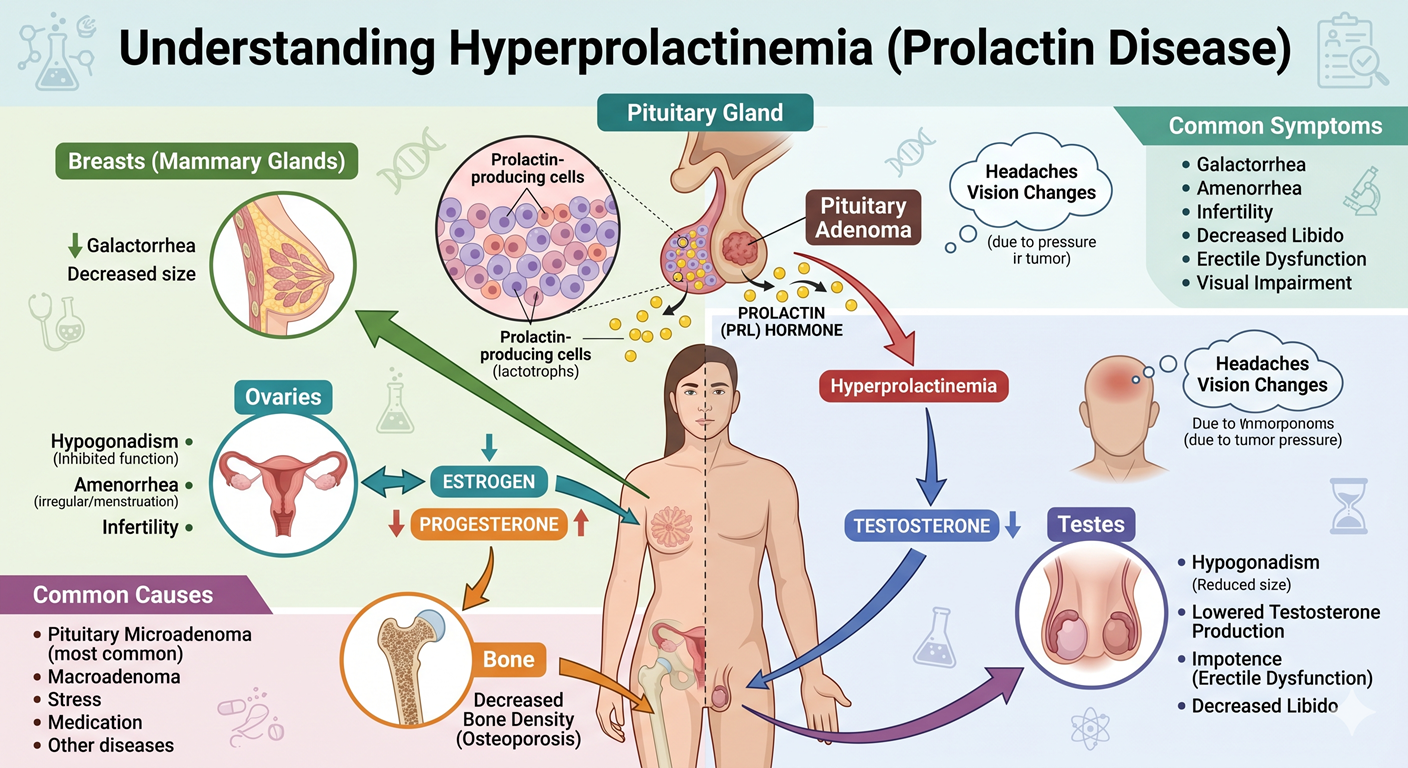
Prolactin is a hormone produced by the anterior pituitary gland, a small pea-sized gland at the base of the brain. Its main role is to stimulate breast milk production after childbirth, but it also influences fertility, sexual function, metabolism and bone density in both sexes.
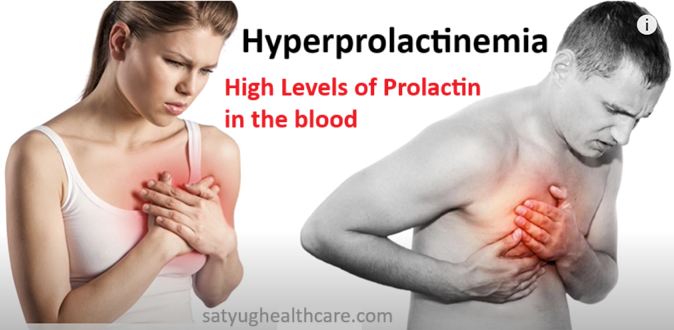
When prolactin levels rise abnormally — a condition called hyperprolactinemia — it disrupts the normal sex hormone balance, causing a wide range of symptoms. The most common cause is a prolactinoma, a benign (non-cancerous) tumour of the pituitary gland that produces excess prolactin.
< 10 mm in size — most common type, usually causes hormonal symptoms without compressing surrounding structures
≥ 10 mm in size — larger tumours that may compress the optic nerves, cavernous sinus or other pituitary tissue
💡 Did you know? Prolactinomas are the most common hormone-secreting pituitary tumour, accounting for about 40% of all pituitary adenomas. They are 3–5 times more common in women than men.
High prolactin levels can arise from many causes — not all are due to a tumour. A complete workup is essential to identify the underlying reason.
Symptoms differ markedly between women and men. Women usually present earlier because of obvious menstrual changes, while men often present late with vision problems or sexual dysfunction.
A complete workup is needed because many factors can raise prolactin. India's top endocrinology centres follow international guidelines for accurate diagnosis.
Fasting morning sample. Normal: <25 ng/mL (women), <20 ng/mL (men). >200 ng/mL usually indicates prolactinoma.
Gold standard imaging — identifies micro vs macroprolactinoma, location and any compression
TSH, free T4 to rule out hypothyroidism as cause
LH, FSH, estradiol (women), testosterone (men) to assess gonadal axis
Polyethylene glycol precipitation — rules out biologically inactive "big-big prolactin"
ACTH, cortisol, GH, IGF-1 — assesses other pituitary functions
Perimetry — essential for macroprolactinomas with chiasm proximity
For long-standing untreated disease to detect osteoporosis
The vast majority of prolactinomas are treated successfully with oral medication alone — surgery and radiation are reserved for resistant or complicated cases. Indian endocrinology and pituitary centres offer the complete spectrum of care.
Dopamine agonists are the cornerstone of treatment. They normalise prolactin levels and shrink the tumour by more than 50% in 80–90% of patients.
Minimally invasive endoscopic trans-sphenoidal surgery (through the nose) is reserved for:
Indian neurosurgical centres routinely achieve cure rates of 70–90% for microprolactinomas and 30–50% for macroprolactinomas with experienced pituitary surgeons.
Reserved for aggressive, residual, or recurrent tumours not responding to medication or surgery. Stereotactic radiosurgery (Gamma Knife or CyberKnife) provides precise, single-session radiation with minimal damage to surrounding tissue. Conventional fractionated radiation may be used for very large or invasive tumours.
One of the great successes of treatment: fertility returns in over 90% of women within months of starting dopamine agonists. For those planning pregnancy, bromocriptine is usually preferred due to its longer safety record. Cabergoline can also be used. Most women can stop medication once pregnancy is confirmed, with monitoring throughout pregnancy.
Patients on dopamine agonists need periodic prolactin levels, MRI scans (1–2 yearly) and visual field tests. After 2 or more years of normal prolactin and tumour shrinkage, careful withdrawal of medication may be attempted in selected patients — about 30–40% remain in long-term remission off treatment.
Prolactin disease often affects fertility, mood, sexual function and bone health — areas that need attention beyond just lowering the hormone level.
Reproductive endocrinology, ovulation monitoring, IVF coordination if needed
DEXA scans, calcium and vitamin D, bisphosphonates if osteoporosis present
Testosterone in men, estrogen in women if hypogonadism persists
Weight, lipid profile, blood sugar — all improve with prolactin normalisation
Counselling for depression, anxiety and impulse control issues from medication
Echocardiogram for high-dose long-term cabergoline patients
Multidisciplinary teams of endocrinologists, neurosurgeons, neuro-radiologists and ophthalmologists.
DM-qualified specialists trained at AIIMS, PGI & leading USA/UK centres, with decades of pituitary experience.
Full diagnostic workup, medication, surgery and follow-up at a fraction of Western costs.
3T MRI, endoscopic trans-sphenoidal surgery, Gamma Knife and CyberKnife radiosurgery.
* Costs vary by tumour size, surgical complexity, length of stay and hospital. Contact Satyug Healthcare for a personalised estimate.
The outlook for prolactin disease is excellent. With dopamine agonist therapy, 80–90% of patients achieve normal prolactin levels and significant tumour shrinkage. Menstrual cycles, fertility and sexual function typically return within months. Successful pregnancies are the norm rather than the exception. Even macroprolactinomas with vision loss often respond rapidly to medication, with vision recovery seen within days to weeks. Long-term, many patients can eventually be weaned off medication, and prolactinomas almost never transform into cancer.
Whether you are seeking diagnosis, dopamine agonist optimisation, surgery, or fertility treatment after prolactin normalisation, Satyug Healthcare provides end-to-end support for international patients.
Send hormone reports, pituitary MRI and visual field tests. Free written opinion from a leading endocrinologist or pituitary neurosurgeon.
Consultations with two or more pituitary specialists so you can choose the team you trust most.
BLK-Max, Indraprastha Apollo, Medanta Medicity, Fortis Memorial, Amrita Hospital, Max Saket, Manipal Dwarka, Artemis Hospital.
Medical visa invitation letter and full visa support — fast-track processing for urgent cases.
Airport pick-up, hotel, hospital appointments, tests, surgery scheduling, follow-up.
English, Arabic, Russian, French and other languages — no communication barriers.
Video consultations with your treating endocrinologist for dose adjustment, monitoring and pregnancy planning.
Q1. Is prolactinoma cancer?
No. Prolactinomas are benign (non-cancerous) tumours of the pituitary gland. They do not spread elsewhere in the body. Malignant prolactinomas are extremely rare.
Q2. Can I get pregnant if I have a prolactinoma?
Yes — fertility returns in over 90% of women once prolactin is normalised with cabergoline or bromocriptine. Most women have successful pregnancies. Your endocrinologist will guide medication adjustment before and during pregnancy.
Q3. Will I need surgery for a prolactinoma?
Most patients (80–90%) do NOT need surgery. Dopamine agonists alone are usually sufficient. Surgery is reserved for resistant tumours, intolerance to medication, or visual emergencies.
Q4. How long do I need to take medication?
Typically at least 2 years of normal prolactin levels and significant tumour shrinkage before considering withdrawal. About 30–40% of patients remain in long-term remission after stopping medication. Some need lifelong therapy.
Q5. What documents do I need to share for a medical opinion?
Please send: (1) serum prolactin levels (multiple readings if available), (2) pituitary MRI report and images, (3) other pituitary hormone tests (TSH, T4, cortisol, LH, FSH, testosterone/estradiol), (4) visual field test, (5) current medication list. Send via WhatsApp or email — written opinion within 24–48 hours.
Get a free written medical opinion from a leading endocrinologist or pituitary specialist in India within 24–48 hours — at no obligation.
📞 +91-8860606766 | +91-9910655125
✉️ query@satyughealthcare.com · 💬 WhatsApp 24/7