Robotic CABG Package
Assistance
Consultation
Services
Opinion
Care Coordination
What will your treatment cost?

| Surgery Name | Cost | Room | Hospitalization |
|---|---|---|---|
| Robotic CABG Package | USD 7814 | Twin Sharing | 6-8 Days in Room |
✓ Inclusion
- ✔Consultation with senior cardiac surgeon and cardiologist (heart team)
- ✔Routine pre-surgery tests: blood tests, ECG, echo, chest X-ray, PFT as per protocol
- ✔Robotic-assisted CABG (MIDCAB / TECAB) under general anaesthesia
- ✔Robotic instruments, drapes and consumables
- ✔Surgeon, assistant and cardiac anaesthetist fees
- ✔Operation theatre and robotic system charges
- ✔Cardiac ICU stay as per protocol
- ✔Twin-sharing room for the rest of the 6–8 day stay
- ✔Routine medicines, IV fluids and blood thinners
- ✔Cardiac rehabilitation and physiotherapy
- ✔Meals for the patient as per hospital diet
- ✔Free: airport pick-up & drop, visa invitation letter, interpreter & coordinator (Satyug Healthcare)
✗ Exclusion
- ✖International flights and visa fees
- ✖Hotel stay before admission and after discharge
- ✖Coronary angiography and CT angiography before surgery
- ✖Stents and angioplasty for hybrid revascularisation
- ✖Extra ICU or hospital days beyond package
- ✖Blood and blood products beyond protocol
- ✖Treatment of complications or other illnesses
- ✖Specialist consultations not related to surgery
- ✖Take-home medicines
- ✖Attendant meals and personal expenses
Know More About Procedure & Surgery
Robotic-Assisted CABG (Heart Bypass) Surgery in India
Minimally invasive robotic coronary bypass through small cuts between the ribs, for blocked heart arteries – done by experienced cardiac surgeons at leading accredited Indian heart hospitals, at a fraction of Western prices.
📖 What is Robotic-Assisted CABG?
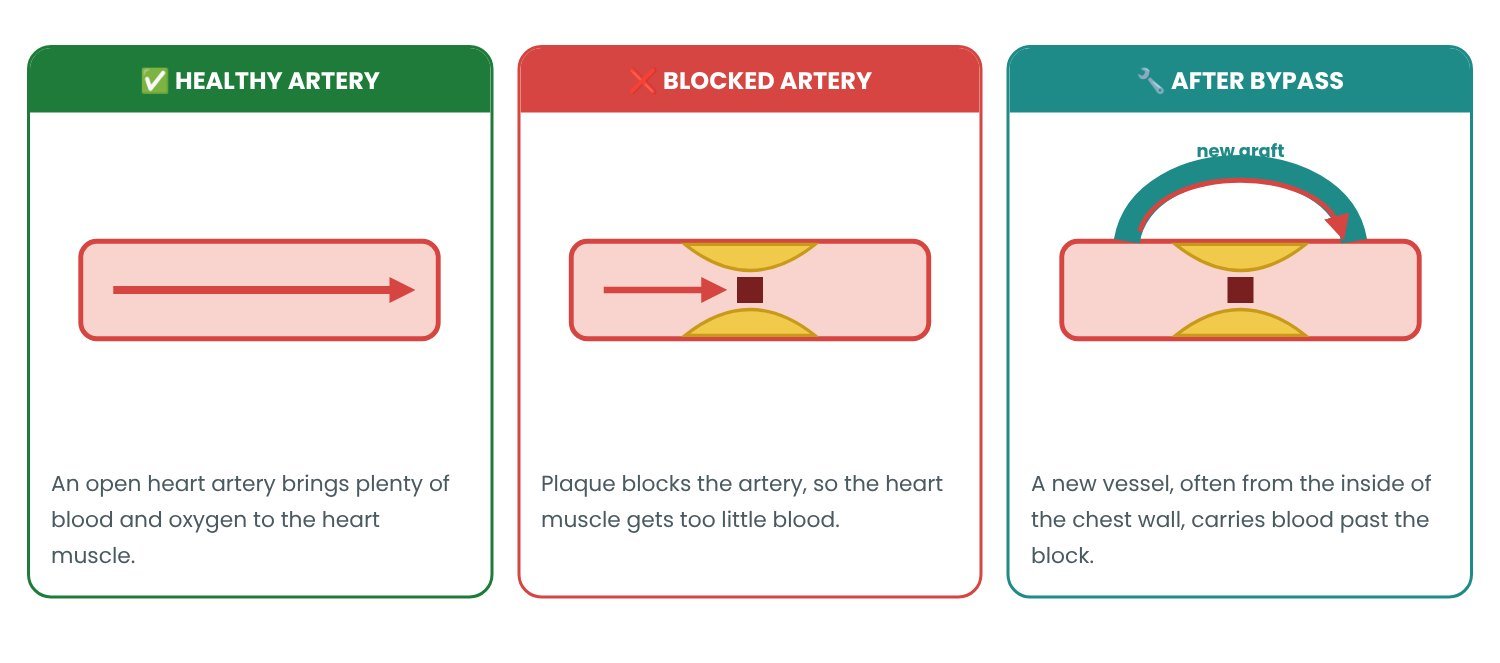
The heart muscle gets its blood from the coronary arteries. Fatty deposits (plaque) can narrow these arteries – this is coronary artery disease. Less blood reaches the heart, causing chest pain (angina), breathlessness and, if an artery blocks suddenly, a heart attack. Coronary artery bypass grafting (CABG) uses a healthy blood vessel to carry blood around the blockage.
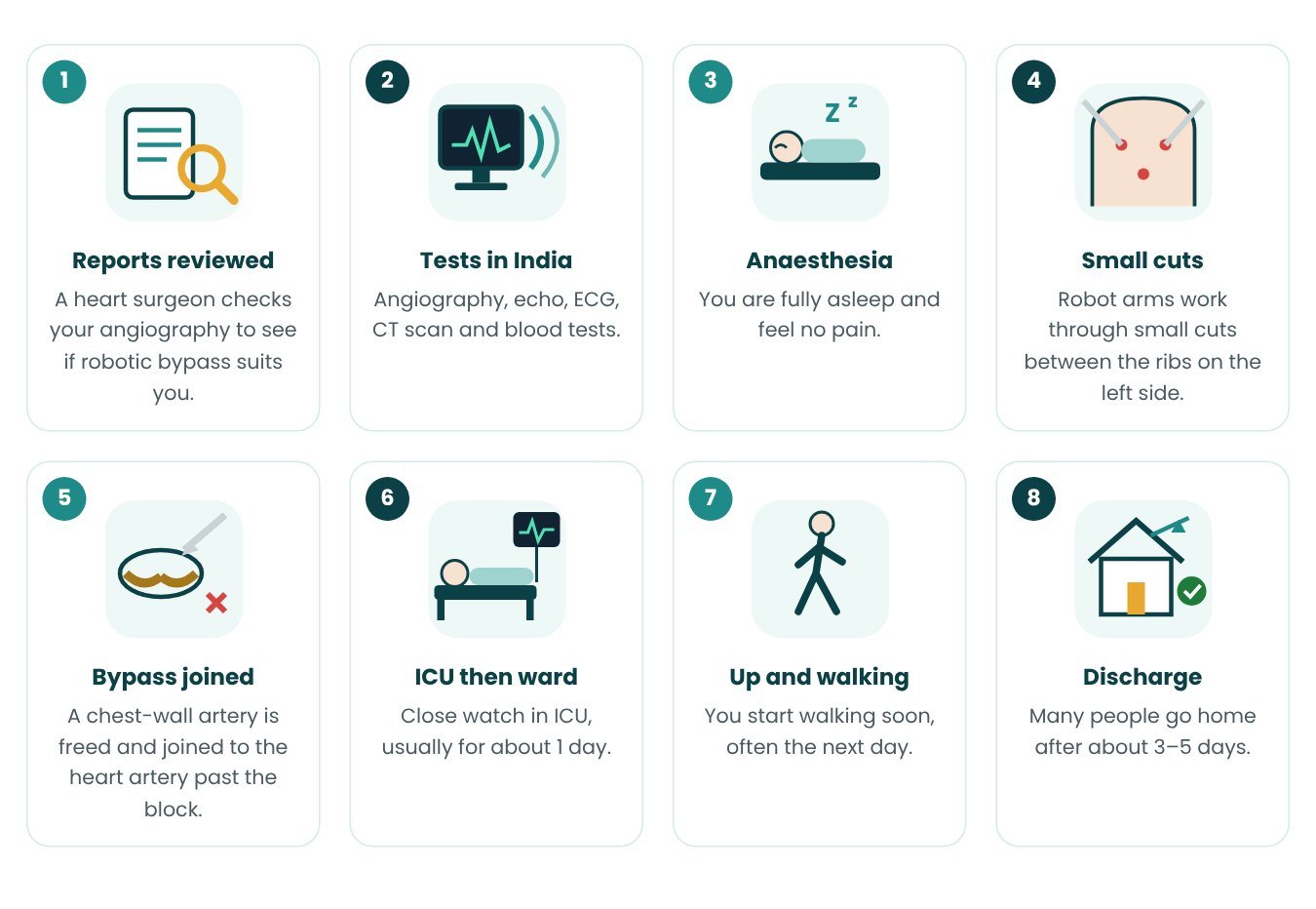
In traditional CABG, the breastbone is cut open (sternotomy). In robotic-assisted CABG, the surgeon uses a robot (such as da Vinci) through small cuts between the ribs on the left side of the chest. The robot takes down the internal mammary artery (the best long-lasting bypass graft) and the bypass is stitched to the blocked artery, often on a beating heart (robotic MIDCAB or TECAB). Because the breastbone is not cut, there is less pain, less blood loss and a faster return to normal life. For several blocked arteries, it can be combined with stenting (hybrid revascularisation).
🖼️ Understand It in Pictures
Healthy vs blocked heart artery
👀 Symptoms in Pictures

🩻 Scans & Tests — What Doctors See


🎬 The Treatment Journey in Pictures

📅 Recovery at a Glance
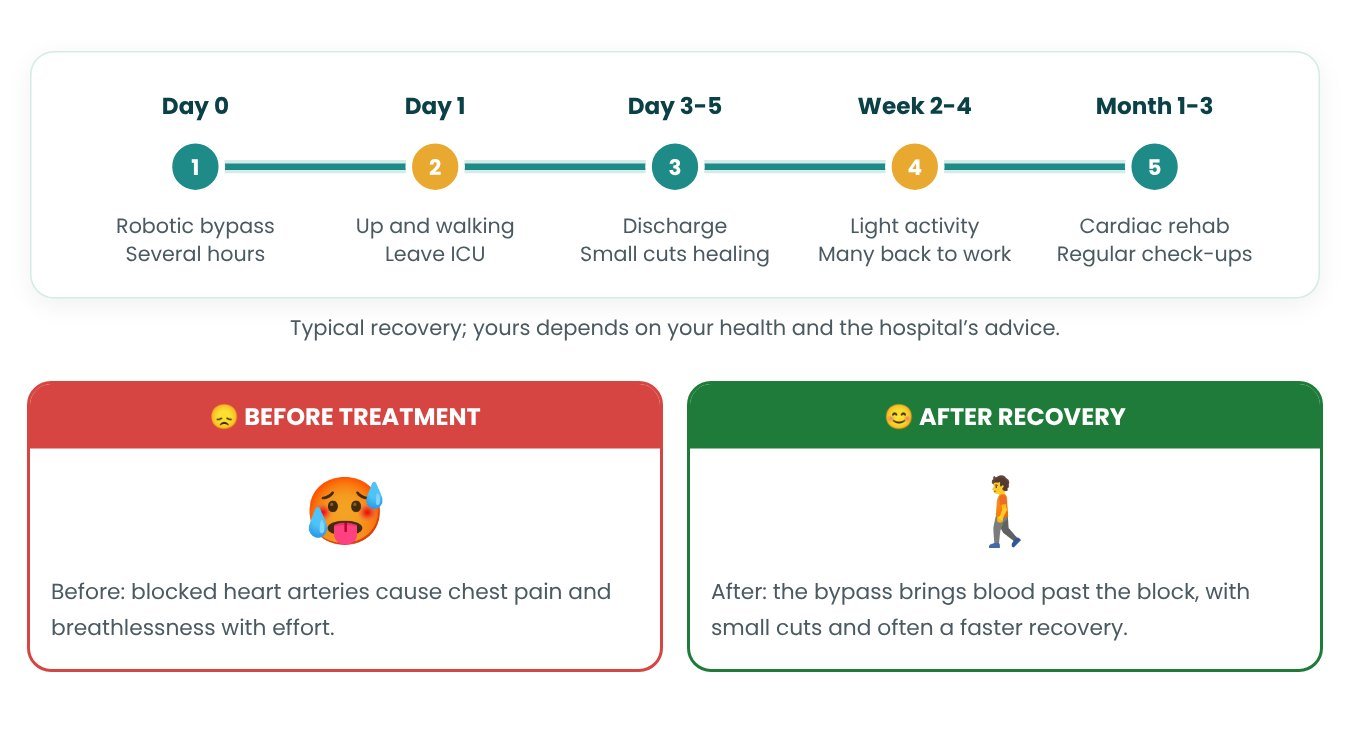
Drawings: Satyug Healthcare (simplified, not to scale). Photos: Wikimedia Commons; author and licence under each photo.
🩺 Conditions Treated
⚠️ Symptoms That May Need Bypass Surgery
- ➤Chest pain or tightness on walking
- ➤Pain spreading to the arm, jaw or back
- ➤Breathlessness on exertion
- ➤Tiredness with little activity
- ➤Chest pain at rest
- ➤Abnormal stress test or angiogram
- ➤Sweating or nausea with chest discomfort
- ➤Recurrent angina after stents
🔬 Tests Before Treatment
| Test | Why it is done |
|---|---|
| Coronary angiography | Shows the exact location and severity of blockages – essential for planning. |
| Echocardiogram | Measures heart pumping (ejection fraction) and checks valves. |
| CT chest / CT angiography | Checks chest anatomy, mammary artery and aorta for robotic access. |
| Pulmonary function test | Robotic surgery needs one-lung ventilation, so lung function must be adequate. |
| Blood tests (CBC, kidney, liver, sugar, HbA1c, clotting) | Check overall fitness and bleeding risk. |
| Carotid Doppler | Checks neck arteries to reduce stroke risk. |
| Stress test or viability study (if needed) | Shows whether heart muscle is alive and will benefit. |
🏥 The Procedure — Step by Step

⚖️ Types & Techniques
| Technique | What is done | Best for |
|---|---|---|
| Robotic-assisted MIDCAB | Robot harvests LIMA; bypass stitched by hand through a 4–6 cm rib cut on a beating heart | Single LAD disease – most common robotic approach |
| TECAB (totally endoscopic CABG) | Whole operation done robotically through ports | Selected single or double vessel disease |
| Hybrid coronary revascularisation | Robotic LIMA-LAD bypass plus stents in other arteries | Multi-vessel disease |
| Off-pump CABG (OPCAB) via sternotomy | Standard bypass on a beating heart through the breastbone | Three or more vessels needing grafts |
| Conventional on-pump CABG | Heart-lung machine used; multiple grafts | Complex multi-vessel disease |
📅 Your Day-by-Day Plan in India
| Day | What happens |
|---|---|
| Day 1 | Arrival in India, airport pick-up and hotel check-in |
| Day 2–3 | Cardiology and cardiac surgery consultation, angiogram review, echo and tests |
| Day 4 | Admission and robotic-assisted CABG |
| Day 5–6 | Cardiac ICU monitoring, drain removal, start walking |
| Day 7–11 | Ward recovery in twin-sharing room; discharge after 6–8 days |
| Day 12–17 | Hotel rest, cardiac rehab walks, wound check |
| Day 18 | Final review with echo and ECG |
| Day 19–20 | Fly home ✈️ |
🌱 Recovery After Treatment
🏆 Success Rate
| Outcome | Result |
|---|---|
| Hospital survival | About 98–99% |
| LIMA graft open at 10 years | Over 90% |
| Freedom from angina | About 90% |
| Return to normal activity | 2–4 weeks (vs 6–12 weeks after sternotomy) |
| Conversion to open surgery | About 2–5% |
Results depend on the number and location of blockages, heart pumping function, diabetes, kidney function and the surgical team's robotic experience. Taking lifelong medicines and controlling risk factors keeps the bypass open.
🩹 Risks & Possible Complications
Robotic CABG is a major heart operation; experienced teams keep risks low.
- •Irregular heartbeat (atrial fibrillation) – about 10–20%, usually temporary
- •Bleeding needing re-operation – about 2%
- •Conversion to open (sternotomy) surgery – about 2–5%
- •Lung complications or fluid around the lung
- •Wound infection – lower than with sternotomy
- •Stroke – about 1%
- •Heart attack or graft problem – about 1–2%
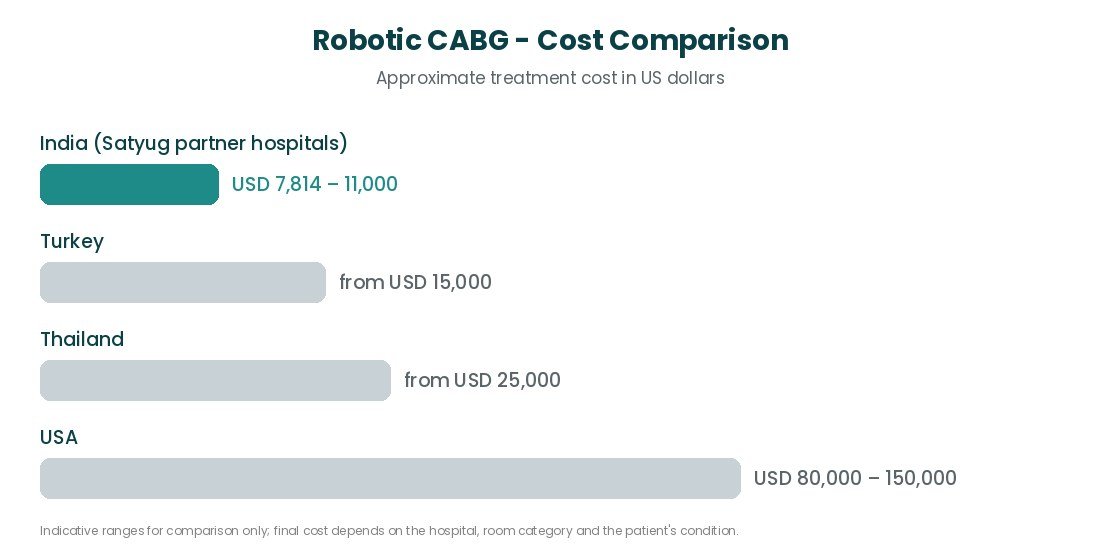
💰 Cost of Robotic CABG in India
The cost of robotic-assisted CABG in India starts from about USD 7,814. This package includes robotic surgery, surgeon and anaesthesia fees, robotic consumables, ICU care and a total of 6–8 days in hospital in a twin-sharing room, and routine medicines. Hybrid stenting, additional grafts or longer ICU stay cost extra.
| Option / Hospital tier | Approx. cost (USD) | Hospital stay | Notes |
|---|---|---|---|
| Robotic-assisted CABG – this package | 7,814 | 6–8 days | Twin sharing |
| Robotic CABG – private room / premium hospital | 9,000 – 11,000 | 6–8 days | Single room |
| Hybrid (robotic CABG + stents) | 10,000 – 13,000 | 7–9 days | Stent cost depends on number and type |
| Conventional CABG (sternotomy) | 5,000 – 6,500 | 7–10 days | For three or more vessels |
📋 What the Package Includes
- ✔Robotic CABG surgery
- ✔Robotic consumables
- ✔Surgeon and anaesthesia fees
- ✔Cardiac ICU stay
- ✔Twin-sharing room for rest of stay
- ✔Routine medicines and nursing
- ✔Cardiac rehab and physiotherapy
- ✔Airport pick-up, visa letter and interpreter
- ✖Flights and visa fees
- ✖Hotel stay outside hospital
- ✖Pre-surgery angiography
- ✖Stents for hybrid procedure
- ✖Extra ICU or hospital days
- ✖Blood products beyond protocol
- ✖Treatment of complications
- ✖Take-home medicines
✈️ Your Medical Travel Process with Satyug Healthcare

| Step | Details |
|---|---|
| 1. Send reports | Coronary angiography report and CD/video, echocardiogram, ECG, recent blood tests including kidney function and HbA1c, and a list of current heart medicines. |
| 2. Free opinion & quotes | Within 48-72 hours you receive opinions and cost estimates from 3-5 leading hospitals to compare. |
| 3. Choose hospital & doctor | We help you compare doctors, success rates, room options and total budget. |
| 4. Medical visa | The hospital issues a Visa Invitation Letter (VIL) to the Indian Embassy. The patient and up to 2 attendants apply for an e-Medical / Medical Attendant visa. |
| 5. Travel planning | Flight guidance, wheelchair assistance, airport pick-up, hotel or guest house near the hospital. |
| 6. Treatment in India | Your coordinator and interpreter stay with you for admission, treatment, discharge and billing. |
| 7. Return & follow-up | Fit-to-fly letter, medicines, and online follow-up with your doctor after you return home. |
🎒 Travel Checklist
- 📌Valid passport (6+ months) for the patient and attendants, plus 10 passport-size photos each
- 📌Medical visa / e-visa and the hospital’s Visa Invitation Letter
- 📌All angiography CDs/videos, echo, ECG, blood reports and prescriptions
- 📌Yellow fever vaccination certificate (mandatory for travellers from African countries)
- 📌Polio vaccination certificate where applicable
- 📌Declare cash above USD 5,000 at the airport; hospitals accept wire transfer and cards
- 📌Foreigners staying longer than permitted must register with the FRRO — our team assists
⭐ Why Choose Satyug Healthcare?
❓ Frequently Asked Questions
➤ How much does robotic CABG cost in India?
➤ How long will I stay in hospital?
➤ How long should I stay in India?
➤ Is robotic CABG suitable for everyone?
➤ What is the advantage over open-heart surgery?
➤ Is the surgery painful?
➤ How long does a bypass last?
➤ When can I fly home?
➤ When can I return to work?
➤ What are the main risks?
➤ Is it safe for elderly or diabetic patients?
Medical disclaimer: This page is for general information and does not replace a consultation with a qualified specialist. Treatment plans and costs are confirmed only after the patient is examined. Sources: NCBI StatPearls: Coronary Artery Bypass Graft; NCBI StatPearls: Minimally Invasive Cardiac Surgery; 2021 ACC/AHA/SCAI Coronary Revascularization Guideline; ESC/EACTS 2018 Guidelines on Myocardial Revascularization; Mayo Clinic; Cleveland Clinic: Robotic Heart Surgery. Infographics: Satyug Healthcare.
Robotic-assisted CABG in India from USD 7,814 – keyhole heart bypass without opening the breastbone, 6–8 day stay incl. ICU, top cardiac hospitals, visa help.
















































































































































































































TOP HOSPITALS
Special High-quality Hospitals


HAPPY PATIENTS
What Our Patients Are Saying




















Our Gallery