Cardiac Ablation Package
Assistance
Consultation
Services
Opinion
Care Coordination
What will your treatment cost?

See the cost breakdown by option, hospital and city →
| Surgery Name | Cost | Room | Hospitalization |
|---|---|---|---|
| Cardiac Ablation Package | $3322 | Single | Patient - 1 days stay in a single room. |
✓ Inclusion
- ✔Consultation with cardiologist / electrophysiologist
- ✔Pre-procedure ECG, echocardiogram and routine blood tests
- ✔Electrophysiology (EP) study
- ✔Radiofrequency catheter ablation for standard arrhythmia (SVT, WPW, typical flutter)
- ✔Standard diagnostic and ablation catheters
- ✔Cath lab charges, fluoroscopy and consumables
- ✔Sedation and local anaesthesia
- ✔1 day hospital stay in a single room with nursing care
- ✔Routine medicines during stay
- ✔Post-procedure ECG and discharge summary
- ✔Free: airport pick-up & drop, visa invitation letter, interpreter & coordinator (Satyug Healthcare)
✗ Exclusion
- ✖3D electro-anatomical mapping (CARTO / EnSite) if required
- ✖Contact-force, irrigated or cryo-balloon catheters
- ✖AF, VT or complex ablation upgrade
- ✖General anaesthesia if needed
- ✖Holter, CT / MRI heart and extra tests
- ✖Extra hospital days
- ✖Treatment of complications or pacemaker if required
- ✖Hotel accommodation and food for attendants
- ✖Air tickets and visa fees
Know More About Procedure & Surgery
Cardiac (Catheter) Ablation in India
A permanent cure for many fast heart rhythms such as SVT, WPW syndrome and atrial flutter, done through a vein in the leg by expert electrophysiologists at accredited Indian hospitals, at a fraction of Western cost.
📖 What is Cardiac Ablation?
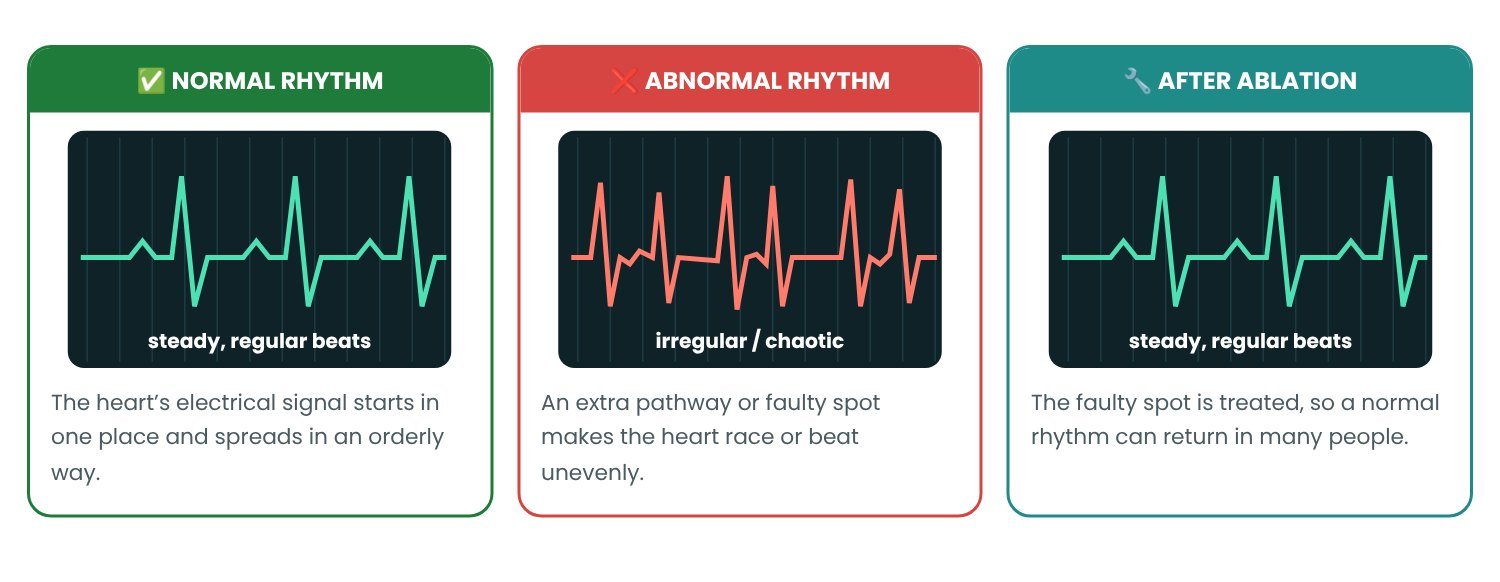
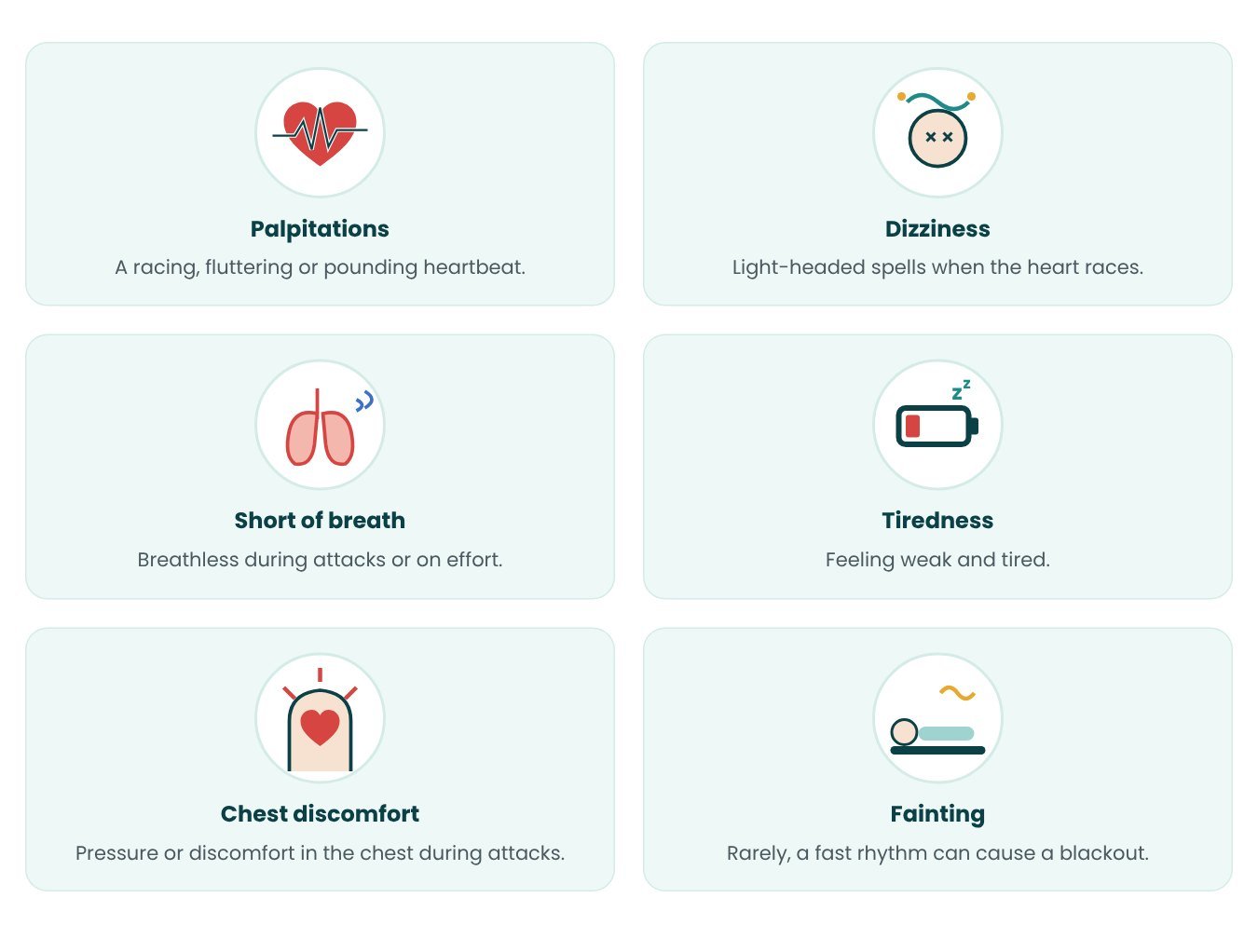
Your heartbeat is controlled by electrical signals. In some people an extra electrical pathway, or a small area of abnormal tissue, sends wrong signals. This causes the heart to beat very fast or irregularly (an arrhythmia). Symptoms include palpitations, dizziness, breathlessness and sometimes fainting.
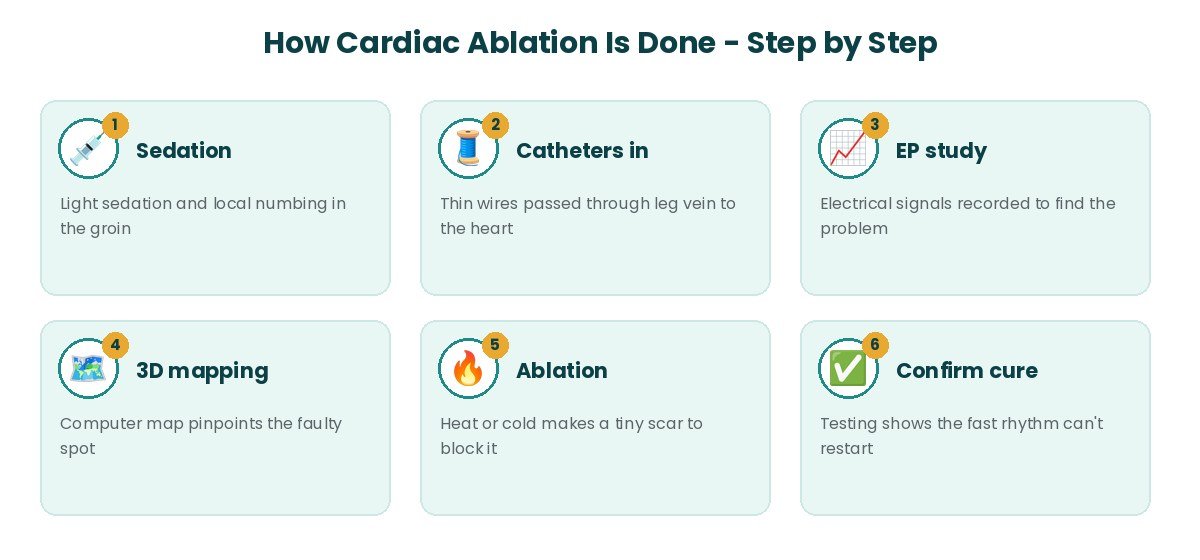
Cardiac ablation (also called catheter ablation or radiofrequency ablation, RFA) finds and destroys this small faulty area. Thin wires (catheters) are passed through a vein in the groin up to the heart. First an electrophysiology (EP) study maps the electrical signals. Then the tip of the catheter delivers heat (radiofrequency) or cold (cryoablation) to make a tiny scar that blocks the wrong signal. There is no cut on the chest and most patients go home the next day.
🖼️ Understand It in Pictures
Normal vs abnormal heartbeat, and after ablation
👀 Symptoms in Pictures
🩻 Scans & Tests — What Doctors See


🎬 The Treatment Journey in Pictures
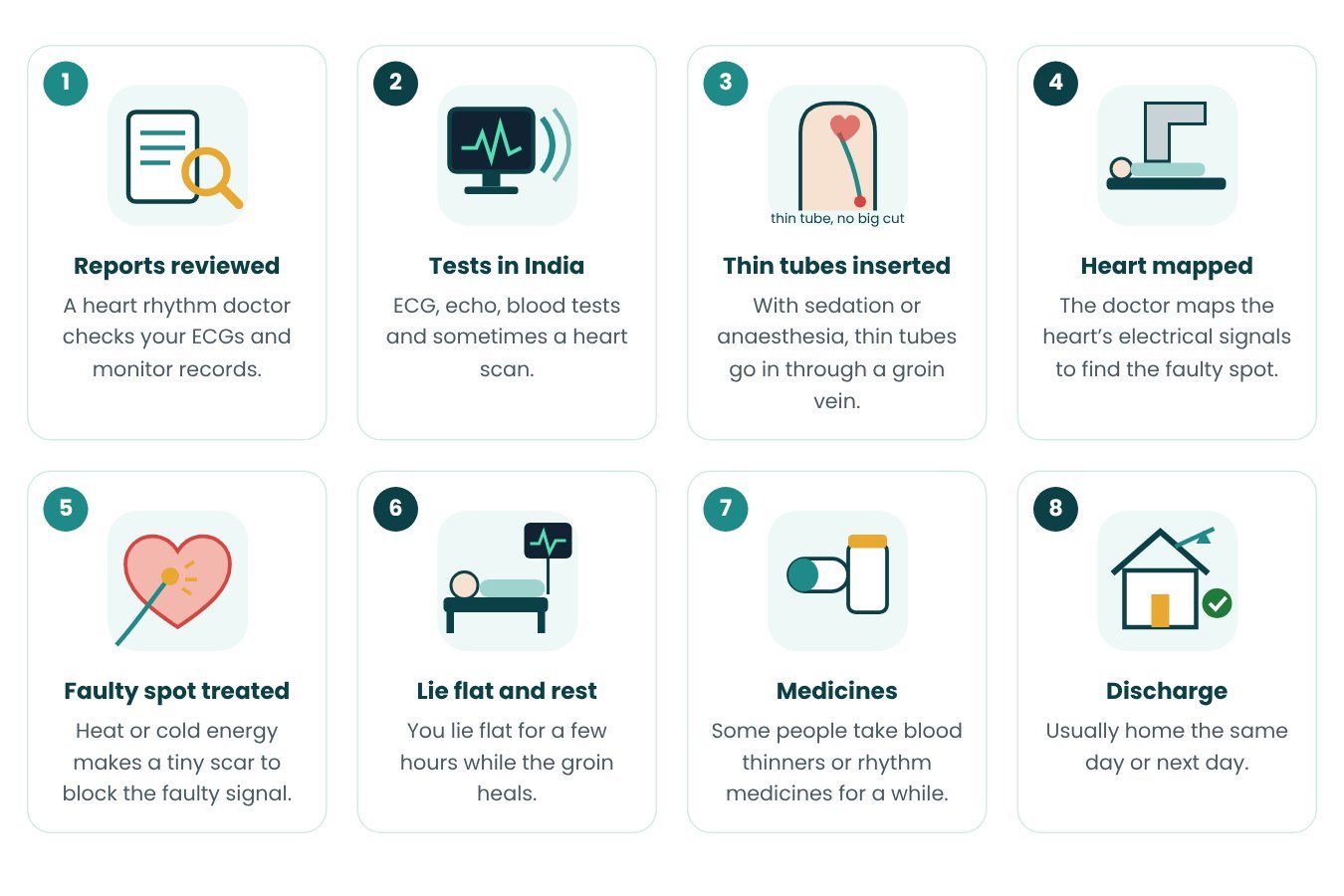

📅 Recovery at a Glance
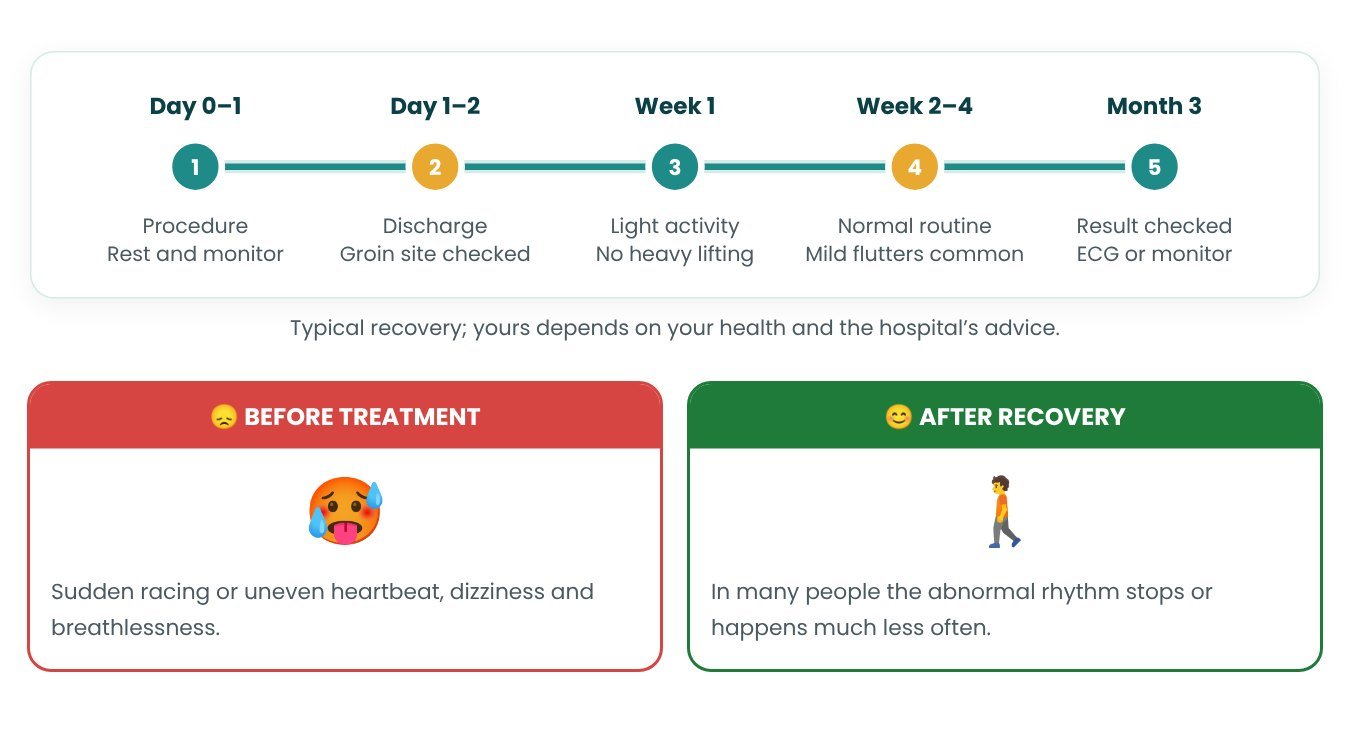
Drawings: Satyug Healthcare (simplified, not to scale). Photos: Wikimedia Commons; author and licence under each photo.
🩺 Conditions Treated
⚠️ Symptoms That May Need Ablation
- ➤Sudden fast heartbeat (palpitations)
- ➤Racing heart that starts and stops suddenly
- ➤Dizziness or light-headedness
- ➤Fainting or near-fainting
- ➤Shortness of breath
- ➤Chest discomfort during attacks
- ➤Tiredness and poor exercise capacity
- ➤Repeated hospital visits to stop fast rhythm
🔬 Tests Before Treatment
| Test | Why it is done |
|---|---|
| ECG (during attack if possible) | Shows the type of fast rhythm |
| 24–48 hour Holter monitor | Records rhythm over days to catch attacks |
| Echocardiogram | Checks heart structure and pumping |
| Blood tests (thyroid, electrolytes, kidney) | Finds other causes and prepares for procedure |
| Treadmill test (selected) | Checks rhythm during exercise |
| CT / MRI of heart (AF ablation) | Maps the left atrium and checks for clots |
🏥 The Procedure — Step by Step
⚖️ Types & Techniques
| Technique | What is done | Best for |
|---|---|---|
| Conventional RF ablation | Radiofrequency heat via catheter with X-ray | SVT, WPW, typical flutter |
| 3D-mapping guided ablation | CARTO / EnSite 3D map of the heart | Atrial tachycardia, complex flutter, VT |
| Cryoablation | Freezing the tissue instead of heat | Pathways close to normal conduction system; AF |
| AF ablation (pulmonary vein isolation) | Isolate veins of left atrium (RF, cryo-balloon or pulsed field) | Atrial fibrillation |
📅 Your Day-by-Day Plan in India
| Day | What happens |
|---|---|
| Day 1 | Arrival in India, airport pick-up and hotel check-in |
| Day 2 | Cardiologist / electrophysiologist consultation, ECG, echo and blood tests |
| Day 3 | Admission and cardiac ablation procedure |
| Day 4 | ECG check and discharge (1 day in hospital) |
| Day 5–6 | Rest in hotel, groin site check |
| Day 7 | Final review – Fly home ✈️ |
🌱 Recovery After Treatment
🏆 Success Rate
| Outcome | Result |
|---|---|
| SVT (AVNRT) cure | about 95–98% |
| WPW / accessory pathway cure | about 90–95% |
| Typical atrial flutter cure | about 90–95% |
| Paroxysmal AF free of AF at 1 year | about 70–80% (repeat may be needed) |
| Serious complications (SVT ablation) | under 1–2% |
Success depends on the type of rhythm, its location, use of 3D mapping and the experience of the electrophysiologist. Simple SVT has the highest cure rates; AF may need a second procedure.
🩹 Risks & Possible Complications
Cardiac ablation is very safe; serious problems are uncommon.
- •Groin bruising or bleeding (about 1–3%)
- •Return of the rhythm needing repeat ablation (about 3–10% for SVT, higher for AF)
- •Heart block needing pacemaker (under 1% in AVNRT)
- •Fluid around the heart (tamponade, under 1%)
- •Blood clot or stroke (rare, under 0.5%; higher for AF)
- •Damage to blood vessel (rare)
- •Infection (very rare)
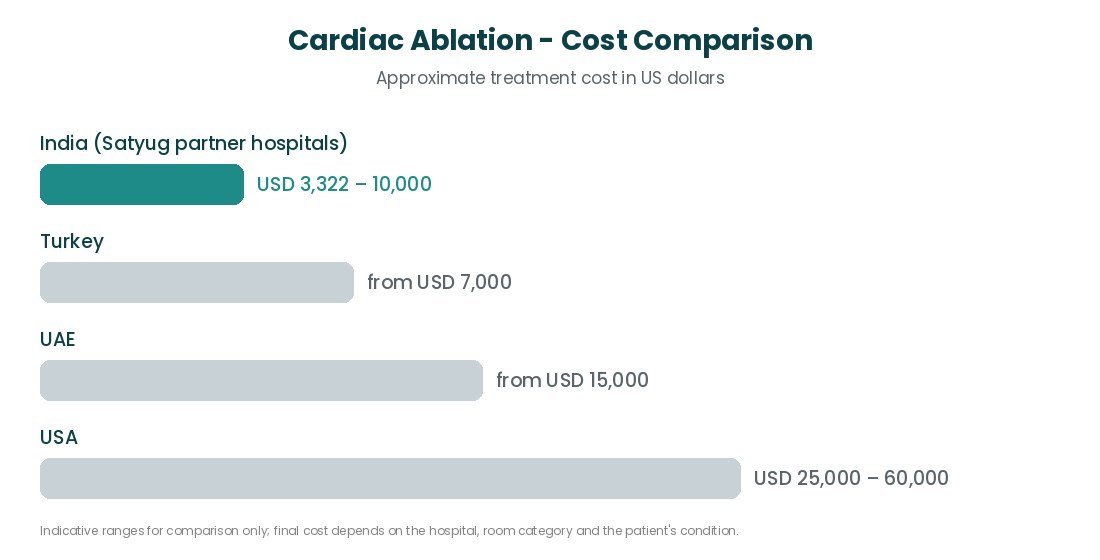
💰 Cost of Cardiac Ablation in India
The cost of cardiac ablation in India starts from about USD 3,322 at Satyug partner hospitals. This covers the EP study and ablation for a standard rhythm problem such as SVT, catheters and 1 day stay in a single room. 3D mapping, AF ablation and cryo-balloon add to the cost.
| Option / Hospital tier | Approx. cost (USD) | Hospital stay | Notes |
|---|---|---|---|
| EP study + RF ablation (this package) | 3,322 | 1 day, single room | SVT, WPW, typical flutter |
| Ablation with 3D mapping | 4,500 – 6,500 | 1–2 days | Complex atrial tachycardia, atypical flutter |
| AF ablation (RF or cryo-balloon) | 7,000 – 10,000 | 1–2 days | Pulmonary vein isolation |
| VT ablation | 8,000 – 12,000 | 2–4 days | Complex, selected patients |
📋 What the Package Includes
- ✔Electrophysiologist and cath lab fees
- ✔EP study and RF ablation
- ✔Standard ablation and diagnostic catheters
- ✔1 day stay in a single room
- ✔Routine medicines and consumables
- ✔Post-procedure ECG
- ✔Discharge consultation
- ✔Airport pick-up, visa letter, interpreter
- ✖3D mapping system charges (if needed)
- ✖Cryo / contact-force catheters
- ✖AF or VT ablation upgrade
- ✖Extra hospital days
- ✖Holter, CT or MRI tests
- ✖Hotel stay
- ✖Flights and visa fees
- ✖Treatment of complications
✈️ Your Medical Travel Process with Satyug Healthcare

| Step | Details |
|---|---|
| 1. Send reports | ECG recorded during an attack (most important), Holter monitor report, echocardiogram, any previous EP study, list of heart medicines and doctor's notes describing the attacks. |
| 2. Free opinion & quotes | Within 48-72 hours you receive opinions and cost estimates from 3-5 leading hospitals to compare. |
| 3. Choose hospital & doctor | We help you compare doctors, success rates, room options and total budget. |
| 4. Medical visa | The hospital issues a Visa Invitation Letter (VIL) to the Indian Embassy. The patient and up to 2 attendants apply for an e-Medical / Medical Attendant visa. |
| 5. Travel planning | Flight guidance, wheelchair assistance, airport pick-up, hotel or guest house near the hospital. |
| 6. Treatment in India | Your coordinator and interpreter stay with you for admission, treatment, discharge and billing. |
| 7. Return & follow-up | Fit-to-fly letter, medicines, and online follow-up with your doctor after you return home. |
🎒 Travel Checklist
- 📌Valid passport (6+ months) for the patient and attendants, plus 10 passport-size photos each
- 📌Medical visa / e-visa and the hospital’s Visa Invitation Letter
- 📌All ECG, Holter and echo reports, any scans on CD / link and prescriptions
- 📌Yellow fever vaccination certificate (mandatory for travellers from African countries)
- 📌Polio vaccination certificate where applicable
- 📌Declare cash above USD 5,000 at the airport; hospitals accept wire transfer and cards
- 📌Foreigners staying longer than permitted must register with the FRRO — our team assists
⭐ Why Choose Satyug Healthcare?
❓ Frequently Asked Questions
➤ What is the cost of cardiac ablation in India?
➤ How long do I need to stay in India?
➤ Is cardiac ablation painful?
➤ Is this open-heart surgery?
➤ What is the success rate?
➤ Will I need medicines after ablation?
➤ What are the risks?
➤ When can I return to work?
➤ When can I fly home?
➤ Can children have ablation?
➤ What if my rhythm comes back?
➤ Can a family member come with me?
➤ What follow-up is needed after I go home?
➤ Will there be a language problem?
Medical disclaimer: This page is for general information and does not replace a consultation with a qualified specialist. Treatment plans and costs are confirmed only after the patient is examined. Sources: NCBI StatPearls: Catheter Ablation; 2015 ACC/AHA/HRS Guideline for Management of Adult SVT; 2023 ACC/AHA/ACCP/HRS AF Guideline; CASTLE-AF (NEJM 2018); Mayo Clinic: Cardiac ablation; NHS: Catheter ablation. Infographics: Satyug Healthcare.
Frequently Asked Questions
Radiofrequency ablation (RFA) is a procedure used to put the heart back into normal rhythm. During RFA, a thin wire sends heat to fix problem areas that cause abnormal heart beats. Medicines can also be used to put the heart back into normal rhythm.
Cardiac catheter ablation in India from USD 3,322 for SVT, WPW & flutter. 90–98% cure rate, 1-day stay, expert electrophysiologists, free opinion & visa help.






TOP HOSPITALS
Special High-quality Hospitals


HAPPY PATIENTS
What Our Patients Are Saying



















Our Gallery