Assistance
Consultation
Services
Opinion
Care Coordination
What will your treatment cost?
Stapled haemorrhoidectomy surgery in India
Released Date: 2023-01-12

What is stapled haemorrhoidectomy?
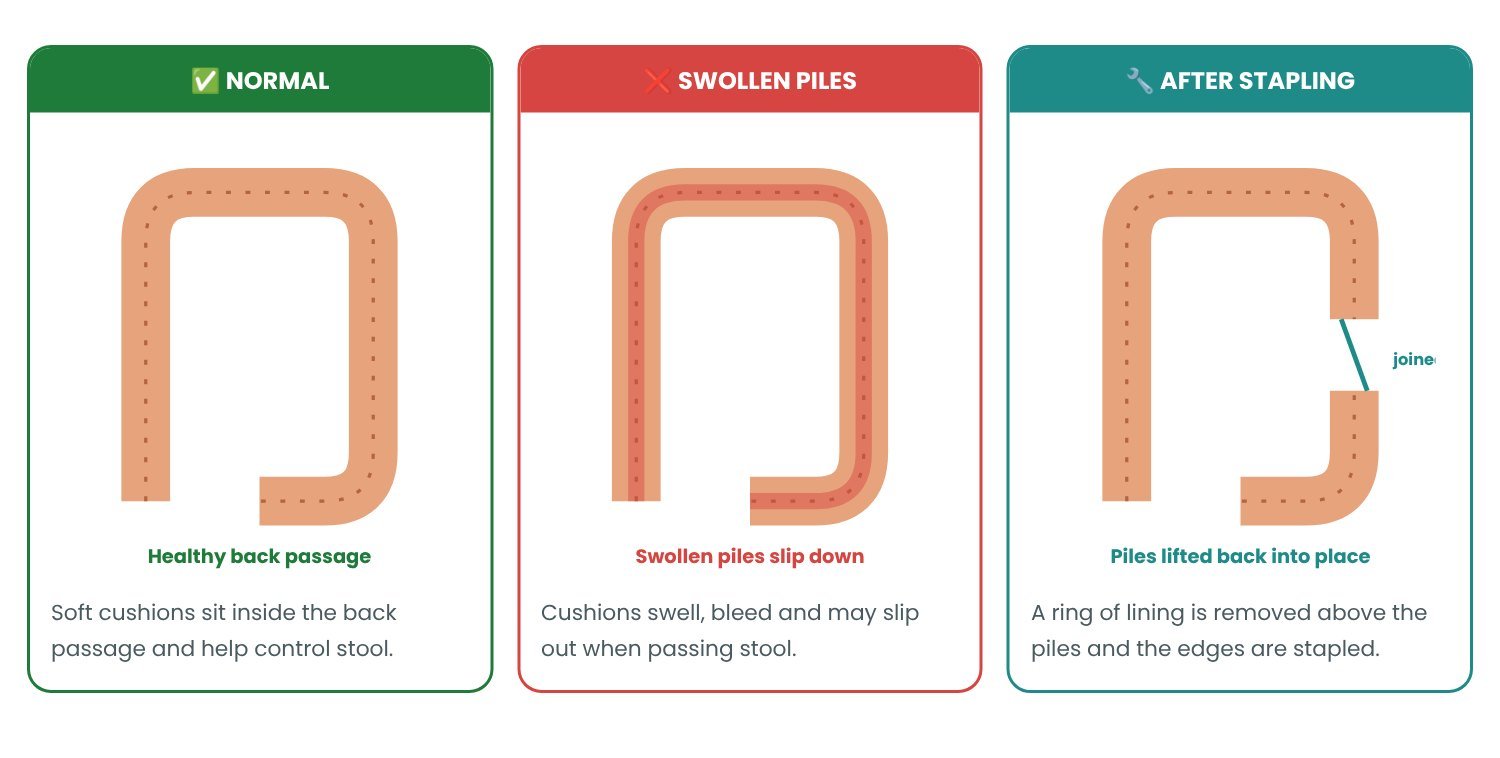
🖼️ Understand It in Pictures
Normal vs swollen piles vs after stapling
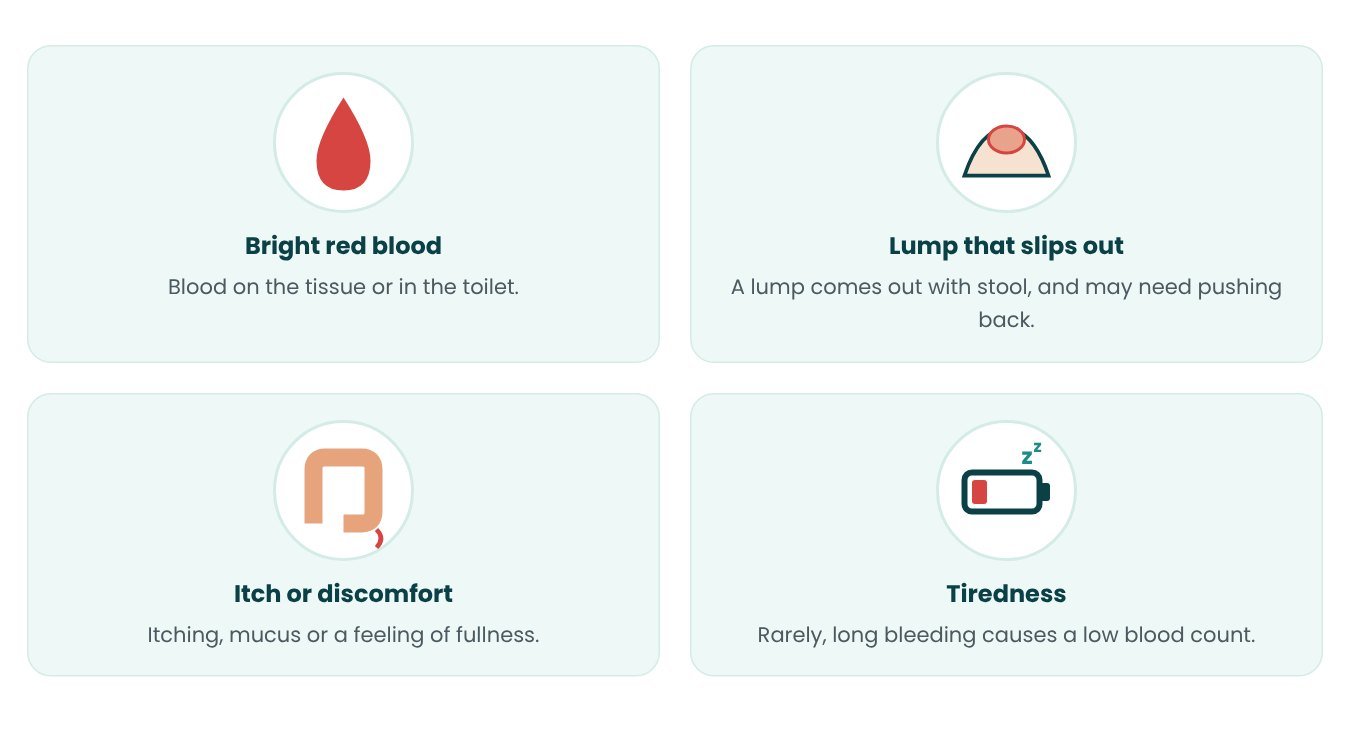
👀 Symptoms in Pictures
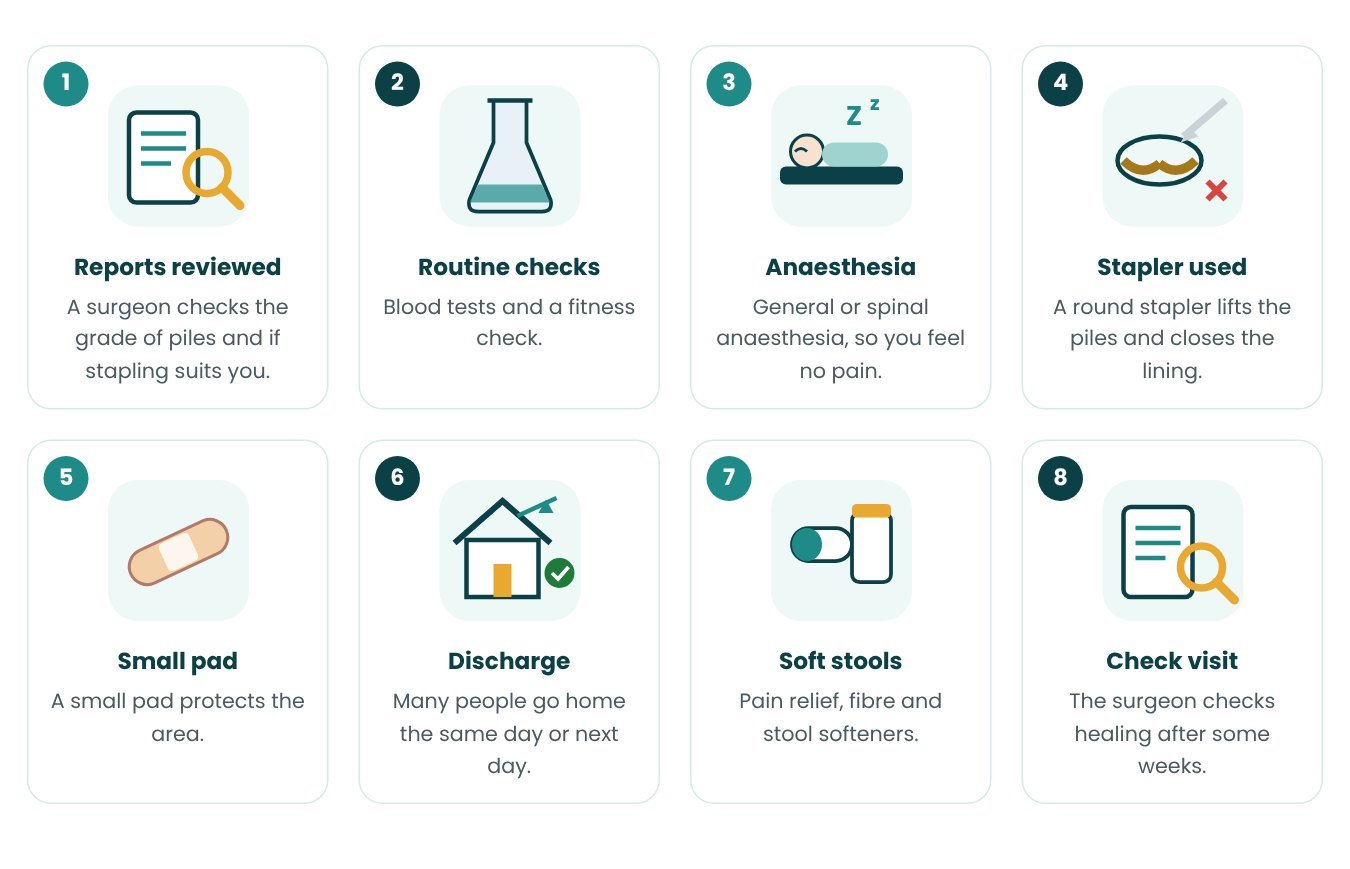
🎬 The Treatment Journey in Pictures
📅 Recovery at a Glance
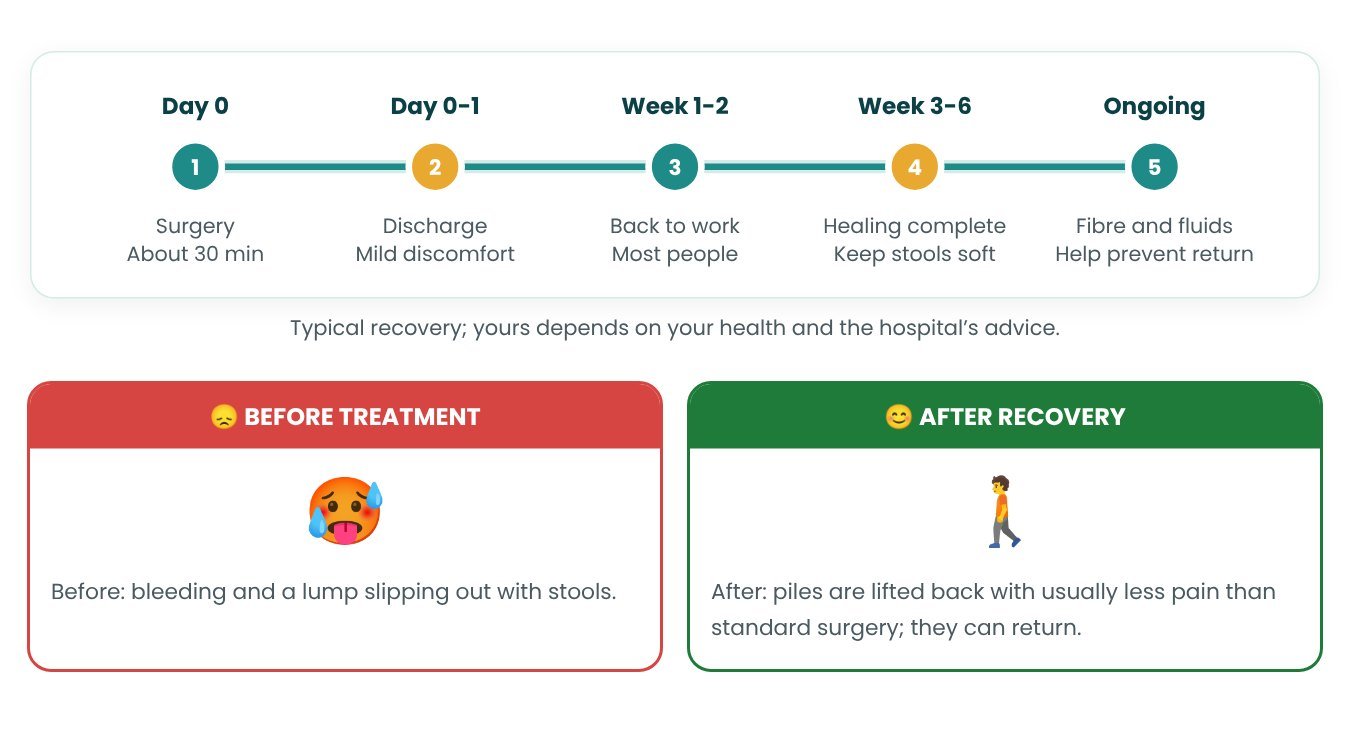
Stapled haemorrhoidectomy, also called stapled haemorrhoidopexy (PPH or MIPH), is a common operation for piles (haemorrhoids) that prolapse or slip out of the back passage. Instead of cutting the piles away, the surgeon uses a circular stapling device to remove a ring of the lining above the piles and staple the edges together. This lifts the piles back into their normal position and reduces their blood supply, so they shrink over the following weeks.
Technique
The operation is done under general or spinal anaesthesia and usually takes less than an hour. A circular stapler is passed through the anus, a stitch is placed around the lining above the piles, and the stapler removes a ring of this tissue while joining the edges with small staples. Because the cut is made above the sensitive skin of the anus, there are no external wounds, and most patients have less pain than after conventional haemorrhoid surgery.
Usage
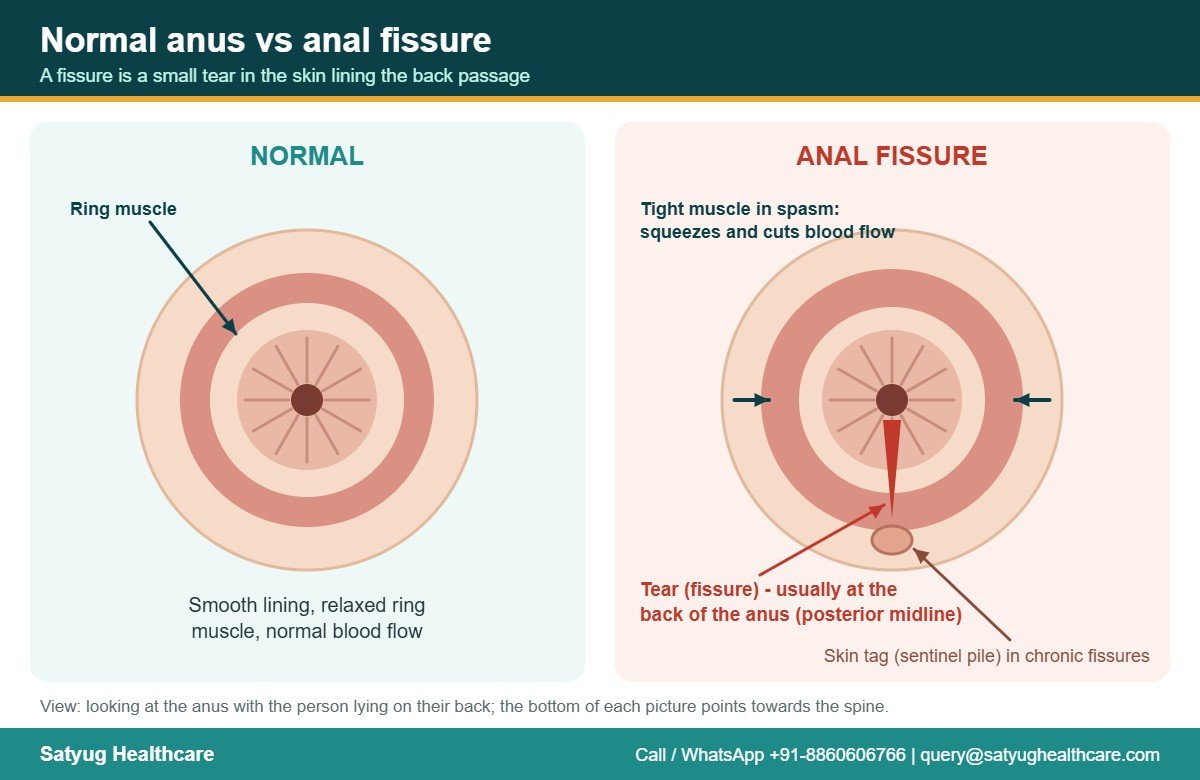
Stapled haemorrhoidectomy is mainly used for internal haemorrhoids that prolapse, especially when they bleed or keep coming out despite diet changes, medicines or banding. It is not suitable for external haemorrhoids alone or for an anal fissure, which need different treatment.
Compared with conventional (open) haemorrhoidectomy, the stapled technique usually causes less pain after surgery, a shorter hospital stay and a faster return to normal activities. Its main drawback is a somewhat higher chance that the piles come back over time. Your surgeon will advise which operation suits you best.
How is stapled haemorrhoidectomy performed?
Under anaesthesia, the surgeon gently widens the anus and inserts a special port, places a purse-string stitch in the lining above the piles, then closes and fires the circular stapler. The stapler cuts away a ring of the lining and seals the edges at the same time, lifting the piles back into place. The surgeon checks for bleeding before finishing.
Treatment starts with a diagnosis: your doctor will examine the back passage, usually with a proctoscope, and may advise a colonoscopy to rule out other causes of bleeding, along with routine blood tests before surgery. Most patients go home the same day or the next day. Mild discomfort, a feeling of fullness and a little bleeding with the first bowel movements are common; a high-fibre diet, plenty of fluids and stool softeners help recovery, and most people return to normal activities within about a week.
We are here to help you at every step
For more information, medical assessment and medical quote
send your medical history and medical reports at Email : query@satyughealthcare.com
Telephone/video consultation with a leading Indian doctor
International patient HelpDesk WhatsAPP/Call: +91-8860606766 | +91-9910655125
Related Blogs



HAPPY PATIENTS
What Our Patients Are Saying






























Our Gallery