Assistance
Consultation
Services
Opinion
Care Coordination
What will your treatment cost?
Myelodysplastic Syndromes treatment in India
Released Date: 2021-06-14

Myelodysplastic Syndrome
Myelodysplastic syndromes are a group of disorders caused by blood cells that are poorly formed or don't work properly. Myelodysplastic syndromes result from something amiss in the spongy material inside your bones where blood cells are made (bone marrow).
🖼️ Understand It in Pictures
Healthy vs diseased blood, and after transplant

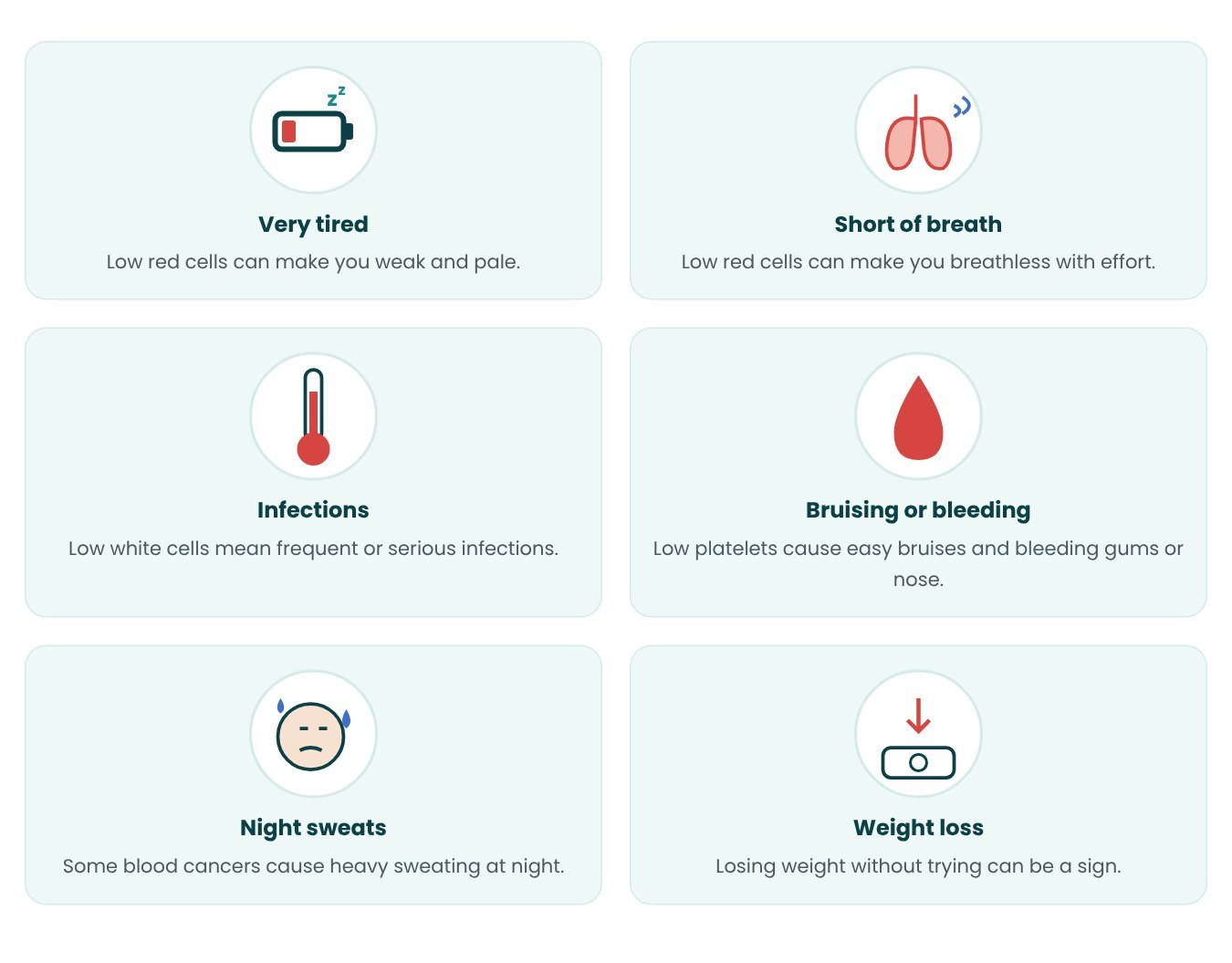
👀 Symptoms in Pictures
🩻 Scans & Tests — What Doctors See

🎬 The Treatment Journey in Pictures


📅 Recovery at a Glance

Drawings: Satyug Healthcare (simplified, not to scale). Photos: Wikimedia Commons; author and licence under each photo.
Symptoms
In time, myelodysplastic syndromes might cause:
- Fatigue
- Shortness of breath
- Unusual paleness (pallor), which occurs due to a low red blood cell count (anemia)
- Easy or unusual bruising or bleeding, which occurs due to a low blood platelet count (thrombocytopenia)
- Pinpoint-sized red spots just beneath the skin that are caused by bleeding (petechiae)
- Frequent infections, which occur due to a low white blood cell count (leukopenia)
Causes
In a healthy person, bone marrow makes new, immature blood cells that mature over time. Myelodysplastic syndromes occur when something disrupts this process so that the blood cells don't mature.
Risk Factors
- Older age - Most people with myelodysplastic syndromes are older than 60.
- Previous treatment with chemotherapy or radiation - Chemotherapy or radiation therapy, both of which are commonly used to treat cancer, can increase your risk of myelodysplastic syndromes.
- Exposure to certain chemicals - Chemicals, including benzene, has been linked to myelodysplastic syndromes.
Types of Myelodysplastic syndrome:
- Myelodysplastic syndromes with single-lineage dysplasia. One blood cell type — white blood cells, red blood cells or platelets — is less in number and appears abnormal under the microscope.
- Myelodysplastic syndromes with multilineage dysplasia. Two or three blood cell types are abnormal.
- Myelodysplastic syndromes with ring sideroblasts. This involves a low number of one or more blood cell types. A characteristic feature is that existing red blood cells in the bone marrow contain rings of excess iron.
- Myelodysplastic syndromes with isolated del (5q) chromosome abnormality. People with this subtype have low numbers of red blood cells, and the cells have a specific mutation in their DNA.
- Myelodysplastic syndromes with excess blasts. Any of the three types of blood cells like red blood cells, white blood cells or platelets might be low and appear abnormal under a microscope. Very immature blood cells (blasts) are found in the blood and bone marrow.
- Myelodysplastic syndromes, unclassifiable. In this subtype, there are reduced numbers of one or more types of mature blood cells and the cells might look abnormal under the microscope. Sometimes the blood cells appear normal, but analysis might find that the cells have DNA changes that are associated with myelodysplastic syndromes.
Diagnosis
- Blood tests - Doctor may order blood tests to determine the number of red cells, white cells and platelets and look for unusual changes in the size, shape and appearance of various blood cells.
- Removing bone marrow for testing - During a bone marrow biopsy and aspiration, a thin needle is used to withdraw a small amount of liquid bone marrow, usually from a spot on the back of your hipbone. Then a small piece of bone with its marrow is removed (biopsy).
Treatment
Blood transfusions
Blood transfusions with healthy blood cells from donors can be used to replace red blood cells and platelets in people with myelodysplastic syndromes. Blood transfusions can help control symptoms.
Medications
Treatment for myelodysplastic syndromes might include medications that:
- Increase the number of blood cells your body makes- These medications are artificial versions of substances found naturally in your bone marrow. Growth factors that stimulate your bone marrow to make more red blood cells can help reduce your need for frequent blood transfusions. Growth factors that promote white blood cell production may reduce your risk of infection.
- Stimulate blood cells to mature- Medications that help stimulate the blood cells to mature can reduce the need for frequent blood transfusions in people who aren't helped by growth factors. Some of these drugs may also reduce the risk that the disease may progress to leukemia.
- Suppress your immune system-Medications that suppress or control your immune system are used in certain myelodysplastic syndromes to reduce your need for red blood cell transfusions.
- Help people with a certain genetic abnormality- If your this syndrome is associated with a gene mutation called isolated del(5q), doctor might recommend lenalidomide (Revlimid).
- Treat infections- If your condition causes you to have infections, you'll receive treatments to control them.
Bone marrow transplant
A bone marrow transplant, also known as a stem cell transplant, is the merely treatment option that offers the potential of a cure for myelodysplastic syndromes. But this treatment carries a high risk of serious complications and it's usually reserved for people who are healthy enough to endure it. During a bone marrow transplant, high doses of chemotherapy drugs are used to clear out the defective blood cells from your bone marrow. Then the abnormal bone marrow stem cells are replaced with healthy, donated cells (allogeneic transplant). In some situations, less intense chemotherapy drugs can be used to reduce the risks of bone marrow transplant for older adults and those who might not otherwise be considered for this treatment.
If you have any related query, you can send us your report on below mention email address or you can call us or whatsApp for any second opinion.
Video/tele consultation also available
E-mail address- query@satyughealthcare.com
Phone number- +91888-242-4372, +91991-065-5125
Frequently asked questions
Q.Is Myelodysplastic syndromes considered cancer?
Myelodysplastic syndromes (MDS) are conditions that can occur when the blood-forming cells in the bone marrow become abnormal. This leads to low numbers of one or more types of blood cells. MDS is considered a type of cancer.
Q.Is MDS curable?
MDS cannot be cured with chemotherapy. An allogeneic bone marrow transplant (BMT) is the only potential cure for patients with MDS.
Q.Do you lose weight with MDS?
Symptoms may be very general, such as feeling tired or weak, losing weight without trying to, having a fever, getting black and blue marks or bleeding easily, having pale skin, or getting sick a lot.
Q.What happens in end stage MDS?
MDS progresses over time in two ways. In most people with MDS, fewer and fewer healthy blood cells are produced or survive. This can lead to severe anemia (low RBCs), increased risk of infection (due to low WBCs) or risk of severe bleeding (due to low platelets).
Q.How can MDS be prevented?
Avoiding exposure to radiation or certain chemicals, Avoiding known cancer-causing industrial chemicals, such as benzene, might lower your risk of developing MDS. Treating cancer with radiation and certain chemotherapy drugs can increase the risk of MDS.
Related Blogs







HAPPY PATIENTS
What Our Patients Are Saying































Our Gallery