
Renal Allograft Biopsy Package
Assistance
Consultation
Services
Opinion
Care Coordination
What will your treatment cost?

See the cost breakdown by option, hospital and city →
| Surgery Name | Cost | Room | Hospitalization |
|---|---|---|---|
| Renal Allograft Biopsy Package | $1019 | Single | Patient - 1 days stay in a single room. |
✓ Inclusion
- ✔Transplant nephrologist consultation and biopsy fees
- ✔Ultrasound guidance and radiologist fees
- ✔Biopsy gun / needle and consumables
- ✔Local anaesthesia and sedation if needed
- ✔1 day hospital stay in a single room
- ✔Post-biopsy monitoring with blood count
- ✔Post-biopsy ultrasound check
- ✔Routine histopathology (light microscopy)
- ✔Nursing care and patient diet
- ✔Discharge consultation and report explanation
- ✔Free: airport pick-up & drop, visa invitation letter, interpreter & coordinator (Satyug Healthcare)
✗ Exclusion
- ✖Immunofluorescence / C4d and electron microscopy (if not routine)
- ✖Donor-specific antibody (DSA) and drug level tests
- ✖BK virus / CMV PCR tests
- ✖Treatment of rejection (steroids, plasmapheresis, IVIG, rituximab)
- ✖Treatment of complications such as bleeding
- ✖Extra hospital stay beyond 1 day
- ✖Medicines after discharge
- ✖Flights, hotel and attendant expenses
- ✖Visa fees and personal expenses
Know More About Procedure & Surgery
Renal Allograft (Transplant Kidney) Biopsy in India
Ultrasound-guided biopsy of a transplanted kidney to find the cause of rising creatinine – rejection, drug toxicity, infection or disease return – done by transplant nephrologists at leading Indian transplant centres.
📖 What is a Transplant Kidney Biopsy?
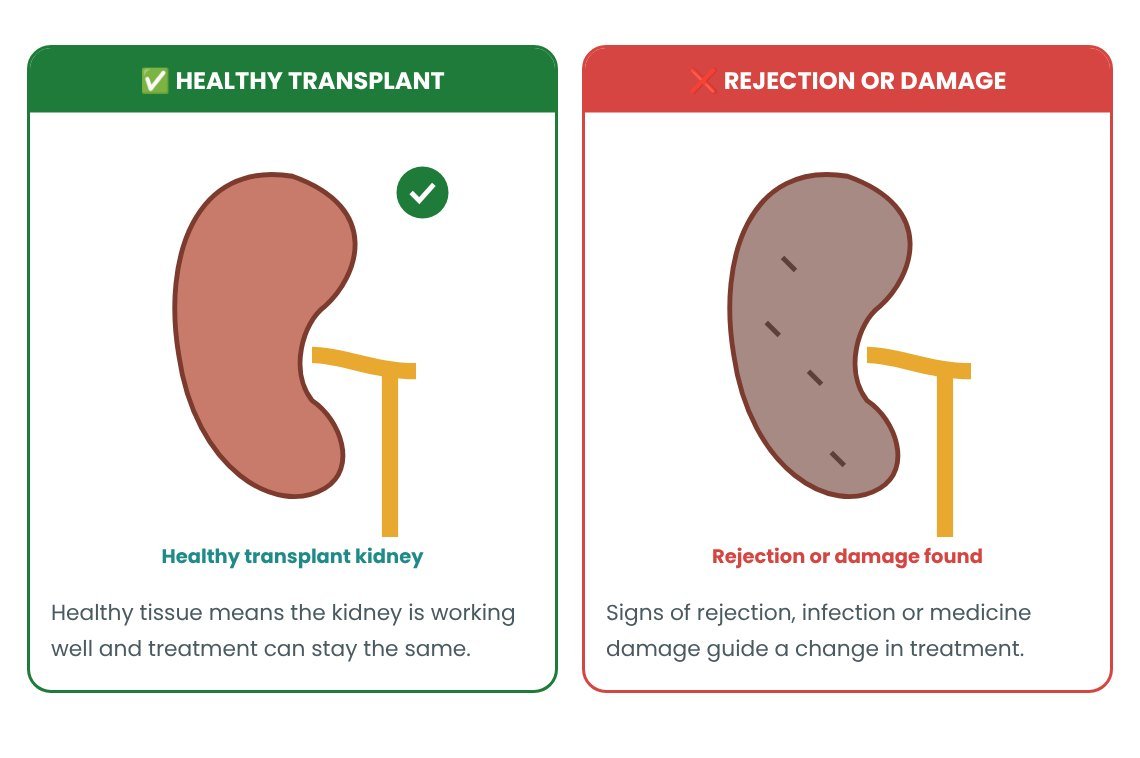
After a kidney transplant, the new kidney (the allograft) is checked with blood tests such as creatinine. If creatinine rises, protein appears in the urine or donor-specific antibodies (DSA) are found, doctors need to know why. The cause may be rejection (the body's immune system attacking the kidney), damage from anti-rejection medicines (tacrolimus or cyclosporine toxicity), a virus such as BK virus, or the original kidney disease coming back.
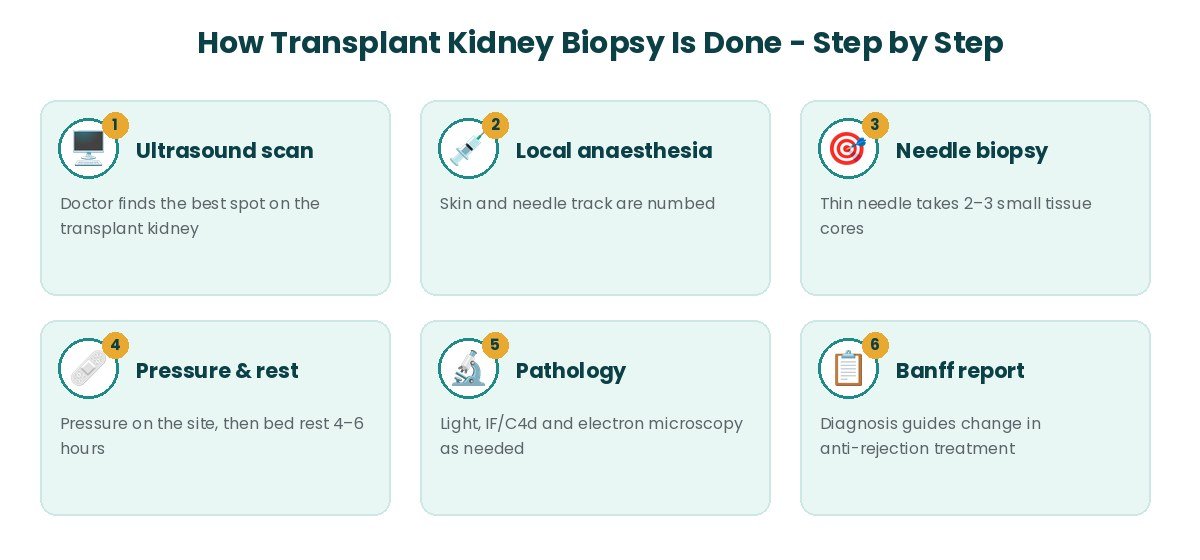
A renal allograft biopsy takes 2–3 tiny thread-like pieces of the transplanted kidney using a thin needle under ultrasound guidance. The transplant kidney lies just under the skin of the lower belly, so the biopsy is done lying on your back with local anaesthetic. A renal pathologist studies the tissue with light microscopy, special stains (such as C4d) and sometimes electron microscopy, and reports it using the international Banff classification. The result tells your doctors exactly how to change your treatment to protect the kidney.
🖼️ Understand It in Pictures
What the biopsy looks for
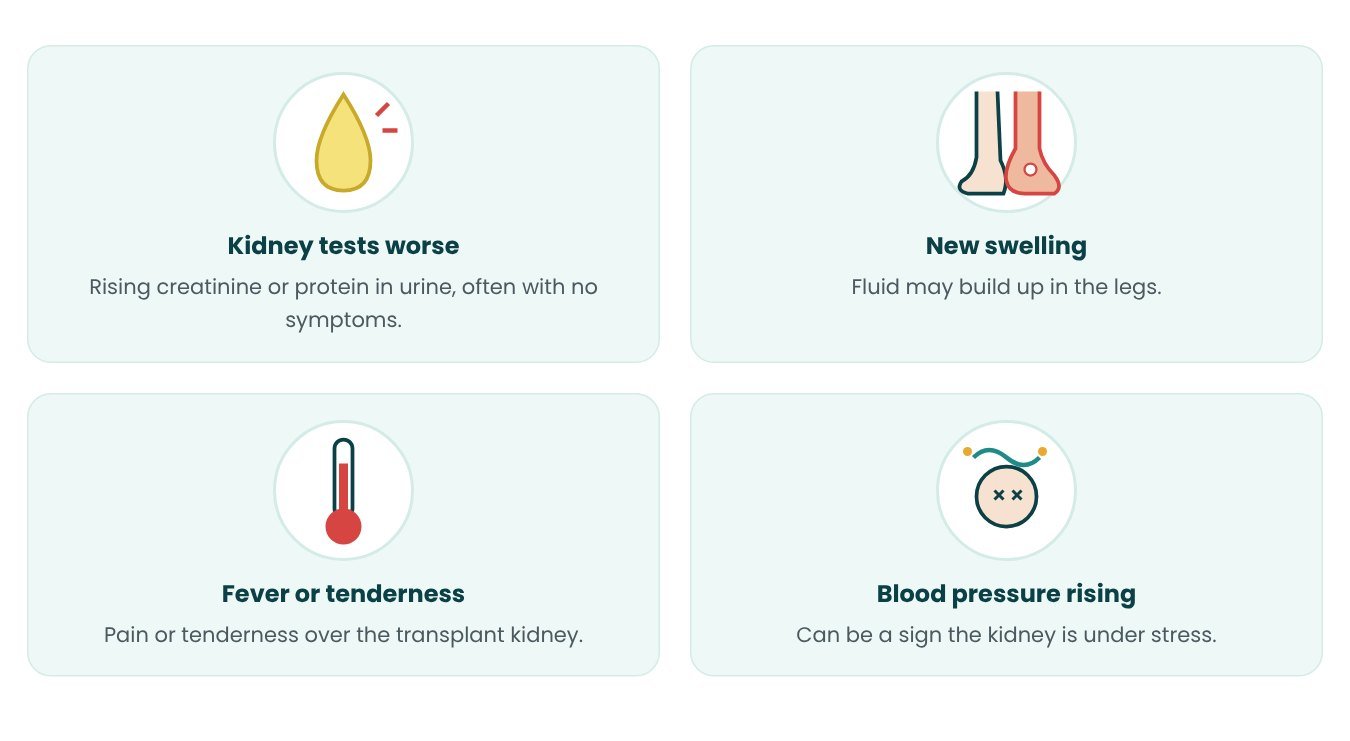
👀 Symptoms in Pictures
🩻 Scans & Tests — What Doctors See

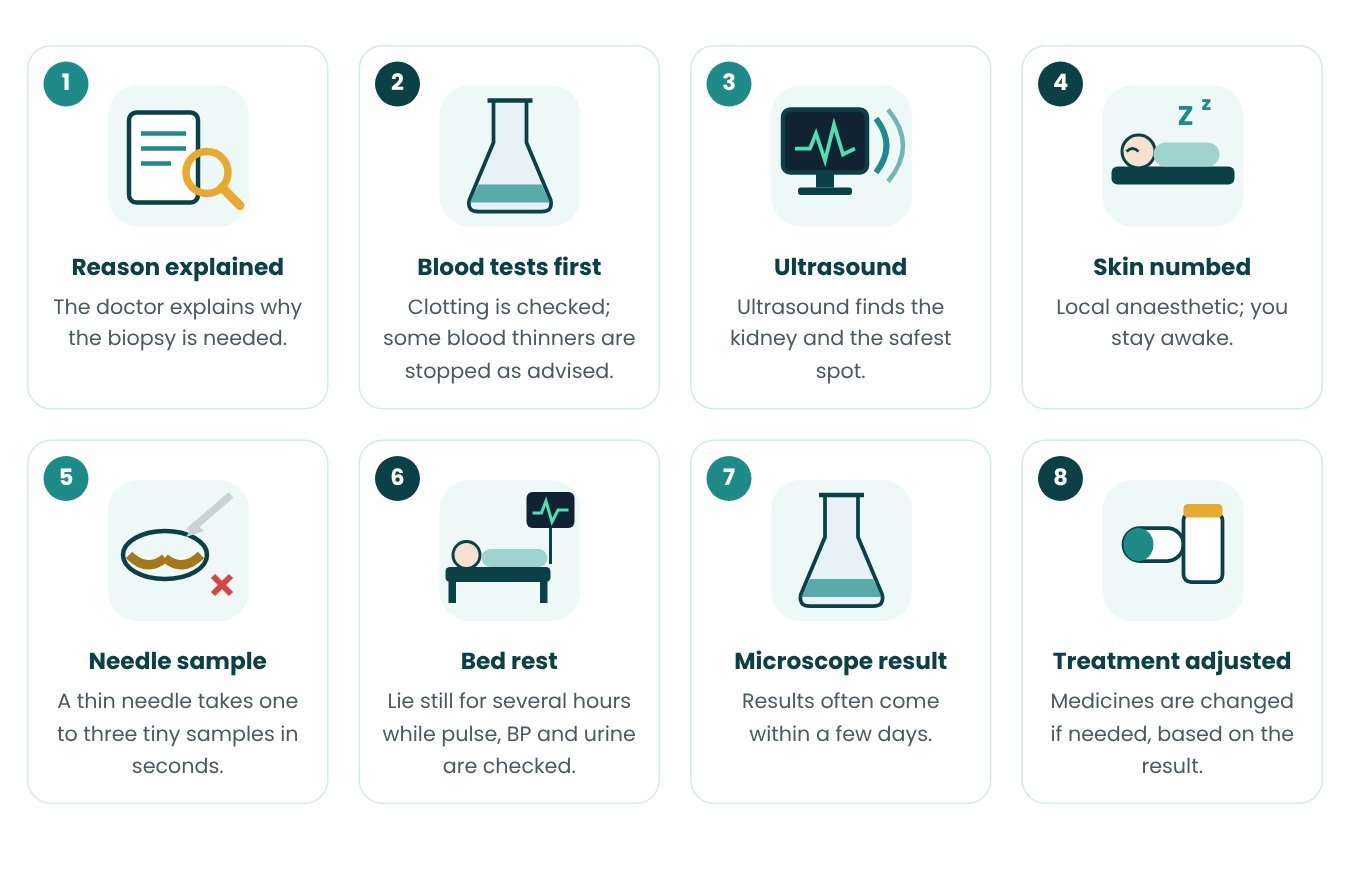
🎬 The Treatment Journey in Pictures

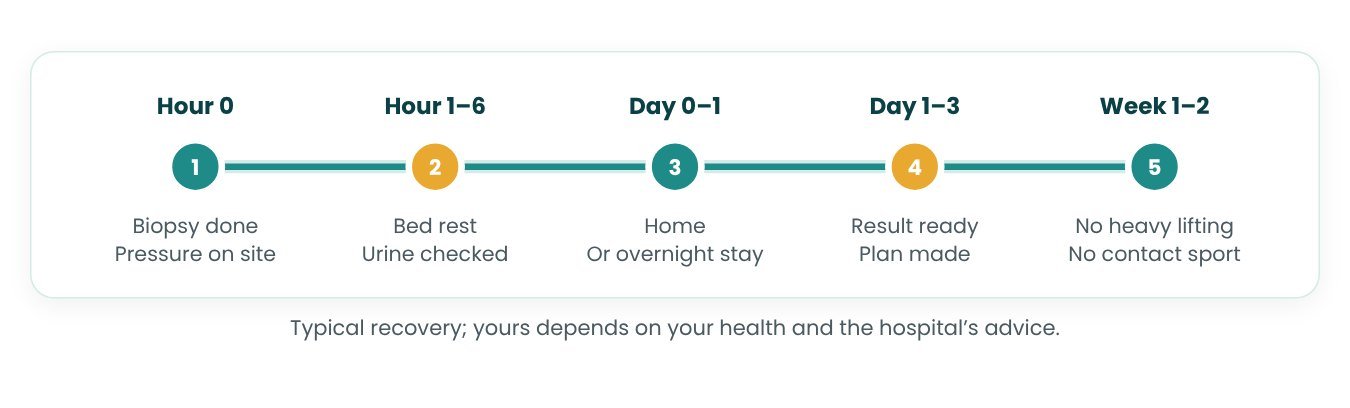
📅 Recovery at a Glance
Drawings: Satyug Healthcare (simplified, not to scale). Photos: Wikimedia Commons; author and licence under each photo.
🩺 Conditions Diagnosed
⚠️ Signs That May Need a Transplant Kidney Biopsy
- ➤Rising serum creatinine
- ➤Protein in the urine
- ➤New donor-specific antibodies (DSA)
- ➤Delayed function after transplant
- ➤Reduced urine output
- ➤Swelling of the legs or face
- ➤Raised blood pressure
- ➤Protocol (routine) check after transplant
🔬 Tests Before Treatment
| Test | Why it is done |
|---|---|
| Serum creatinine, eGFR, urine protein | Measure kidney function and protein loss |
| Tacrolimus / cyclosporine trough level | Checks for drug toxicity or under-dosing |
| Donor-specific antibody (DSA) test | Looks for antibodies that cause rejection |
| Transplant kidney Doppler ultrasound | Checks blood flow and blockage; plans the biopsy site |
| Clotting profile (PT/INR, platelets) | Ensures safe biopsy – bleeding risk check |
| BK virus and CMV PCR | Looks for viral infection of the kidney |
| Blood group & cross-match | Kept ready in case of bleeding |
🏥 The Procedure — Step by Step
⚖️ Types of Transplant Kidney Biopsy
| Type | When it is done | Purpose |
|---|---|---|
| Indication (for-cause) biopsy | When creatinine rises or protein appears | Find the cause of kidney dysfunction |
| Protocol (surveillance) biopsy | At set times, e.g. 3 or 12 months after transplant | Detect hidden (subclinical) rejection |
| Delayed graft function biopsy | When the new kidney does not work well in the first week | Separate rejection from tubular injury |
| Follow-up biopsy | After rejection treatment | Check response to treatment |
📅 Your Day-by-Day Plan in India
| Day | What happens |
|---|---|
| Day 1 | Arrival, airport pick-up, rest at hotel |
| Day 2 | Nephrology consultation, blood tests, ultrasound, drug levels |
| Day 3 | Admission and biopsy 🏥 (1 day stay in a single room) |
| Day 4 | Ultrasound check, discharge |
| Day 5–6 | Biopsy report and treatment plan with nephrologist |
| Day 7 | Start or change treatment – Fly home ✈️ (longer if rejection treatment is needed) |
🌱 Recovery After Treatment
🏆 Success Rate
| Outcome | Result |
|---|---|
| Adequate tissue for diagnosis | About 95%+ |
| Biopsy changes management | In about 40–60% of for-cause biopsies |
| Major bleeding complication | About 1% |
| Visible blood in urine (usually minor) | About 3–5% |
| Graft loss due to biopsy | Under 0.1% |
The value of the biopsy depends on a good sample and expert renal pathology. Results are best when the biopsy is done early, before scarring becomes severe, so that treatment can protect the kidney.
🩹 Risks & Possible Complications
Like any medical procedure, this treatment carries some risks. Your specialist will explain them in detail before treatment:
- •Pain at the biopsy site (mild, 1–2 days)
- •Blood in urine – about 3–5%, usually clears in 1–2 days
- •Small bleed around the kidney seen on ultrasound (often harmless)
- •Bleeding needing transfusion – about 1%
- •Arteriovenous fistula (abnormal vessel link) – usually closes by itself
- •Very rare: injury to bowel or loss of the transplant kidney
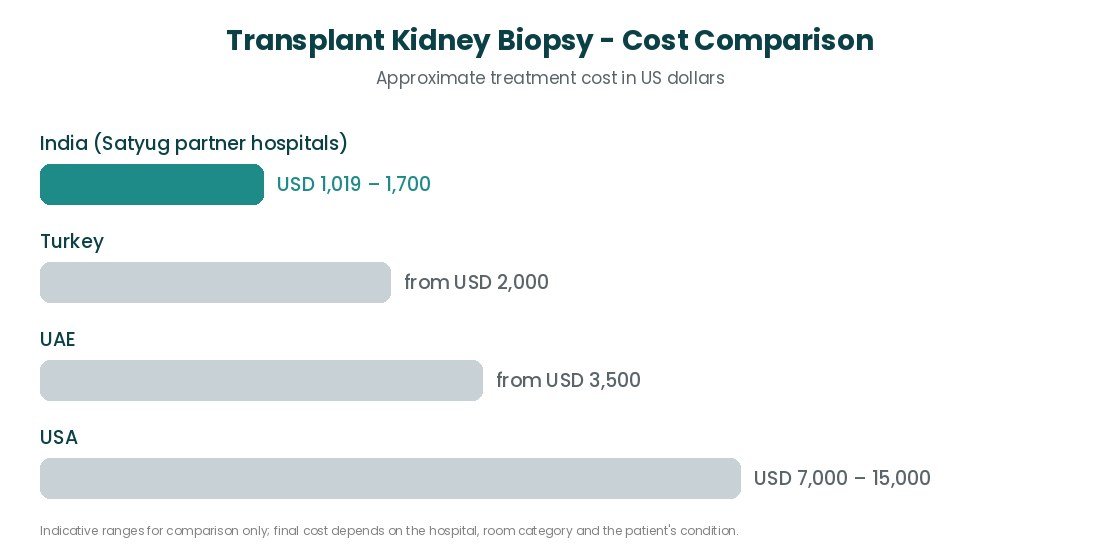
💰 Cost of Transplant Kidney Biopsy in India
The cost of a transplant kidney biopsy in India starts from about USD 1,019. This includes the nephrologist fees, ultrasound guidance, biopsy needle, a 1-day stay in a single room, and routine histopathology. Special stains, electron microscopy and treatment of rejection are extra.
| Option / Hospital tier | Approx. cost (USD) | Hospital stay | Notes |
|---|---|---|---|
| Renal allograft biopsy (this package) | from 1,019 | 1 day, single room | Ultrasound-guided, routine histopathology |
| Biopsy + C4d / IF + electron microscopy | 1,300 – 1,700 | 1 day | Full renal pathology work-up |
| Biopsy + steroid pulse for rejection | 1,800 – 2,800 | 3–4 days | IV methylprednisolone for 3 days |
| Antibody-mediated rejection treatment | 5,000 – 12,000 | 7–14 days | Plasmapheresis, IVIG, rituximab |
📋 What the Package Includes
- ✔Nephrologist / radiologist fees
- ✔Ultrasound-guided biopsy
- ✔Biopsy needle & consumables
- ✔1 day in a single room
- ✔Routine histopathology
- ✔Post-biopsy monitoring
- ✔Patient food
- ✔Discharge consultation
- ✖Electron microscopy
- ✖DSA & drug level tests
- ✖Rejection treatment
- ✖Plasmapheresis / IVIG
- ✖Extra hospital days
- ✖Flights & hotel
- ✖Attendant meals
- ✖Visa fees
✈️ Your Medical Travel Process with Satyug Healthcare

| Step | Details |
|---|---|
| 1. Send reports | Transplant details (date, donor type), latest creatinine and urine protein trend, tacrolimus or cyclosporine levels, DSA report if available, transplant kidney ultrasound, current medicine list and any previous biopsy report. |
| 2. Free opinion & quotes | Within 48-72 hours you receive opinions and cost estimates from 3-5 leading hospitals to compare. |
| 3. Choose hospital & doctor | We help you compare doctors, success rates, room options and total budget. |
| 4. Medical visa | The hospital issues a Visa Invitation Letter (VIL) to the Indian Embassy. The patient and up to 2 attendants apply for an e-Medical / Medical Attendant visa. |
| 5. Travel planning | Flight guidance, wheelchair assistance, airport pick-up, hotel or guest house near the hospital. |
| 6. Treatment in India | Your coordinator and interpreter stay with you for admission, treatment, discharge and billing. |
| 7. Return & follow-up | Fit-to-fly letter, medicines, and online follow-up with your doctor after you return home. |
🎒 Travel Checklist
- 📌Valid passport (6+ months) for the patient and attendants, plus 10 passport-size photos each
- 📌Medical visa / e-visa and the hospital’s Visa Invitation Letter
- 📌All transplant records, creatinine trend, drug levels, ultrasound and previous biopsy reports, and current prescriptions
- 📌Yellow fever vaccination certificate (mandatory for travellers from African countries)
- 📌Polio vaccination certificate where applicable
- 📌Declare cash above USD 5,000 at the airport; hospitals accept wire transfer and cards
- 📌Foreigners staying longer than permitted must register with the FRRO — our team assists
⭐ Why Choose Satyug Healthcare?
❓ Frequently Asked Questions
➤ What is the cost of a transplant kidney biopsy in India?
➤ Why do I need a biopsy if blood tests show a problem?
➤ Is the biopsy painful?
➤ How long will I stay in hospital?
➤ How long will I stay in India?
➤ When will I get the result?
➤ What are the risks?
➤ Do I need to stop my medicines?
➤ Can rejection be treated?
➤ My transplant was done in another country. Can I still come?
➤ Can an attendant come with me?
➤ What follow-up is needed after I go home?
➤ Will I have language support?
Medical disclaimer: This page is for general information and does not replace a consultation with a qualified specialist. Treatment plans and costs are confirmed only after the patient is examined. Sources: NCBI StatPearls: Renal Biopsy; Banff Classification of Allograft Pathology (2019/2022 update); KDIGO Clinical Practice Guideline for the Care of Kidney Transplant Recipients; American Journal of Transplantation biopsy complication series; National Kidney Foundation. Infographics: Satyug Healthcare.
Frequently Asked Questions
The biopsy is done under local anaesthesia with ultrasound guidance, so you feel pressure but little pain during it. Mild soreness at the biopsy site afterwards is common and usually settles within a day or two.
Transplant kidney (renal allograft) biopsy in India from USD 1,019 with 1-day stay. Ultrasound-guided, Banff pathology report, expert nephrologists, visa help.


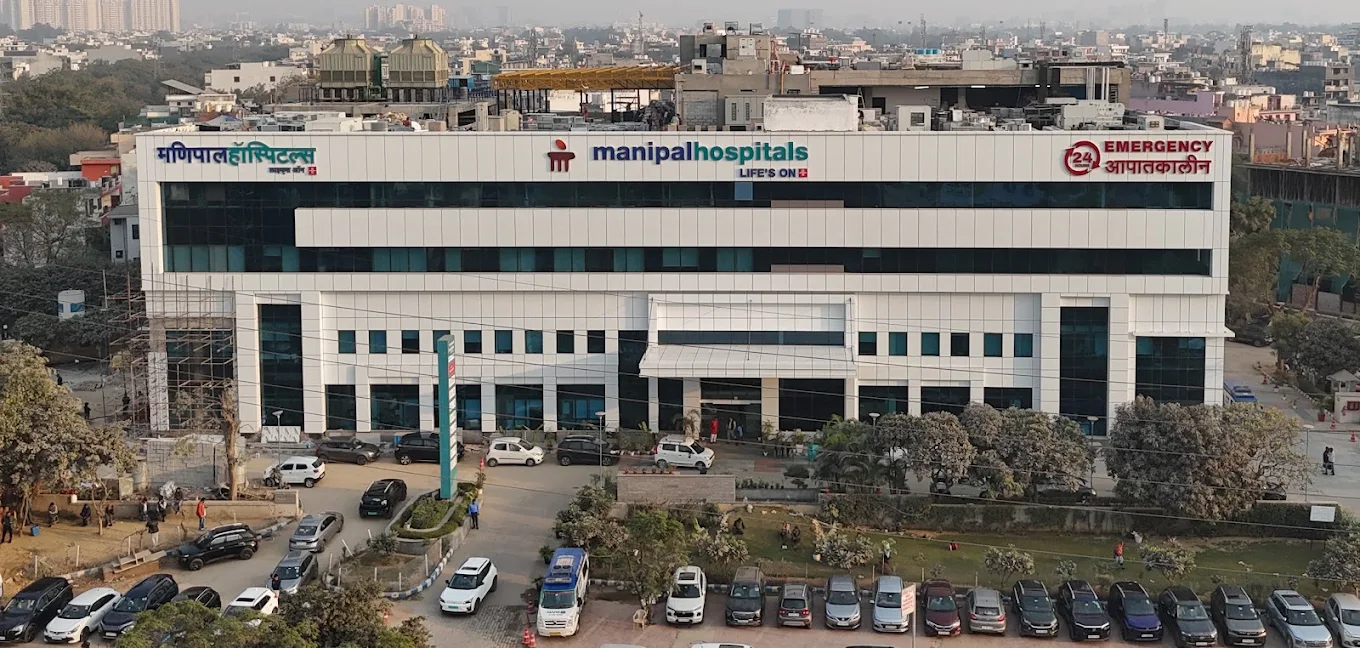
TOP HOSPITALS
Special High-quality Hospitals




HAPPY PATIENTS
What Our Patients Are Saying

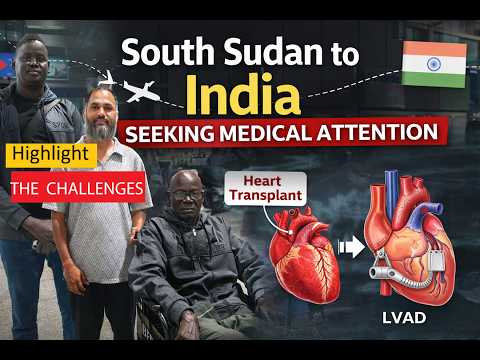


























Our Gallery



Get a Free Quote
Tell us what you need and share your medical reports. Our medical team prepares your treatment plan and cost estimate.
- Free medical opinion on your reports
- Your quote within 24–48 hours
- Help with visa invitation letter, travel and airport pickup
- Coordinators available on WhatsApp
Prefer to talk? Call +91-8860606766 or WhatsApp us.
Thank you! Your request is received.
Reference . Our medical team will send your free quote within 24–48 hours by e-mail or WhatsApp.
Chat on WhatsApp now