
PCNL Surgery Package
Assistance
Consultation
Services
Opinion
Care Coordination
What will your treatment cost?

See the cost breakdown by option, hospital and city →
| Surgery Name | Cost | Room | Hospitalization |
|---|---|---|---|
| PCNL Surgery Package | $3000 | Single | Patient - 3 days stay in a single room. |
✓ Inclusion
- ✔Consultation with a senior urologist / endourologist
- ✔Pre-anaesthesia check-up
- ✔PCNL (standard or mini) with one tract under general or spinal anaesthesia
- ✔Surgeon, assistant and anaesthetist fees
- ✔Operation theatre charges and C-arm / ultrasound guidance
- ✔Stone fragmentation (pneumatic / ultrasonic; laser as per surgeon)
- ✔DJ stent and nephrostomy tube if required
- ✔3-day hospital stay in a single room with nursing care
- ✔Standard medicines, antibiotics and consumables during the stay
- ✔Post-operative X-ray KUB or ultrasound
- ✔Meals for the patient as per hospital diet
- ✔Free: airport pick-up & drop, visa invitation letter, interpreter & coordinator (Satyug Healthcare)
✗ Exclusion
- ✖Pre-admission CT KUB, renal scan and investigations
- ✖Stone composition analysis
- ✖Second-look PCNL, RIRS or ESWL
- ✖DJ stent removal procedure (separate day-care)
- ✖Blood and blood products
- ✖ICU stay or extra days beyond the package
- ✖Treatment of unrelated illness or complications
- ✖Hotel/guest house stay, food and local transport outside the hospital
- ✖International flights, visa fees and travel insurance
Know More About Procedure & Surgery
PCNL (Percutaneous Nephrolithotomy) in India
Keyhole surgery to remove large or hard kidney stones (above 2 cm, staghorn stones) through a 1 cm cut in the back, done by experienced urologists at NABH & JCI hospitals in India – at a fraction of Gulf, UK or US prices.
📖 What is PCNL Surgery?
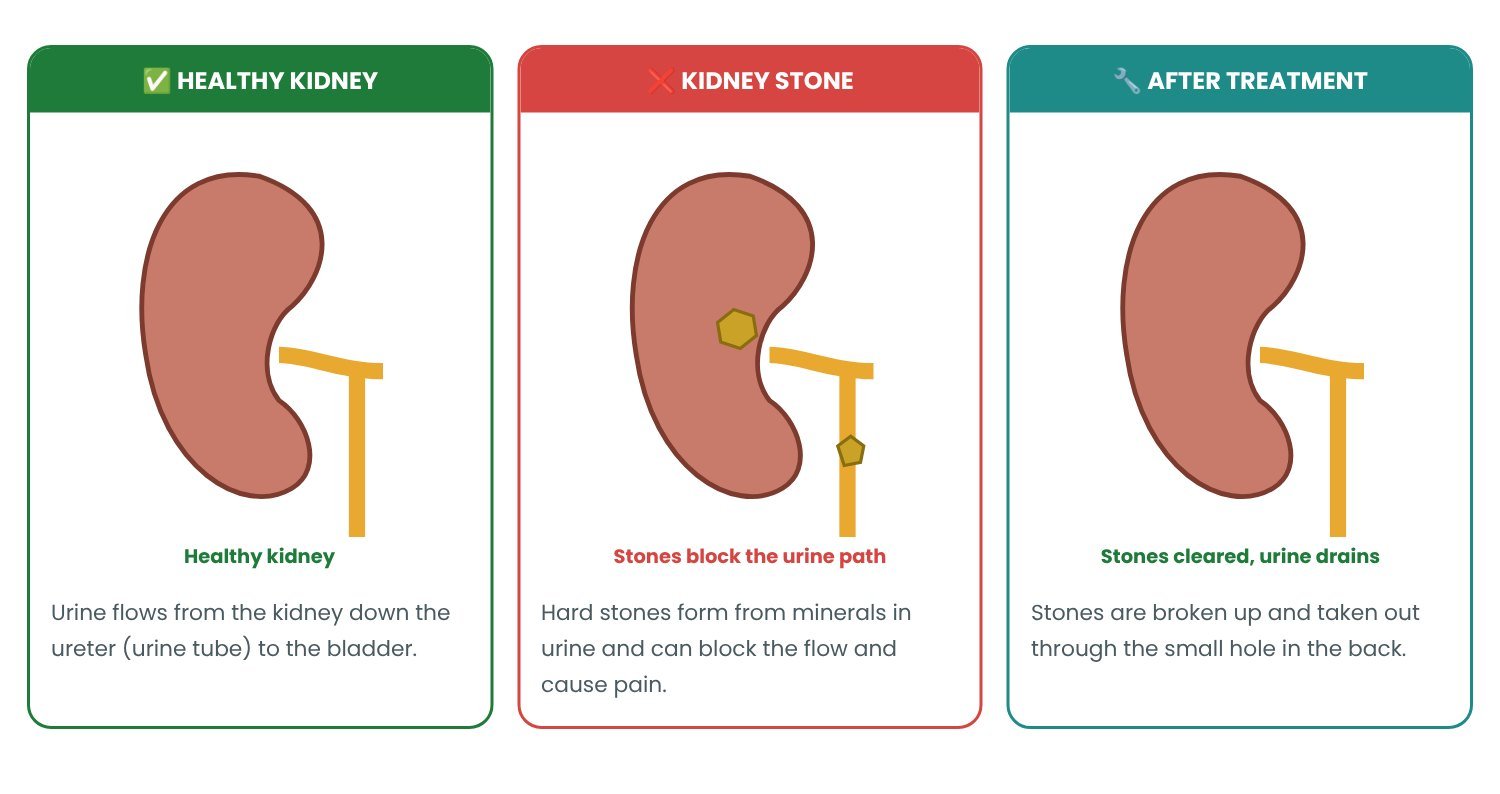
Kidney stones are hard lumps formed when minerals such as calcium, oxalate or uric acid crystallise in the urine. Small stones often pass by themselves. Large stones – usually bigger than 2 cm – or branching staghorn stones that fill the kidney cannot pass, and can cause pain, repeated infection, bleeding and slow damage to the kidney.
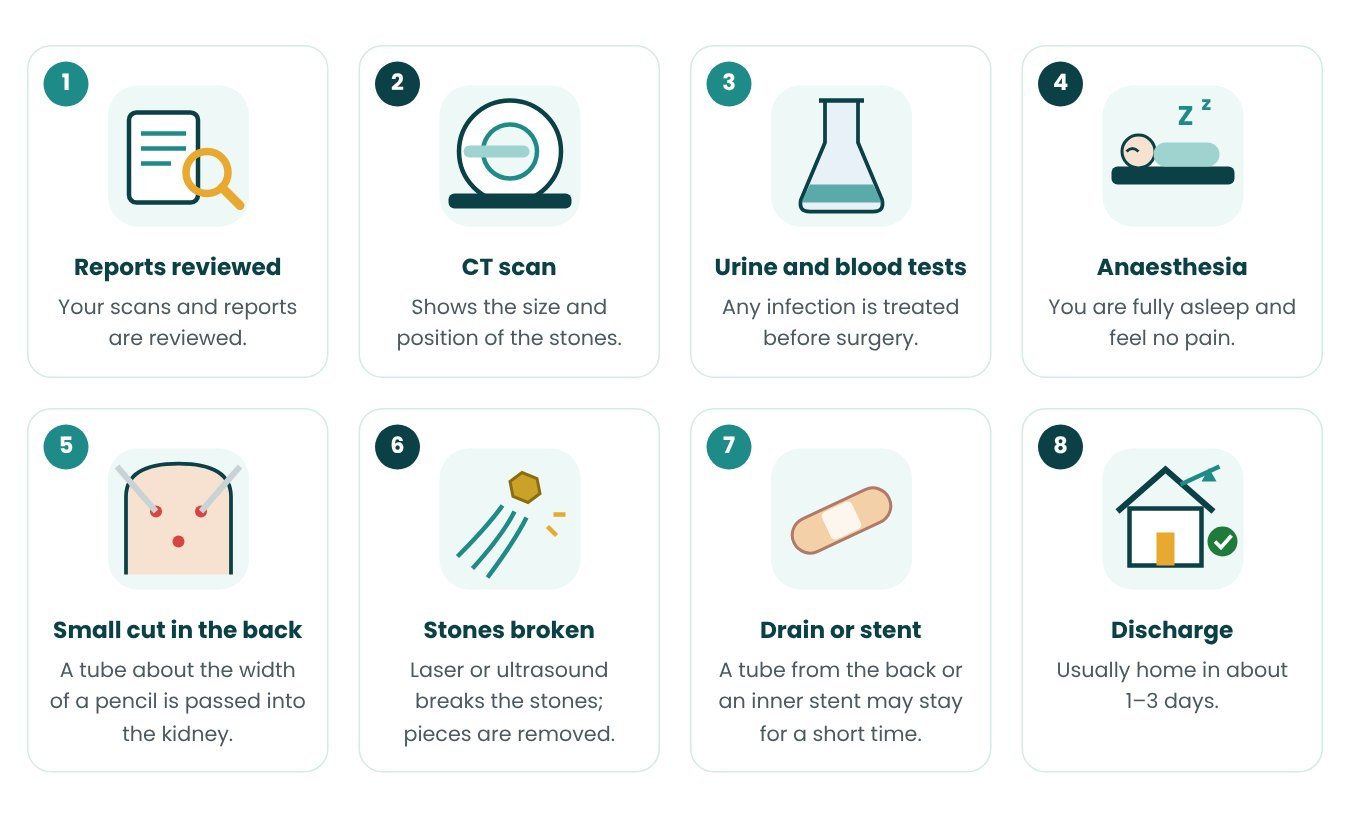
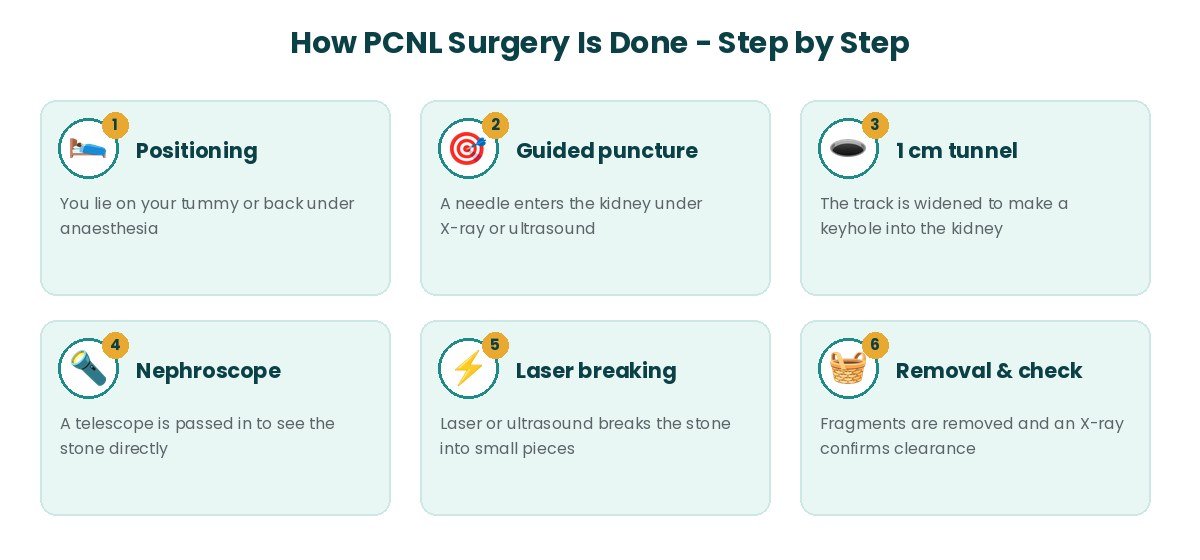
Percutaneous nephrolithotomy (PCNL) is keyhole surgery. The surgeon makes a 1 cm cut in the back, creates a narrow tunnel straight into the kidney under X-ray or ultrasound guidance, breaks the stone with a laser or ultrasonic probe, and removes the pieces. It is the recommended first treatment for kidney stones above 2 cm by the European and American urology associations. Mini-PCNL uses an even thinner tunnel.
🖼️ Understand It in Pictures
Healthy kidney vs kidney stone, and after PCNL
👀 Symptoms in Pictures
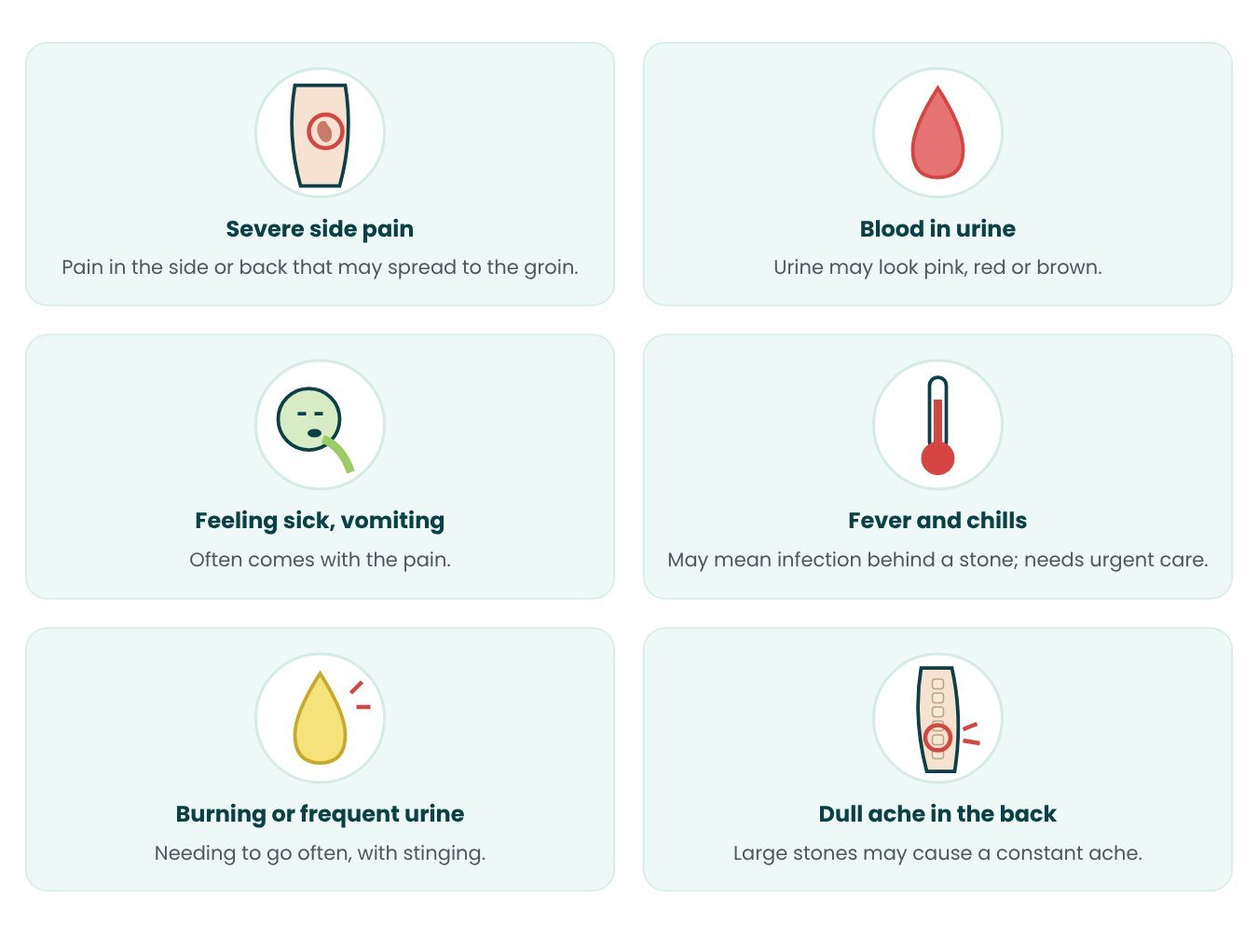
🩻 Scans & Tests — What Doctors See

🎬 The Treatment Journey in Pictures
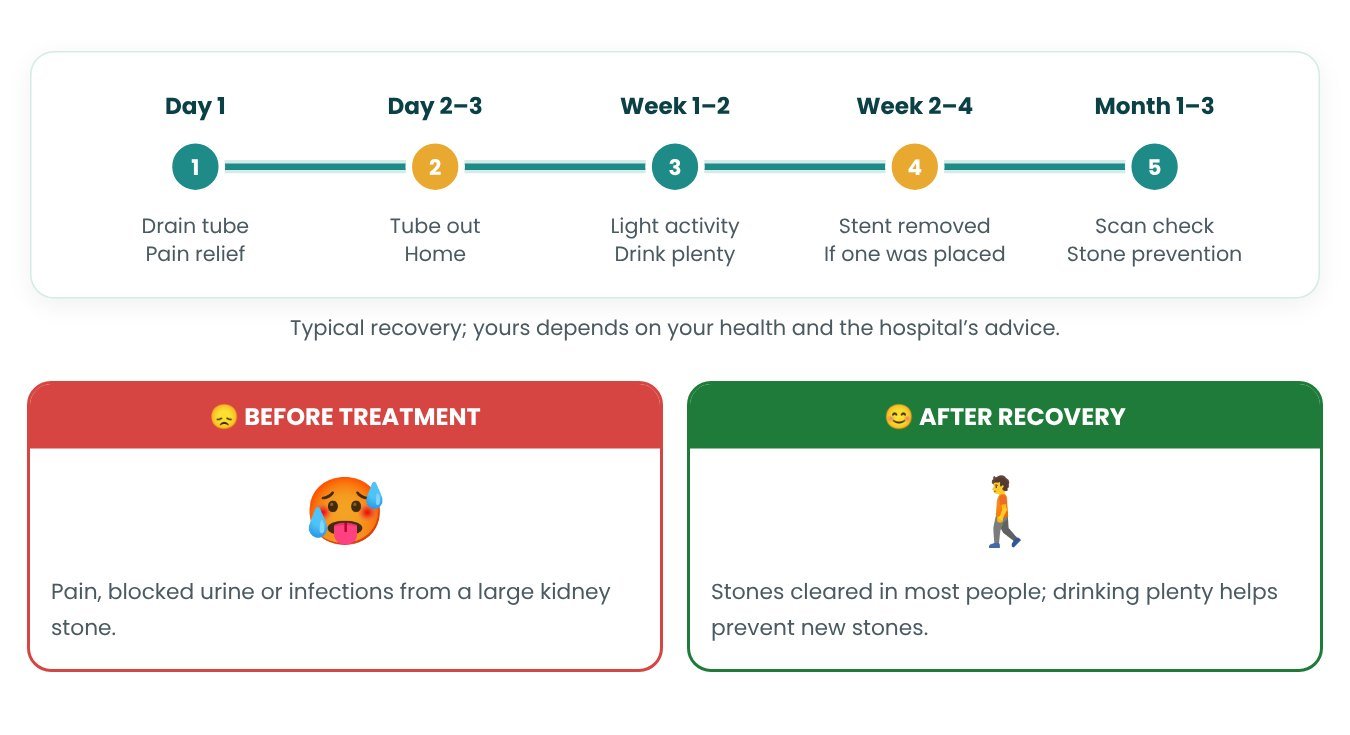
📅 Recovery at a Glance
Drawings: Satyug Healthcare (simplified, not to scale). Photos: Wikimedia Commons; author and licence under each photo.
🩺 Conditions Treated
⚠️ Symptoms That May Need Treatment
- ➤Severe pain in the back or side
- ➤Pain spreading to the groin
- ➤Blood in the urine
- ➤Repeated urine infections
- ➤Fever with chills and flank pain
- ➤Nausea and vomiting
- ➤Burning or frequent urination
- ➤Swollen kidney on scan
🔬 Tests Before Treatment
| Test | Why it is done |
|---|---|
| Non-contrast CT KUB | Gold-standard scan showing exact stone size, number, position and hardness (HU). |
| Ultrasound KUB | Checks kidney swelling (hydronephrosis) and guides the puncture. |
| Urine routine and culture | Infection must be treated with antibiotics before surgery. |
| Kidney function (creatinine, urea) | Shows how well both kidneys are working. |
| Blood count and clotting tests | Check fitness and bleeding risk. |
| DTPA / DMSA renal scan (if needed) | Measures how much each kidney works when one kidney is badly affected. |
| ECG, chest X-ray, anaesthesia check | Confirms fitness for general or spinal anaesthesia. |
🏥 The Procedure — Step by Step
⚖️ Types & Techniques
| Technique | What is done | Best for |
|---|---|---|
| Standard PCNL | 24–30 Fr tunnel with ultrasonic or pneumatic lithotripsy | Very large and staghorn stones |
| Mini-PCNL | 14–20 Fr tunnel, usually with holmium laser | Stones 1.5–3 cm; less bleeding |
| Ultra-mini / micro PCNL | Very thin tract under 13 Fr | Smaller stones, children |
| Tubeless PCNL | No nephrostomy tube, only an internal stent | Uncomplicated cases; less pain, faster discharge |
| ECIRS (combined) | PCNL plus flexible ureteroscopy at the same time | Complex stones spread across the kidney |
📅 Your Day-by-Day Plan in India
| Day | What happens |
|---|---|
| Day 1 | Arrival in India, airport pick-up, hotel check-in |
| Day 2 | Urologist consultation, CT KUB, blood and urine tests |
| Day 3 | Admission and PCNL surgery (hospital day 1) |
| Day 4 | Walking, drain/catheter review (hospital day 2) |
| Day 5 | Check X-ray/ultrasound, discharge (hospital day 3) |
| Day 6–9 | Rest at hotel, follow-up visit, stent removal if planned |
| Day 10 | Fly home ✈️ |
🌱 Recovery After Treatment
🏆 Success Rate
| Outcome | Result |
|---|---|
| Stone-free after one session (stones over 2 cm) | About 75–90% |
| Stone-free including second look | About 90–95% |
| Staghorn stone clearance | About 70–85% in one stage |
| Need for blood transfusion | About 2–7% |
| Return to normal activity | About 1–2 weeks |
Results depend on stone size, hardness and spread, kidney anatomy and the surgeon's experience. Very large staghorn stones sometimes need a second sitting to clear completely.
🩹 Risks & Possible Complications
Like any medical procedure, this treatment carries some risks. Your specialist will explain them in detail before treatment:
- •Blood in urine for a few days – common and usually settles
- •Fever or urine infection – about 10–20%; serious infection (sepsis) about 0.5–1%
- •Bleeding needing transfusion – about 2–7%; embolisation rarely needed (under 1%)
- •Residual stone fragments needing another procedure – about 10–20%
- •Urine leak from the puncture site – usually stops in 1–2 days
- •Injury to the lung lining, bowel or spleen – rare (under 1–2%)
- •Loss of the kidney – extremely rare
💰 Cost of PCNL Surgery in India
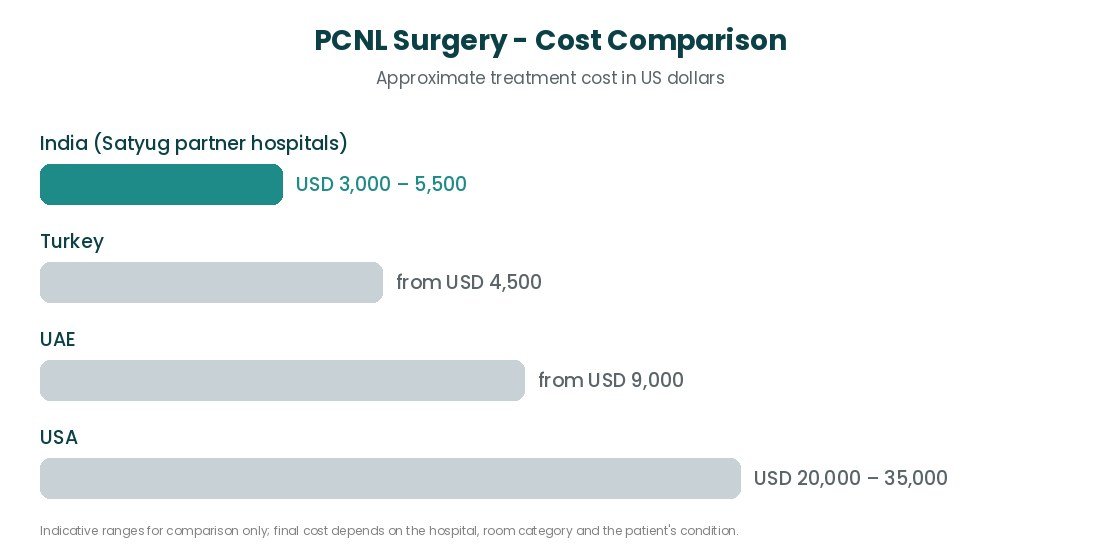
The cost of PCNL surgery in India starts from about USD 3,000 in a single room. This includes surgery, anaesthesia, the surgeon's fee, a 3-day hospital stay, standard medicines and consumables, and routine post-operative tests. Price varies with stone complexity, laser use, the number of tracts and the hospital.
| Option / Hospital tier | Approx. cost (USD) | Hospital stay | Notes |
|---|---|---|---|
| PCNL – this package (Single room) | 3,000 | 3 days | Standard or mini-PCNL, one tract |
| Mini-PCNL with holmium laser | 3,000 – 3,800 | 2–3 days | Less bleeding, often tubeless |
| Complex / staghorn PCNL (multiple tracts) | 3,800 – 5,000 | 3–5 days | May need a second-look procedure |
| Premium hospital (Tier-1 metro) | 4,000 – 5,500 | 3 days | Top-brand hospitals in Delhi NCR, Mumbai |
📋 What the Package Includes
- ✔Urologist's surgical fee
- ✔Anaesthesia and OT charges
- ✔3-day stay in a single room
- ✔Standard medicines and consumables
- ✔DJ stent and nephrostomy tube
- ✔Post-op X-ray / ultrasound
- ✔Nursing and meals for the patient
- ✔Airport pick-up, visa letter & interpreter
- ✖Pre-op CT KUB and tests
- ✖Stone analysis
- ✖Second-look PCNL
- ✖Stent removal (separate day-care)
- ✖Blood transfusion
- ✖Extra ICU or hospital days
- ✖Hotel stay outside hospital
- ✖Flights and visa fees
✈️ Your Medical Travel Process with Satyug Healthcare

| Step | Details |
|---|---|
| 1. Send reports | Recent non-contrast CT KUB (with images), ultrasound KUB, urine culture, serum creatinine, and details of any previous stone treatment (ESWL, ureteroscopy, PCNL). |
| 2. Free opinion & quotes | Within 48-72 hours you receive opinions and cost estimates from 3-5 leading hospitals to compare. |
| 3. Choose hospital & doctor | We help you compare doctors, success rates, room options and total budget. |
| 4. Medical visa | The hospital issues a Visa Invitation Letter (VIL) to the Indian Embassy. The patient and up to 2 attendants apply for an e-Medical / Medical Attendant visa. |
| 5. Travel planning | Flight guidance, wheelchair assistance, airport pick-up, hotel or guest house near the hospital. |
| 6. Treatment in India | Your coordinator and interpreter stay with you for admission, treatment, discharge and billing. |
| 7. Return & follow-up | Fit-to-fly letter, medicines, and online follow-up with your doctor after you return home. |
🎒 Travel Checklist
- 📌Valid passport (6+ months) for the patient and attendants, plus 10 passport-size photos each
- 📌Medical visa / e-visa and the hospital’s Visa Invitation Letter
- 📌All CT KUB / ultrasound reports, scans on CD / link, kidney function and urine culture reports, and prescriptions
- 📌Yellow fever vaccination certificate (mandatory for travellers from African countries)
- 📌Polio vaccination certificate where applicable
- 📌Declare cash above USD 5,000 at the airport; hospitals accept wire transfer and cards
- 📌Foreigners staying longer than permitted must register with the FRRO — our team assists
⭐ Why Choose Satyug Healthcare?
❓ Frequently Asked Questions
➤ What is the cost of PCNL in India?
➤ How long is the hospital stay?
➤ How long should I stay in India?
➤ Is PCNL painful?
➤ Is PCNL better than ESWL or RIRS?
➤ What is the success rate?
➤ Will I have a stent or tube?
➤ When can I return to work?
➤ What are the main risks?
➤ Can children have PCNL?
➤ Can my stones come back?
➤ Can a family member come with me?
➤ What reports should I send?
➤ What follow-up is needed at home?
Medical disclaimer: This page is for general information and does not replace a consultation with a qualified specialist. Treatment plans and costs are confirmed only after the patient is examined. Sources: EAU Guidelines on Urolithiasis (2024); AUA Surgical Management of Stones Guideline (2016, amended); NCBI StatPearls: Percutaneous Nephrolithotomy; CROES PCNL Global Study (de la Rosette et al., J Endourol 2011); Mayo Clinic – Kidney stones; NHS – Kidney stones. Infographics: Satyug Healthcare.
PCNL surgery in India from USD 3,000. Keyhole removal of large and staghorn kidney stones, 85–95% stone-free rates, 3-day stay, free opinion & visa help.


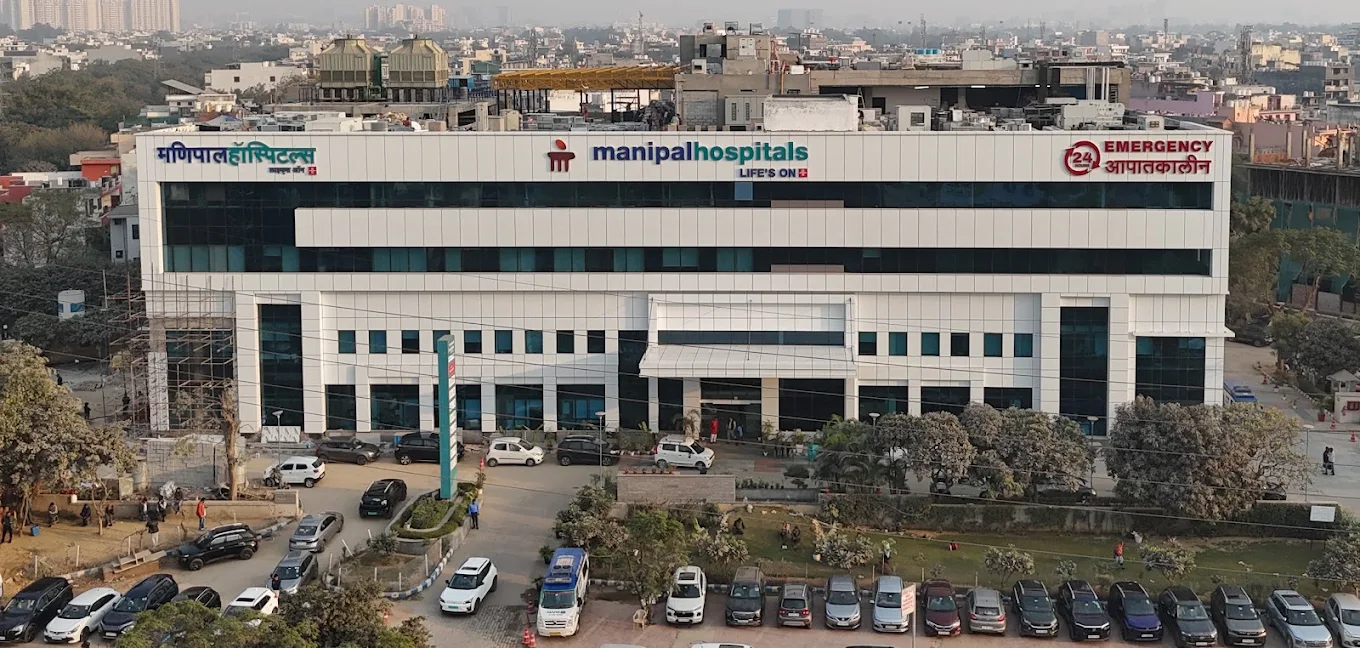
TOP HOSPITALS
Special High-quality Hospitals


HAPPY PATIENTS
What Our Patients Are Saying
























Our Gallery



Get a Free Quote
Tell us what you need and share your medical reports. Our medical team prepares your treatment plan and cost estimate.
- Free medical opinion on your reports
- Your quote within 24–48 hours
- Help with visa invitation letter, travel and airport pickup
- Coordinators available on WhatsApp
Prefer to talk? Call +91-8860606766 or WhatsApp us.
Thank you! Your request is received.
Reference . Our medical team will send your free quote within 24–48 hours by e-mail or WhatsApp.
Chat on WhatsApp now