Assistance
Consultation
Services
Opinion
Care Coordination
What will your treatment cost?
Spinal Muscular Atrophy (SMA): Causes, Types, Symptoms, Treatment and Cost in India
Released Date: 2026-10-08
Spinal muscular atrophy (SMA) is a rare inherited disease that causes progressive muscle weakness and wasting. It affects the motor neurons - the nerve cells in the spinal cord that control muscles used for crawling, walking, sitting, head control, breathing and swallowing. SMA is one of the leading genetic causes of death in infancy, and families in the Middle East, North Africa, Central Asia and South Asia are at particular risk where marriages between relatives are common. Until recently, care was only supportive. Today the outlook has changed dramatically: new disease-modifying medicines and gene therapy can slow or halt progression, especially when started early, and expert multidisciplinary care can greatly improve quality of life. India has specialised neuromuscular clinics, genetic laboratories and paediatric orthopaedic teams caring for children and adults with SMA.
What is Spinal Muscular Atrophy?
SMA is most commonly caused by a missing or faulty SMN1 gene on chromosome 5. This gene makes the survival motor neuron (SMN) protein, which motor neurons need to survive. Without enough SMN protein, motor neurons gradually die and muscles weaken. A similar back-up gene, SMN2, makes small amounts of functional protein. The number of SMN2 copies a person has strongly influences how severe their SMA is - more copies usually mean milder disease. SMA does not affect intelligence; children with SMA are often bright and sociable.
Types of SMA
- SMA Type 0 - the rarest and most severe form, starting before birth, with severe weakness and breathing problems at birth.
- SMA Type 1 (Werdnig-Hoffmann disease) - the most common type, beginning before 6 months of age. Babies never sit without support and develop breathing and swallowing difficulties. Without treatment, survival is often limited to the first two years.
- SMA Type 2 - onset between 6 and 18 months. Children can sit but never walk independently. Scoliosis and breathing problems are common.
- SMA Type 3 (Kugelberg-Welander disease) - onset after 18 months. Children learn to walk but may lose this ability over time.
- SMA Type 4 - adult onset with mild weakness and normal life expectancy.
🖼️ Understand It in Pictures
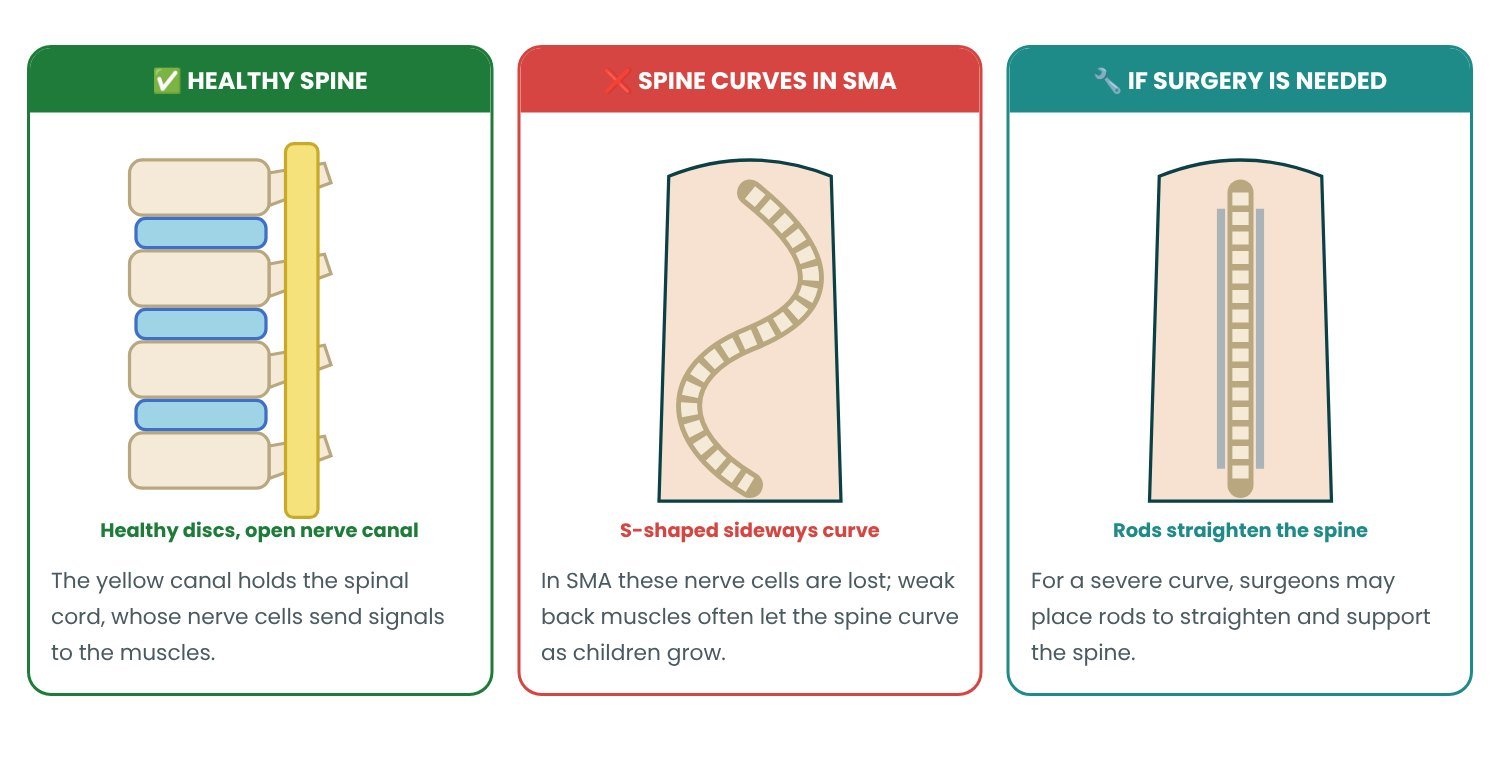
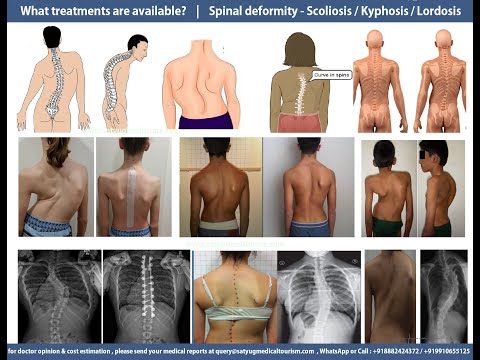
The spinal cord and the back in SMA
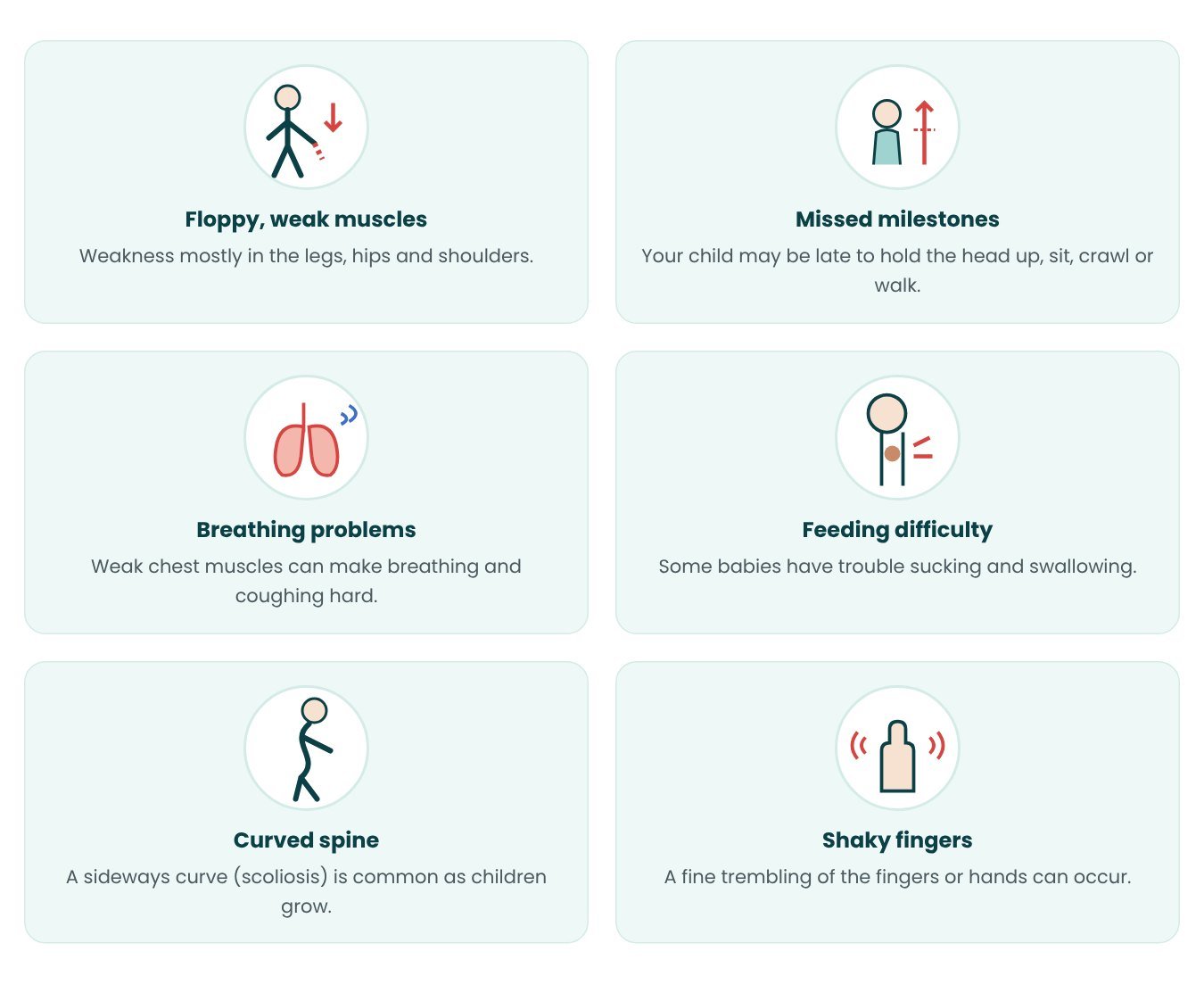
👀 Symptoms in Pictures
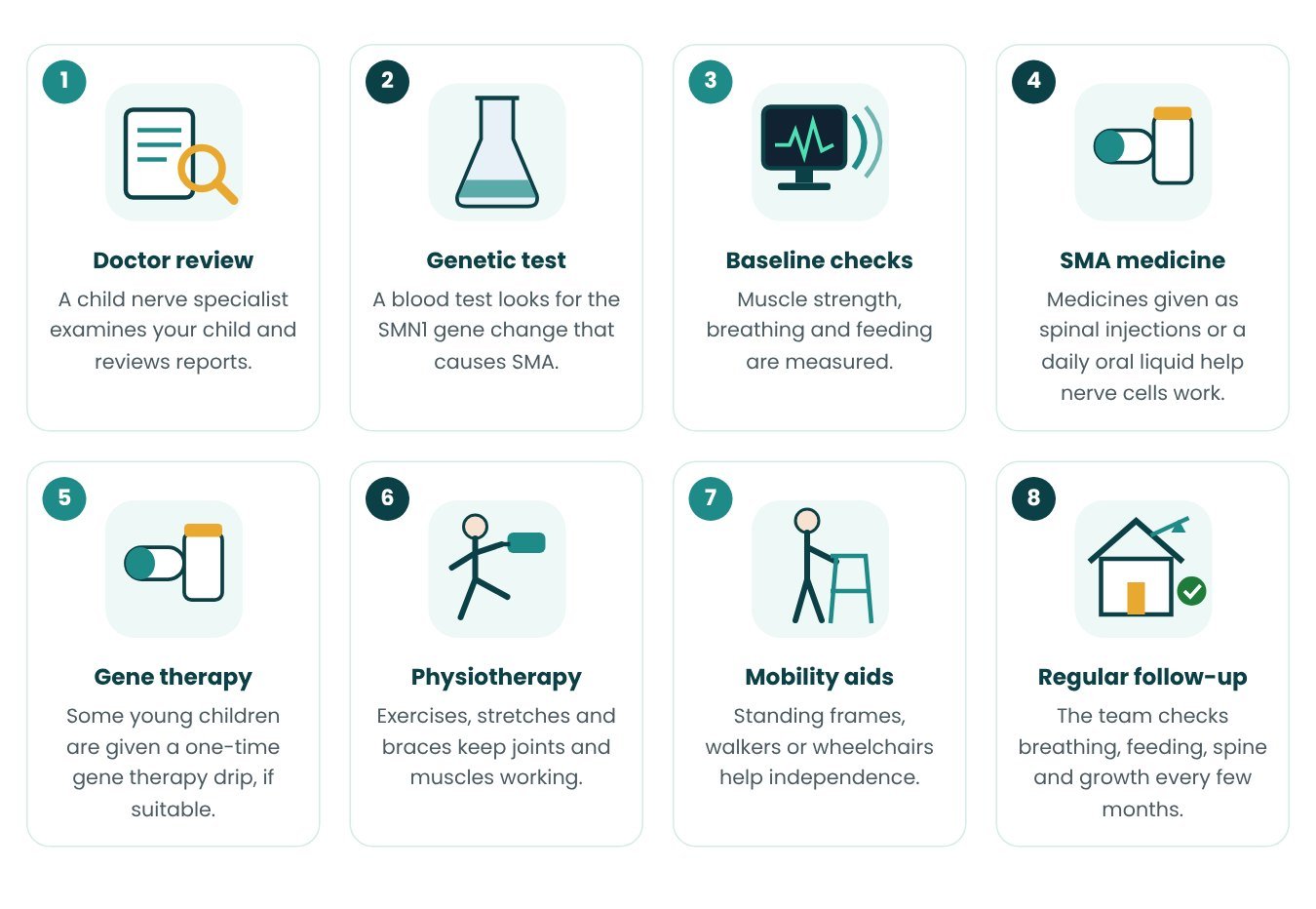
🎬 The Treatment Journey in Pictures
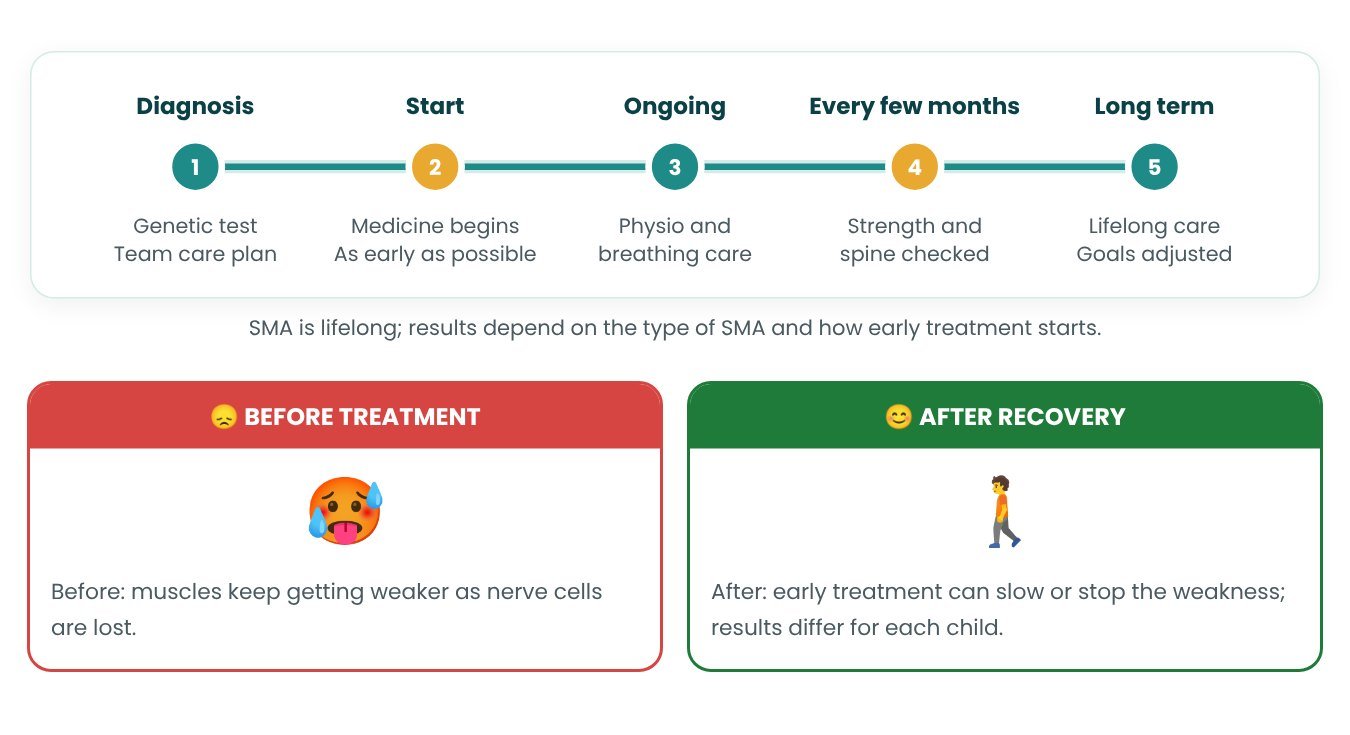
📅 Recovery at a Glance
Causes and Risk Factors
SMA is inherited in an autosomal recessive pattern. A child develops SMA when they inherit a faulty SMN1 gene from both parents. Parents who each carry one faulty copy (carriers) usually have no symptoms, and each pregnancy carries a 25% chance of an affected child.
- Carrier parents - carriers are relatively common in all populations.
- Consanguineous (cousin) marriages - common in parts of the Middle East, North Africa, Pakistan and India - increase the chance that both parents carry the same faulty gene.
- Family history of SMA or of unexplained infant deaths with weakness or breathing problems.
Symptoms of SMA
- Floppy baby (hypotonia), with weak arms and legs, often more in the legs.
- Poor head control and delayed or lost motor milestones such as sitting, crawling or walking.
- Tongue fasciculations (fine quivering) and hand tremor.
- Weak cry and cough, difficulty feeding and swallowing.
- Bell-shaped chest and belly breathing.
- Frequent falls, difficulty climbing stairs or getting up from the floor in milder types.
- Later problems such as scoliosis, joint contractures and hip dislocation.
Warning signs needing urgent care
- Fast or laboured breathing, pauses in breathing or bluish lips.
- Choking, coughing during feeds or poor weight gain.
- Chest infections - children with SMA can become very unwell quickly and need early treatment.
Diagnosis
- Genetic testing - a blood test (MLPA or quantitative PCR) confirms deletion of the SMN1 gene in about 95% of patients and counts SMN2 copies. This is the key test.
- Sequencing of SMN1 when only one copy is deleted and the other may carry a point mutation.
- Carrier testing for parents and relatives.
- Prenatal diagnosis (chorionic villus sampling or amniocentesis) and pre-implantation genetic testing (PGT) with IVF for future pregnancies.
- Newborn screening - available in some countries and private programmes, allowing treatment before symptoms appear.
- Electromyography (EMG) and muscle biopsy are rarely needed today.
Treatment Options for SMA
Disease-modifying therapies
Three approved treatments target the genetic cause. Results are best when treatment starts as early as possible, ideally before symptoms appear.
- Nusinersen (Spinraza) - an antisense oligonucleotide given by lumbar puncture (spinal injection). After four loading doses it is repeated every four months for life. It helps the SMN2 gene make more functional protein.
- Risdiplam (Evrysdi) - an oral liquid taken once daily at home that also increases SMN protein from the SMN2 gene. It is approved for infants and adults and is available in India.
- Onasemnogene abeparvovec (Zolgensma) - a one-time intravenous gene therapy that delivers a working copy of the SMN1 gene. It is approved for young children (age and weight criteria vary by country) and is one of the most expensive medicines in the world; access is usually through special programmes.
The choice depends on the child's age, type, weight, SMN2 copies, availability and cost. Indian specialists can guide families on eligibility and access programmes.
Supportive and multidisciplinary care
- Respiratory care - cough-assist devices, chest physiotherapy, non-invasive ventilation (BiPAP) during sleep, vaccinations against flu and pneumococcus.
- Nutrition - feeding assessment and, when needed, a gastrostomy tube to ensure safe feeding and growth.
- Physiotherapy and occupational therapy - stretching, positioning, standing frames, braces and powered wheelchairs.
- Orthopaedic care - monitoring and treatment of scoliosis, contractures and hip problems.
Scoliosis surgery in SMA
Most children with SMA Type 2, and many with Type 3, develop scoliosis that can worsen sitting balance and breathing. Young children may receive growing rods or magnetically controlled rods that are lengthened as the child grows; older children and teenagers may undergo definitive spinal fusion. Surgeons can leave access windows in the spine to allow continued nusinersen injections. Learn more about our spinal fusion surgery package.
Cost of SMA Diagnosis and Treatment in India
Approximate starting costs at JCI/NABH-accredited hospitals in Delhi/NCR:
| Treatment / Service | Approximate Cost (USD, starting from) | Hospital Stay |
|---|---|---|
| SMN1/SMN2 genetic test (MLPA) with genetic counselling | $150 - $300 | Outpatient |
| Comprehensive neuromuscular evaluation (neurology, pulmonology, orthopaedics, nutrition) | $500 - $1,000 | Outpatient / 1 - 2 days |
| Nusinersen injection administration (procedure charges, excluding drug) | $300 - $600 per dose | Day care |
| Scoliosis correction with growing rods | $9,000 - $13,000 | 7 - 10 days |
| Scoliosis correction with spinal fusion | $10,000 - $15,000 | 7 - 12 days |
| Intensive rehabilitation programme (per month) | $1,000 - $2,000 | Outpatient |
Disease-modifying drugs are priced separately and vary according to the manufacturer, dose, weight of the patient and any access or assistance programme; our team can obtain current quotations. Final cost depends on the patient's condition and hospital chosen. Contact Satyug Healthcare at +91-8860606766 / +91-9910655125 (WhatsApp) for a free medical opinion and cost estimate.
Living with SMA
With modern treatment, many children with SMA are reaching milestones that were once thought impossible, such as sitting, standing and, in some pre-symptomatic cases, walking. Life with SMA involves regular follow-up with a neuromuscular team, usually every few months.
- Do daily stretching and positioning to prevent contractures.
- Use respiratory equipment as advised and treat chest infections early.
- Maintain a healthy weight - both under- and over-nutrition are harmful.
- Support education and social life; children with SMA usually have normal or above-average intelligence.
- Prepare an emergency care plan and carry medical records when travelling.
Prevention
SMA can be prevented in future pregnancies through carrier screening for couples, especially in consanguineous marriages, and through prenatal diagnosis or IVF with pre-implantation genetic testing (PGT-M) for couples who are known carriers.
Bone health also matters: children with SMA are prone to low bone density and fractures, so vitamin D, calcium and regular bone health checks are part of routine follow-up. Teenagers and adults benefit from transition planning to adult neuromuscular services.
Why Choose India for SMA Care?
- Experienced paediatric neurologists and neuromuscular specialists.
- Advanced genetic laboratories offering fast, affordable diagnosis and carrier testing.
- Skilled paediatric spine surgeons for complex scoliosis in neuromuscular disease.
- Integrated respiratory, nutrition and rehabilitation services at a fraction of Western costs.
Step-by-Step Process to Travel to India for Treatment
- Share your reports - send your latest reports, scans/CD, angiography or echo films and passport copy to Satyug Healthcare on WhatsApp (+91-8860606766 / +91-9910655125) or email.
- Free medical opinion & cost estimate - within 24-72 hours we share opinions and written cost estimates from 2-3 JCI/NABH-accredited hospitals and specialists.
- Choose hospital & doctor - compare doctor experience, hospital, room category and total cost; we help you decide with no extra charge.
- Visa Invitation Letter (VIL) - the hospital issues a VIL for the patient and up to two attendants; we arrange it within 24-48 hours.
- Apply for Indian e-Medical Visa - apply online for the e-Medical Visa (patient) and e-Medical Attendant Visa (family) using the VIL; most approvals come in 3-5 working days.
- Book flights & accommodation - we suggest flights and arrange a guest house, service apartment or hotel near the hospital to suit your budget.
- Free airport pickup - our representative receives you at the airport and takes you to your hotel or directly to the hospital.
- Hospital admission & treatment - a dedicated coordinator and language interpreter stay with you for registration, tests, doctor consultations, the procedure and billing.
- Discharge & follow-up - you receive the discharge summary, prescriptions and fitness-to-fly certificate; follow-up checks are done before you fly.
- Return home & tele-follow-up - we arrange airport drop and stay connected for online follow-up consultations with your doctor in India.
Frequently Asked Questions
Is SMA curable?
There is no complete cure yet, but disease-modifying treatments can stop or slow progression and improve motor function, especially when started early.
Which SMA treatment is best?
No single treatment is best for everyone. The choice depends on the child's age, weight, SMA type, SMN2 copies, medical condition and access. Your neuromuscular specialist will advise.
Is risdiplam available in India?
Yes, risdiplam is approved and available in India. It is taken by mouth once daily and can be continued at home after starting.
Can adults with SMA be treated?
Yes. Nusinersen and risdiplam are used in adults, and rehabilitation and respiratory care remain very important.
If we have one child with SMA, will our next child have it?
If both parents are carriers, each pregnancy has a 25% chance of SMA. Genetic counselling, prenatal testing or IVF with PGT can help couples have an unaffected child.
When is scoliosis surgery needed in SMA?
Surgery is considered when the curve progresses significantly, usually beyond about 40-50 degrees, or affects sitting balance and breathing. Timing is individualised.
Does SMA affect intelligence?
No. SMA affects motor nerves and muscles, not the brain's thinking ability.
Disclaimer: This article is for general information only and is not a substitute for a consultation with a qualified doctor.
Related Blogs


HAPPY PATIENTS
What Our Patients Are Saying



Our Gallery