Assistance
Consultation
Services
Opinion
Care Coordination
What will your treatment cost?
Rheumatic Heart Disease: Causes, Symptoms, Diagnosis, Treatment and Cost in India
Released Date: 2026-10-08

Rheumatic heart disease (RHD) is a preventable but serious heart condition that damages the heart valves. While it has become rare in wealthy countries, it remains a major cause of heart disease in children and young adults across sub-Saharan Africa, South Asia, parts of the Middle East and Central Asia. The World Health Organization recognises RHD as a significant global health problem affecting millions of people, many of them young women of child-bearing age. The good news is that RHD can be prevented, its progression can be slowed with regular antibiotics, and damaged valves can be successfully treated with balloon procedures, valve repair or valve replacement. Indian cardiac surgeons have extensive experience with rheumatic valve disease, which is still seen frequently in India.
What is Rheumatic Heart Disease?
RHD is the long-term result of acute rheumatic fever, an inflammatory illness that can follow an untreated throat infection caused by group A Streptococcus bacteria ("strep throat"). In some people, the immune system's response to the bacteria mistakenly attacks the body's own tissues, including the heart. Repeated episodes of rheumatic fever cause inflammation and scarring of the heart valves, making them thick, stiff and deformed.
Valves commonly affected
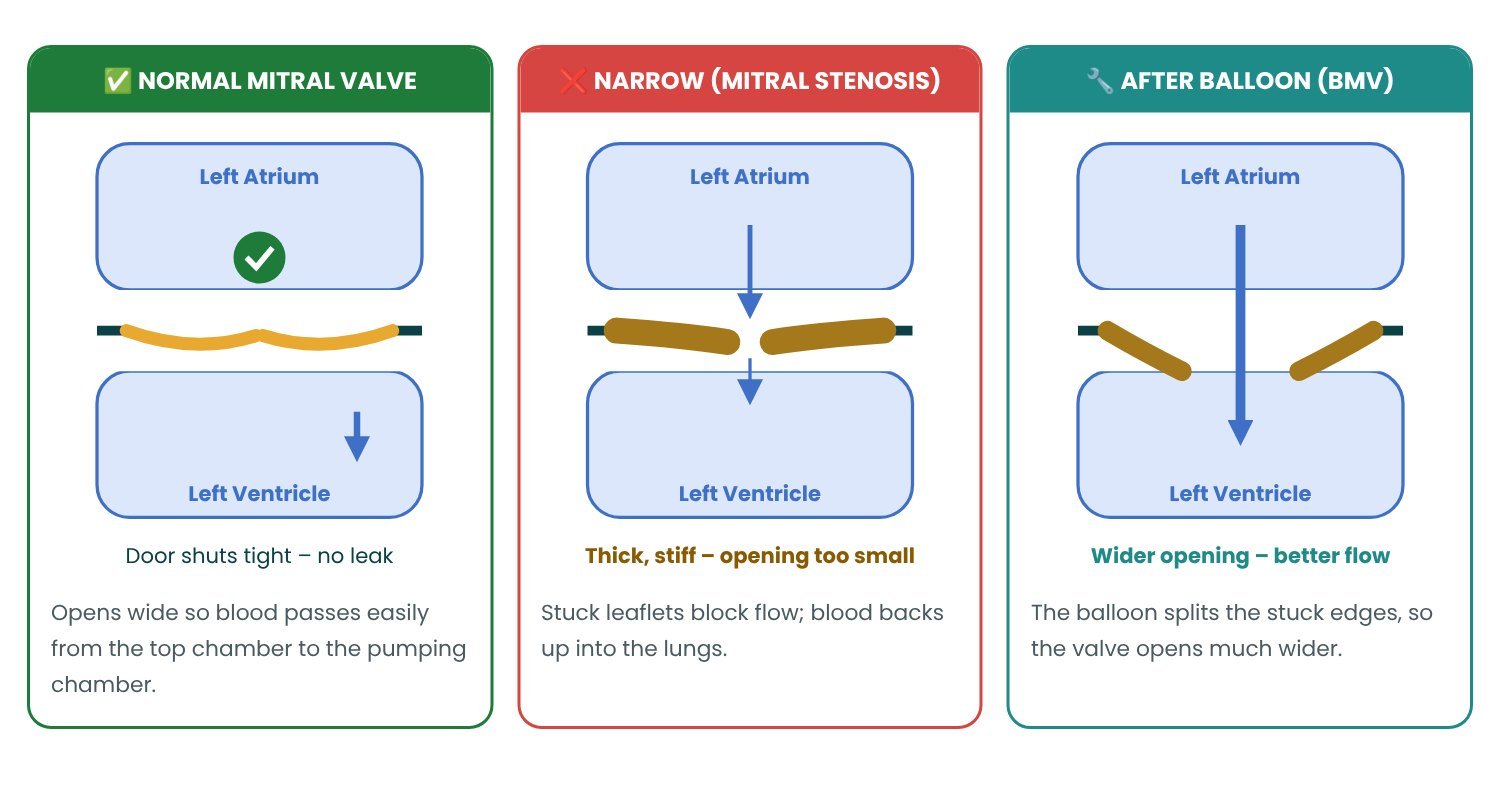
- Mitral valve - the most commonly affected valve. It may become narrowed (mitral stenosis), leaky (mitral regurgitation) or both.
- Aortic valve - may become narrowed (aortic stenosis) or leaky (aortic regurgitation), often together with mitral disease.
- Tricuspid valve - may be affected in advanced disease, often as a consequence of high pressure in the lungs.
When two valves are severely affected, patients may need double valve surgery.
🖼️ Understand It in Pictures
Normal vs narrow mitral valve
👀 Symptoms in Pictures
🩻 Scans & Tests — What Doctors See


🎬 The Treatment Journey in Pictures

📅 Recovery at a Glance
Drawings: Satyug Healthcare (simplified, not to scale). Photos: Wikimedia Commons; author and licence under each photo.
Causes and Risk Factors
- Untreated or partially treated strep throat infections in childhood, most commonly between the ages of 5 and 15.
- Overcrowded living conditions and poor access to healthcare, which allow strep infections to spread and go untreated.
- Repeated episodes of rheumatic fever - each new episode causes further valve damage.
- Genetic susceptibility - rheumatic fever tends to run in some families.
- Geography - RHD is most common in sub-Saharan Africa, South Asia, the Pacific region, and among some communities in the Middle East and Central Asia.
- Pregnancy - the increased workload on the heart during pregnancy often unmasks previously silent RHD in young women.
Symptoms of Rheumatic Heart Disease
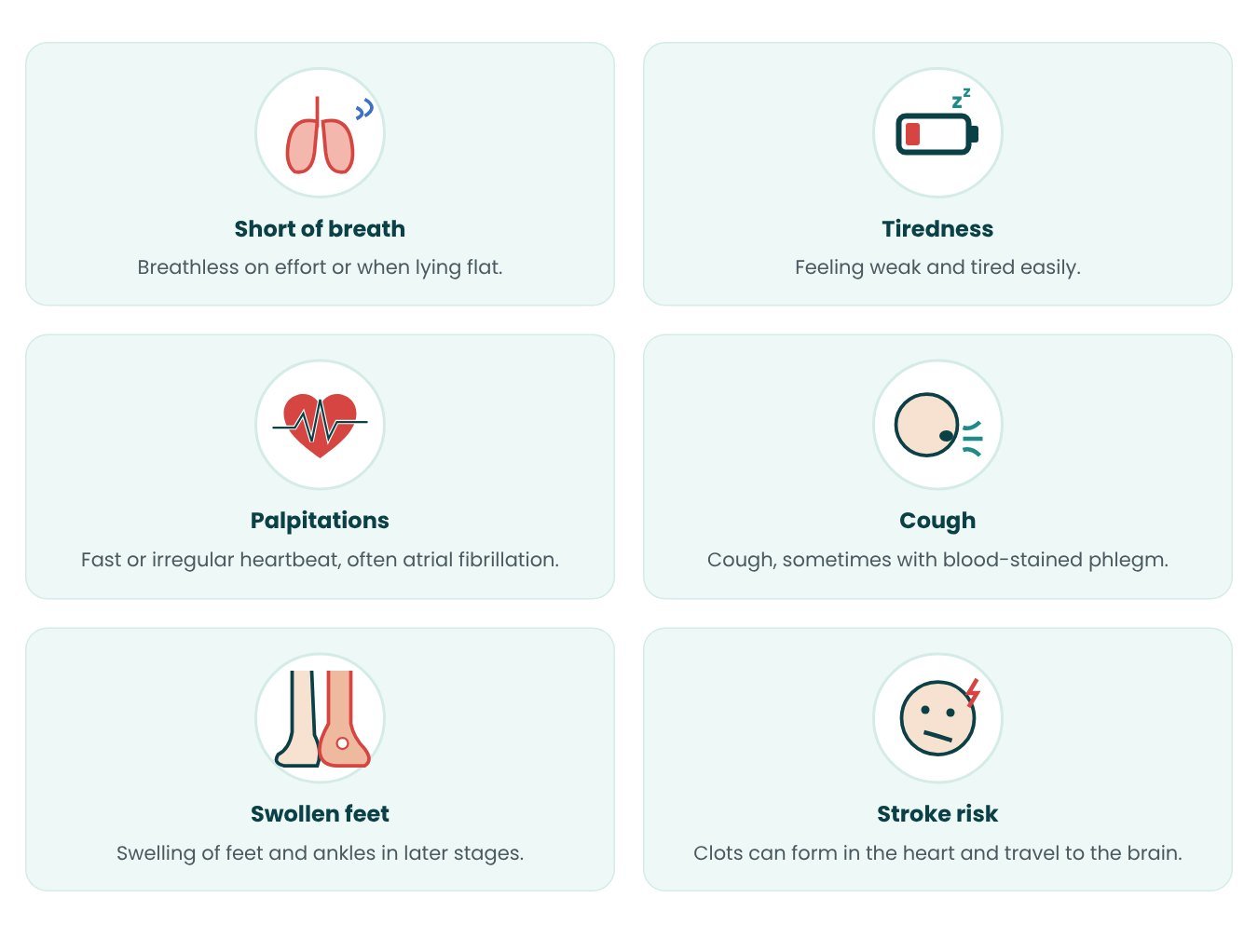
Valve damage may remain silent for years. Symptoms usually appear when the damage becomes moderate to severe:
- Shortness of breath, especially on exertion or when lying flat
- Tiredness and reduced ability to exercise
- Palpitations or an irregular heartbeat, often due to atrial fibrillation
- Chest pain or discomfort
- Swelling of the feet, ankles or abdomen
- Coughing, sometimes with blood-stained sputum (in mitral stenosis)
- Fainting or dizziness (in aortic stenosis)
Symptoms of acute rheumatic fever in children include fever, painful swollen joints that move from one joint to another, a rash, small lumps under the skin and jerky, uncontrolled movements (Sydenham's chorea).
Seek urgent medical care for: severe breathlessness or coughing up frothy sputum, sudden weakness of one side of the body or difficulty speaking (a stroke from a blood clot, which can form in RHD with atrial fibrillation), fainting, or fever with a known heart valve problem (possible infective endocarditis).
How is Rheumatic Heart Disease Diagnosed?
- Clinical examination - a doctor may hear a heart murmur with a stethoscope.
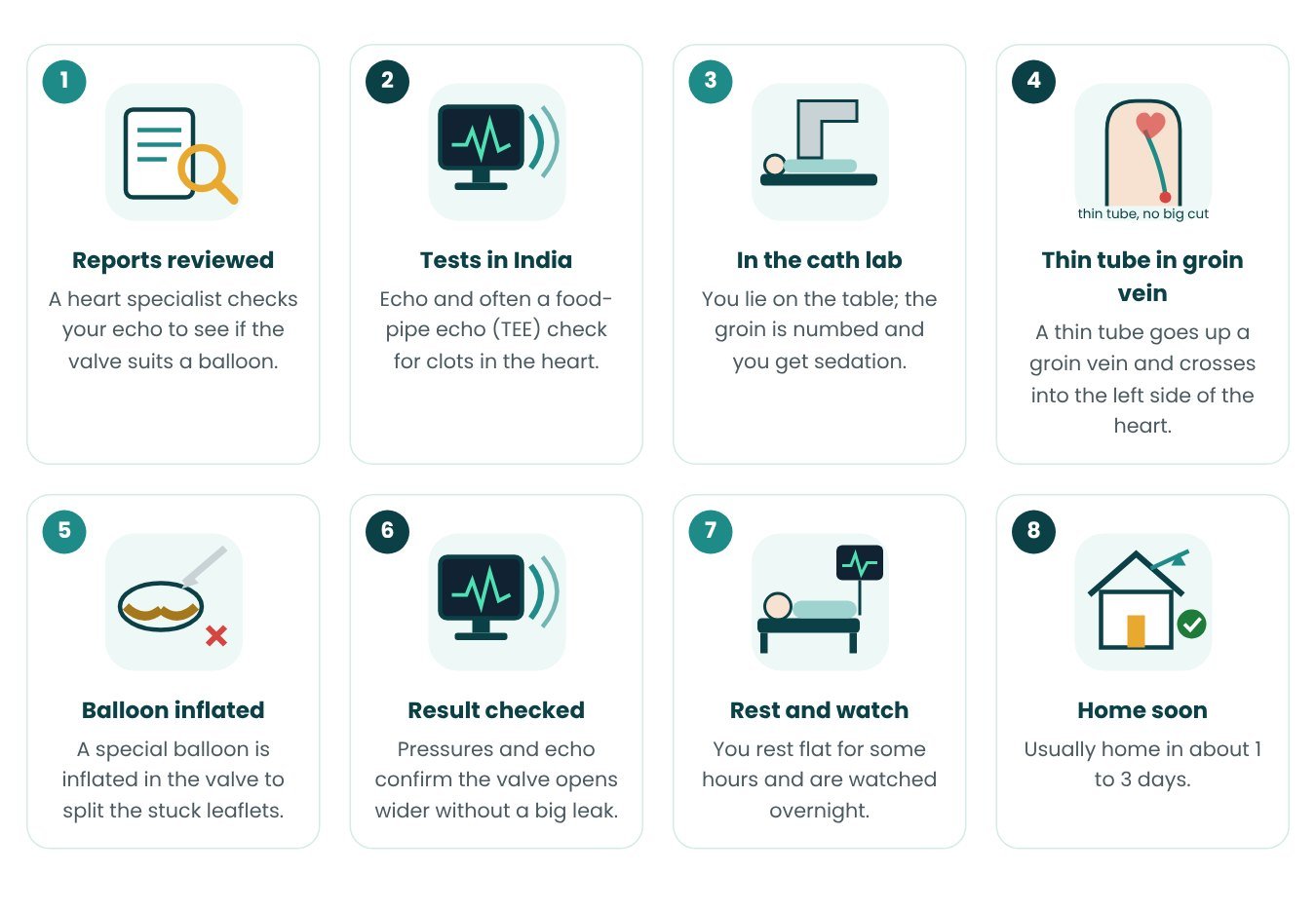
- Echocardiography (ECHO) - the key test, showing which valves are damaged and how severely. Transoesophageal echo (TEE) gives more detailed images and checks for clots before procedures.
- ECG - to detect atrial fibrillation and enlarged heart chambers.
- Chest X-ray - to assess heart size and lung congestion.
- Blood tests - ASO titre and inflammatory markers if recent rheumatic fever is suspected.
- Coronary angiography - in older patients before valve surgery.
Treatment Options for Rheumatic Heart Disease
1. Secondary prophylaxis - preventing further damage
The cornerstone of RHD care is regular antibiotics to prevent new strep infections and repeat rheumatic fever. The standard is an injection of benzathine penicillin G every 3 to 4 weeks, often for 10 years or more, or until a certain age, depending on severity. Patients allergic to penicillin receive alternative antibiotics.
2. Medicines
Medicines do not repair damaged valves, but they control symptoms: diuretics for fluid retention, beta-blockers or other drugs to control heart rate, and blood thinners (anticoagulants) for patients with atrial fibrillation or a mechanical valve to prevent stroke.
3. Balloon mitral valvotomy (BMV / PTMC)
For suitable patients with mitral stenosis, a balloon is passed through a vein in the groin up to the heart and inflated to open the narrowed valve. There is no chest incision, recovery is quick, and it is a good option for young patients and for pregnant women when needed. Indian cardiologists have very wide experience with this procedure.
4. Mitral valve repair
Where the valve tissue allows, surgeons can repair the valve instead of replacing it. Repair preserves the patient's own valve and may avoid the need for lifelong blood thinners, although rheumatic valves are often more difficult to repair than other types.
5. Valve replacement surgery
Severely damaged valves are replaced with either a mechanical valve (very durable but requires lifelong warfarin) or a tissue (bioprosthetic) valve (no lifelong warfarin in most cases, but may wear out and need replacing after some years). The choice depends on age, plans for pregnancy, and the ability to monitor blood thinners. Mitral, aortic or double valve replacement can be performed, sometimes via minimally invasive techniques.
6. Transcatheter options
For selected older or high-risk patients, transcatheter treatments such as valve-in-valve procedures or MitraClip may be considered, although their role in rheumatic valve disease is limited and decided case by case.
Cost of Rheumatic Heart Disease Treatment in India
Indicative starting prices at leading JCI/NABH accredited hospitals in Delhi NCR:
| Treatment | Starting cost (USD) |
|---|---|
| Cardiac evaluation (consultation, ECHO, ECG, chest X-ray, blood tests) | From $250 |
| Balloon mitral valvotomy (BMV / PTMC) | From $2,500 |
| Mitral valve repair | From $6,500 |
| Single valve replacement (mitral or aortic) | From $6,500 |
| Double valve replacement (mitral and aortic) | From $8,500 |
Note: these are starting estimates. The final cost depends on the patient's condition, the type of valve used (mechanical or tissue), the surgical approach, the hospital and the length of stay.
Contact Satyug Healthcare at +91-8860606766 / +91-9910655125 (WhatsApp) for a free medical opinion and cost estimate.
Recovery, Living with RHD and Prevention
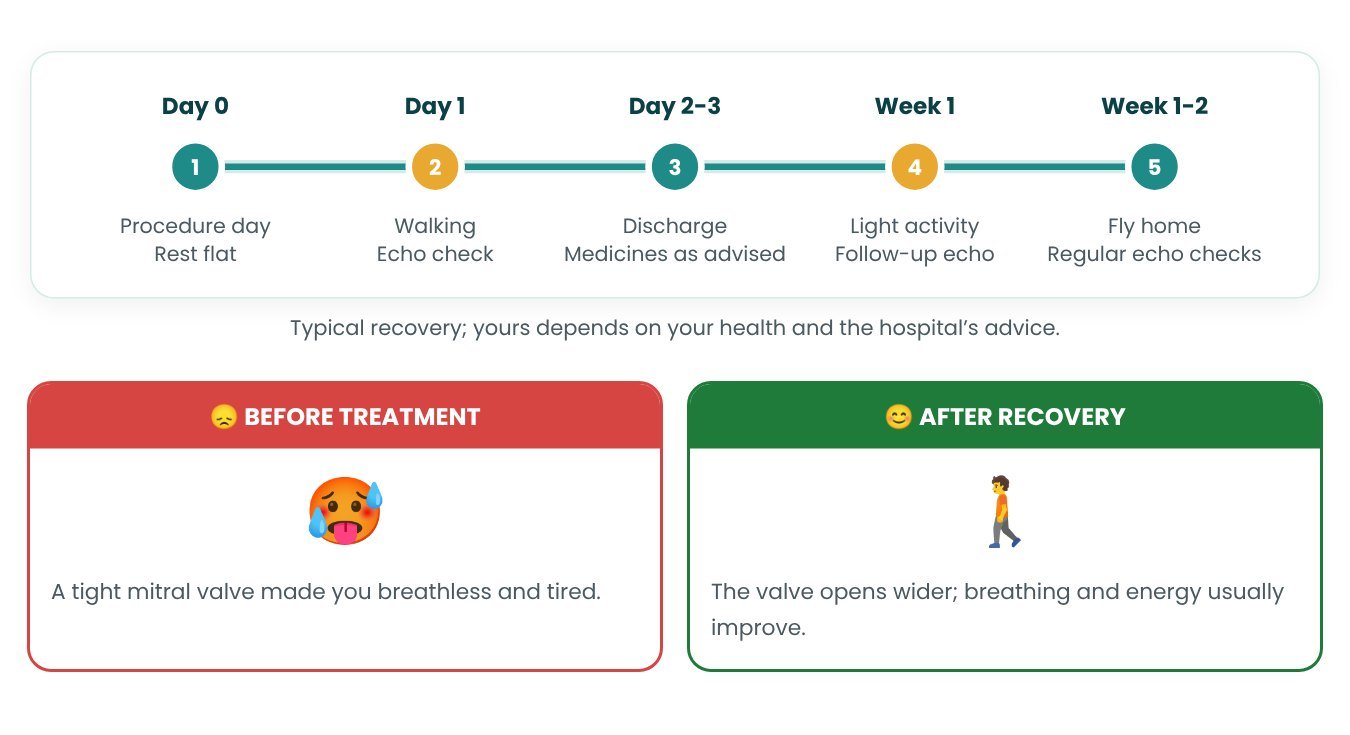
After balloon valvotomy, most patients leave hospital within 2 to 3 days. After open valve surgery, the hospital stay is usually 7 to 10 days, and most patients return to light activities within 4 to 6 weeks and to full activity in about 3 months.
- Continue penicillin prophylaxis exactly as prescribed - this is essential even after surgery.
- If you have a mechanical valve, take warfarin daily and check your INR regularly.
- Maintain good dental hygiene and inform dentists about your valve condition to reduce the risk of endocarditis.
- Women with RHD should plan pregnancies with their cardiologist, as some blood thinners can harm the baby.
- Attend regular echocardiography follow-up.
RHD is preventable. Treating sore throats in children promptly with antibiotics (primary prevention), improving living conditions, and giving regular penicillin to anyone who has had rheumatic fever (secondary prevention) greatly reduce the burden of this disease.
Why Choose India for RHD Treatment?
- Indian cardiologists and cardiac surgeons treat a large number of rheumatic valve patients every year.
- Wide experience in balloon valvotomy, complex valve repair and double valve replacement.
- Internationally accredited hospitals at a fraction of Western costs.
- Affordable follow-up medicines and INR monitoring support.
Step-by-Step Process to Travel to India for Treatment
- Share your reports - send your latest reports, scans/CD, angiography or echo films and passport copy to Satyug Healthcare on WhatsApp (+91-8860606766 / +91-9910655125) or email.
- Free medical opinion & cost estimate - within 24-72 hours we share opinions and written cost estimates from 2-3 JCI/NABH-accredited hospitals and specialists.
- Choose hospital & doctor - compare doctor experience, hospital, room category and total cost; we help you decide with no extra charge.
- Visa Invitation Letter (VIL) - the hospital issues a VIL for the patient and up to two attendants; we arrange it within 24-48 hours.
- Apply for Indian e-Medical Visa - apply online for the e-Medical Visa (patient) and e-Medical Attendant Visa (family) using the VIL; most approvals come in 3-5 working days.
- Book flights & accommodation - we suggest flights and arrange a guest house, service apartment or hotel near the hospital to suit your budget.
- Free airport pickup - our representative receives you at the airport and takes you to your hotel or directly to the hospital.
- Hospital admission & treatment - a dedicated coordinator and language interpreter stay with you for registration, tests, doctor consultations, the procedure and billing.
- Discharge & follow-up - you receive the discharge summary, prescriptions and fitness-to-fly certificate; follow-up checks are done before you fly.
- Return home & tele-follow-up - we arrange airport drop and stay connected for online follow-up consultations with your doctor in India.
Frequently Asked Questions
Is rheumatic heart disease curable?
Valve damage from RHD is permanent, but treatment can control it very effectively. Balloon valvotomy, valve repair or valve replacement restore good heart function in most patients, and penicillin prophylaxis prevents further damage.
Which is better, a mechanical or tissue valve?
Mechanical valves last much longer but require lifelong blood thinners. Tissue valves avoid long-term warfarin but may need replacement after some years. Your surgeon will recommend the best option based on your age, lifestyle and pregnancy plans.
How long does a patient need to stay in India for valve surgery?
Usually about 2 to 3 weeks for valve replacement or repair, and about 5 to 7 days for balloon mitral valvotomy.
Can a woman with rheumatic heart disease have a safe pregnancy?
Many can, with careful planning and monitoring by a cardiologist and obstetrician. Severe mitral stenosis should ideally be treated before pregnancy, and blood thinner regimens may need adjustment.
How long must penicillin injections be continued?
The duration depends on age and the severity of heart involvement. It is often at least 10 years after the last episode of rheumatic fever, and longer for those with significant valve disease. Your cardiologist will advise.
What is the success rate of heart valve surgery in India?
Leading Indian cardiac centres have results comparable to international standards for valve surgery. Outcomes depend on the patient's age, heart function and other illnesses, and your surgeon can explain your individual risk.
Can RHD come back after valve replacement?
The new valve cannot be affected by rheumatic fever in the same way, but other valves can still be damaged if rheumatic fever recurs. This is why penicillin prophylaxis is usually continued after surgery.
Disclaimer: This article is for general information only and is not a substitute for a consultation with a qualified doctor.
Related Blogs


HAPPY PATIENTS
What Our Patients Are Saying





























Our Gallery