
PTBD / Biliary Stenting Package
Assistance
Consultation
Services
Opinion
Care Coordination
What will your treatment cost?

See the cost breakdown by option, hospital and city →
| Surgery Name | Cost | Room | Hospitalization |
|---|---|---|---|
| PTBD / Biliary Stenting Package | 1200 | Economy / Twin Sharing | 1-3 Days in Hospital; Total Stay in India 7-10 Days |
✓ Inclusion
- ✔Interventional radiologist fee
- ✔Procedure room / cath lab charges
- ✔Drainage catheter and consumables (as quoted)
- ✔Hospital room for the package days
- ✔Routine medicines and antibiotics during the stay
- ✔Satyug coordinator, interpreter and airport pick-up
✗ Exclusion
- ✖Consultations, MRCP / CT and blood tests
- ✖Metal stent device if not in the package
- ✖Biopsy and histopathology
- ✖Extra days or ICU care
- ✖Drain bags, dressings and later drain changes
- ✖Hotel, flights, visa fees and meals
Know More About Procedure & Surgery
PTBD (Percutaneous Transhepatic Biliary Drainage) & Biliary Stenting in India
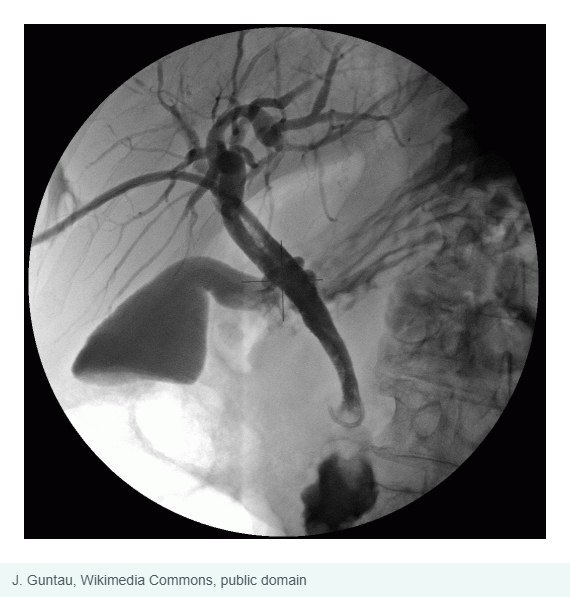
When the bile ducts are blocked by a tumour, stone or stricture, bile backs up into the blood, causing jaundice, itching, dark urine and a risk of life-threatening infection (cholangitis). Percutaneous transhepatic biliary drainage (PTBD) relieves the blockage by placing a thin tube through the skin and liver into the bile duct, and often a metal or plastic stent across the narrowing so bile drains inside the body again. In India PTBD is done by interventional radiologists in accredited hospitals, working with liver and pancreas surgeons, gastroenterologists and oncologists.
📖 What is PTBD and Biliary Stenting?
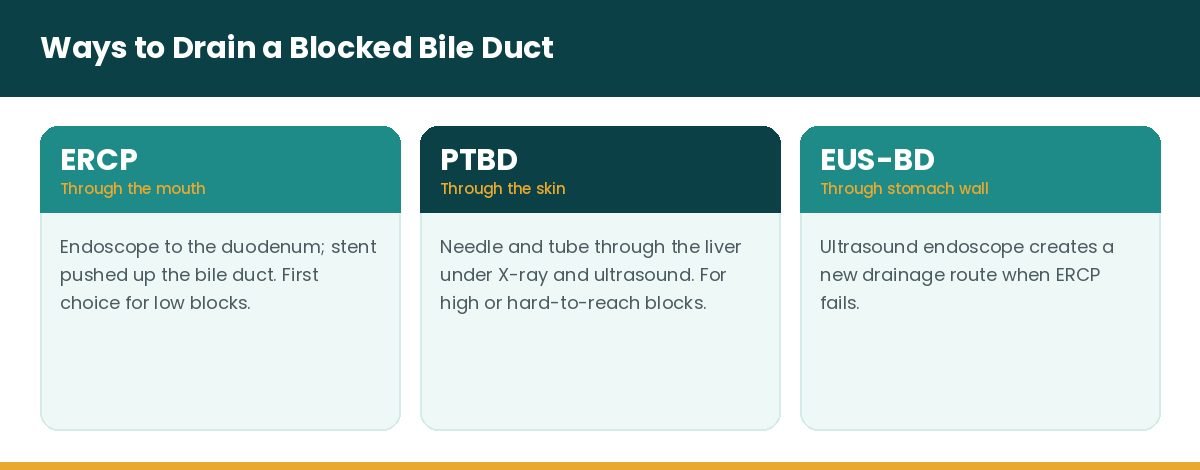
Bile is made in the liver and flows through the bile ducts into the intestine. A blockage – most often from cancer of the pancreas, bile duct (cholangiocarcinoma) or gallbladder, enlarged lymph nodes, stones or a narrowing after surgery – causes obstructive jaundice. For blockages low in the bile duct, the usual first treatment is ERCP with plastic stent (endoscopic stenting through the mouth). PTBD is preferred when the blockage is high near the liver (hilar), when ERCP has failed or is not possible (for example after stomach surgery), or in severe infection.
PTBD can be an external drain (bile drains into a bag), an internal–external drain (the tube crosses the block so bile flows into the intestine), or be converted to an internal metal stent so that no tube remains outside. Self-expanding metal stents stay open longer than plastic stents and are used for cancers that cannot be removed; plastic stents and drains are used for temporary or benign problems. Children with biliary atresia need a different operation, the Kasai procedure for biliary atresia.
🖼️ Understand It in Pictures
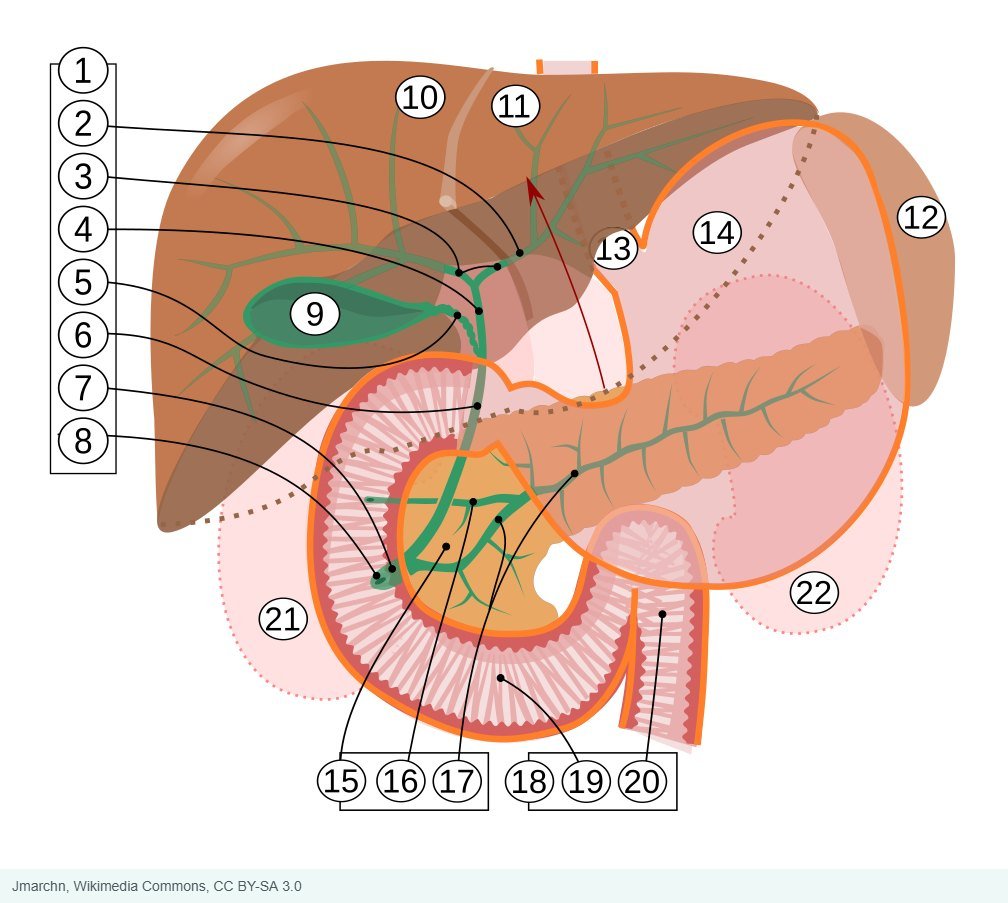
The liver, gallbladder and bile ducts
ERCP, PTBD or EUS drainage?
🩺 Conditions Treated
⚠️ Signs of a Blocked Bile Duct
- ➤Yellow skin and eyes (jaundice)
- ➤Severe itching
- ➤Dark urine and pale stools
- ➤Fever with chills and pain (cholangitis)
- ➤Loss of appetite and weight loss
- ➤Pain in the upper right abdomen
- ➤Rising bilirubin on blood tests
- ➤Dilated bile ducts on ultrasound or CT
🔬 Tests Before Treatment
| Test | Why it is done |
|---|---|
| Liver function tests and bilirubin | Confirms obstructive jaundice and measures its severity. |
| Ultrasound abdomen | Shows dilated ducts and the likely level of the block. |
| MRCP and / or contrast CT | Maps the ducts and the tumour; plans which side to drain. |
| Clotting tests (PT/INR) and platelets | Reduce bleeding risk; vitamin K may be given. |
| Kidney function and blood count | Safety for contrast and sedation. |
| Tumour markers and biopsy (if needed) | CA 19-9, CEA; brush cytology can be taken during the procedure. |
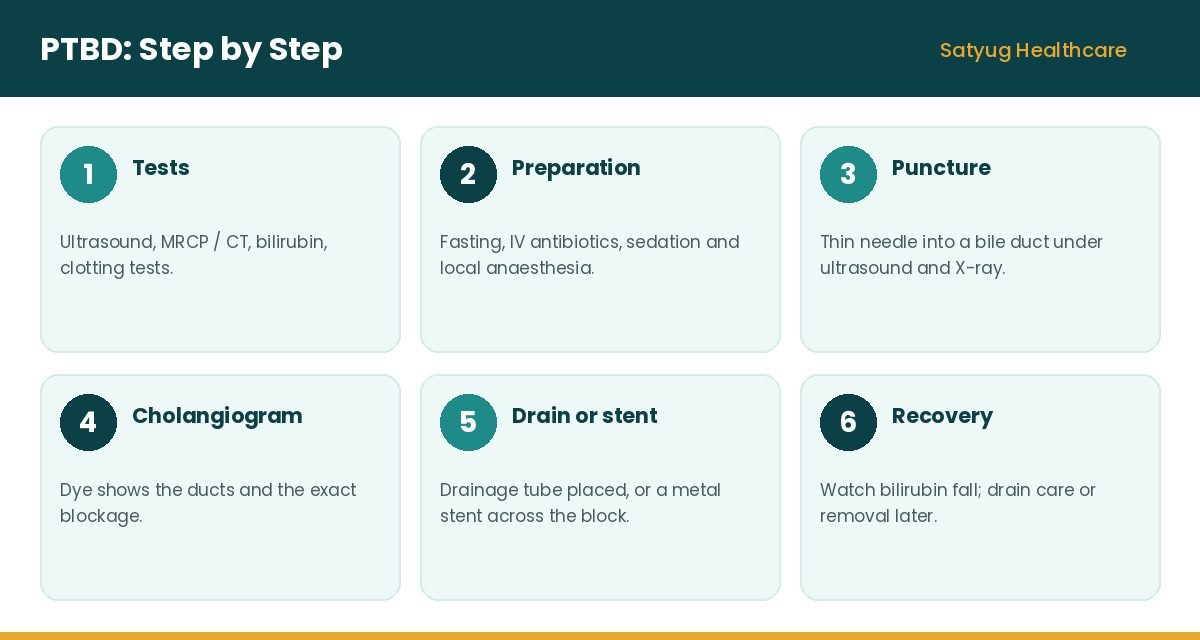
🏥 The Procedure — Step by Step
⚖️ Types & Techniques
| Procedure | What is done | Typical use |
|---|---|---|
| External PTBD | Tube drains bile into a bag | Infection, very tight block, first step |
| Internal–external PTBD | Tube crosses block into intestine | Longer-term drainage, before stenting |
| PTBD with metal stent (SEMS) | Mesh stent across the block, tube removed | Inoperable cancer |
| PTBD with balloon dilatation | Narrowing stretched with a balloon | Benign strictures |
| Bilateral / multiple drains | Both liver lobes drained | Hilar tumours (Bismuth III–IV) |
| ERCP stent (separate package) | Endoscopic stent through the mouth | Low bile duct blocks |
| EUS-guided drainage | Drainage through stomach or duodenal wall | When ERCP fails, in expert centres |
📅 Your Day-by-Day Plan in India
| Day | What happens |
|---|---|
| Day 1 | Arrival in India ✈️, airport pick-up and hotel check-in |
| Day 2 | Consultation; blood tests, ultrasound and MRCP / CT review |
| Day 3 | PTBD (45–90 minutes); admission |
| Days 4–5 | Monitoring, antibiotics, bilirubin check; drain care teaching |
| Days 5–8 | Stent placement if planned; tube capping or removal |
| Days 8–10 | Follow-up blood tests; oncology plan; fitness-to-fly; flight home ✈️ |
| Later | Drain change every 2–3 months if a tube remains; stent checks by blood tests |
🌱 Recovery After Treatment
🏆 Success Rate
| Outcome | Result |
|---|---|
| Technical success, dilated ducts (SIR) | About 95% |
| Technical success, non-dilated ducts (SIR) | Lower: about 70–80% (guideline thresholds) |
| Major complications | Usually below 10% |
| Metal vs plastic stent | Metal stents stay open longer, with fewer re-interventions |
| DROP trial: routine pre-op drainage | More complications than early surgery (74% vs 39%) |
🩹 Risks & Possible Complications
- •Bleeding from the liver or into the bile ducts (haemobilia)
- •Infection or sepsis (cholangitis)
- •Bile leak around the tube
- •Pain at the drain site
- •Tube blockage or dislodgement needing replacement
- •Stent blockage over time (re-intervention)
💰 Cost of PTBD and Biliary Stenting in India
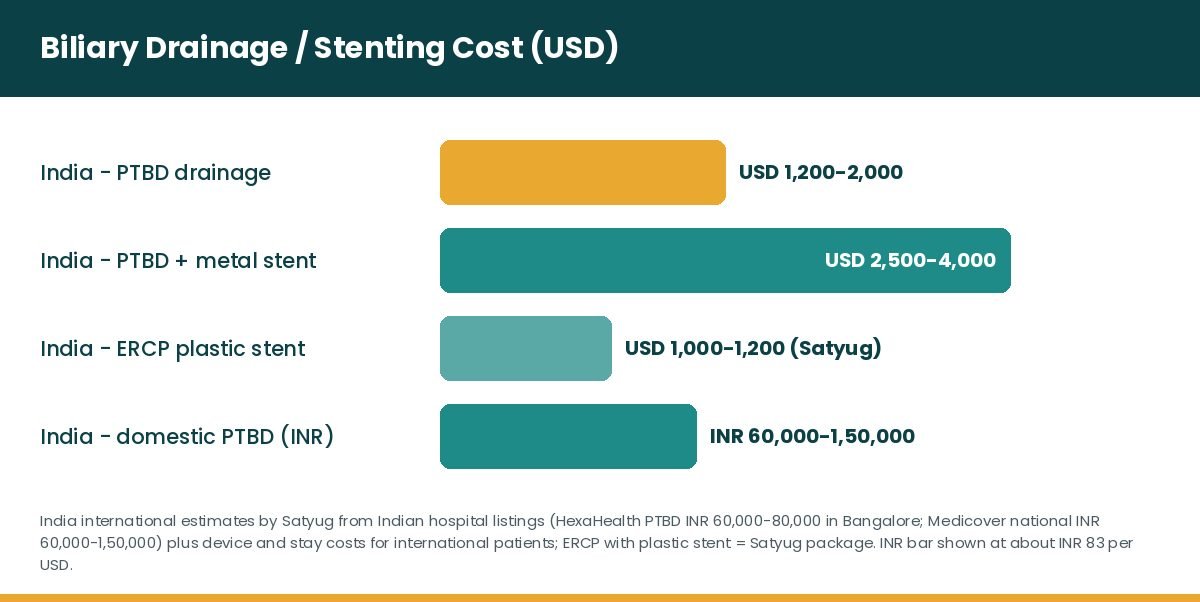
PTBD in India starts from about USD 1,200. Estimated cost range (USD), final price per hospital quote: PTBD drainage USD 1,200–2,000; PTBD with self-expanding metal stent USD 2,500–4,000, depending on the number of drains, stent type, ICU need and length of stay. ERCP with a plastic stent is a separate package (USD 1,000–1,200).
Price examples from Indian listings and Satyug packages:
| Hospital / Option | Cost | Stay | Notes |
|---|---|---|---|
| PTBD, Bangalore hospitals (domestic listing) | INR 60,000–80,000 | 2–3 days | HexaHealth listing (updated Jun 2024) |
| PTBD, India national estimate (domestic) | INR 60,000–1,50,000 | 1–3 days | Medicover Hospitals listing |
| ERCP with plastic stent (Satyug package) | USD 1,000–1,200 | 1–2 days | See the ERCP package |
| PTBD drainage – international patient (Satyug estimate) | USD 1,200–2,000 | 1–3 days | Includes room and consumables |
| PTBD with metal stent (Satyug estimate) | USD 2,500–4,000 | 2–4 days | Metal stent device adds a large part of the cost |
📋 What the Package Includes
- ✔Interventional radiologist fee
- ✔Procedure room / cath lab charges
- ✔Drainage catheter and consumables (as quoted)
- ✔Hospital room for the package days
- ✔Routine medicines and antibiotics during the stay
- ✔Satyug coordinator, interpreter and airport pick-up
- ✖Consultations, MRCP / CT and blood tests
- ✖Metal stent device if not in the package
- ✖Biopsy and histopathology
- ✖Extra days or ICU care
- ✖Drain bags, dressings and later drain changes
- ✖Hotel, flights, visa fees and meals
✈️ Your Medical Travel Process with Satyug Healthcare

| Step | Details |
|---|---|
| 1. Send reports | Recent liver function tests and bilirubin, ultrasound, MRCP and / or CT images and reports, any ERCP or biopsy reports, and the diagnosis and treatment plan from your doctors. |
| 2. Free opinion & quotes | Within 48-72 hours you receive opinions and cost estimates from 3-5 leading hospitals to compare. |
| 3. Choose hospital & doctor | We help you compare surgeons, success data, room options and total cost – with no hidden charges. |
| 4. Medical visa | The hospital issues a Visa Invitation Letter (VIL) and we help with the e-Medical visa for the patient and up to 2 attendants. |
| 5. Travel & arrival | Free airport pick-up, help with a local SIM card and currency, and a hotel or guest house close to the hospital. |
| 6. Treatment | A coordinator and interpreter stay with you for admission, tests, surgery and ward stay, and help with bills and insurance papers. |
| 7. Recovery & follow-up | FRRO registration if needed, fitness-to-fly certificate, discharge summary, and teleconsultation follow-up with your surgeon after you return home. |
Percutaneous transhepatic cholangiogram: the X-ray picture taken during PTBD
🎒 Travel Checklist
- 📌Valid passport (6+ months) for the patient and attendants, plus 10 passport-size photos each
- 📌e-Medical visa / medical visa and the hospital’s Visa Invitation Letter (VIL)
- 📌Bilirubin and liver tests (within 1 week), MRCP / CT images and reports, ERCP and biopsy reports
- 📌Yellow fever vaccination certificate (mandatory for travellers from African countries)
- 📌Polio vaccination certificate where applicable
- 📌Cash above USD 5,000 (or equivalent) must be declared to Indian Customs on arrival; carry an international debit/credit card
- 📌FRRO registration within 14 days if your visa or stay requires it (Satyug helps with this)
- 📌Comfortable clothes, phone charger, adapter, and a list of emergency contacts
⭐ Why Choose Satyug Healthcare?
❓ Frequently Asked Questions
➤ How much does PTBD cost in India?
➤ What is the difference between ERCP and PTBD?
➤ Is PTBD painful?
➤ Will I go home with a tube?
➤ How quickly will jaundice improve?
➤ Metal or plastic stent?
➤ How long do I stay in India?
➤ Can chemotherapy start after drainage?
➤ What are the main risks?
➤ How often does a drain need changing?
➤ Should I have drainage before Whipple surgery?
➤ Can a blocked stent be fixed?
➤ What reports are needed?
➤ Do you provide an interpreter?
Medical disclaimer: This page is for general information and does not replace a consultation with a qualified interventional radiologist, gastroenterologist or hepatobiliary surgeon. Treatment plans and costs are confirmed only after the patient is examined and tests are reviewed. Sources: StatPearls: Percutaneous Transhepatic Cholangiography; StatPearls: Biliary Obstruction; Society of Interventional Radiology quality improvement guidelines for percutaneous transhepatic cholangiography and biliary drainage (Saad WE et al., J Vasc Interv Radiol 2010;21:789-795); CIRSE quality improvement guidelines for percutaneous transhepatic cholangiography and biliary drainage (2003); van der Gaag NA et al., Preoperative biliary drainage for cancer of the head of the pancreas (DROP), N Engl J Med 2010; Cancer Research UK: stents for bile duct blockage; HexaHealth and Medicover price listings (accessed Oct 2026). Image credits: Biliary system: Jmarchn, Wikimedia Commons, CC BY-SA 3.0 (https://commons.wikimedia.org/wiki/File:Biliary_system_multilingual.svg). Percutaneous transhepatic cholangiogram: J. Guntau, Wikimedia Commons, public domain (https://commons.wikimedia.org/wiki/File:Perkutan_transhepatische_Cholangiographie.jpg). Infographics and banner: Satyug Healthcare.
✍️ Written & reviewed by Vikram Kashyap, Medical Consultant, Satyug Healthcare · Last updated: October 2026
Frequently Asked Questions
About USD 1,200–2,000 for PTBD drainage and USD 2,500–4,000 with a metal stent for international patients. Domestic Indian prices are lower but exclude many items.
PTBD biliary drainage and stenting in India from USD 1,200: relief of obstructive jaundice with drains or metal stents by interventional radiologists.


TOP HOSPITALS
Special High-quality Hospitals




HAPPY PATIENTS
What Our Patients Are Saying



















Our Gallery



Get a Free Quote
Tell us what you need and share your medical reports. Our medical team prepares your treatment plan and cost estimate.
- Free medical opinion on your reports
- Your quote within 24–48 hours
- Help with visa invitation letter, travel and airport pickup
- Coordinators available on WhatsApp
Prefer to talk? Call +91-8860606766 or WhatsApp us.
Thank you! Your request is received.
Reference . Our medical team will send your free quote within 24–48 hours by e-mail or WhatsApp.
Chat on WhatsApp now