Pneumonectomy Package
Assistance
Consultation
Services
Opinion
Care Coordination
What will your treatment cost?

| Surgery Name | Cost | Room | Hospitalization |
|---|---|---|---|
| Pneumonectomy Package | $5014 | Single | Patient - 6 days stay in a single room. |
✓ Inclusion
- ✔Room rent – 6 days stay in a single room
- ✔Cost of pneumonectomy surgery with lymph node clearance
- ✔Surgeon's fees and anaesthetist fees
- ✔Operation theatre charges
- ✔Routine post-operative ICU / high-dependency monitoring as per protocol
- ✔Consultation by the primary team during package days
- ✔Basic pre-operative investigations
- ✔Routine pharmacy, drugs and medical consumables
- ✔Pharmacy service charges
- ✔Patient food as per hospital menu
- ✔Free: airport pick-up & drop, visa invitation letter, interpreter & coordinator (Satyug Healthcare)
✗ Exclusion
- ✖Overstay beyond the 6 package days
- ✖Extra ICU / ventilator days due to complications
- ✖Any other specialty consultations
- ✖Special equipment
- ✖Additional procedures or surgery
- ✖Blood and blood components
- ✖PET-CT, EBUS biopsy and advanced investigations
- ✖Chemotherapy, immunotherapy or radiotherapy
- ✖Flights, visa fees, hotel and local travel
Know More About Procedure & Surgery
Pneumonectomy (Lung Removal) Surgery in India
Surgical removal of one whole lung for central lung cancer and selected other tumours, done by experienced thoracic surgical oncologists at accredited Indian cancer hospitals with modern ICU care – at a fraction of Western costs.
📖 What is a Pneumonectomy?
We have two lungs. The right lung has three parts (lobes) and the left has two. Air reaches them through the windpipe and two main tubes called bronchi. Lung cancer that grows in the centre of the lung, near the main bronchus or the main blood vessels, cannot always be removed by taking out just one lobe.
A pneumonectomy is an operation to remove one entire lung, together with its lymph nodes. It is done through a cut on the side of the chest (thoracotomy), or in selected cases by keyhole (VATS) surgery. The space left behind slowly fills with fluid and scar tissue. Most people can live a normal, though less strenuous, life with one healthy lung. An extrapleural pneumonectomy also removes the lining of the lung and is used for mesothelioma. Whenever possible, surgeons prefer a smaller operation such as lobectomy or sleeve lobectomy.
🩺 Conditions Treated
⚠️ Symptoms That May Need Evaluation
- ➤Persistent cough for more than 3 weeks
- ➤Coughing up blood
- ➤Chest pain
- ➤Breathlessness
- ➤Repeated chest infections or pneumonia
- ➤Unexplained weight loss
- ➤Hoarse voice
- ➤Tiredness and loss of appetite
🔬 Tests Before Treatment
| Test | Why it is done |
|---|---|
| CT scan of the chest | Shows the size and location of the tumour and lymph nodes. |
| PET-CT scan | Checks for spread to lymph nodes and other organs. |
| Bronchoscopy / EBUS biopsy | Confirms the cancer type and stages the lymph nodes. |
| Pulmonary function tests with DLCO | Measure lung capacity to predict breathing after one lung is removed. |
| Ventilation-perfusion (V/Q) scan | Shows how much each lung contributes to breathing. |
| Cardiopulmonary exercise test / stair climb | Assesses fitness for major lung surgery in borderline cases. |
| MRI brain, ECG, echo and blood tests | Rule out brain spread and check heart, kidney and liver fitness. |
🏥 The Procedure — Step by Step

⚖️ Types & Techniques
| Technique | What is done | Best for |
|---|---|---|
| Standard pneumonectomy | Removal of the whole right or left lung with nodes | Central lung cancer |
| Intrapericardial pneumonectomy | Vessels divided inside the heart sac | Tumours very close to the heart |
| Extrapleural pneumonectomy | Lung, pleura, part of diaphragm and pericardium removed | Selected mesothelioma |
| VATS pneumonectomy | Keyhole removal through small cuts | Selected patients in expert centres |
| Sleeve lobectomy (alternative) | Lobe and part of bronchus removed, airway rejoined | To avoid removing the whole lung |
📅 Your Day-by-Day Plan in India
| Day | What happens |
|---|---|
| Day 1 | Arrival in India ✈️, airport pick-up, hotel check-in |
| Day 2–4 | Thoracic surgeon consultation, PET-CT/PFT review, fitness tests and tumour board |
| Day 5 | Admission and pneumonectomy |
| Day 6–7 | ICU / high-dependency care and breathing physiotherapy |
| Day 8–10 | Ward recovery and walking (6 days in hospital) |
| Day 11–20 | Rest at hotel, wound check, histopathology report, oncologist plan |
| Day 21–25 | Final review, chest X-ray and fitness to fly – Fly home ✈️ |
🌱 Recovery After Treatment
🏆 Success Rate
| Outcome | Result |
|---|---|
| 30-day survival | About 93–95% |
| 5-year survival – stage I–II NSCLC | About 40–60% |
| 5-year survival – stage III NSCLC | About 20–30% |
| Return to independent daily life | Most patients |
| Bronchial stump leak (fistula) | About 2–5% |
Results depend on the cancer stage, lymph node status, the patient's lung and heart fitness, right versus left side, and completing chemotherapy or immunotherapy when needed.
🩹 Risks & Possible Complications
Pneumonectomy is one of the bigger chest operations and has higher risks than smaller lung surgeries.
- •Irregular heartbeat (atrial fibrillation) – about 15–20%
- •Pneumonia or breathing difficulty – about 10%
- •Long-term breathlessness on exertion
- •Bronchopleural fistula (airway stump leak) – about 2–5%
- •Fluid build-up in the lungs (post-pneumonectomy oedema) – about 2–5%
- •Empyema (infection in the chest space) – about 2–5%
- •Death within 30 days – about 5–7% in large series
💰 Cost of Pneumonectomy in India
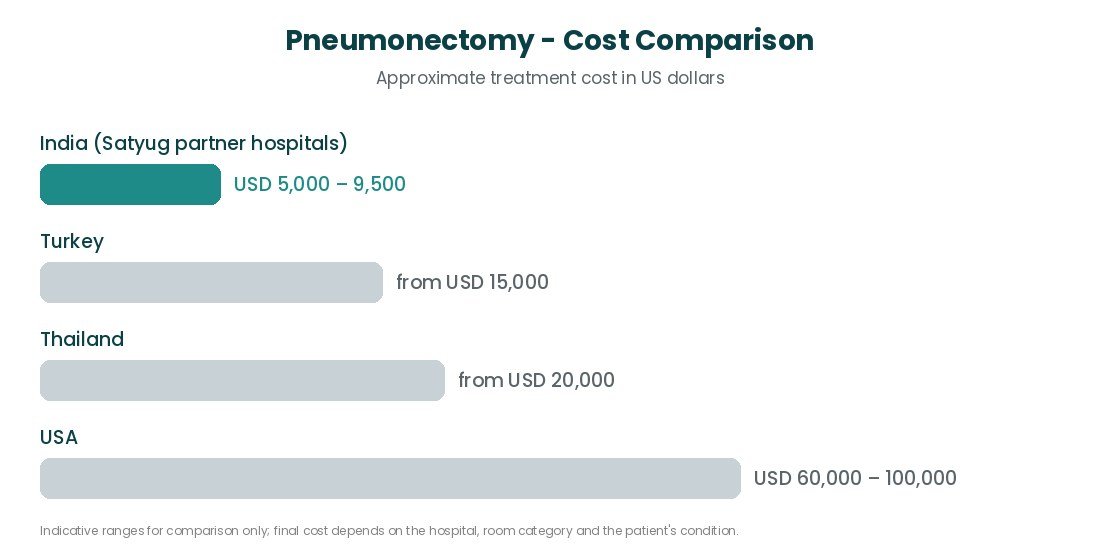
The cost of pneumonectomy in India starts from about USD 5,014 with 6 days in a single room. This includes surgery, surgeon and anaesthetist fees, operation theatre, room, routine medicines and consumables, basic tests and food. PET-CT, EBUS biopsy, extra ICU days, blood products and chemotherapy are charged separately.
| Option / Hospital tier | Approx. cost (USD) | Hospital stay | Notes |
|---|---|---|---|
| Pneumonectomy – this package (single room) | 5,014 | 6 days | Open surgery with lymph node clearance |
| Pneumonectomy – premium hospital | 7,000 – 9,500 | 6–8 days | Top-tier Delhi NCR / Mumbai centres |
| Lobectomy (VATS / robotic) | 6,500 – 9,000 | 4–5 days | Lung-sparing option when possible |
| Extrapleural pneumonectomy | 10,000 – 14,000 | 8–12 days | Mesothelioma, highly specialised |
📋 What the Package Includes
- ✔Surgeon & anaesthetist fees
- ✔Operation theatre charges
- ✔6 days in a single room
- ✔Routine medicines & consumables
- ✔Basic investigations
- ✔Patient food
- ✔Consultation by the primary team
- ✖Extra hospital / ICU days
- ✖PET-CT, EBUS and advanced tests
- ✖Blood components
- ✖Other specialty consultations
- ✖Chemotherapy / immunotherapy
- ✖Special equipment
- ✖Flights, visa & hotel
✈️ Your Medical Travel Process with Satyug Healthcare

| Step | Details |
|---|---|
| 1. Send reports | CT chest with contrast, PET-CT, biopsy / bronchoscopy report, pulmonary function tests (with DLCO if done), ECG/echo, and a list of current medicines and smoking history. |
| 2. Free opinion & quotes | Within 48-72 hours you receive opinions and cost estimates from 3-5 leading hospitals to compare. |
| 3. Choose hospital & doctor | We help you compare doctors, success rates, room options and total budget. |
| 4. Medical visa | The hospital issues a Visa Invitation Letter (VIL) to the Indian Embassy. The patient and up to 2 attendants apply for an e-Medical / Medical Attendant visa. |
| 5. Travel planning | Flight guidance, wheelchair assistance, airport pick-up, hotel or guest house near the hospital. |
| 6. Treatment in India | Your coordinator and interpreter stay with you for admission, treatment, discharge and billing. |
| 7. Return & follow-up | Fit-to-fly letter, medicines, and online follow-up with your doctor after you return home. |
🎒 Travel Checklist
- 📌Valid passport (6+ months) for the patient and attendants, plus 10 passport-size photos each
- 📌Medical visa / e-visa and the hospital’s Visa Invitation Letter
- 📌All CT, PET-CT, biopsy and lung function reports, scans on CD / link and prescriptions
- 📌Yellow fever vaccination certificate (mandatory for travellers from African countries)
- 📌Polio vaccination certificate where applicable
- 📌Declare cash above USD 5,000 at the airport; hospitals accept wire transfer and cards
- 📌Foreigners staying longer than permitted must register with the FRRO — our team assists
⭐ Why Choose Satyug Healthcare?
❓ Frequently Asked Questions
➤ What is the cost of pneumonectomy in India?
➤ How long will I stay in India?
➤ Can I live normally with one lung?
➤ Why remove the whole lung and not just the tumour?
➤ What is the success rate?
➤ Is it painful?
➤ Will I need chemotherapy?
➤ When can I fly home?
➤ When can I return to work?
➤ What are the main risks?
➤ Can elderly patients have pneumonectomy?
➤ Do I need to stop smoking?
➤ How many attendants can come?
➤ What follow-up is needed after going home?
Medical disclaimer: This page is for general information and does not replace a consultation with a qualified specialist. Treatment plans and costs are confirmed only after the patient is examined. Sources: NCBI StatPearls: Pneumonectomy; NCCN Guidelines – Non-Small Cell Lung Cancer; ESTS/ACCP guidelines on physiological evaluation before lung resection; STS General Thoracic Surgery Database outcomes; Cleveland Clinic – Pneumonectomy. Infographics: Satyug Healthcare.
Frequently Asked Questions
Because there is no lung tissue to expand, negative pressure in the post pneumonectomy space serves no purpose at all. Moreover, it causes mediastinal shift, with all of its undesirable consequences. Suction should never be applied, and the tube should be removed after 24 hours.
Pneumonectomy (lung removal) for lung cancer in India from USD 5,014. Expert thoracic surgeons, 6-day stay, ICU care, free opinion and visa support.





























































































































































































































































































































































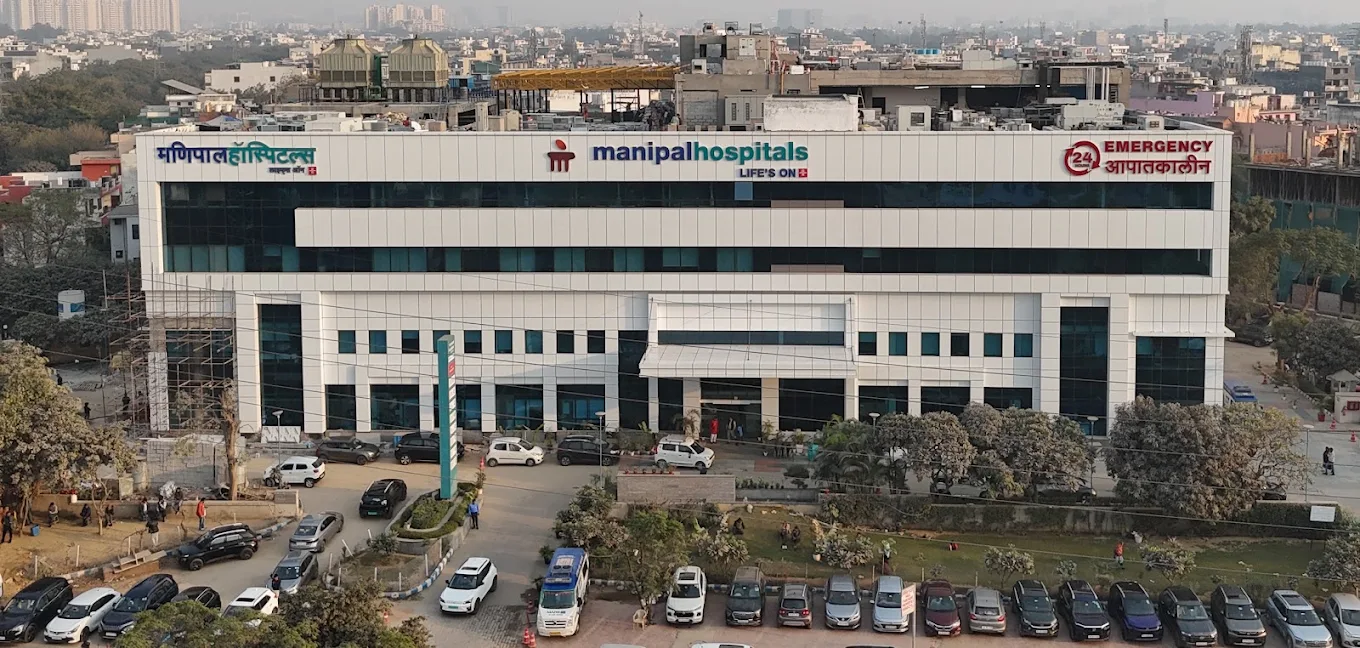
TOP HOSPITALS
Special High-quality Hospitals




HAPPY PATIENTS
What Our Patients Are Saying
























Our Gallery