Assistance
Consultation
Services
Opinion
Care Coordination
What will your treatment cost?
Ovarian germ cell tumor
Released Date: 2022-03-01

Outline
🖼️ Understand It in Pictures
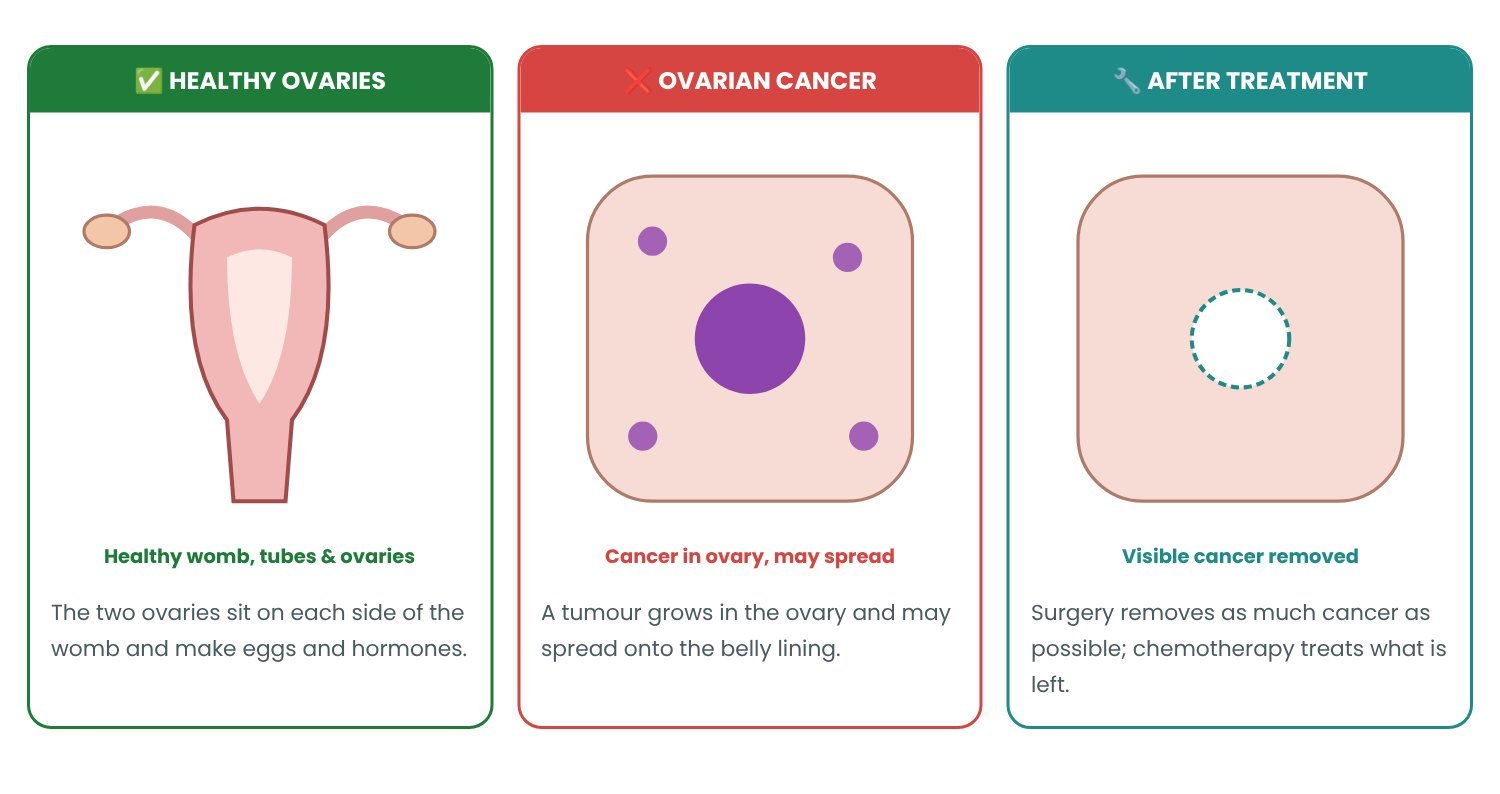
Healthy ovaries vs ovarian cancer
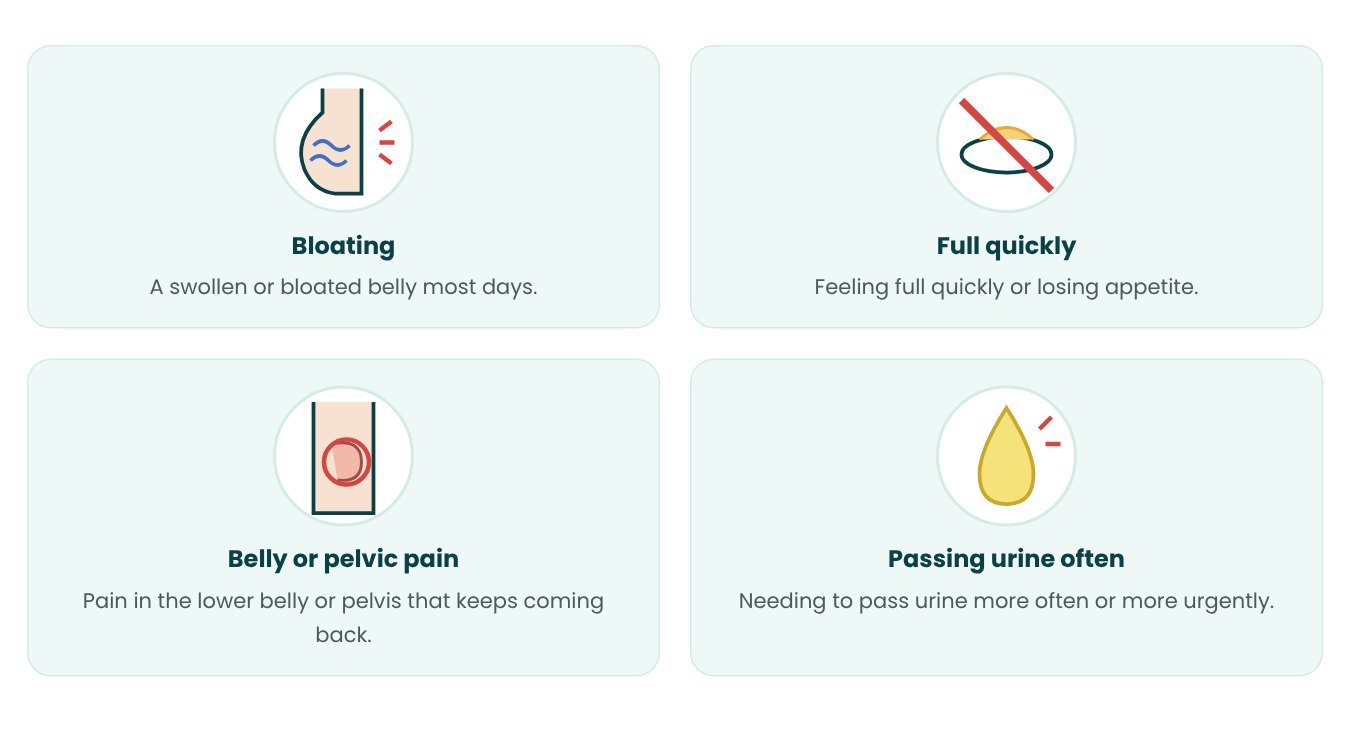
👀 Symptoms in Pictures
🩻 Scans & Tests — What Doctors See


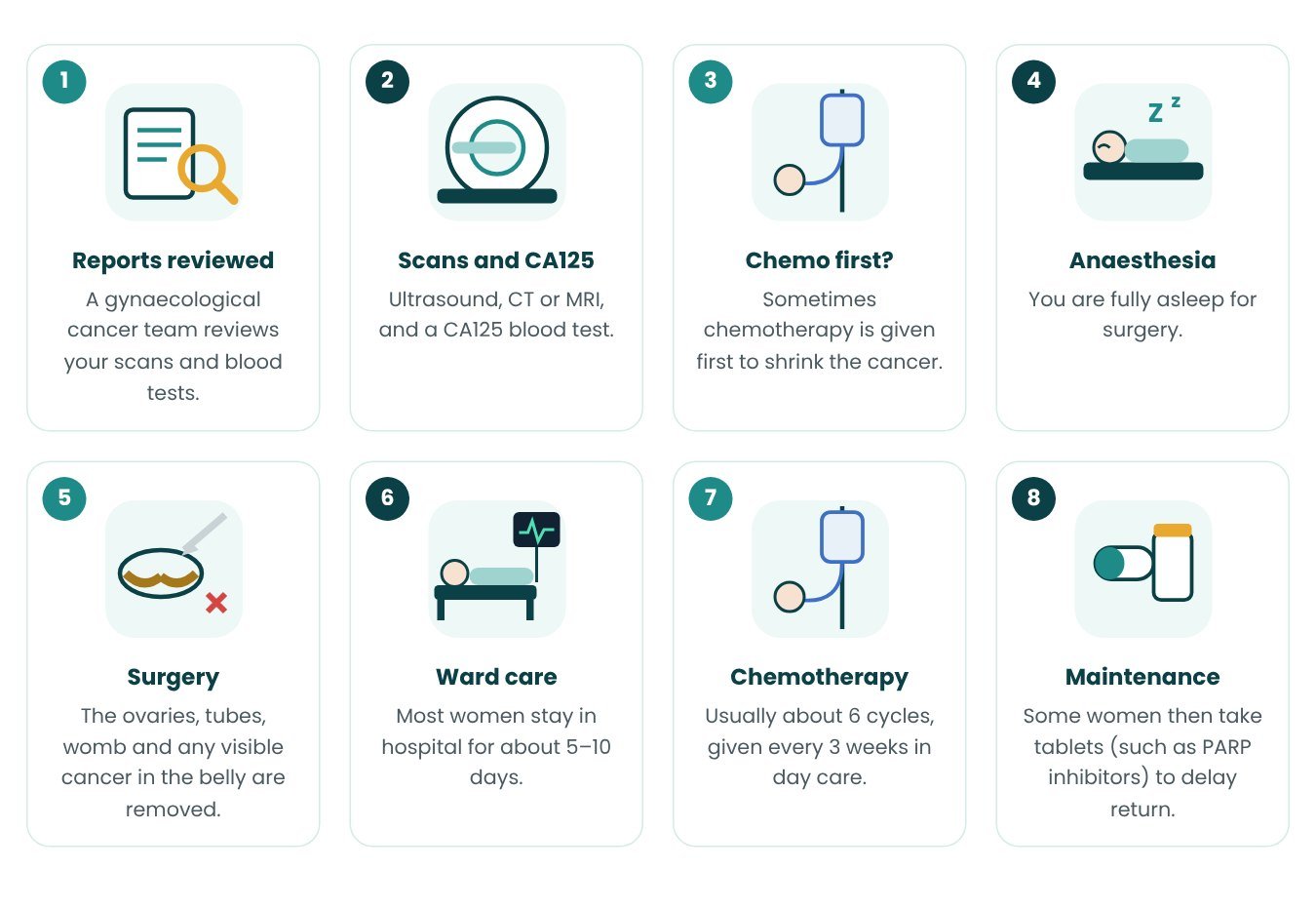
🎬 The Treatment Journey in Pictures
📅 Recovery at a Glance
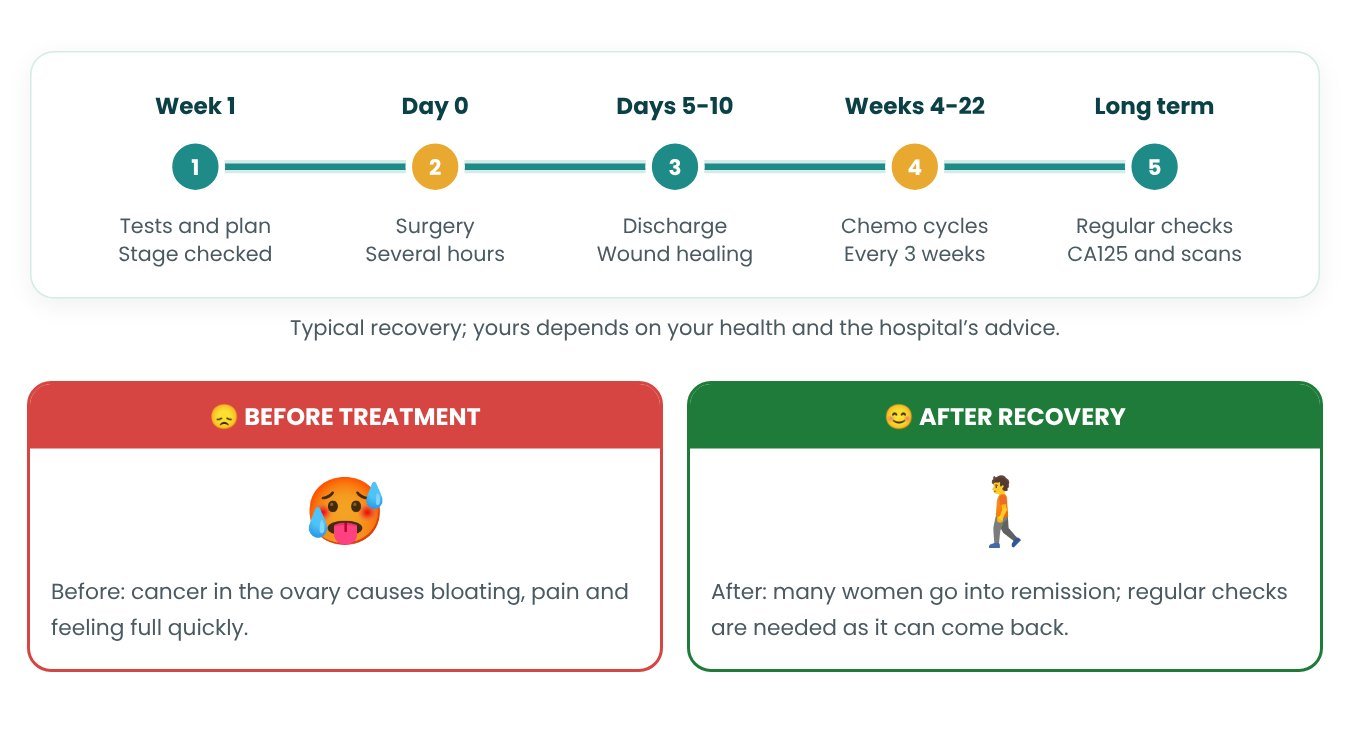
Drawings: Satyug Healthcare (simplified, not to scale). Photos: Wikimedia Commons; author and licence under each photo.
Germ cell tumors are growths that develop from reproductive (germ) cells. They can be cancerous or non-cancerous. Most germ cell tumors occur in the testicles or the ovaries.
Some germ cell tumors occur in other parts of the body, such as the abdomen, brain and chest, although it is not clear why. Germ cell tumors that occur outside the testicles and ovaries (extragonadal germ cell tumors) are very rare.
Treatment options for germ cell tumors may include surgery to remove the tumor, chemotherapy with medicines that kill cancer cells, and radiation therapy with high-energy beams. Let us look at the condition in detail.
What are germ cell tumors?
Germ cell tumors are malignant (cancerous) or non-malignant (benign, non-cancerous) tumors made up mainly of germ cells. Germ cells form in the embryo (the unborn baby) and later become the cells of the reproductive system in men and women. During development, these germ cells travel along the midline of the body and move down into the pelvis as ovarian cells or into the scrotal sac as testicular cells. Most ovarian and testicular tumors are of germ cell origin. The ovaries and testes are called gonads.
Tumor sites outside the gonads are called extragonadal sites. These tumors also arise along the midline path and may be found in the head, chest, abdomen, pelvis and sacrococcygeal (lower back) area.
Germ cell tumors are rare. They account for about 2 to 4 percent of all cancers in children and adolescents younger than 20 years.
Germ cell tumors can spread (metastasize) to other parts of the body. The most common sites of spread are the lungs, liver, lymph nodes and central nervous system. Rarely, they spread to the bone, bone marrow and other organs.
What causes germ cell tumors?
Changes in the genes of a germ cell can make it grow out of control, which leads to a tumor. Doctors are not sure what triggers this change.
Still, you may be more likely to develop a germ cell tumor if you have:
- An undescended testicle (one or both testicles have not moved down into the scrotum)
- Birth defects of the central nervous system, genitals, lower spine or urinary tract
- Genetic conditions such as Klinefelter syndrome or Turner syndrome, in which there is an extra or missing sex chromosome
- Other family members who have had germ cell tumors
Types of Germ Cell Tumors
There are many types, but five are more common than others:
- Teratomas – also called “dermoid cysts” – are usually not cancer, but they can be. They are the most common germ cell tumors found in the ovaries. They are usually treated with surgery.
- Germinomas are cancer. They are called “dysgerminomas” when they occur in the ovaries and “seminomas” when they occur in the testicles. Germinomas can also form in the brain.
- Yolk sac tumors, also called endodermal sinus tumors, are usually cancer. They form in the testicles and ovaries. They are often aggressive cancers that spread quickly to the lymph nodes and other parts of the body. They are usually treated with surgery and chemotherapy.
- Embryonal carcinoma contains cancer cells that usually mix with another type of germ cell tumor. For example, embryonal carcinoma cells can mix with a teratoma and make it cancerous.
- Choriocarcinoma is a rare cancer that can start in the placenta. It can affect both the mother and the baby.
What are the symptoms of germ cell tumors?
The following are the most common symptoms of germ cell tumors. However, each person may experience symptoms differently. Symptoms depend on the size and location of the tumor and may include:
- A mass in the ovaries or testicles
- Belly pain and swelling (caused by the tumor)
- Bladder or bowel problems (difficulty passing stool or holding urine, if the tumor is near the pelvis)
- Breast growth, pubic hair or vaginal bleeding at an earlier age than normal
- Belly or chest pain
- A lump or mass in the abdomen or testicles
- Testicles that are not the normal shape or size
- Weakness in the legs (if the tumor is in the lower back)
- Wheezing or shortness of breath (if the tumor is close to the lungs)
How is it diagnosed?
The doctor will start by asking about your health and symptoms and then do a physical examination. After that, you may need:
Biopsy: Your doctor takes a sample of the tumor to check it for cancer and to help guide your treatment.
Blood tests: You may have different tests to check the general health of your blood, kidneys and liver. Your doctor may also look for signs of a tumor, such as high hormone levels. If a genetic condition is suspected, you may also have a genetic test.
Imaging: CT, MRI, X-ray, ultrasound and bone scans can show where the tumor is and whether it has spread.
How is it treated?
Treatment depends on the type of tumor, where it is and whether it has spread. Your doctor will also consider your age and general health. You may need more than one type of treatment. Your doctor will help you decide on the best approach.
Treatment options usually include:
Surgery to remove the tumor. If the tumor is cancer, your doctor aims to remove all the cancer cells. This may mean removing the testicle, or the ovary and fallopian tube, where the tumor is located.
Chemotherapy (chemo), which uses medicines to kill cancer cells. It is often used if the tumor is cancer and has spread to other parts of the body.
Radiation, which uses high-energy X-rays or other sources to kill cancer cells. Newer types of radiation focus as closely as possible on the tumor to help limit side effects.
We hope you found this information easy to understand and useful. Please contact your doctor for more information. You can contact us at any time for a doctor's advice. We look forward to serving you.
You have any related query, you can send us your report on below mention email address or you can call us or whatsApp for any second opinion.
Video/tele consultation also available
E-mail address- query@satyughealthcare.com
Phone number- +91888-242-4372, +91991-065-5125
Related Blogs





HAPPY PATIENTS
What Our Patients Are Saying































Our Gallery