PCL AVULSION - FIXATOR cost in India
Assistance
Consultation
Services
Opinion
Care Coordination
What will your treatment cost?

| Surgery Name | Cost | Room | Hospitalization |
|---|---|---|---|
| PCL AVULSION - FIXATOR cost in India | $3875 | Single | Patient - 2 days stay in a single room. |
✓ Inclusion
- The cost of all related investigations needed before the surgery.
- The cost of Surgery including the cost of surgeon’s fee and OT.
- The cost of all consumable and disposables used for the treatment in OT.
- The cost of the room stays of the patient and 1 attendant including all meals as per the hospital menu.
- The cost of pre surgical and post-surgical Physiotherapy / Dietetic consult during the entire hospital stay.
- Airport Transfers.
- In room wi fi and free internet.
- Needful concierge services.
✗ Exclusion
- Overstay more than package days,
- Any other Specialty Consultations,
- Special Equipment,
- Additional Procedure/Surgery.
- Blood Components.
Know More About Procedure & Surgery
🇮🇳 Medical Package — India
PCL AVULSION - FIXATOR cost in India
World-class treatment • NABH & JCI Accredited Hospitals • Save up to 80% vs USA/UK
What is PCL Avulsion Fracture?
A PCL injury includes a stretch or tear of the ligament. The PCL most often is injured when the front of the knee hits the dashboard during an automobile accident. During sports activities, the PCL also can tear when an athlete falls forward and lands hard on a bent knee, which is common in football, basketball, soccer and especially rugby.
Diagnosis
Your doctor will ask you to describe exactly how you hurt your knee. He or she will want to know whether you had a recent serious impact to the front of your knee, the type of impact (fall, automobile collision), the position of your knee at the time of injury (flexed, extended, twisted) and what symptoms you are having now.
The doctor will examine both of your knees, comparing your injured knee with your uninjured one. During this exam, the doctor will check your injured knee for swelling, deformity, tenderness, fluid inside the knee joint and discoloration. After determining your knee's range of motion (how far it can move in all directions), the doctor will pull against the ligaments to check their strength. You will be asked to bend your knee while the doctor gently pushes forward on your lower leg where it meets the knee. If your PCL is torn, your lower leg can be moved backward in relation to the knee. The more your lower leg can be moved away from its normal position, the greater the amount of PCL damage and the more unstable your knee.
If your physical examination suggests you have a PCL injury, you may need special diagnostic tests. These may include standard knee X-rays to check whether the PCL has separated from bone and for other bone damage, a magnetic resonance imaging (MRI) scan or camera-guided knee surgery (arthroscopy).
Common conditions requiring treatment
Injuring the PCL usually takes a powerful force. Tears mostly occur after you receive a direct flow to the leg below your knee or right at the front of the knee.
Some of the common situations that cause a serious tear include:
- ✓Car accidents, especially if your knee hits the dashboard
- ✓Sports accidents that cause you to fall on your bended knee
- ✓Twisting or hyper extending the ligament in a fall or misstep
Symptoms
- ✓Pain. Mild to moderate pain in the knee can cause a slight limp or difficulty walking.
- ✓Swelling. Knee swelling occurs rapidly, within hours of the injury.
- ✓Instability. Your knee might feel loose, as if it's going to give way.
If there are no associated injuries to other parts of your knee, the signs and symptoms of a posterior cruciate ligament injury can be so mild that you might not notice that anything's wrong. Over time, the pain might worsen and your knee might feel more unstable. If other parts of your knee have also been injured, your signs and symptoms will likely be more severe.
Surgery
During a surgical posterior cruciate ligament (PCL) reconstruction, your doctor removes the torn ligament. They reconstruct it with tissue taken from another part of your body or from a human donor. It can take several months for the graft to heal. The PCL is one of the four major ligaments in your knee. It crosses the center of your knee in the back where it connects to the thigh bone to the shin bone. The PCL is a strong ligament. Injuries aren’t that common. Diagnosing a PCL injury can be more difficult. They are subtle compared to other ligament injuries according to the American Academy of Orthopedic Surgeons.
After an injury, your doctor might recommend trying nonsurgical treatments first. Example includes the RICE (rest, ice, compression and elevation) method. At your first visit, your doctor will do a thorough exam to check the structure of your knee like x-rays or an MRI. Often, doctors only recommend surgery if the ligament completely ruptured. They might also recommend it if the injury also affected other ligaments or parts of your knee.
Most doctors perform PCL reconstruction as an arthroscopic surgery. This allows them to use several small incisions and a special camera known as an arthroscope. They go in, remove the injured PCL and prepare the thigh and lower leg bones for the graft. Doctors connect the PCL graft on either bone using screws or staples to rebuild the PCL. The average surgery takes around two hours. This is a minimally invasive operation. You'll likely go to an outpatient surgical center.
You can expect to wear a brace and use crutches for the first four weeks or so. Physical therapy is a big part of the recovery process. It usually starts one to four weeks after surgery. Full recovery can take between six months and a year.
Free Medical Opinion
Expert review in 48 hours
Best Surgeon
Top specialists in India
Hospital Booking
NABH / JCI accredited
Visa Assistance
Invitation letter provided
Airport Transfer
Safe pickup & drop
Tele-Consultation
Video consult before travel
Hotel Booking
Near hospital, affordable
Multilingual Support
Arabic, French, English
📞 Get Started Today — It Is Free
Ready to Plan Your Treatment in India?
Send your medical reports and get a free expert opinion within 48 hours. Our coordinators speak Arabic, French and English.
Frequently Asked Questions
Surgery involves reconstruction of the torn ligament using a tissue graft taken from another part of the body, or from a donor. Surgery is usually carried out with the help of an arthroscope, using a few small incisions.
Top doctors for PCL AVULSION - FIXATOR treatment| Cost for PCL reconstruction|Book online appointment| Best treatment for PCL AVULSION - FIXATOR in India. Search Results Web results for cost of PCL AVULSION - FIXATOR treatment|
















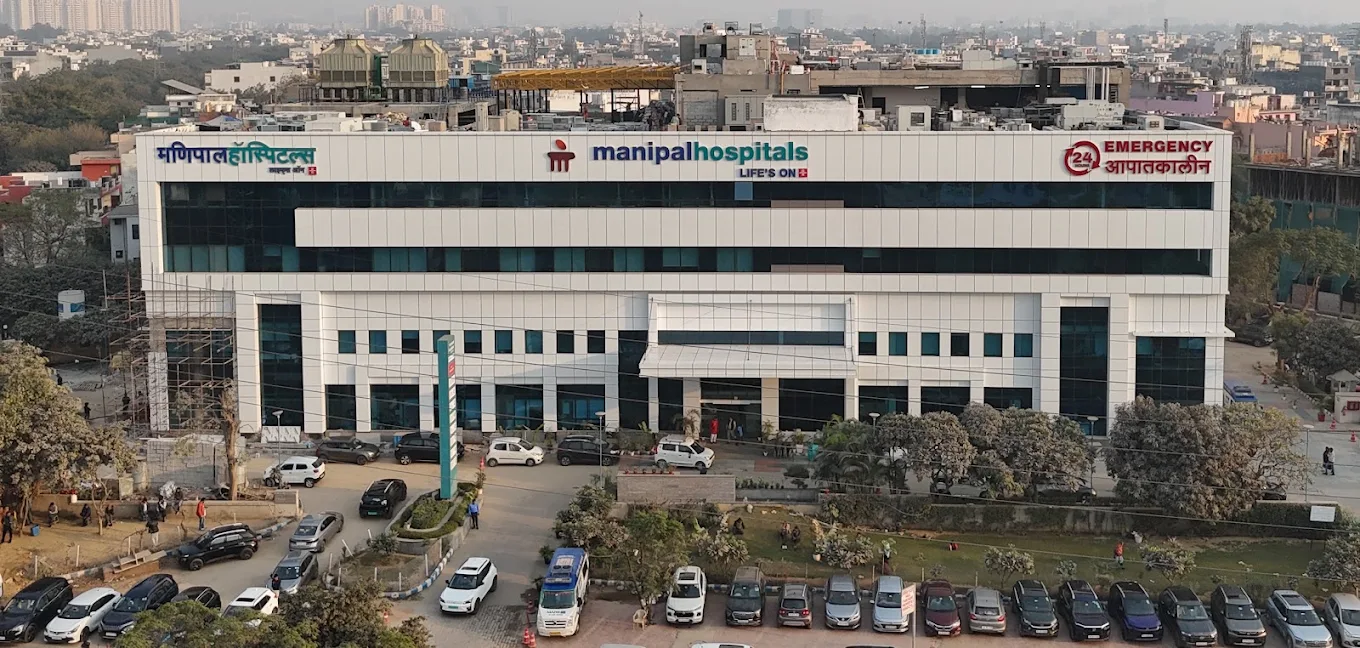
TOP HOSPITALS
Special High-quality Hospitals




HAPPY PATIENTS
What Our Patients Are Saying
























Our Gallery