Medical Visa
Assistance
Assistance
Tele-Video
Consultation
Consultation
Language Interpretation
Services
Services
Second Medical
Opinion
Opinion
Post-Treatment
Care Coordination
Care Coordination
Coordinating care at accredited hospitals, including
Apollo HospitalsFortis HealthcareManipal HospitalsSarvodaya Hospital
Not sure where to start? Get a free medical opinion Not sure what your treatment will cost? Free, instant, itemised estimate -- treatment, visa, flights, hotel & food
What will your treatment cost?
Satyug Assistant
Online · usually replies instantly
Answers are informational, not medical advice.
Spine Scoliosis Surgery in India
Released Date: 2024-08-04
Written & reviewed by Vikram Kashyap, Medical Consultant, Satyug Healthcare
·Last updated: ·Editorial policy

What is Spinal curve Scoliosis deformities ?
🖼️ Understand It in Pictures
💡 In simple words
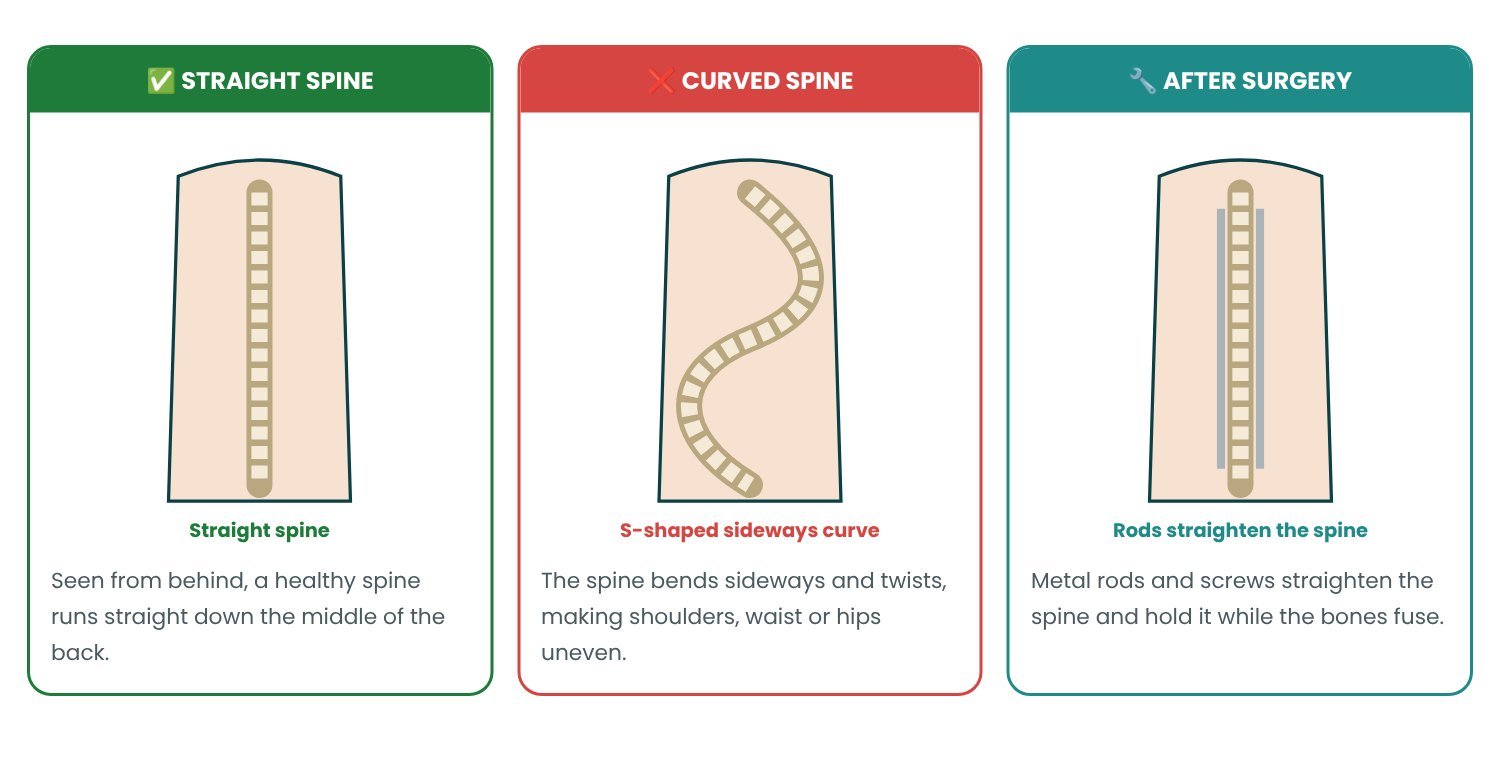
In scoliosis, the spine curves sideways like an S or C. A large or worsening curve can affect posture, cause pain and, if severe, press on the lungs. Surgery uses screws and rods to straighten the curve and fuse the bones so it stays corrected.
Straight spine vs scoliosis
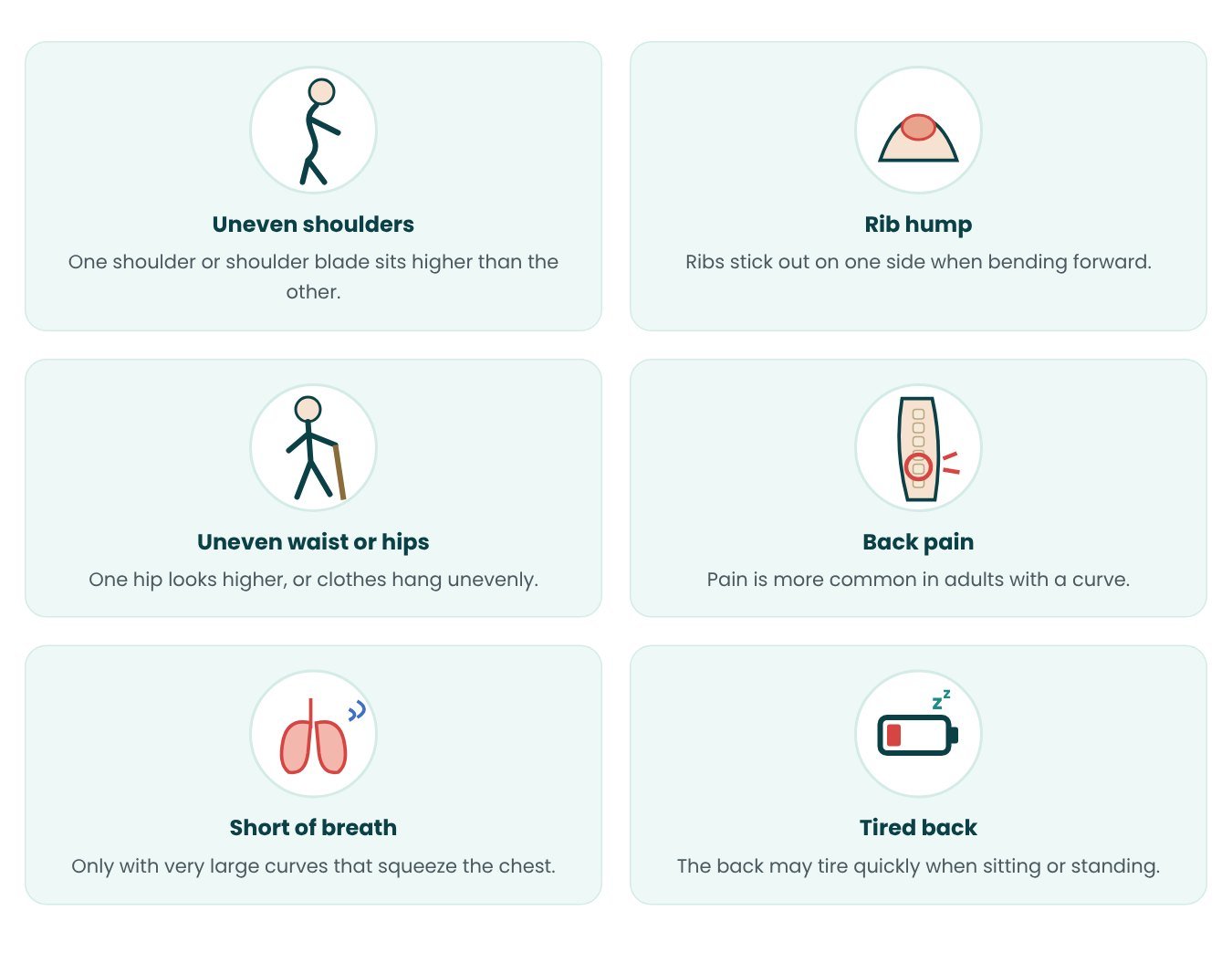
👀 Symptoms in Pictures
🩻 Scans & Tests — What Doctors See

🎬 The Treatment Journey in Pictures
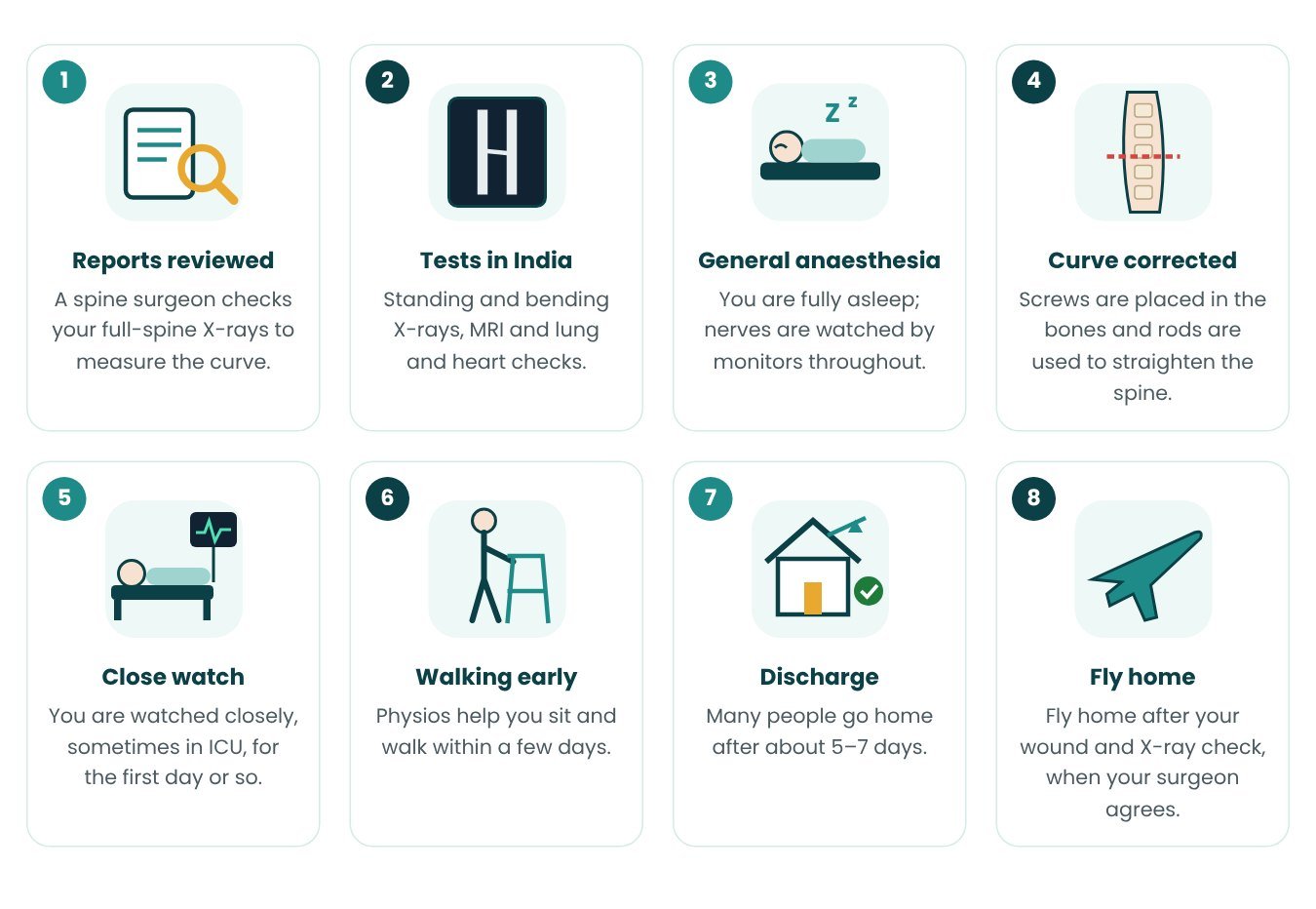
📅 Recovery at a Glance
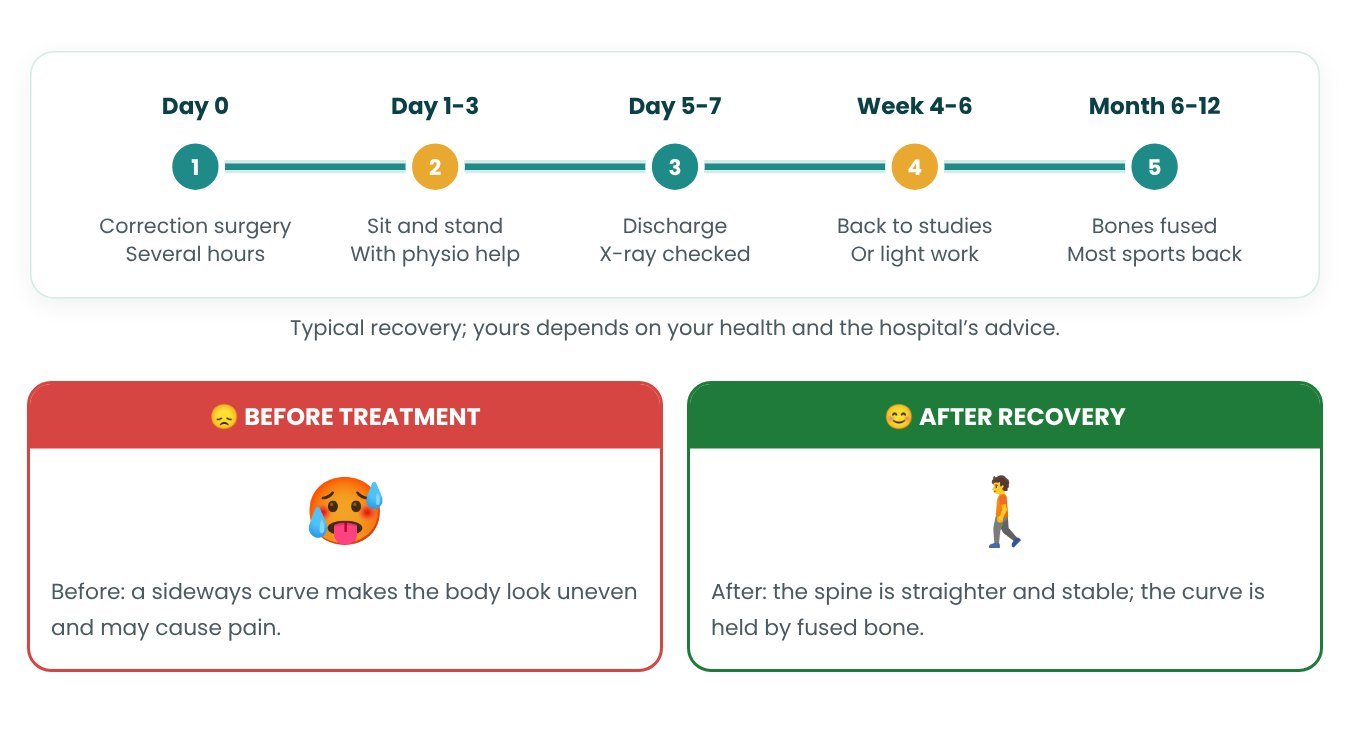
Drawings: Satyug Healthcare (simplified, not to scale). Photos: Wikimedia Commons; author and licence under each photo.
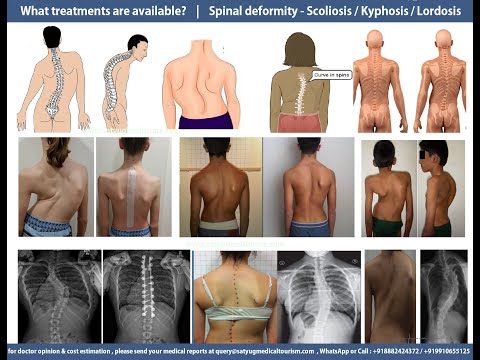
Spinal scoliosis is a medical condition in which patient spine is having an abnormal curvature of the spine. The spine curve can take on a "C" or "S" shape, and it can vary in severity from mild to severe.
Kyphoscoliosis :Kyphoscoliosis is a combination of outward curvature (kyphosis) and lateral curvature (scoliosis) of the spine.

What are the Types of Scoliosis ?
- Idiopathic Scoliosis: The most common type, with no identifiable cause. It is subdivided into:
- Infantile (0-3 years)
- Juvenile (4-10 years)
- Adolescent (11-18 years)
- Congenital Scoliosis: Caused by malformations of the spine present at birth.
- Neuromuscular Scoliosis: Associated with neurological or muscular conditions, such as cerebral palsy or muscular dystrophy.
- Degenerative Scoliosis: Occurs in older adults due to age-related changes in the spine, such as arthritis.
Related Blogs



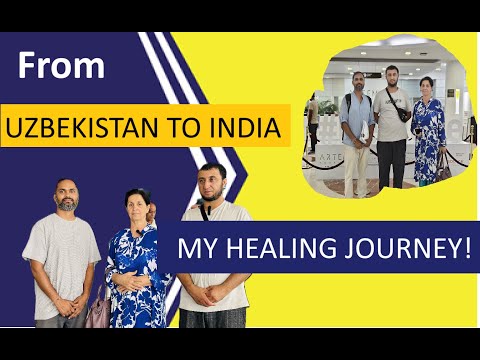
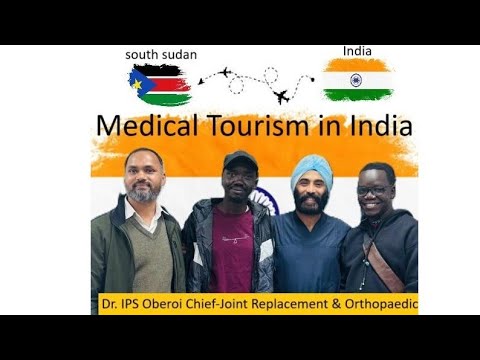
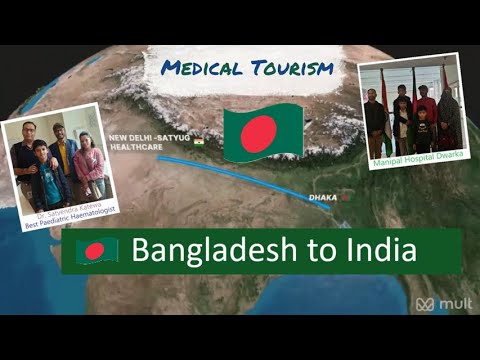
HAPPY PATIENTS
What Our Patients Are Saying




Our Gallery