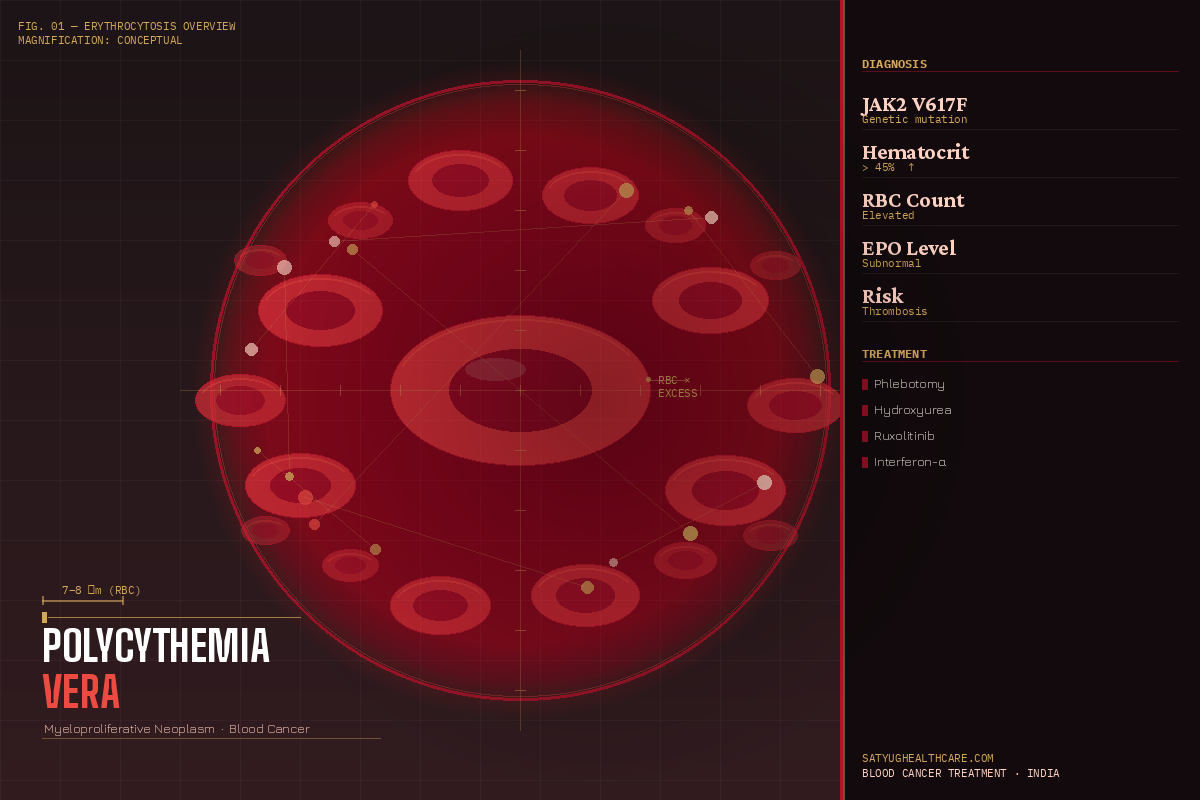
Polycythemia Vera (PV) is a rare but serious blood cancer that causes the bone marrow to produce too many red blood cells, making the blood dangerously thick and slow-moving. If you or someone you love has been diagnosed with PV, getting the right treatment quickly is critical. India has emerged as one of the world's most trusted destinations for PV treatment — offering world-class haematology expertise at a fraction of the cost of Western countries.
Polycythemia Vera is a type of myeloproliferative neoplasm (MPN) — a group of blood cancers originating in the bone marrow. It is driven in approximately 95–98% of cases by a genetic mutation called JAK2 V617F, which causes uncontrolled production of red blood cells, and often white blood cells and platelets as well.
The excess blood cells thicken the blood, significantly raising the risk of dangerous blood clots, strokes, and heart attacks. Without treatment, PV can progress to myelofibrosis (scarring of the bone marrow) or, in some cases, acute leukaemia.
PV is most commonly diagnosed in people over the age of 60, though it can occur at any age. It is slightly more common in men than women. The condition develops slowly, and many patients are diagnosed incidentally through a routine blood test before symptoms become apparent.
Diagnosis involves a combination of blood tests, genetic testing and bone marrow biopsy. The three key diagnostic criteria used globally are:
| Risk Category | Criteria | Treatment Approach |
|---|---|---|
| Low Risk | Age below 60, no history of blood clots | Phlebotomy + Low-dose Aspirin |
| High Risk | Age above 60 OR prior blood clot history | Above + Cytoreductive therapy (Hydroxyurea or Pegylated Interferon-alpha) |
| Refractory / Intolerant | Inadequate response to Hydroxyurea | Ruxolitinib or Ropeginterferon |
India offers a compelling combination of medical excellence and affordability for international patients seeking PV treatment.
Expert Haematologists — India's top haematologists are trained at leading institutions in the USA, UK and Europe, and follow the latest international guidelines for PV management published by the European LeukemiaNet and the American Society of Hematology.
Advanced Diagnostics — JAK2 mutation testing, bone marrow biopsy with FISH analysis, flow cytometry and molecular profiling are all available at major Indian hospitals with fast turnaround times.
All Treatment Options Available — From phlebotomy and hydroxyurea to ruxolitinib and ropeginterferon, every treatment approved globally is available in India.
Cost Advantage — The cost of PV treatment in India is 60–80% lower than in the USA, UK or Europe, without any compromise on quality of care or drug authenticity.
No Waiting Lists — Patients can be seen by a senior haematologist within days of arrival, with treatment commencing almost immediately.
Navigating a rare blood cancer diagnosis in a foreign country can feel overwhelming. Satyug Healthcare specialises in making this journey as smooth and stress-free as possible for international patients.
1. Is Polycythemia Vera curable? PV is currently not considered curable with standard treatments. However, it is very manageable. Most patients with well-controlled PV live for decades with a good quality of life. The only potential cure is allogeneic stem cell transplantation, which is reserved for selected high-risk patients who progress to myelofibrosis.
2. How long does PV treatment take in India? Initial consultation, diagnosis confirmation and treatment initiation typically takes 7–10 days. For patients requiring phlebotomy and oral medications only, treatment can begin almost immediately and continued at home with periodic remote monitoring.
If you have been diagnosed with Polycythemia Vera and are considering treatment in India, our team is ready to assist you immediately.
📞 +91-8860606766 | +91-9910655125