Assistance
Consultation
Services
Opinion
Care Coordination
What will your treatment cost?
Liver Cirrhosis: Causes, Symptoms, Stages, Treatment and Cost in India
Released Date: 2026-10-08

Liver cirrhosis is a serious, long-term condition in which healthy liver tissue is gradually replaced by scar tissue, so the liver can no longer work properly. It affects millions of people worldwide and is a major cause of illness in Africa, the Middle East and Central Asia, where chronic hepatitis B and hepatitis C infections are common. Cirrhosis develops slowly, often over many years, and many people do not know they have it until complications appear. The encouraging news is that treating the underlying cause can stop further damage, complications can be managed effectively, and for people with advanced disease, a liver transplant can offer a new life. India is one of the world's leading centres for living donor liver transplantation.
What is Liver Cirrhosis?
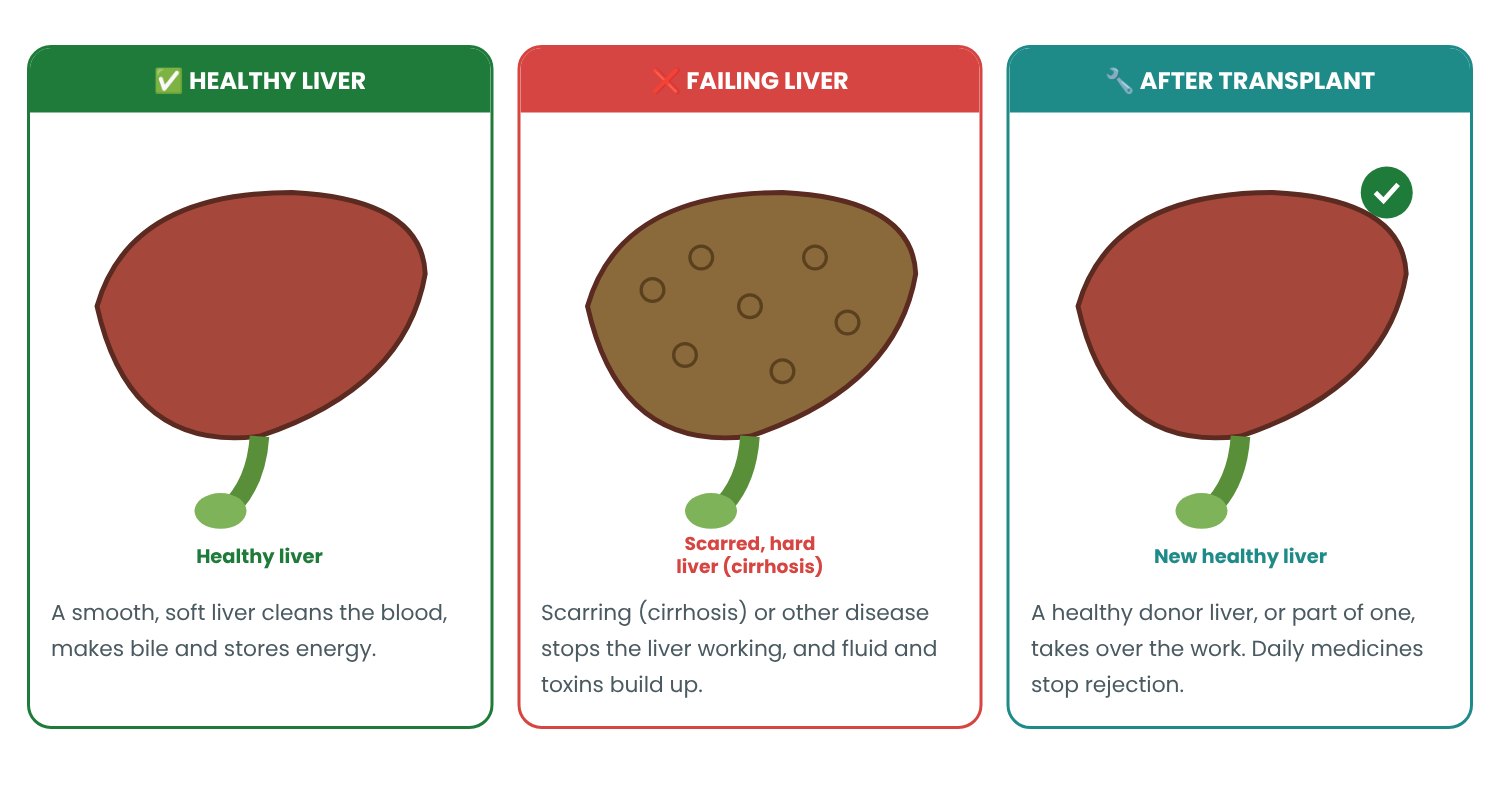
The liver is a remarkable organ that cleans the blood, processes nutrients and medicines, makes proteins that help blood clot, produces bile for digestion and stores energy. When it is injured repeatedly, it tries to repair itself and forms scar tissue (fibrosis). Over time, extensive scarring and nodules distort the liver's structure - this advanced stage is called cirrhosis.
Compensated and decompensated cirrhosis
- Compensated cirrhosis - the liver is scarred but still manages to perform its essential functions. Many people have few or no symptoms at this stage and can remain stable for years with proper care.
- Decompensated cirrhosis - the liver can no longer cope, leading to complications such as fluid in the abdomen (ascites), bleeding from swollen veins (varices), jaundice and confusion (hepatic encephalopathy).
Doctors use scoring systems such as the Child-Pugh score (classes A, B and C) and the MELD score to judge how severe cirrhosis is and to decide when a liver transplant is needed.
🖼️ Understand It in Pictures
Healthy liver vs failing liver vs after transplant
👀 Symptoms in Pictures
🩻 Scans & Tests — What Doctors See

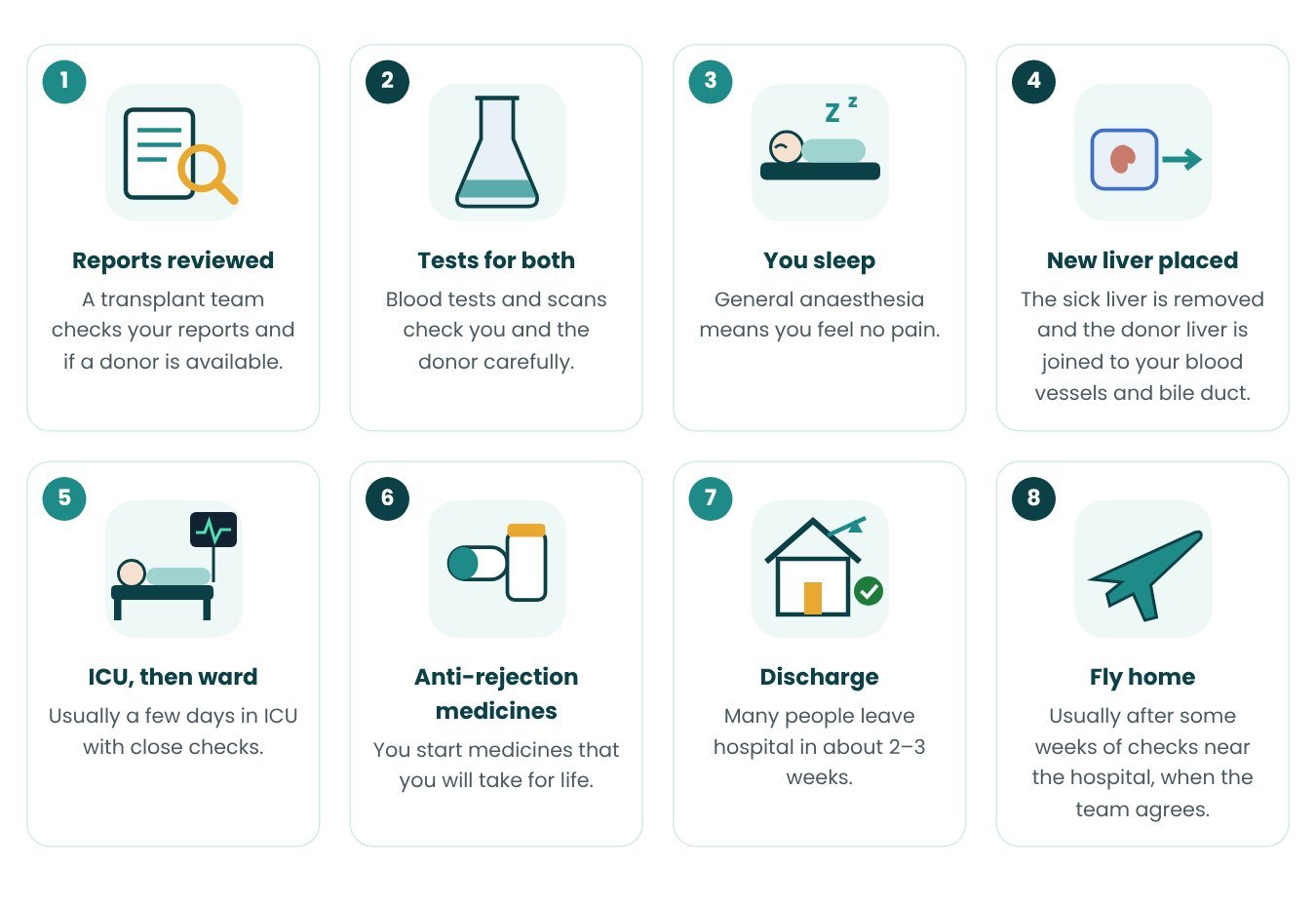
🎬 The Treatment Journey in Pictures

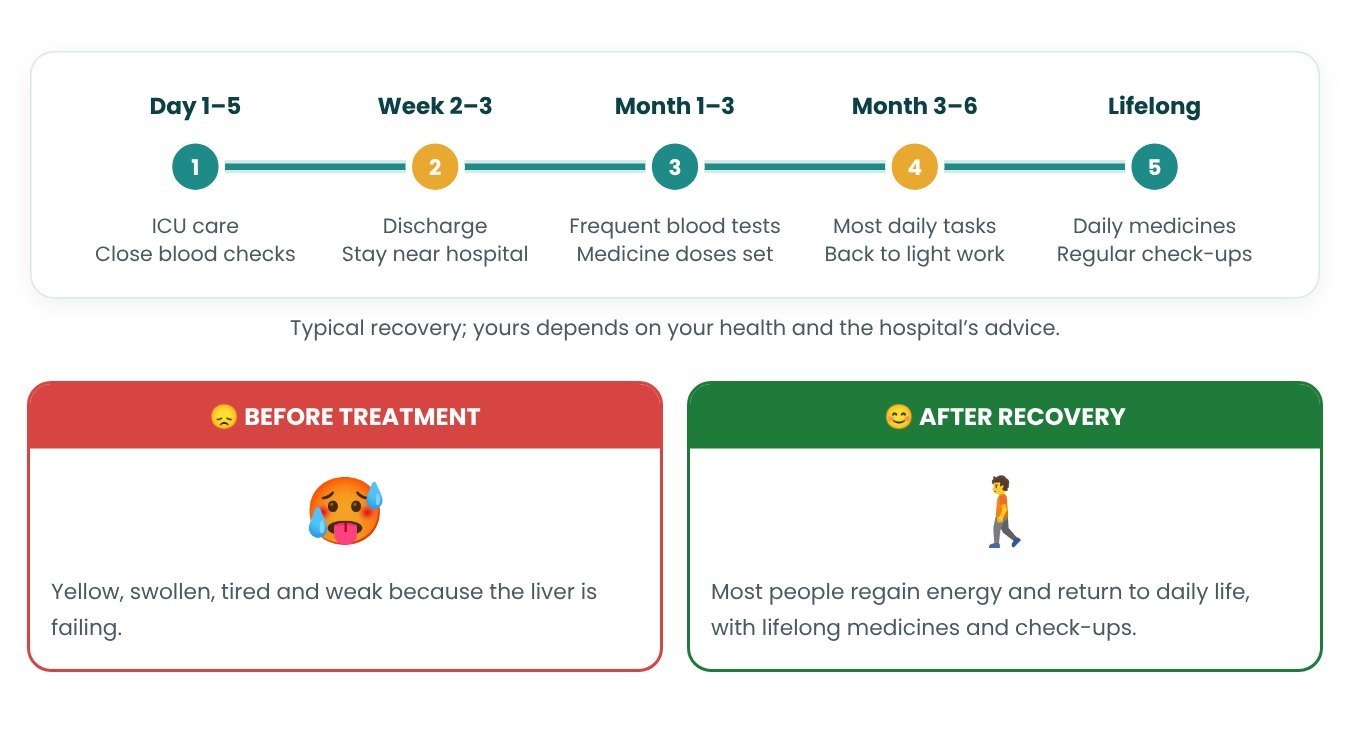
📅 Recovery at a Glance
Drawings: Satyug Healthcare (simplified, not to scale). Photos: Wikimedia Commons; author and licence under each photo.
Causes and Risk Factors
- Chronic hepatitis B - very common in sub-Saharan Africa and parts of Central Asia, often acquired at birth or in early childhood.
- Chronic hepatitis C - Egypt historically had one of the highest rates in the world, and it remains common in Central Asia and Pakistan.
- Metabolic dysfunction-associated steatotic liver disease (MASLD), previously called non-alcoholic fatty liver disease - linked to obesity, diabetes and high cholesterol. This is rising rapidly in the Gulf countries and South Asia.
- Long-term heavy alcohol use.
- Autoimmune hepatitis and bile duct diseases such as primary biliary cholangitis and primary sclerosing cholangitis.
- Inherited conditions such as Wilson's disease (copper build-up), haemochromatosis (iron build-up) and alpha-1 antitrypsin deficiency.
- Schistosomiasis - a parasitic infection common in parts of Africa that can cause liver scarring and high pressure in the liver veins.
- In children, conditions such as biliary atresia can lead to cirrhosis early in life if not treated.
Symptoms of Liver Cirrhosis
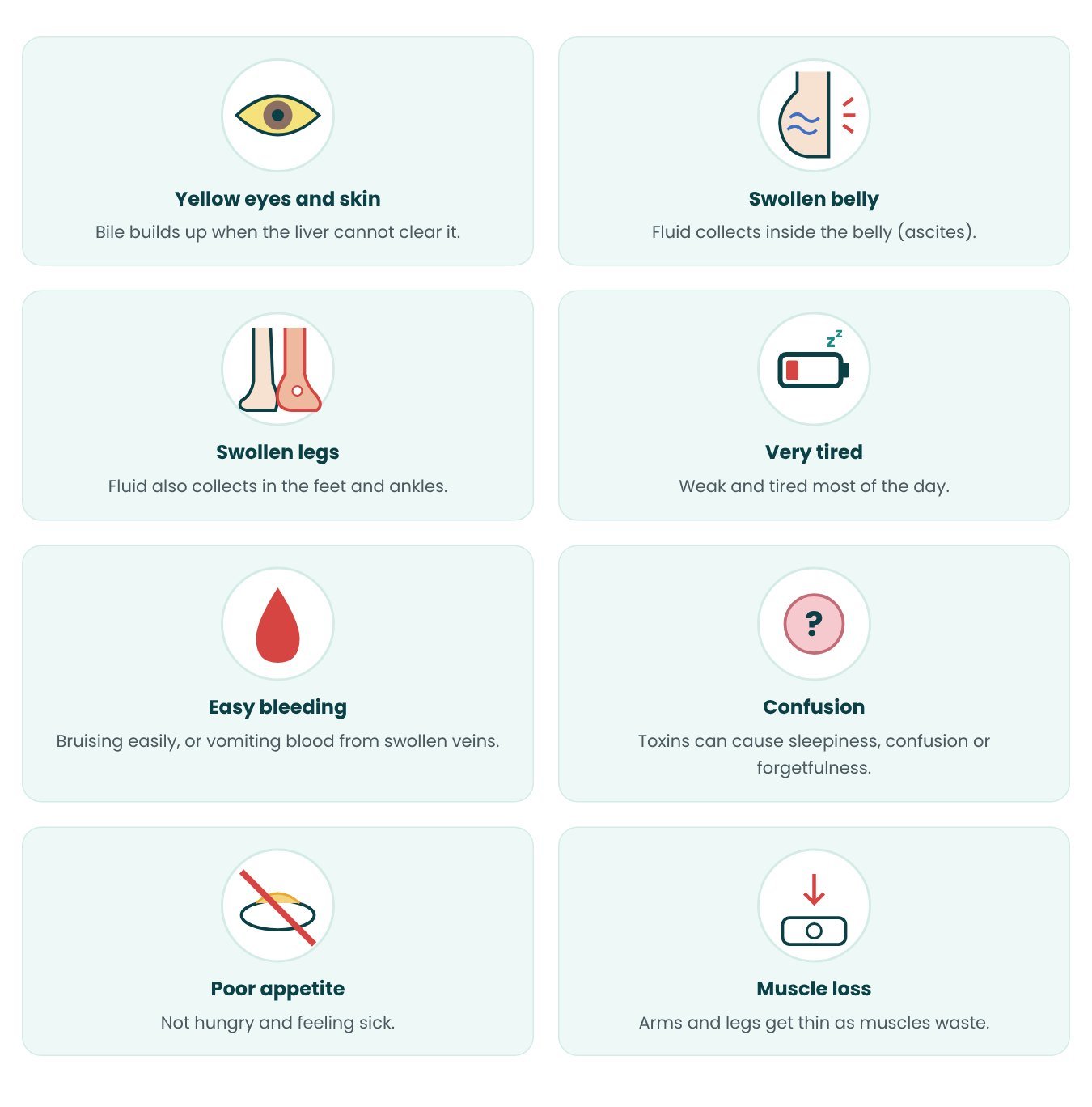
Early cirrhosis may cause only vague symptoms such as tiredness, weakness, poor appetite and weight loss. As the disease progresses, symptoms may include:
- Yellowing of the eyes and skin (jaundice) and dark urine
- Swelling of the abdomen (ascites) and legs
- Easy bruising and bleeding, including nosebleeds and bleeding gums
- Itchy skin
- Spider-like blood vessels on the skin and redness of the palms
- Muscle loss and weakness
- Confusion, drowsiness, sleep disturbances or personality changes
- Hormonal changes, such as breast enlargement in men and irregular periods in women
Warning signs that need emergency care: vomiting blood or passing black, tarry stools (bleeding varices), sudden confusion or extreme drowsiness, high fever with a painful swollen abdomen (possible infection of the ascitic fluid), or a rapid increase in jaundice.
How is Liver Cirrhosis Diagnosed?
- Blood tests - liver function tests (bilirubin, albumin, liver enzymes), clotting test (INR), complete blood count, kidney function and electrolytes.
- Tests for the cause - hepatitis B and C markers, autoimmune antibodies, iron studies, copper studies, and others as needed.
- Ultrasound with Doppler - shows the shape and texture of the liver, spleen size, fluid and blood flow.
- FibroScan (transient elastography) - a quick, painless test that measures liver stiffness to estimate the degree of scarring.
- CT or MRI scan - for detailed imaging and to screen for liver cancer.
- Upper GI endoscopy - to look for varices in the food pipe and stomach.
- Liver biopsy - in selected cases where the cause or degree of damage is unclear.
Treatment Options for Liver Cirrhosis
1. Treating the underlying cause
Stopping the cause of damage is the most important step and can prevent cirrhosis from getting worse - and in some cases even improve liver function. This includes antiviral medicines for hepatitis B, curative oral treatment for hepatitis C, complete abstinence from alcohol, weight loss and diabetes control for fatty liver disease, steroids and immunosuppressants for autoimmune hepatitis, and specific treatments for Wilson's disease or haemochromatosis.
2. Managing complications
- Ascites - low-salt diet, diuretics (water tablets) and, when needed, draining the fluid (paracentesis).
- Varices - beta-blockers to lower portal pressure and endoscopic variceal band ligation to prevent or stop bleeding.
- Hepatic encephalopathy - medicines such as lactulose and rifaximin to reduce toxins affecting the brain.
- TIPS (transjugular intrahepatic portosystemic shunt) - an interventional radiology procedure that creates a channel inside the liver to reduce pressure, used for recurrent bleeding or difficult ascites.
- Nutrition support - adequate protein and calories, often with a late-evening snack, to prevent muscle loss.
3. Liver cancer surveillance
People with cirrhosis have a higher risk of hepatocellular carcinoma (liver cancer), so an ultrasound with or without an AFP blood test is recommended every six months.
4. Liver transplantation
When cirrhosis becomes advanced, a liver transplant is the only definitive cure. India has some of the world's most experienced living donor liver transplant (LDLT) programmes. A healthy relative donates part of their liver; both the donor's remaining liver and the transplanted portion regrow to near-normal size within a few months. For international patients, the donor must be a close family member, with the relationship verified as required by Indian law.
Cost of Liver Cirrhosis Treatment in India
Indicative starting prices at leading JCI/NABH accredited hospitals in Delhi NCR:
| Treatment | Starting cost (USD) |
|---|---|
| Hepatology evaluation (consultation, blood tests, ultrasound, FibroScan) | From $400 |
| Upper GI endoscopy with variceal band ligation | From $600 |
| Therapeutic paracentesis (ascitic fluid drainage) | From $300 |
| TIPS procedure | From $7,000 |
| Living donor liver transplant (recipient and donor) | From $30,000 |
Note: these are starting estimates. The final cost depends on the severity of liver disease, complications, the hospital chosen, length of ICU and hospital stay, and medicines required.
Contact Satyug Healthcare at +91-8860606766 / +91-9910655125 (WhatsApp) for a free medical opinion and cost estimate.
Living with Cirrhosis and Prevention
- Avoid alcohol completely.
- Follow a low-salt diet if you have fluid retention, and eat enough protein unless told otherwise.
- Do not take herbal remedies, traditional medicines or over-the-counter painkillers (especially NSAIDs) without your doctor's advice.
- Get vaccinated against hepatitis A, hepatitis B, influenza and pneumococcus.
- Attend six-monthly liver cancer screening and regular check-ups.
- Keep a healthy weight and control diabetes and cholesterol.
Prevention is possible for most causes of cirrhosis: hepatitis B vaccination (including the birth dose for newborns), screening and treatment for hepatitis B and C, safe injection and blood transfusion practices, limiting alcohol, and preventing obesity.
After a liver transplant, most patients return to normal daily activities within three months. Lifelong anti-rejection medicines and regular follow-up are essential.
Why Choose India for Liver Treatment?
- Internationally recognised liver transplant teams with very large living donor programmes.
- Advanced hepatology, interventional radiology and liver ICU facilities.
- Costs much lower than in the USA, Europe and the Gulf, with no long waiting lists for living donor transplants.
- Affordable generic antiviral and anti-rejection medicines.
Step-by-Step Process to Travel to India for Treatment
- Share your reports - send your latest reports, scans/CD, angiography or echo films and passport copy to Satyug Healthcare on WhatsApp (+91-8860606766 / +91-9910655125) or email.
- Free medical opinion & cost estimate - within 24-72 hours we share opinions and written cost estimates from 2-3 JCI/NABH-accredited hospitals and specialists.
- Choose hospital & doctor - compare doctor experience, hospital, room category and total cost; we help you decide with no extra charge.
- Visa Invitation Letter (VIL) - the hospital issues a VIL for the patient and up to two attendants; we arrange it within 24-48 hours.
- Apply for Indian e-Medical Visa - apply online for the e-Medical Visa (patient) and e-Medical Attendant Visa (family) using the VIL; most approvals come in 3-5 working days.
- Book flights & accommodation - we suggest flights and arrange a guest house, service apartment or hotel near the hospital to suit your budget.
- Free airport pickup - our representative receives you at the airport and takes you to your hotel or directly to the hospital.
- Hospital admission & treatment - a dedicated coordinator and language interpreter stay with you for registration, tests, doctor consultations, the procedure and billing.
- Discharge & follow-up - you receive the discharge summary, prescriptions and fitness-to-fly certificate; follow-up checks are done before you fly.
- Return home & tele-follow-up - we arrange airport drop and stay connected for online follow-up consultations with your doctor in India.
Frequently Asked Questions
Can liver cirrhosis be reversed?
Established cirrhosis is generally considered permanent, but treating the cause (for example curing hepatitis C or stopping alcohol) can stop progression and sometimes lead to partial improvement in liver function and scarring.
How long can a person live with cirrhosis?
People with compensated cirrhosis can live for many years with good care. Once complications such as ascites, bleeding or encephalopathy appear, survival is shorter, and a liver transplant evaluation should be considered.
Who can be a liver donor for an international patient in India?
The donor should be a close relative or spouse, usually between 18 and 55 years of age, in good health and with a compatible blood group. The relationship must be documented and approved by the hospital's authorisation committee.
Is liver donation safe for the donor?
Living liver donation is a major operation, but in experienced centres the risks are low. The donor's liver regrows within a few months, and most donors return to normal work in about 6 to 8 weeks.
How long do I need to stay in India for a liver transplant?
International patients usually need to stay about 2 to 3 months in total, including evaluation, surgery, hospital recovery and early follow-up. The donor usually leaves hospital within about a week to 10 days.
What is the success rate of liver transplant in India?
Leading Indian centres report outcomes comparable to international standards, with most recipients surviving well beyond one year. Results depend on the patient's condition before surgery, so ask the hospital for its own outcome data.
What should a cirrhosis patient eat?
A balanced diet with adequate protein, small frequent meals and a bedtime snack, low salt if there is fluid retention, and no alcohol. A liver dietitian can create a plan for you.
Disclaimer: This article is for general information only and is not a substitute for a consultation with a qualified doctor.
Related Blogs


HAPPY PATIENTS
What Our Patients Are Saying





























Our Gallery