Assistance
Consultation
Services
Opinion
Care Coordination
What will your treatment cost?
Hepatitis B and Hepatitis C: Causes, Symptoms, Diagnosis, Treatment and Cost in India
Released Date: 2026-10-08
Hepatitis B and hepatitis C are viral infections of the liver that together affect hundreds of millions of people worldwide, according to the World Health Organization. Both viruses can live in the body for decades without causing symptoms while slowly damaging the liver, eventually leading to cirrhosis, liver failure or liver cancer. They are particularly common in sub-Saharan Africa, Central Asia, Egypt, Pakistan and parts of the Middle East. The good news is remarkable: hepatitis C can now be cured in most people with a short course of tablets, and hepatitis B can be effectively controlled with safe daily medicine and prevented with a vaccine. India manufactures high-quality generic antiviral medicines and has expert liver specialists, making treatment highly affordable.
What are Hepatitis B and Hepatitis C?
"Hepatitis" means inflammation of the liver. Hepatitis B is caused by the hepatitis B virus (HBV) and hepatitis C by the hepatitis C virus (HCV). Both can cause:
- Acute infection - the first few months after infection, which may be silent or cause a short illness with jaundice.
- Chronic infection - when the virus remains in the body for more than six months. Most adults infected with hepatitis B clear the virus, but infants infected at birth very often develop chronic infection. With hepatitis C, the majority of infected people develop chronic infection if untreated.
Hepatitis C has several genotypes (strains). Modern "pan-genotypic" medicines work against all of them. Hepatitis D is a related virus that only infects people who already have hepatitis B and makes the disease more severe; it is more common in parts of Central Asia, Africa and the Middle East.
🖼️ Understand It in Pictures
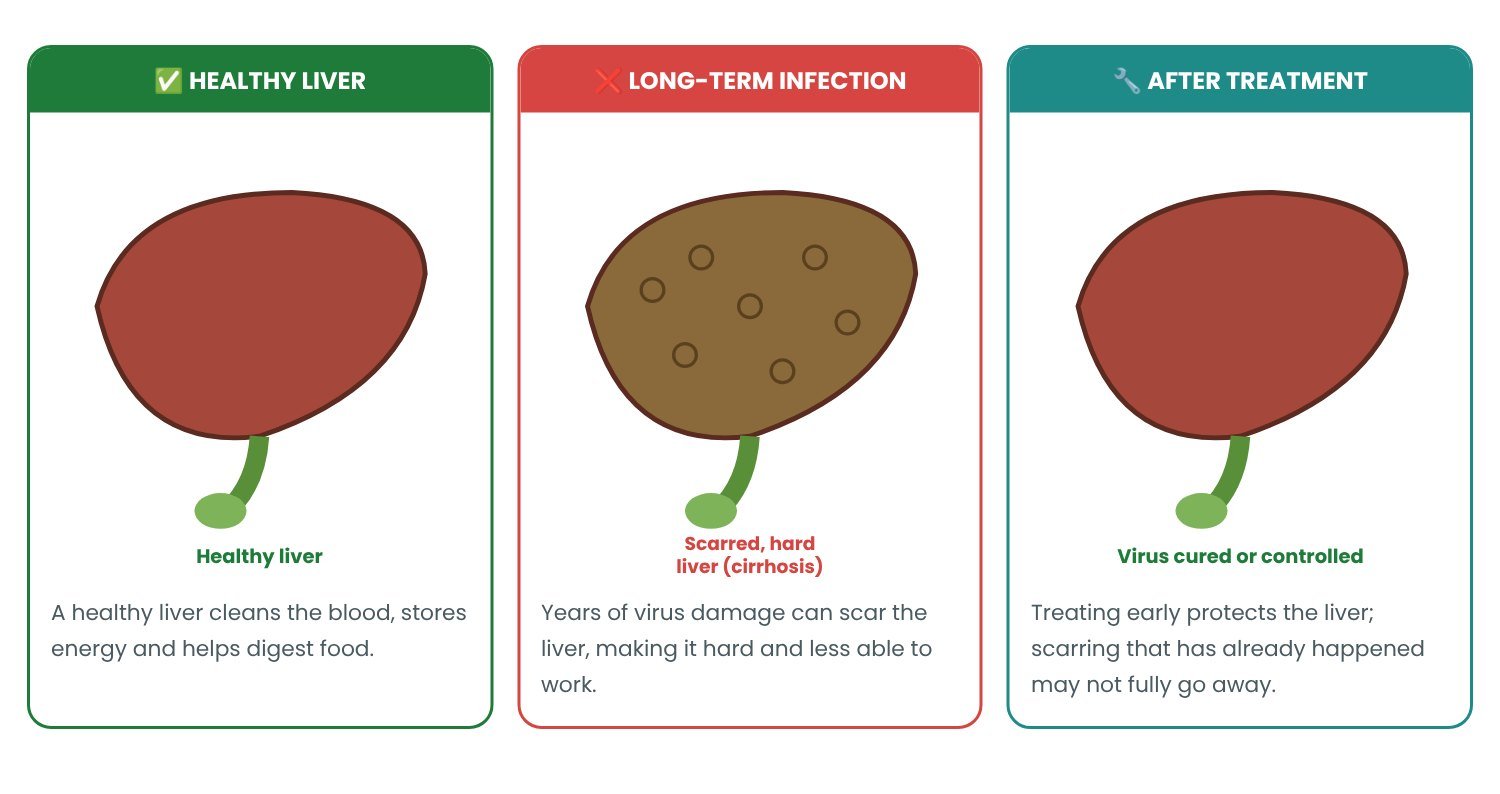
Healthy liver vs long-term virus damage
👀 Symptoms in Pictures
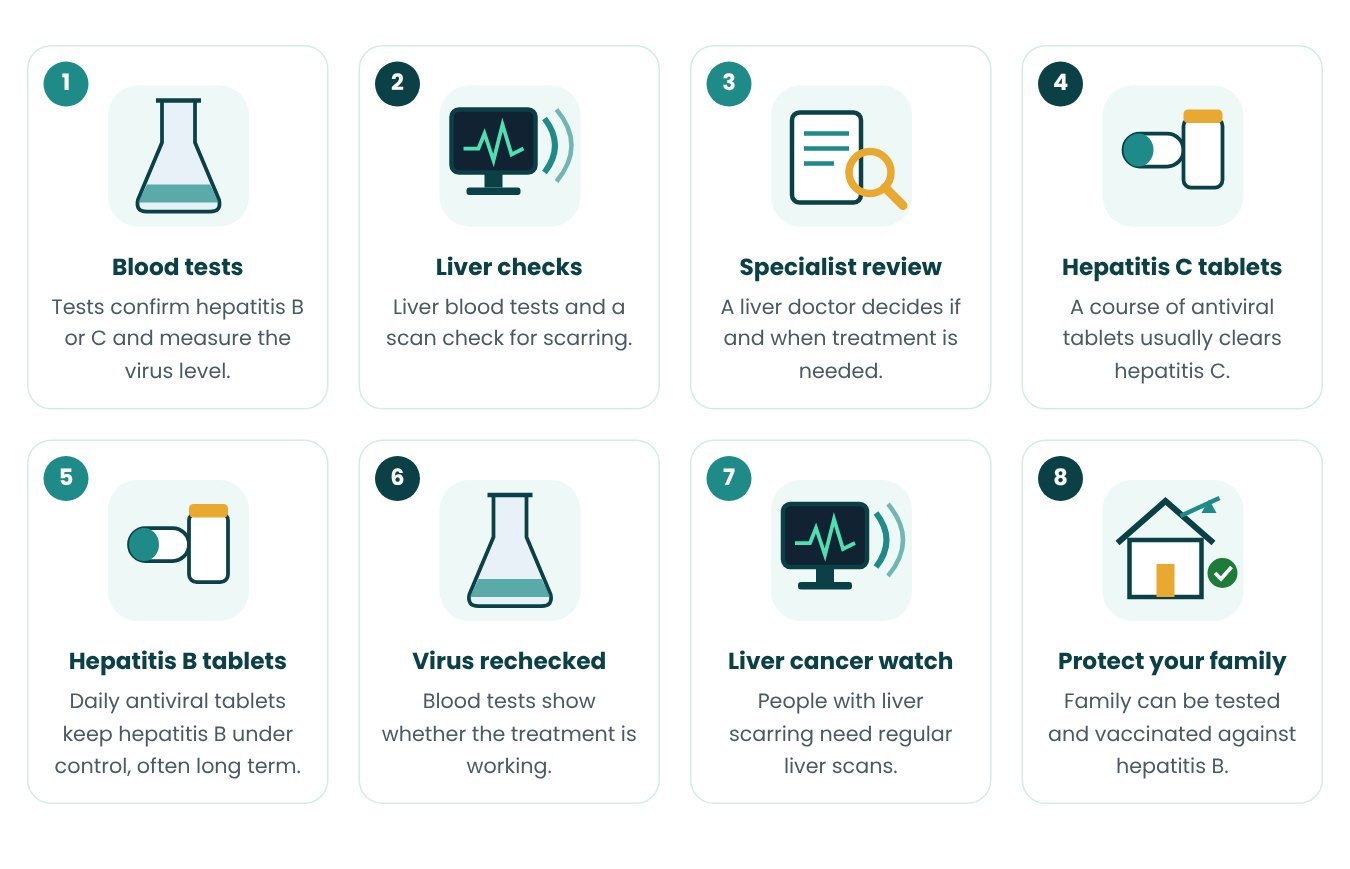
🎬 The Treatment Journey in Pictures
📅 Recovery at a Glance
Causes and How the Infections Spread
Hepatitis B spreads through
- Mother to baby at birth - the most common route in Africa and Asia
- Close household contact in childhood, especially through cuts and sores
- Unprotected sex
- Sharing needles, razors or toothbrushes
- Unsafe injections, tattoos, traditional scarification or medical/dental procedures with unsterilised equipment
- Transfusion of unscreened blood
Hepatitis C spreads mainly through
- Blood-to-blood contact: reused syringes and unsafe injections in healthcare settings (a key reason for past high rates in Egypt and Pakistan)
- Blood transfusions before routine screening was introduced
- Dialysis in units with poor infection control
- Sharing needles for drug use, unsterile tattooing or cupping (hijama) with reused blades
- Less commonly, from mother to baby or through sex
Neither virus spreads through food, water, coughing, hugging, sharing utensils or breastfeeding (unless nipples are cracked and bleeding).
Symptoms of Hepatitis B and C
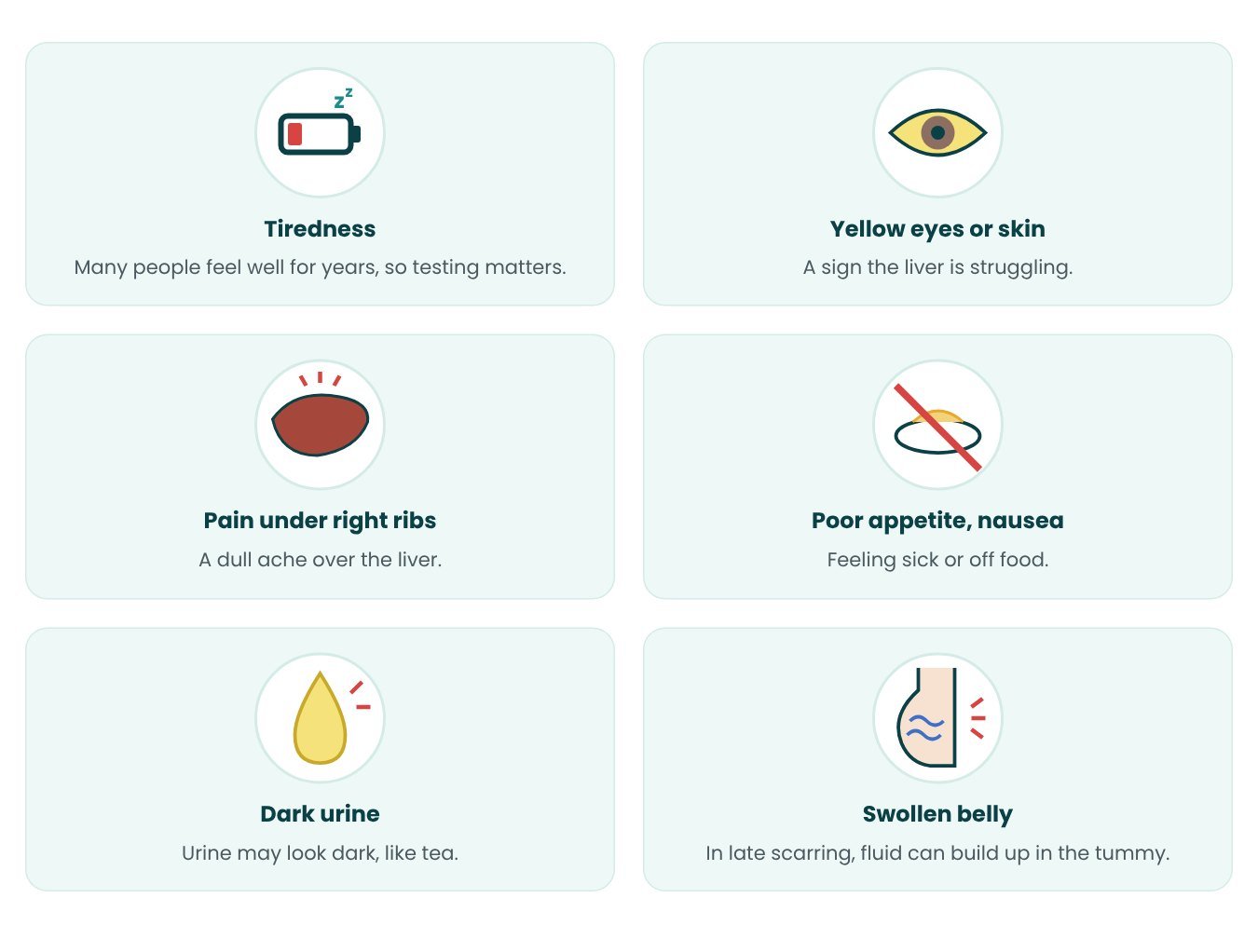
Most people with chronic hepatitis B or C have no symptoms for many years, which is why testing is so important. When symptoms appear they may include:
- Tiredness and weakness
- Loss of appetite, nausea and pain in the upper right abdomen
- Yellow eyes and skin (jaundice), dark urine and pale stools
- Joint pains and fever (during acute infection)
- Signs of advanced liver disease: swollen abdomen, swollen legs, easy bruising and confusion
Seek urgent care if you have: deepening jaundice with confusion or drowsiness, vomiting blood or black stools, a rapidly swelling abdomen, or bleeding that will not stop. These may indicate liver failure or complications of cirrhosis.
How are Hepatitis B and C Diagnosed?
- Hepatitis B tests - HBsAg (shows current infection), HBeAg and anti-HBe, anti-HBc, and HBV DNA viral load.
- Hepatitis C tests - anti-HCV antibody screening, followed by HCV RNA to confirm active infection; genotype testing is sometimes done.
- Liver function tests - ALT, AST, bilirubin, albumin and INR.
- FibroScan or blood-based fibrosis scores (such as APRI and FIB-4) - to check how much liver scarring is present.
- Ultrasound of the abdomen - to examine the liver and screen for cancer.
- Tests for co-infections such as HIV and hepatitis D.
Treatment Options
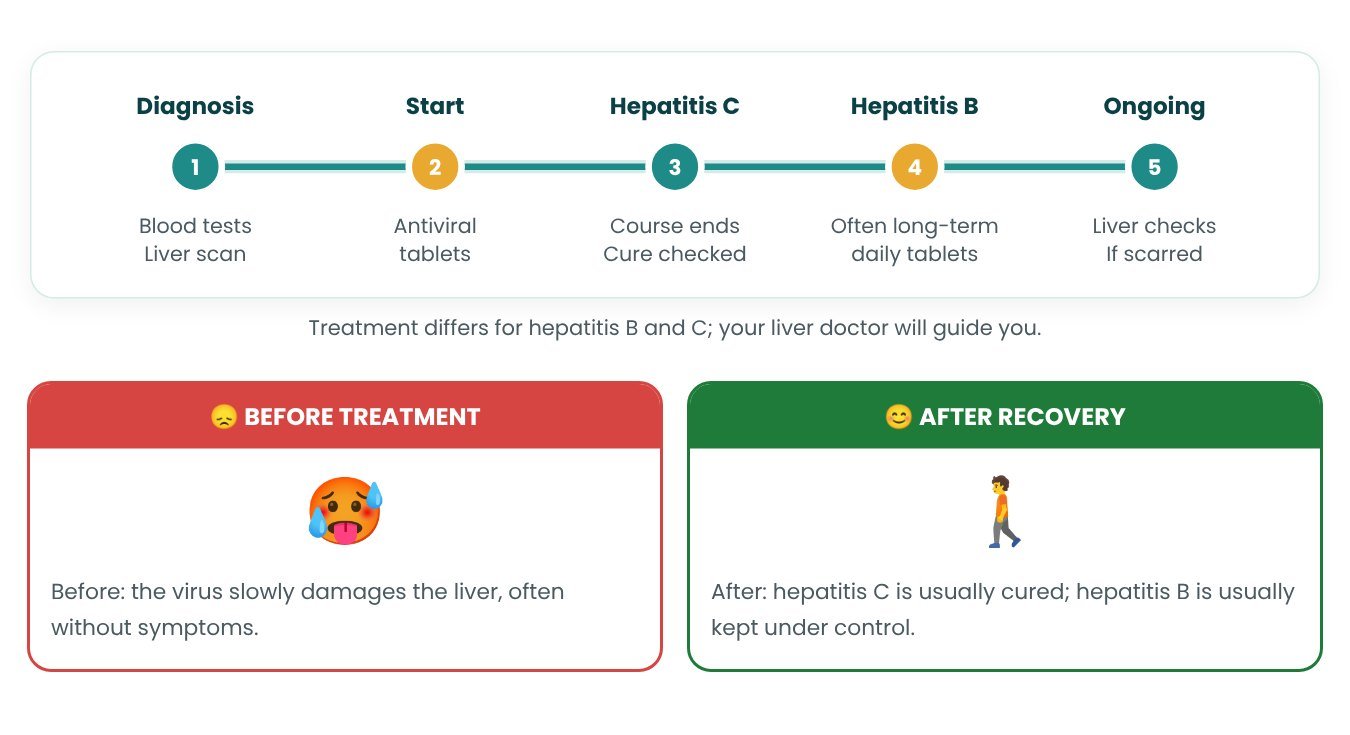
Treatment of hepatitis C - a cure in weeks
Hepatitis C is treated with direct-acting antivirals (DAAs) taken as tablets, usually for 12 weeks. Common combinations include sofosbuvir with velpatasvir, or glecaprevir with pibrentasvir. These medicines cure the large majority of patients, have few side effects and do not require injections. Cure is confirmed by an undetectable HCV RNA test 12 weeks after finishing treatment (called sustained virological response, or SVR). Patients with cirrhosis may need a longer course or the addition of ribavirin. India manufactures licensed generic versions of these medicines, making a full course very affordable.
Treatment of hepatitis B - long-term control
Not every person with hepatitis B needs medicine immediately. Treatment is recommended based on viral load, liver enzyme levels, the degree of liver scarring, family history of liver cancer and other factors. The main medicines are tenofovir (TDF or TAF) and entecavir, taken as one tablet a day. They powerfully suppress the virus, reduce liver inflammation, can reverse some scarring and lower the risk of cirrhosis and liver cancer. Treatment is usually long-term, sometimes lifelong. In selected patients, pegylated interferon injections may be used for a fixed period.
Treatment of advanced liver disease
Patients who already have cirrhosis need management of complications, six-monthly liver cancer screening and, when the liver fails, a liver transplant. Antiviral therapy continues after transplant to prevent the virus attacking the new liver. Patients who develop liver cancer may benefit from surgery, ablation, TACE or transplant depending on the stage.
Pregnancy and newborns
Pregnant women with high hepatitis B viral loads may be given tenofovir in the third trimester, and all babies born to mothers with hepatitis B should receive the hepatitis B vaccine birth dose and, ideally, hepatitis B immunoglobulin within 24 hours of birth. This greatly reduces the chance of the baby becoming infected.
Cost of Hepatitis B and C Treatment in India
Indicative starting prices at leading JCI/NABH accredited hospitals in Delhi NCR:
| Treatment | Starting cost (USD) |
|---|---|
| Hepatology evaluation (consultation, viral load, liver tests, ultrasound, FibroScan) | From $400 |
| Hepatitis C 12-week generic DAA course (medicines only) | From $150 |
| Hepatitis B antiviral medicine (tenofovir/entecavir), per month | From $10 |
| Endoscopy with variceal banding (if cirrhosis present) | From $600 |
| Living donor liver transplant (for liver failure) | From $30,000 |
Note: these are starting estimates. The final cost depends on the stage of liver disease, the tests required, the medicines prescribed and the hospital chosen.
Contact Satyug Healthcare at +91-8860606766 / +91-9910655125 (WhatsApp) for a free medical opinion and cost estimate.
Living with Hepatitis and Prevention
- Take hepatitis B medicine every day without missing doses; stopping suddenly can cause a dangerous flare.
- Avoid alcohol, and do not take herbal or traditional remedies without medical advice.
- Maintain a healthy weight, as fatty liver adds to liver damage.
- Get vaccinated against hepatitis A if not already immune.
- Ensure family members and sexual partners are tested and vaccinated against hepatitis B.
- Do not share razors, toothbrushes or needles, and cover cuts.
- Have regular blood tests and six-monthly liver ultrasound if advised.
Hepatitis B is preventable with a safe and effective vaccine given in three doses, starting at birth. There is currently no vaccine for hepatitis C, so prevention depends on safe injections, screened blood and avoiding sharing of sharp items.
Why Choose India for Hepatitis Treatment?
- Experienced hepatologists who manage large numbers of viral hepatitis patients.
- Quality-assured generic antiviral medicines manufactured in India at very low cost.
- Advanced diagnostics such as FibroScan and viral load testing available within days.
- World-class liver transplant programmes for those with advanced disease.
Step-by-Step Process to Travel to India for Treatment
- Share your reports - send your latest reports, scans/CD, angiography or echo films and passport copy to Satyug Healthcare on WhatsApp (+91-8860606766 / +91-9910655125) or email.
- Free medical opinion & cost estimate - within 24-72 hours we share opinions and written cost estimates from 2-3 JCI/NABH-accredited hospitals and specialists.
- Choose hospital & doctor - compare doctor experience, hospital, room category and total cost; we help you decide with no extra charge.
- Visa Invitation Letter (VIL) - the hospital issues a VIL for the patient and up to two attendants; we arrange it within 24-48 hours.
- Apply for Indian e-Medical Visa - apply online for the e-Medical Visa (patient) and e-Medical Attendant Visa (family) using the VIL; most approvals come in 3-5 working days.
- Book flights & accommodation - we suggest flights and arrange a guest house, service apartment or hotel near the hospital to suit your budget.
- Free airport pickup - our representative receives you at the airport and takes you to your hotel or directly to the hospital.
- Hospital admission & treatment - a dedicated coordinator and language interpreter stay with you for registration, tests, doctor consultations, the procedure and billing.
- Discharge & follow-up - you receive the discharge summary, prescriptions and fitness-to-fly certificate; follow-up checks are done before you fly.
- Return home & tele-follow-up - we arrange airport drop and stay connected for online follow-up consultations with your doctor in India.
Frequently Asked Questions
Can hepatitis C be completely cured?
Yes. Modern direct-acting antiviral tablets cure most people with hepatitis C after 8 to 12 weeks of treatment. However, cure does not protect against re-infection, so precautions are still important.
Can hepatitis B be cured?
A complete cure is uncommon, but antiviral medicines control the virus very effectively and greatly reduce the risk of cirrhosis and liver cancer. Some patients eventually lose HBsAg, which is considered a functional cure.
Do I need to stay in India for the whole hepatitis C treatment?
No. After the initial evaluation, which usually takes 3 to 5 days, you can take the tablets home and complete the course there, with follow-up through tele-consultation and local blood tests.
Can a person with hepatitis B get married and have children?
Yes. The partner should be tested and vaccinated, and with the right care during pregnancy and the birth-dose vaccine for the baby, the chance of passing the virus to the child is very low.
Are generic hepatitis medicines from India safe?
Indian pharmaceutical companies manufacture licensed generic versions of hepatitis C and B medicines, many of which are WHO-prequalified. Your hepatologist will prescribe reputable brands.
Can I work normally with hepatitis B or C?
Yes. People with hepatitis B or C can live and work normally. The infections do not spread through casual contact at work, food or water.
How often should I be checked if I have hepatitis B?
Usually every 6 to 12 months, with liver tests, viral load and an ultrasound, and more often if you have cirrhosis or are on treatment. Your doctor will set the schedule for you.
Disclaimer: This article is for general information only and is not a substitute for a consultation with a qualified doctor.
Related Blogs


HAPPY PATIENTS
What Our Patients Are Saying





























Our Gallery