Assistance
Consultation
Services
Opinion
Care Coordination
What will your treatment cost?
Autism Spectrum Disorder: Causes, Signs, Diagnosis, Therapy and Cost in India
Released Date: 2026-10-08
Autism spectrum disorder (ASD) is a lifelong neurodevelopmental condition that affects how a person communicates, interacts with others and experiences the world. The World Health Organization estimates that about 1 in 100 children worldwide is autistic, and awareness is growing rapidly across Africa, the Middle East, Central Asia and South Asia. Yet many families still face long waits for diagnosis and limited access to trained therapists. The hopeful message is that early identification and structured, evidence-based therapy can make a remarkable difference to a child's communication, learning and independence. India has a growing number of child development centres offering comprehensive assessment and intensive therapy programmes at affordable costs.
What is Autism Spectrum Disorder?
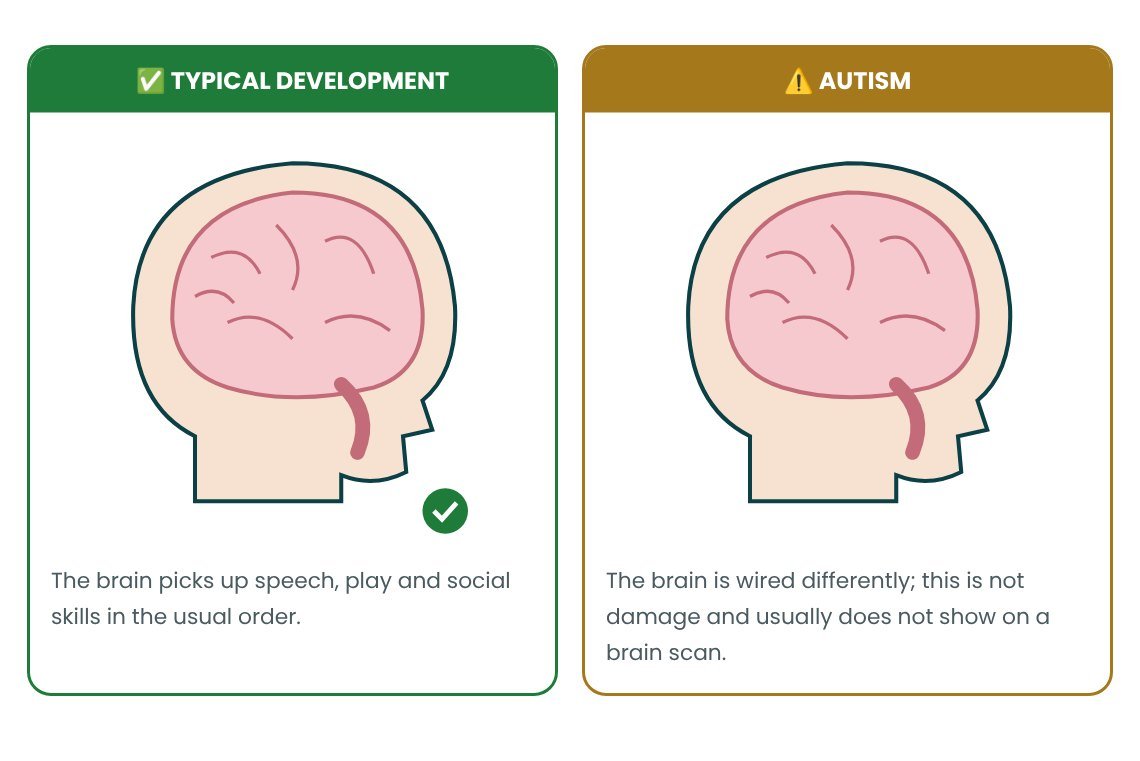
Autism is not a disease to be cured but a different way in which the brain develops. It is called a "spectrum" because it affects every person differently. Some autistic people need very little support, while others have significant learning disabilities and need lifelong care. Diagnosis is based on two core features:
- Differences in social communication and interaction - such as limited eye contact, difficulty understanding others' feelings, or delayed or unusual use of language.
- Restricted and repetitive behaviours or interests - such as repetitive movements, strong need for routine, intense focused interests and unusual responses to sounds, textures or lights.
Levels of support
Clinicians often describe autism by the level of support needed: Level 1 (requiring support), Level 2 (requiring substantial support) and Level 3 (requiring very substantial support). Terms like Asperger's syndrome are now included within ASD.
🖼️ Understand It in Pictures
Autism is a different way the brain works
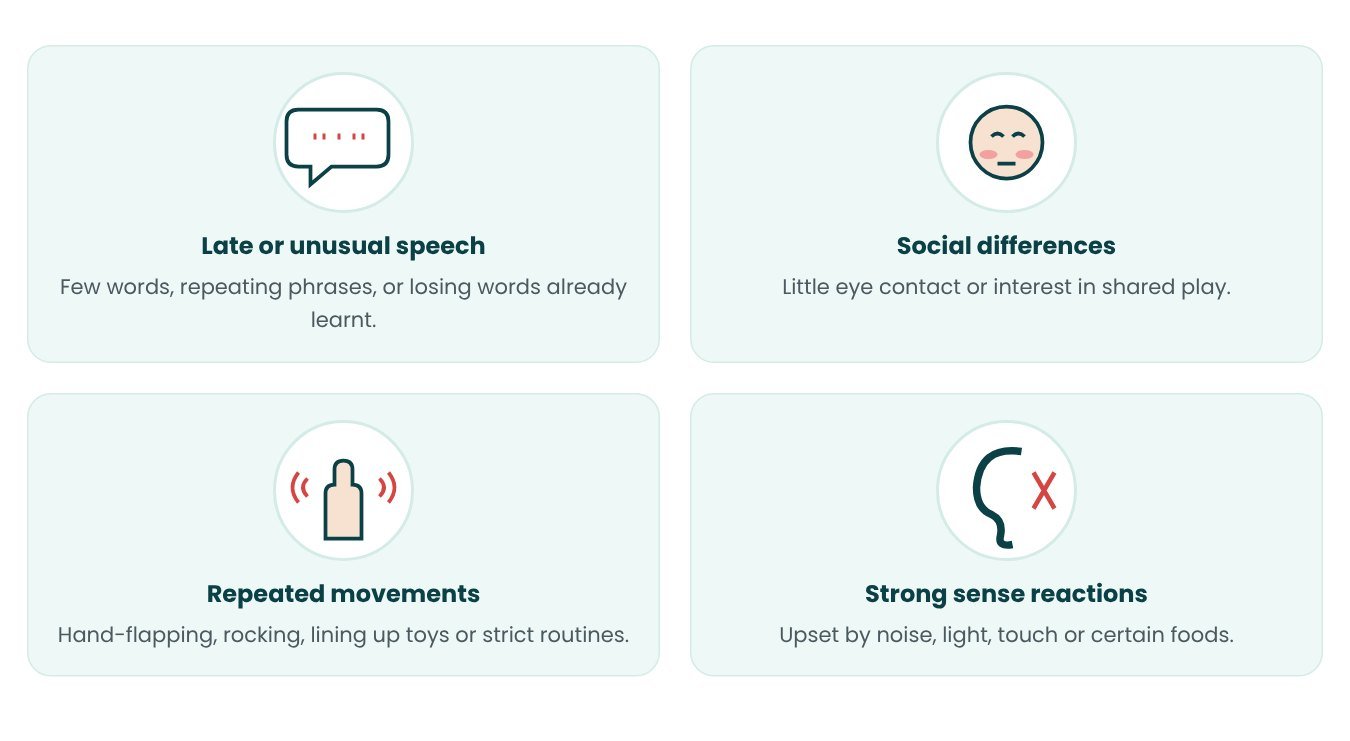
👀 Symptoms in Pictures
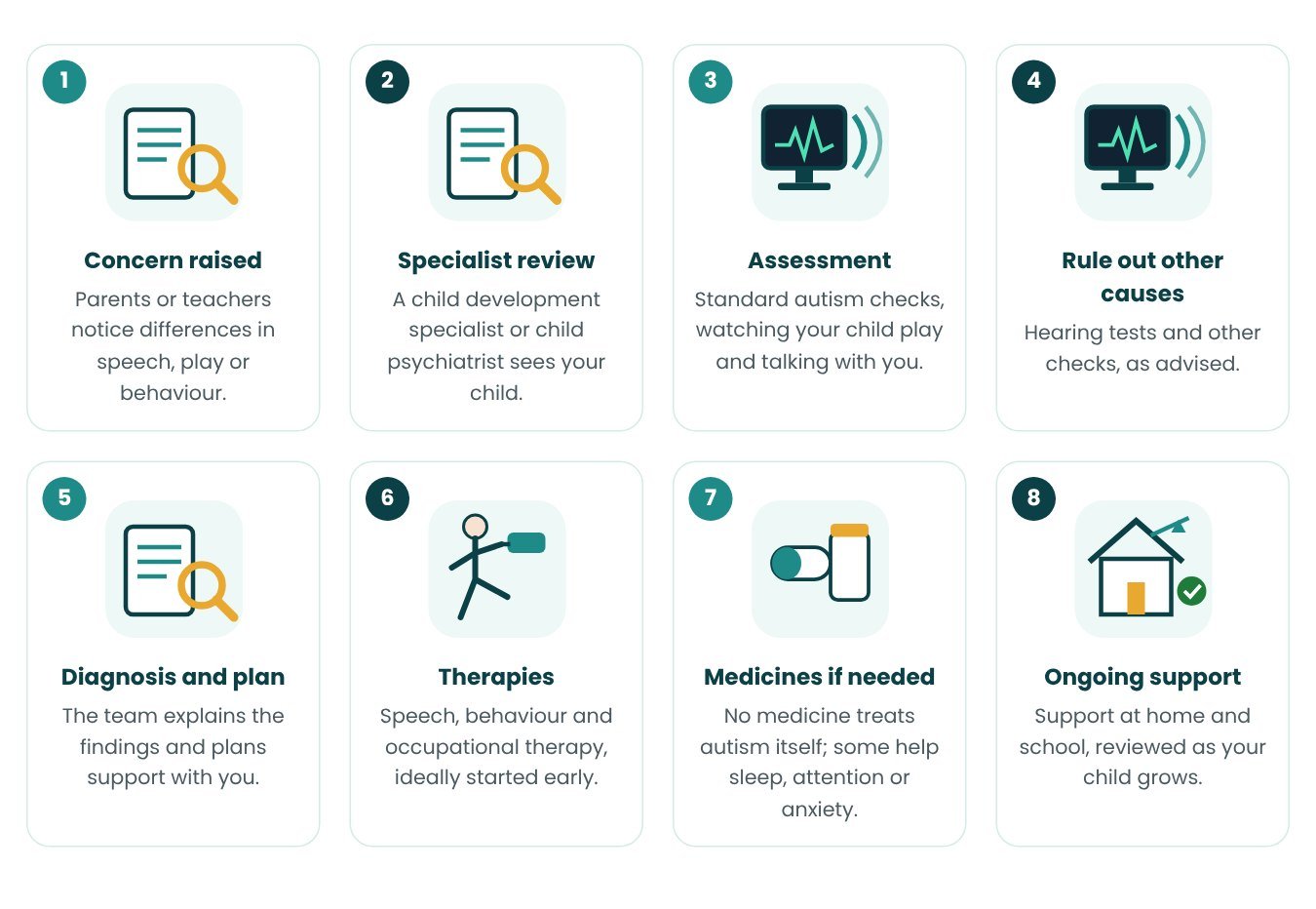
🎬 The Treatment Journey in Pictures
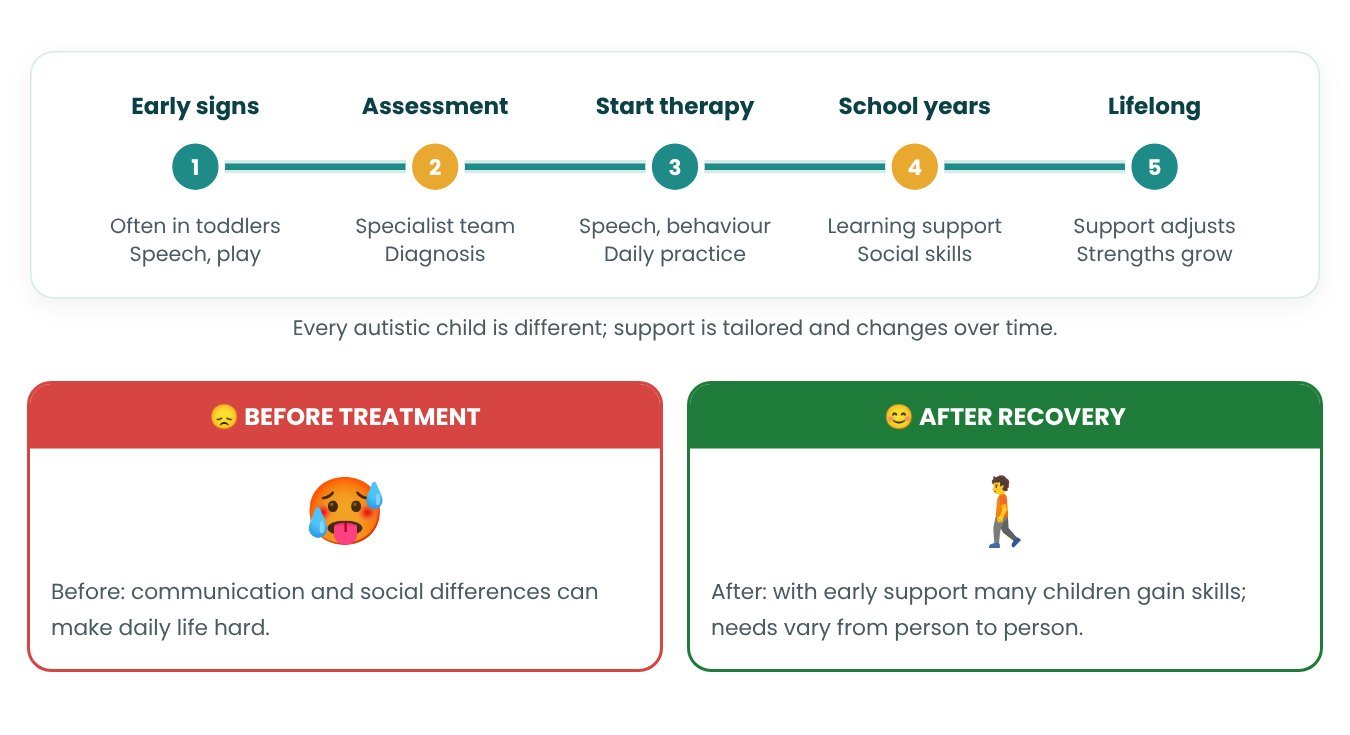
📅 Recovery at a Glance
Causes and Risk Factors
There is no single cause of autism. Research shows it results mainly from genetic factors influencing early brain development, with some environmental contributions:
- Genetics - autism often runs in families; siblings of autistic children have a higher chance of being autistic.
- Genetic syndromes such as fragile X syndrome, tuberous sclerosis and Rett syndrome.
- Older parental age at conception.
- Premature birth and very low birth weight.
- Certain exposures in pregnancy, such as valproate medication, rubella infection or poorly controlled maternal diabetes.
- Consanguineous marriage - common in parts of the Middle East, North Africa and South Asia - increases the chance of rare recessive genetic conditions that can be associated with autism and intellectual disability.
Vaccines do not cause autism. This has been confirmed by large studies worldwide. Parenting style also does not cause autism.
Signs and Symptoms
Early signs in babies and toddlers
- Not responding to their name by about 12 months.
- Little eye contact or social smiling.
- Not pointing to show interest, or not looking where you point.
- Delayed speech or loss of words or social skills already learned.
- Preferring to play alone; lining up toys; repetitive play.
- Hand flapping, rocking or spinning.
- Strong reactions to sounds, textures, foods or changes in routine.
Signs in older children and adults
- Difficulty making friends or understanding social rules and jokes.
- Taking language very literally.
- Intense interest in particular topics.
- Anxiety, meltdowns or shutdowns when overwhelmed.
When to seek help urgently
Any loss of speech, babbling or social skills at any age, seizures, self-injury, severe aggression or refusal to eat should be assessed by a doctor promptly. Around a third of autistic people may have epilepsy at some point, and sleep, gut and feeding problems are common.
Diagnosis
There is no blood test or scan that diagnoses autism. Diagnosis is made by a developmental paediatrician, child psychiatrist or child psychologist through careful observation and history:
- Screening tools such as M-CHAT-R/F for toddlers aged 16-30 months.
- Standardised diagnostic assessments such as ADOS-2 and ADI-R, and in India the ISAA (Indian Scale for Assessment of Autism).
- Developmental and IQ assessment, speech-language and sensory evaluation.
- Hearing test to rule out hearing loss.
- Genetic tests - chromosomal microarray and fragile X testing, sometimes whole exome sequencing.
- EEG and MRI only when seizures, regression or neurological signs are present.
Autism can be reliably diagnosed from about 18-24 months in many children.
Conditions That Often Occur with Autism
Many autistic children and adults have one or more additional conditions that need attention, because treating them can improve wellbeing and learning:
- ADHD - difficulty with attention, hyperactivity and impulsivity.
- Intellectual disability and specific learning difficulties.
- Epilepsy, which may begin in early childhood or adolescence.
- Sleep problems such as difficulty falling asleep and frequent waking.
- Gastrointestinal problems such as constipation, and restricted eating due to sensory sensitivities, which can lead to nutritional deficiencies.
- Anxiety and depression, especially in older children, teenagers and adults.
- Motor coordination difficulties, low muscle tone and delayed toilet training.
A good assessment centre looks at the whole child, not only the autism diagnosis. This is why a team approach involving a developmental paediatrician, child psychologist, speech therapist, occupational therapist and, when needed, a paediatric neurologist, gastroenterologist and nutritionist gives the best results. For families who travel from abroad, it is helpful to bring previous reports, school reports and short home videos of the child's behaviour and communication, as these help the team understand the child in their natural environment.
Treatment and Therapy Options
Support is tailored to each person's strengths and needs. Evidence-based approaches include:
- Applied Behaviour Analysis (ABA) and naturalistic developmental behavioural interventions such as the Early Start Denver Model (ESDM), which teach communication, social and daily living skills through play and positive reinforcement.
- Speech and language therapy, including alternative and augmentative communication (picture exchange systems, communication devices).
- Occupational therapy for fine motor skills, self-care and sensory processing difficulties.
- Parent-mediated therapy - training parents to continue therapy techniques at home, which is especially valuable for international families.
- Social skills groups and special education support.
- Cognitive behavioural therapy for anxiety in older children and adults.
- Medicines do not treat autism itself but can help associated problems such as irritability and aggression (risperidone, aripiprazole), ADHD, sleep difficulties, anxiety and epilepsy.
Be cautious of unproven treatments. Stem cell therapy, chelation, hyperbaric oxygen and other "cures" are not supported by reliable evidence and some carry real risks.
Cost of Autism Assessment and Therapy in India
Approximate starting costs at leading child development centres and accredited hospitals in Delhi/NCR:
| Service | Approximate Cost (USD, starting from) | Duration |
|---|---|---|
| Comprehensive developmental and autism assessment (ADOS-2, speech, OT, psychology) | $300 - $600 | 2 - 4 days |
| Genetic testing (microarray / exome) | $300 - $800 | Results in 3 - 6 weeks |
| EEG and MRI brain (if indicated) | $300 - $600 | 1 day |
| Intensive therapy programme - ABA, speech and OT (per month) | $800 - $1,500 | 4 weeks |
| Parent training package | $200 - $400 | 1 - 2 weeks |
Final cost depends on the child's needs, the intensity of therapy and the centre chosen. Contact Satyug Healthcare at +91-8860606766 / +91-9910655125 (WhatsApp) for a free medical opinion and cost estimate.
Living Well with Autism
With the right support, many autistic children make steady progress in communication, learning and independence. Many autistic adults study, work and live independently. For families travelling to India, a common plan is a 1 to 3 month intensive programme with parent training, followed by a structured home programme and online follow-up sessions.
- Keep routines predictable and use visual schedules.
- Use the child's interests to motivate learning.
- Practise therapy goals daily at home.
- Work with schools for inclusive education and classroom support.
- Look after caregivers' wellbeing - parent support groups can help greatly.
Autism cannot be prevented, but good antenatal care, folic acid, avoiding risky medicines in pregnancy and early developmental screening help ensure children receive support as early as possible.
Families should also plan for the long term. Therapy goals change as a child grows, from early communication and play skills to school readiness, friendships, independence and, later, vocational and life skills.
Why Choose India for Autism Assessment and Therapy?
- Experienced developmental paediatricians, child psychiatrists and certified therapists.
- Multidisciplinary assessment completed within days rather than months.
- Therapy in English and Hindi, with interpreters for Arabic, French and Russian-speaking families.
- Affordable intensive programmes compared to the Gulf, Europe or North America.
Step-by-Step Process to Travel to India for Treatment
- Share your reports - send your latest reports, scans/CD, angiography or echo films and passport copy to Satyug Healthcare on WhatsApp (+91-8860606766 / +91-9910655125) or email.
- Free medical opinion & cost estimate - within 24-72 hours we share opinions and written cost estimates from 2-3 JCI/NABH-accredited hospitals and specialists.
- Choose hospital & doctor - compare doctor experience, hospital, room category and total cost; we help you decide with no extra charge.
- Visa Invitation Letter (VIL) - the hospital issues a VIL for the patient and up to two attendants; we arrange it within 24-48 hours.
- Apply for Indian e-Medical Visa - apply online for the e-Medical Visa (patient) and e-Medical Attendant Visa (family) using the VIL; most approvals come in 3-5 working days.
- Book flights & accommodation - we suggest flights and arrange a guest house, service apartment or hotel near the hospital to suit your budget.
- Free airport pickup - our representative receives you at the airport and takes you to your hotel or directly to the hospital.
- Hospital admission & treatment - a dedicated coordinator and language interpreter stay with you for registration, tests, doctor consultations, the procedure and billing.
- Discharge & follow-up - you receive the discharge summary, prescriptions and fitness-to-fly certificate; follow-up checks are done before you fly.
- Return home & tele-follow-up - we arrange airport drop and stay connected for online follow-up consultations with your doctor in India.
Frequently Asked Questions
Can autism be cured?
No. Autism is a lifelong difference in brain development. Early, consistent therapy can greatly improve communication, behaviour and independence.
At what age can autism be diagnosed?
Reliable diagnosis is often possible from 18 to 24 months. Screening at 18 and 24 months is recommended; earlier concerns should also be assessed.
Do vaccines cause autism?
No. Large scientific studies involving millions of children have found no link between vaccines and autism.
Is stem cell therapy effective for autism?
There is no reliable evidence that stem cell therapy treats autism. It should only be considered in properly regulated research trials.
Will my child learn to speak?
Many autistic children develop useful speech, especially with early speech therapy. Others communicate effectively using pictures, signs or devices.
How long should we stay in India for therapy?
Assessment takes about a week. For intensive therapy and parent training, families usually stay 1 to 3 months, then continue with a home programme and online reviews.
Is autism more common in boys?
Yes, autism is diagnosed more often in boys, although girls are increasingly recognised and may show more subtle signs.
Disclaimer: This article is for general information only and is not a substitute for a consultation with a qualified doctor.
Related Blogs


HAPPY PATIENTS
What Our Patients Are Saying









Our Gallery