
Pericardiocentesis Package
Assistance
Consultation
Services
Opinion
Care Coordination
What will your treatment cost?

See the cost breakdown by option, hospital and city →
| Surgery Name | Cost | Room | Hospitalization |
|---|---|---|---|
| Pericardiocentesis Package | 1200 USD | Twin Sharing / CCU | 2-3 days in hospital; total stay in India 5-7 days |
| Echo-guided Pericardiocentesis with pigtail drainage | 1200 USD | Twin Sharing | 2-3 days |
✓ Inclusion
- ✔Consultation with a senior cardiologist
- ✔Echocardiogram before and after the procedure
- ✔Routine pre-procedure tests: blood tests, clotting profile, ECG and chest X-ray
- ✔Echo-guided pericardiocentesis under local anaesthesia
- ✔Pigtail catheter and pericardial drainage set
- ✔Cardiologist and procedure fees
- ✔2–3 days hospital stay in twin-sharing room / CCU as needed
- ✔Nursing care, routine medicines and diet in hospital
- ✔Routine pericardial fluid analysis (cell count, protein, biochemistry, ADA and culture)
- ✔Drain removal and discharge summary with treatment plan
- ✔Free: airport pick-up & drop, visa invitation letter, interpreter & coordinator (Satyug Healthcare)
✗ Exclusion
- ✖CT, MRI or PET-CT scans
- ✖Advanced fluid tests such as cytology panels, immunohistochemistry or TB PCR (if not routine)
- ✖Surgical pericardial window, pericardiectomy or other surgery
- ✖Extra ICU / CCU days beyond the package
- ✖Treatment of the underlying cause (TB, cancer, kidney disease)
- ✖Blood products and treatment of complications
- ✖Medicines after discharge
- ✖Hotel stay, food, local travel and flights
- ✖Attendant's food and accommodation
Know More About Procedure & Surgery
Pericardiocentesis (Pericardial Fluid Drainage) in India
Echo-guided needle and pigtail catheter drainage of a large pericardial effusion or cardiac tamponade – with tests to find the cause such as tuberculosis, cancer, kidney failure or infection – by experienced cardiologists at accredited Indian heart centres.
📖 What is Pericardiocentesis?
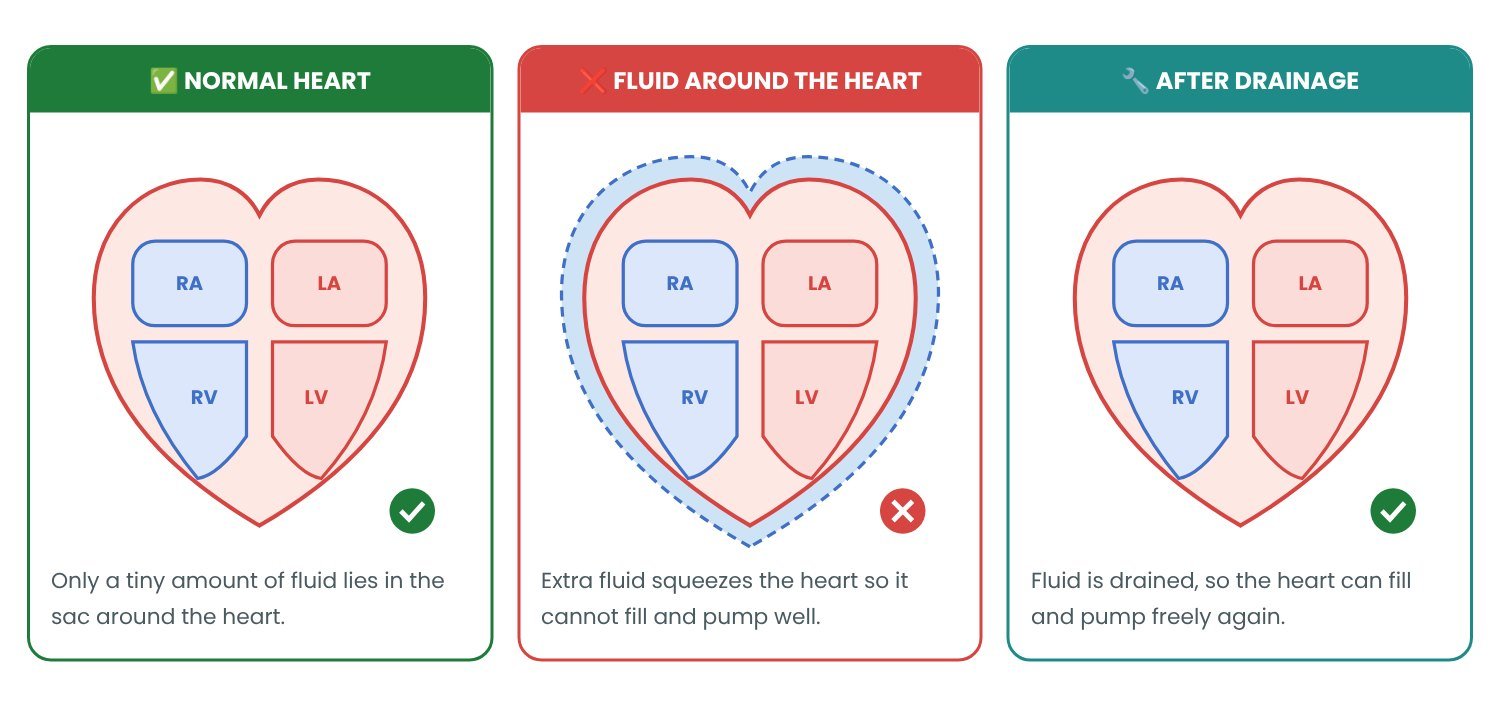
The heart sits inside a thin, two-layered bag called the pericardium, which normally holds only a small amount of fluid (about 15–50 ml). In pericardial effusion, extra fluid builds up in this bag. Causes include tuberculosis (very common in Africa, South Asia and Central Asia), viral infection, cancer, kidney failure, hypothyroidism, autoimmune disease, heart surgery and injury. If the fluid builds up fast or becomes large, it squeezes the heart so it cannot fill properly – this is cardiac tamponade, a life-threatening emergency.
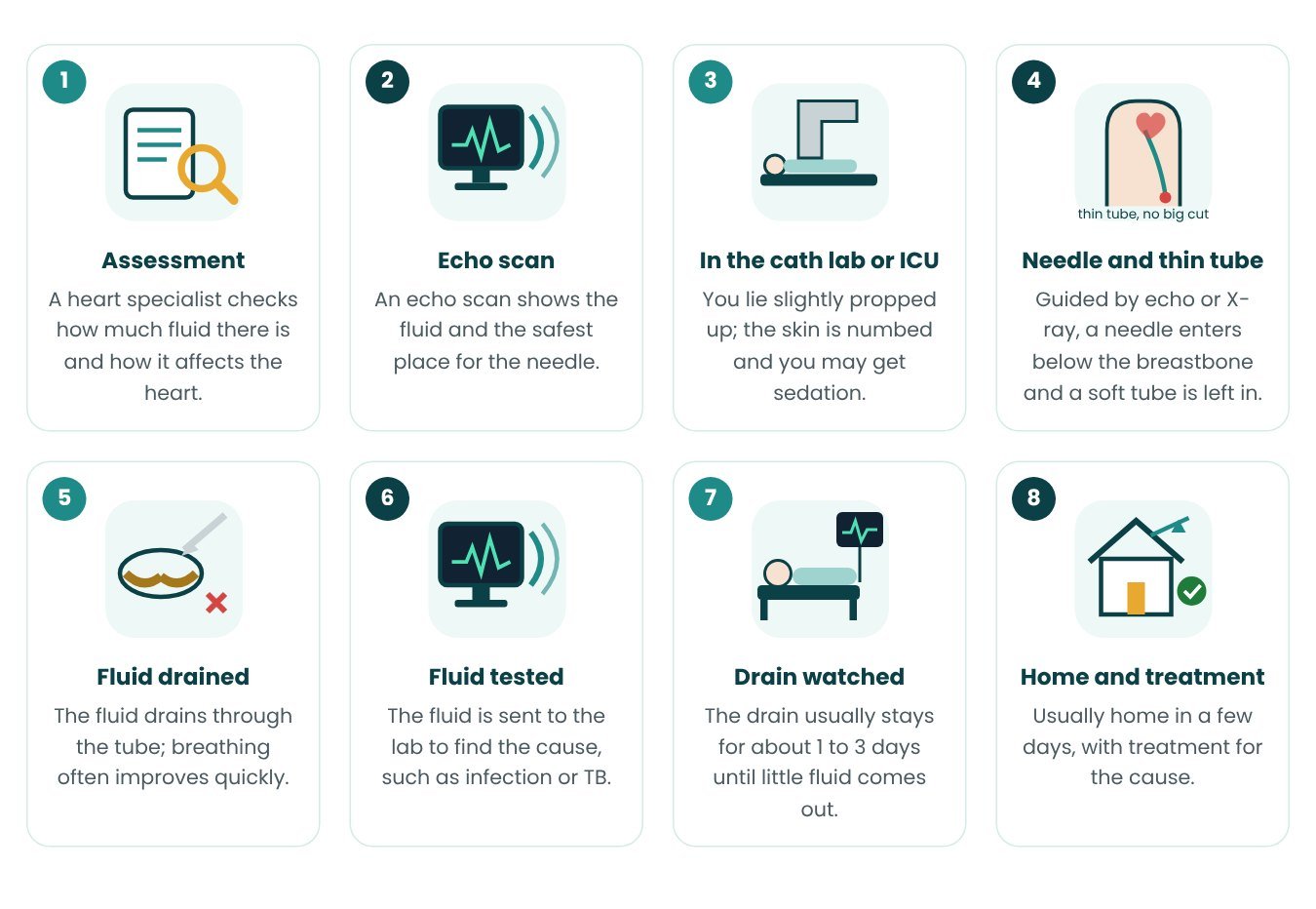
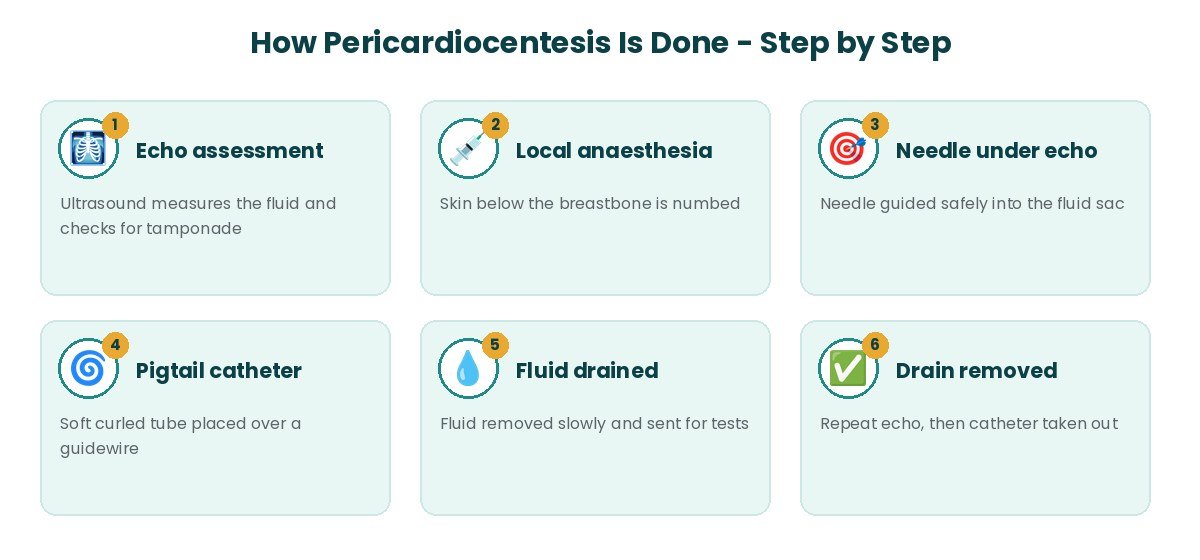
Pericardiocentesis drains this fluid. Under local anaesthesia and with live echocardiography (heart ultrasound) guidance, a needle is passed below the breastbone or through the chest wall into the fluid. A soft, curled tube called a pigtail catheter is left in place for 1–3 days to drain the remaining fluid. The fluid is sent for tests to find the cause. It gives immediate relief of breathlessness in tamponade and is also called pericardial tap or pericardial drainage.
🖼️ Understand It in Pictures
Normal heart vs fluid around the heart
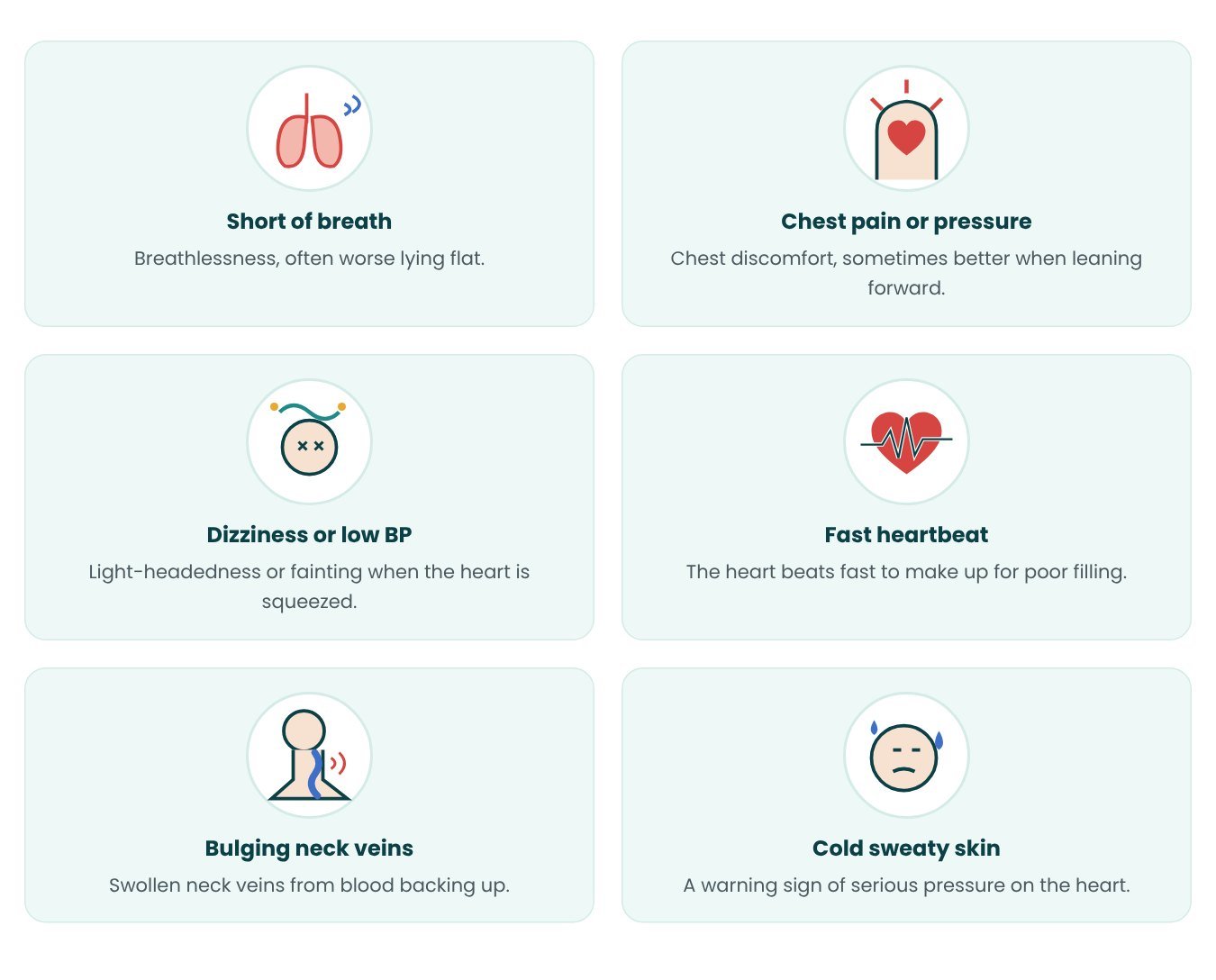
👀 Symptoms in Pictures
📷 What It Looks Like (real photos)

🩻 Scans & Tests — What Doctors See


🎬 The Treatment Journey in Pictures
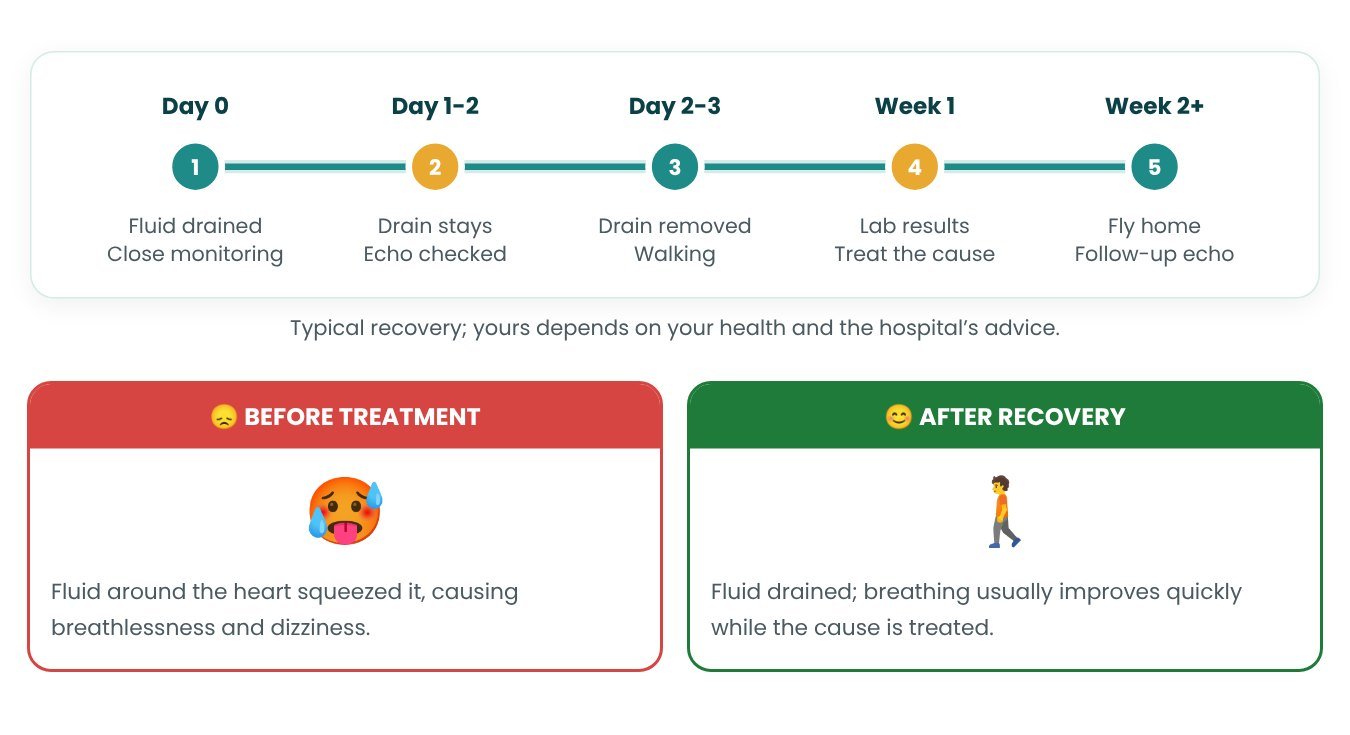
📅 Recovery at a Glance
Drawings: Satyug Healthcare (simplified, not to scale). Photos: Wikimedia Commons; author and licence under each photo.
🩺 Conditions Treated
⚠️ Symptoms of Pericardial Effusion
- ➤Shortness of breath, worse lying flat
- ➤Chest pain or pressure
- ➤Fast heartbeat
- ➤Dizziness or fainting
- ➤Swelling of legs or abdomen
- ➤Swollen neck veins
- ➤Low blood pressure
- ➤Cough, fever or weight loss (TB or cancer)
🔬 Tests Before Treatment
| Test | Why it is done |
|---|---|
| Echocardiogram (echo) | Shows the size and location of the fluid and signs of tamponade; guides the needle. |
| ECG | May show low voltage or alternating complexes in large effusions. |
| Chest X-ray | May show an enlarged 'water-bottle' heart shadow and lung disease. |
| CT or MRI of chest (if needed) | Shows thickened pericardium, loculated fluid and chest causes such as cancer or TB. |
| Blood tests (CBC, kidney, thyroid, clotting, ESR/CRP) | Look for causes and check safety for the procedure. |
| Pericardial fluid analysis | Cells, protein, ADA and GeneXpert for TB, culture and cytology for cancer cells. |
🏥 The Procedure — Step by Step
⚖️ Types & Techniques
| Technique | What is done | Best for |
|---|---|---|
| Echo-guided pericardiocentesis with pigtail drainage | Needle and catheter placed under ultrasound; drains 1–3 days | Most effusions and tamponade |
| Fluoroscopy-guided pericardiocentesis | Done in the cath lab with X-ray and contrast | Effusions after cardiac procedures, difficult access |
| Surgical pericardial window | Small opening made in the pericardium to drain into the chest or abdomen | Recurrent, thick or loculated effusions |
| Pericardiectomy | Surgical removal of the thickened pericardium | Constrictive pericarditis (often after TB) |
| Medical treatment only | Anti-inflammatory drugs, colchicine, TB or cancer treatment | Small effusions without tamponade |
📅 Your Day-by-Day Plan in India
| Day | What happens |
|---|---|
| Day 1 | Arrival in India ✈️, airport pick-up; urgent cardiology review and echo |
| Day 1–2 | Admission, blood tests and echo-guided pericardiocentesis 🏥 |
| Day 2–3 | Hospital stay (2–3 days): drain monitoring, repeat echo, drain removal and discharge |
| Day 4–5 | Hotel stay; fluid test results (TB, cytology) discussed; treatment of cause started |
| Day 5–6 | Follow-up echo to check fluid has not returned |
| Day 6–7 | Fit-to-fly review and fly home ✈️ |
🌱 Recovery After Treatment
🏆 Success Rate
| Outcome | Result |
|---|---|
| Procedure success with echo guidance | About 95–97% |
| Major complications | About 1–2% |
| Immediate relief of tamponade | Over 90% of patients |
| Fluid returning after pigtail drainage | About 10–20% (higher in cancer) |
Long-term results depend mainly on the cause. Effusions from viral pericarditis or treated TB usually settle well, while those from cancer are more likely to return and may need a pericardial window.
🩹 Risks & Possible Complications
With echo guidance, pericardiocentesis is safe; serious problems are uncommon.
- •Pain or discomfort at the drain site – common, mild
- •Irregular heartbeat during the procedure – usually brief
- •Puncture of the heart chamber or a coronary artery – about 1%, rarely needs surgery
- •Air in the chest (pneumothorax) – under 1%
- •Infection of the drain – rare, reduced by removing the drain within 1–3 days
- •Fluid coming back – about 10–20%, may need repeat drainage or a pericardial window
- •Injury to the liver or abdominal organs – rare
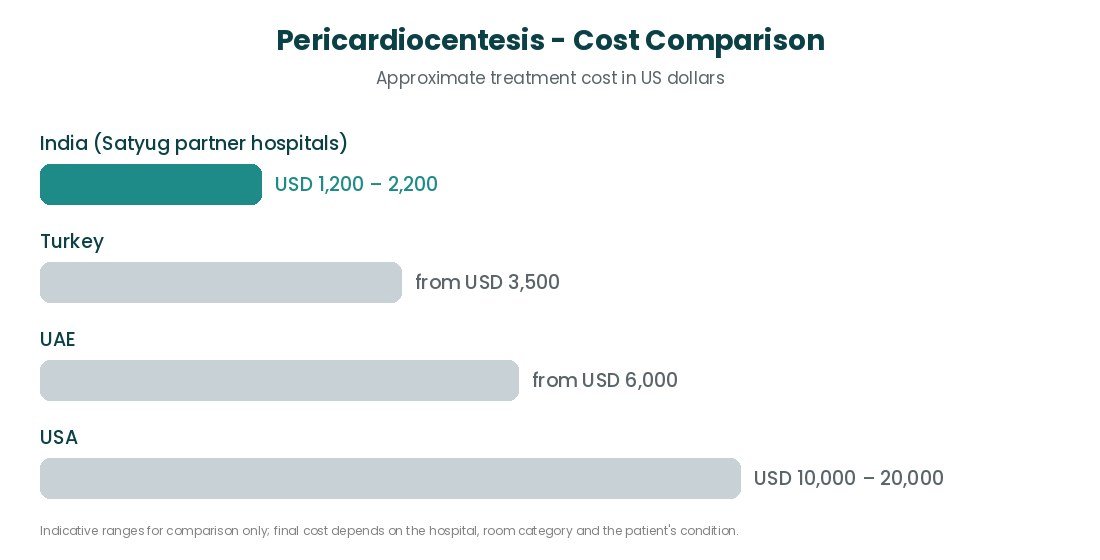
💰 Cost of Pericardiocentesis in India
The cost of pericardiocentesis in India starts from about USD 1,200. This includes echo-guided pericardiocentesis with pigtail drainage, the cardiologist's fees, a 2–3 day stay in twin-sharing room or CCU, routine fluid tests, repeat echo and routine medicines. CT/MRI scans, advanced fluid tests and treatment of the underlying cause are extra.
| Option / Hospital tier | Approx. cost (USD) | Hospital stay | Notes |
|---|---|---|---|
| Echo-guided pericardiocentesis with pigtail drainage (this package) | 1,200 | 2–3 days, twin sharing / CCU | Includes basic fluid analysis |
| Pericardiocentesis with private room / premium hospital | 1,600 – 2,200 | 2–3 days, private room | Top-tier JCI hospital |
| Surgical pericardial window | 3,500 – 5,500 | 4–6 days | For recurrent or loculated effusions |
| Pericardiectomy (constrictive pericarditis) | 6,000 – 9,000 | 7–10 days | Major cardiac surgery |
📋 What the Package Includes
- ✔Cardiologist consultation
- ✔Echo-guided pericardiocentesis
- ✔Pigtail catheter and drainage set
- ✔2–3 day stay, twin sharing / CCU
- ✔Routine fluid analysis
- ✔Repeat echocardiogram
- ✔Routine medicines and nursing care
- ✔Free airport pick-up, visa letter and interpreter
- ✖CT or MRI of the chest
- ✖Advanced fluid tests (cytology panels, PCR)
- ✖Pericardial window or surgery
- ✖Extra ICU or hospital days
- ✖TB, cancer or other long-term treatment
- ✖Medicines after discharge
- ✖Hotel, flights and food
- ✖Attendant's stay and meals
✈️ Your Medical Travel Process with Satyug Healthcare

| Step | Details |
|---|---|
| 1. Send reports | Recent echocardiogram report (with images or video if possible), ECG, chest X-ray, any CT scan, blood tests (CBC, kidney, thyroid, ESR/CRP), results of any earlier fluid drainage, TB or cancer history, current medicines (especially blood thinners) and your symptoms. |
| 2. Free opinion & quotes | Within 48-72 hours you receive opinions and cost estimates from 3-5 leading hospitals to compare. |
| 3. Choose hospital & doctor | We help you compare doctors, success rates, room options and total budget. |
| 4. Medical visa | The hospital issues a Visa Invitation Letter (VIL) to the Indian Embassy. The patient and up to 2 attendants apply for an e-Medical / Medical Attendant visa. |
| 5. Travel planning | Flight guidance, wheelchair assistance, airport pick-up, hotel or guest house near the hospital. |
| 6. Treatment in India | Your coordinator and interpreter stay with you for admission, treatment, discharge and billing. |
| 7. Return & follow-up | Fit-to-fly letter, medicines, and online follow-up with your doctor after you return home. |
🎒 Travel Checklist
- 📌Valid passport (6+ months) for the patient and attendants, plus 10 passport-size photos each
- 📌Medical visa / e-visa and the hospital’s Visa Invitation Letter
- 📌All echo reports and videos, ECG, chest X-ray and CT scans on CD / link, blood tests and prescriptions
- 📌Yellow fever vaccination certificate (mandatory for travellers from African countries)
- 📌Polio vaccination certificate where applicable
- 📌Declare cash above USD 5,000 at the airport; hospitals accept wire transfer and cards
- 📌Foreigners staying longer than permitted must register with the FRRO — our team assists
⭐ Why Choose Satyug Healthcare?
❓ Frequently Asked Questions
➤ How much does pericardiocentesis cost in India?
➤ Is it safe to travel with a pericardial effusion?
➤ How long will I stay in hospital and in India?
➤ Is pericardiocentesis painful?
➤ How quickly will I feel better?
➤ What causes fluid around the heart?
➤ Will the fluid come back?
➤ What are the risks?
➤ Will I need treatment after the procedure?
➤ Can children have pericardiocentesis?
Medical disclaimer: This page is for general information and does not replace a consultation with a qualified specialist. Treatment plans and costs are confirmed only after the patient is examined. Sources: NCBI StatPearls: Pericardiocentesis; NCBI StatPearls: Pericardial Effusion; NCBI StatPearls: Cardiac Tamponade; Mayo Clinic: Pericardial effusion; Cleveland Clinic: Pericardiocentesis; 2015 ESC Guidelines for the Diagnosis and Management of Pericardial Diseases; Tsang TS et al., Mayo Clinic Proceedings 2002. Infographics: Satyug Healthcare.
Frequently Asked Questions
The cost of pericardiocentesis in India starts from USD 1200. Echo-guided Pericardiocentesis with pigtail drainage: USD 1200. The final cost depends on the hospital, room category and medical condition.
Pericardiocentesis in India from USD 1,200. Echo-guided drainage of fluid around the heart with pigtail catheter, 2–3 day stay, free opinion & visa support.




TOP HOSPITALS
Special High-quality Hospitals


HAPPY PATIENTS
What Our Patients Are Saying


























Our Gallery



Get a Free Quote
Tell us what you need and share your medical reports. Our medical team prepares your treatment plan and cost estimate.
- Free medical opinion on your reports
- Your quote within 24–48 hours
- Help with visa invitation letter, travel and airport pickup
- Coordinators available on WhatsApp
Prefer to talk? Call +91-8860606766 or WhatsApp us.
Thank you! Your request is received.
Reference . Our medical team will send your free quote within 24–48 hours by e-mail or WhatsApp.
Chat on WhatsApp now