| Surgery Name | Cost | Room | Hospitalization |
|---|---|---|---|
| LVAD(Left Ventricular Assist Device) in India | $100,000 | Single | Patient - 30 days stay in a single room. |
1.Overstay more than package days,
2. Any other Specialty Consultations,
3. Special Equipment,
4. Additional Procedure/Surgery.
5. Blood Components.
🇮🇳 Medical Package — India
World-class treatment • NABH & JCI Accredited Hospitals • Save up to 80% vs USA/UK
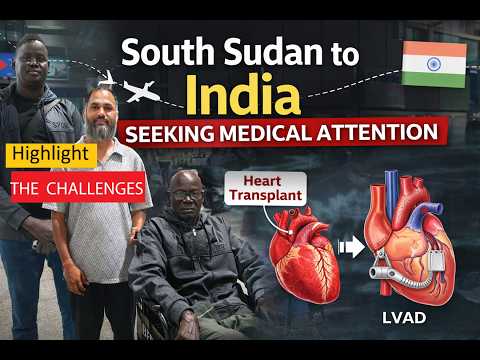
A ventricular assist device (VAD) also known as a mechanical circulatory support device is an implantable mechanical pump that helps pump blood from the lower chambers of your heart (the ventricles) to the rest of your body. A VAD is used in people who have weakened hearts or heart failure. A VAD can be placed in the left, right or both ventricles of your heart, it is most frequently used in the left ventricle. When placed in the left ventricle it is called a left ventricular assist device (LVAD).
Discuss with the doctor
Talk to your doctor about:
Before your ventricular assist device (VAD) is implanted, you'll likely need to stay in the hospital for several days preparing for your surgery. While you're in the hospital, you may have other treatments for your weakened heart or heart failure. Doctor may review several factors to decide if a VAD is the most appropriate treatment for your condition and to determine which VAD may be most appropriate for you, including whether:
Your doctor will also evaluate your condition and ensure that you're healthy enough for surgery to implant a VAD. Your doctor may order several tests, including:
A surgical team of heart (cardiac) surgeons, surgical nurses, doctors trained in giving medication that causes you to sleep during surgery (anesthesiologists) and others work together to perform your surgery. The procedure to implant a ventricular assist device (VAD) is typically an open-heart surgery that generally takes four to six hours. You'll be connected to a machine that helps you breathe (ventilator) during your surgery. A tube will be run down your throat to your lungs and connected to the ventilator. You may need to remain connected to the ventilator for several days after your surgery. In this procedure, your surgeon will make an incision down the center of your chest. Your surgeon will separate your chest bone (sternum) and open your rib cage so that he or she can operate on your heart. Your heart may be stopped using medications during the surgery. You'll be connected to a heart-lung bypass machine that keeps oxygenated blood flowing through your body during surgery if your heart is stopped during surgery.
Your surgical team will implant your VAD during surgery. An implanted left ventricular assist device (LVAD) has many parts. A tube carries blood from the left ventricle of your heart to a pump. The pump delivers blood through another tube to the aorta — the artery that leads out to the body from the heart — which then delivers blood to the body. A cable inserted through the skin connects the pump to the control unit and battery pack outside your body. After your VAD is implanted and working properly, your doctors will take you off the heart-lung bypass machine so that the VAD can begin pumping blood through your heart. Certain types of VAD pump blood similar to the way your heart does, using a pumping action. They help pump blood from one or both lower chambers of your heart (ventricles) and on to the rest of your body. Other types of VAD — continuous flow devices — are smaller. These devices allow a continuous stream of blood to flow through your heart. If you have a continuous stream of blood flowing through your LVAD, you or your doctor may not be able to check your pulse or your blood pressure using standard methods. Doctors may use other tests to check your heart rate and rhythm and to measure your blood pressure. Certain types of VADs have pumps located outside of the body. These VADs may have external pumps connecting to a large console, while some have smaller external pumps located next to the body that are connected to portable devices. These VADs may be used for a temporary period of time, such as during or after heart surgery, but some may be used while waiting for a heart transplant or a longer-term VAD. In one type of short-term VAD, the pump is inserted through a catheter in the leg, neck or armpit, which doctors guide through the arteries to the heart. Another type uses catheters to access the heart, but the pump is located outside the body.
After surgery to implant a VAD, you'll stay in the intensive care unit (ICU). You'll be given fluids, nutrition and medications through intravenous (IV) lines. Other tubes will drain urine from your bladder and drain fluid and blood from your heart and chest. Your treatment team will monitor you for signs of infection or other complications. Your lungs may not work properly immediately after your surgery, so you may need to remain connected to a ventilator for a few days after surgery until you're able to breathe on your own.
After a few days in the ICU, you'll generally be moved to a regular hospital room. Your treatment team will work with you to help you gain strength and prepare you for going home. They may explain how to live with a VAD and care for your VAD after you go home, and they can help answer your questions about the VAD. Your treatment team may also discuss with you nutrition and cardiac rehabilitation plans they may recommend during your recovery after you return home.
Your doctor will likely prescribe antibiotics and blood-thinning medications to prevent infection and other complications while you're in the hospital. It's very important to follow the instructions for taking these medications carefully. Once you have recovered and gained your strength, your treatment team will determine when you're healthy enough to be released from the hospital. If you need more time to recover your strength before returning home, you may stay at a special care facility, such as a nursing home, for a period of time after leaving the hospital.
If you have any related query, you can send us your report on below mention email address or you can call us or whatsApp for any second opinion.
Video/tele consultation also available
E-mail address- query@satyughealthcare.com
Phone number- +91888-242-4372, +91991-065-51251
Free Medical Opinion
Expert review in 48 hours
Best Surgeon
Top specialists in India
Hospital Booking
NABH / JCI accredited
Visa Assistance
Invitation letter provided
Airport Transfer
Safe pickup & drop
Tele-Consultation
Video consult before travel
Hotel Booking
Near hospital, affordable
Multilingual Support
Arabic, French, English
📞 Get Started Today — It Is Free
Send your medical reports and get a free expert opinion within 48 hours. Our coordinators speak Arabic, French and English.
A patient may stay alive for 5 and half years with LVAD. As per research, 80–85% of patients are alive a year after having an LVAD placed and 70–75% of patients are alive for 2 years with an LVAD.


![Subroto Kumar Datta [MBBS, MD - Medicine, DNB - Medicine, DM - Cardiology, DNB - Cardiology] - Doctor at Satyug Healthcare](https://satyughealthcare.com/uploads/doctors/13509618eb493a00d6c4e84e7b551a2b.webp)