Assistance
Consultation
Services
Opinion
Care Coordination
What will your treatment cost?
Wiskott-Aldrich Syndrome (WAS): Causes, Symptoms, Diagnosis & Treatment
Released Date: 2026-09-14
🧬 Wiskott-Aldrich Syndrome (WAS)
A Rare, X-Linked Immune Disorder Affecting Blood Cells and Skin
⚡ Quick Facts: Wiskott-Aldrich Syndrome (WAS) is a rare, inherited primary immunodeficiency disorder caused by mutations in the WAS gene on the X chromosome. It almost exclusively affects boys and is classically marked by a triad of low, abnormally small platelets (leading to easy bruising and bleeding), eczema, and recurrent infections. It is estimated to occur in roughly 1 in 100,000 to 1 in 250,000 live male births worldwide.
📖 What Is Wiskott-Aldrich Syndrome?
Wiskott-Aldrich Syndrome is a primary immunodeficiency disorder — meaning a child is born with an immune system that does not function correctly, rather than developing the problem later in life. It affects multiple systems at once: it disrupts how platelets (the blood cells that help stop bleeding) are made and sized, weakens the immune system’s ability to fight infections, and commonly causes chronic eczema.
The severity of WAS varies — some boys have a severe "classic" form with all three features present from infancy, while others have milder variants with fewer symptoms, mainly low platelets. Because the underlying immune defect can also affect how the body regulates itself, children with WAS also have a higher-than-average chance of developing autoimmune problems or certain cancers of the immune system over time.
🧬 What Causes It?
WAS is caused by mutations in the WAS gene, located on the X chromosome (Xp11.23). This gene provides instructions for making a protein called WASp, which helps organize the cytoskeleton inside blood cells — allowing platelets, T-cells, B-cells, and other immune cells to change shape, move, and communicate properly. When WASp is missing or doesn’t work correctly, platelets are produced smaller than normal and cleared too quickly, and immune cells cannot coordinate an effective defense against infections.
Because the WAS gene sits on the X chromosome, the condition follows an X-linked recessive inheritance pattern. Boys have only one X chromosome, so a single altered copy is enough to cause disease. Girls have two X chromosomes, so a mutation on one is usually "covered" by the healthy copy on the other — this is why WAS almost always affects boys, while girls are typically unaffected carriers.
🤒 Signs and Symptoms
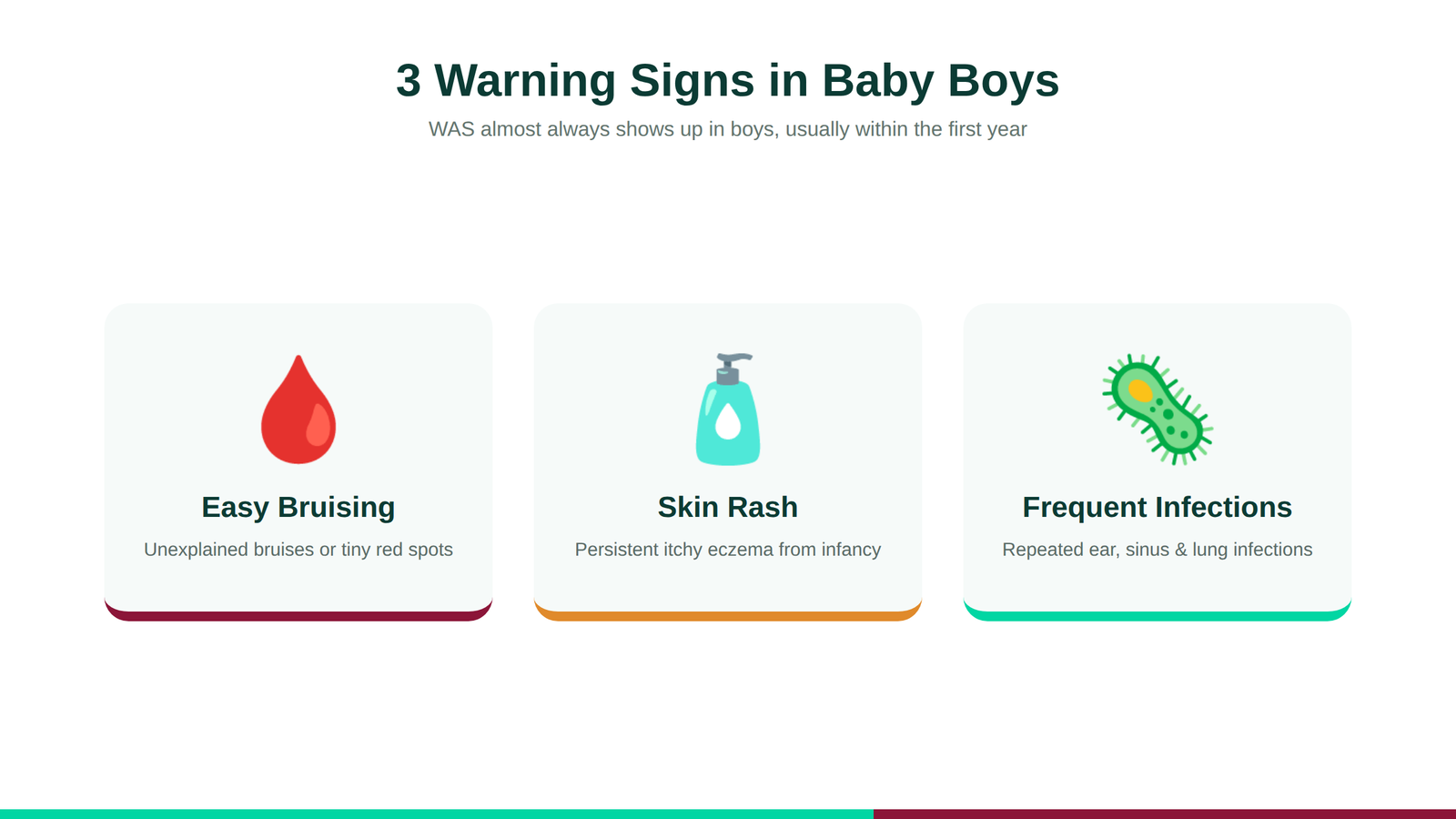
🩸 Bleeding & Bruising (Thrombocytopenia)
- Easy bruising, sometimes appearing spontaneously
- Petechiae (tiny red or purple spots on the skin)
- Prolonged bleeding after minor cuts, circumcision, or vaccinations
- Blood in the stool or urine
- Nosebleeds that are frequent or hard to stop
🌿 Eczema
- Itchy, red, dry patches of skin, often starting in infancy
- Can range from mild to severe and widespread
- May become infected due to scratching combined with weak immunity
🤠 Recurrent Infections
- Frequent ear infections, sinus infections, and pneumonia
- Infections caused by bacteria, viruses, and sometimes fungi
- Infections that are more severe or slower to resolve than expected
⚠️ Associated Risks (Especially in More Severe/Untreated Cases)
- Autoimmune conditions (the immune system mistakenly attacking the body’s own tissues), seen in a significant proportion of patients
- Increased risk of certain cancers of the immune system, particularly lymphoma, if the underlying immune defect is not corrected
🔍 How Is It Diagnosed?
| Test | What It Shows |
|---|---|
| Complete Blood Count (CBC) | Reveals thrombocytopenia (a low platelet count) |
| Platelet Size / Mean Platelet Volume (MPV) | Platelets in WAS are characteristically small; distinguishes WAS from ITP, where platelets are normal or large |
| Immunoglobulin Levels | Often shows low IgM with normal or elevated IgA and IgE |
| WASp Protein Testing (Flow Cytometry) | Checks whether the WASp protein is present, reduced, or absent in blood cells |
| Genetic Testing | Confirms diagnosis by identifying the specific WAS gene mutation and helps predict severity |
| Family & Pregnancy History | A family history of similar symptoms in male relatives supports the diagnosis and can prompt earlier newborn testing |
💊 Treatment: Supportive Care and Curative Options
Management of WAS is tailored to how severe the symptoms are, and typically combines day-to-day supportive care with, in many classic/severe cases, a curative procedure.
- Antibiotics and antimicrobial prophylaxis to prevent and treat infections
- Intravenous immunoglobulin (IVIG) to supplement missing antibodies and reduce infection risk
- Platelet transfusions during active bleeding episodes or before procedures
- Topical treatments (emollients, steroid creams) to manage eczema
- Careful avoidance of blood-thinning medications such as aspirin or NSAIDs
- Splenectomy (surgical removal of the spleen) may be considered in select cases to raise platelet counts, though it increases infection risk and requires lifelong precautions
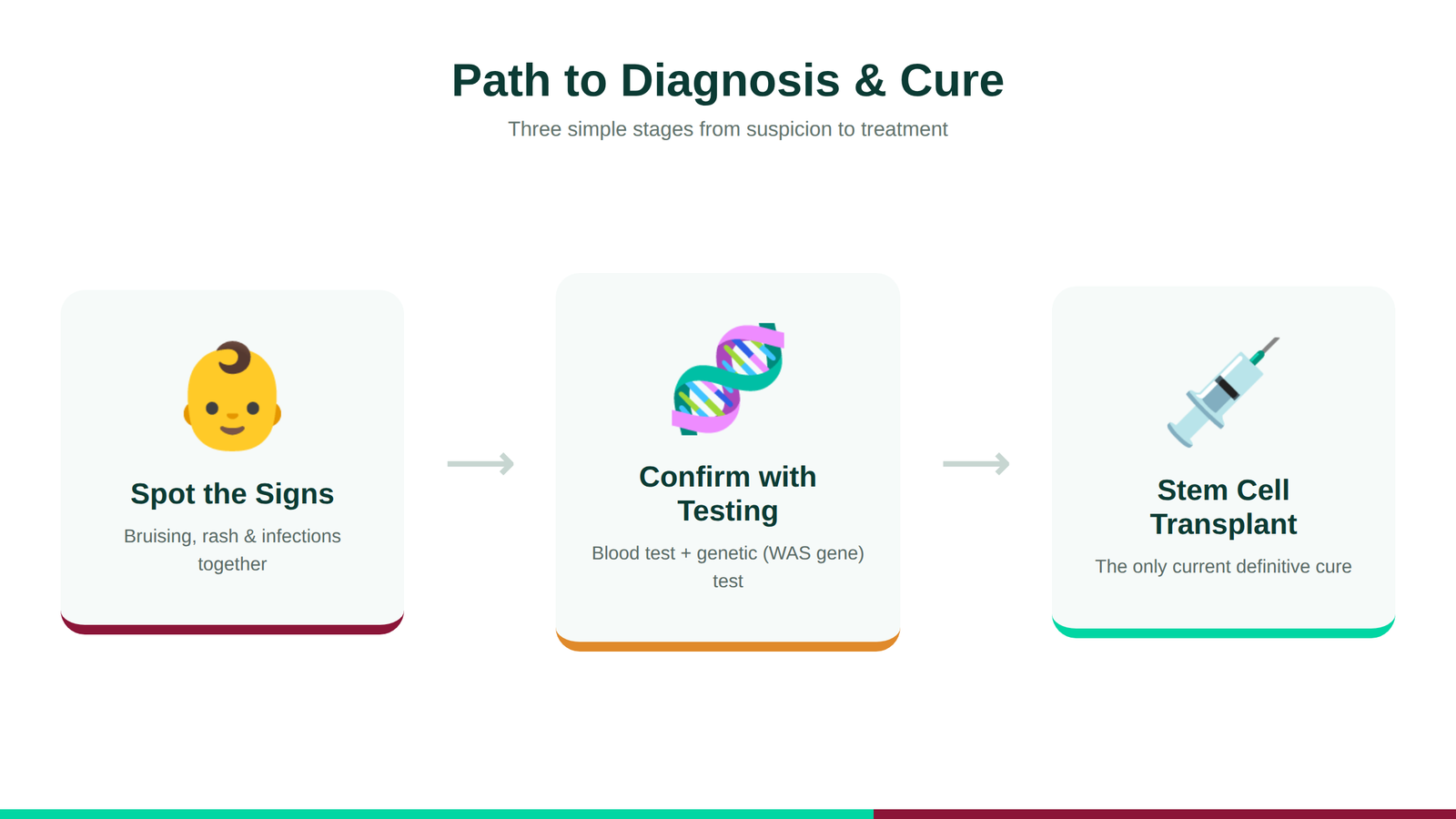
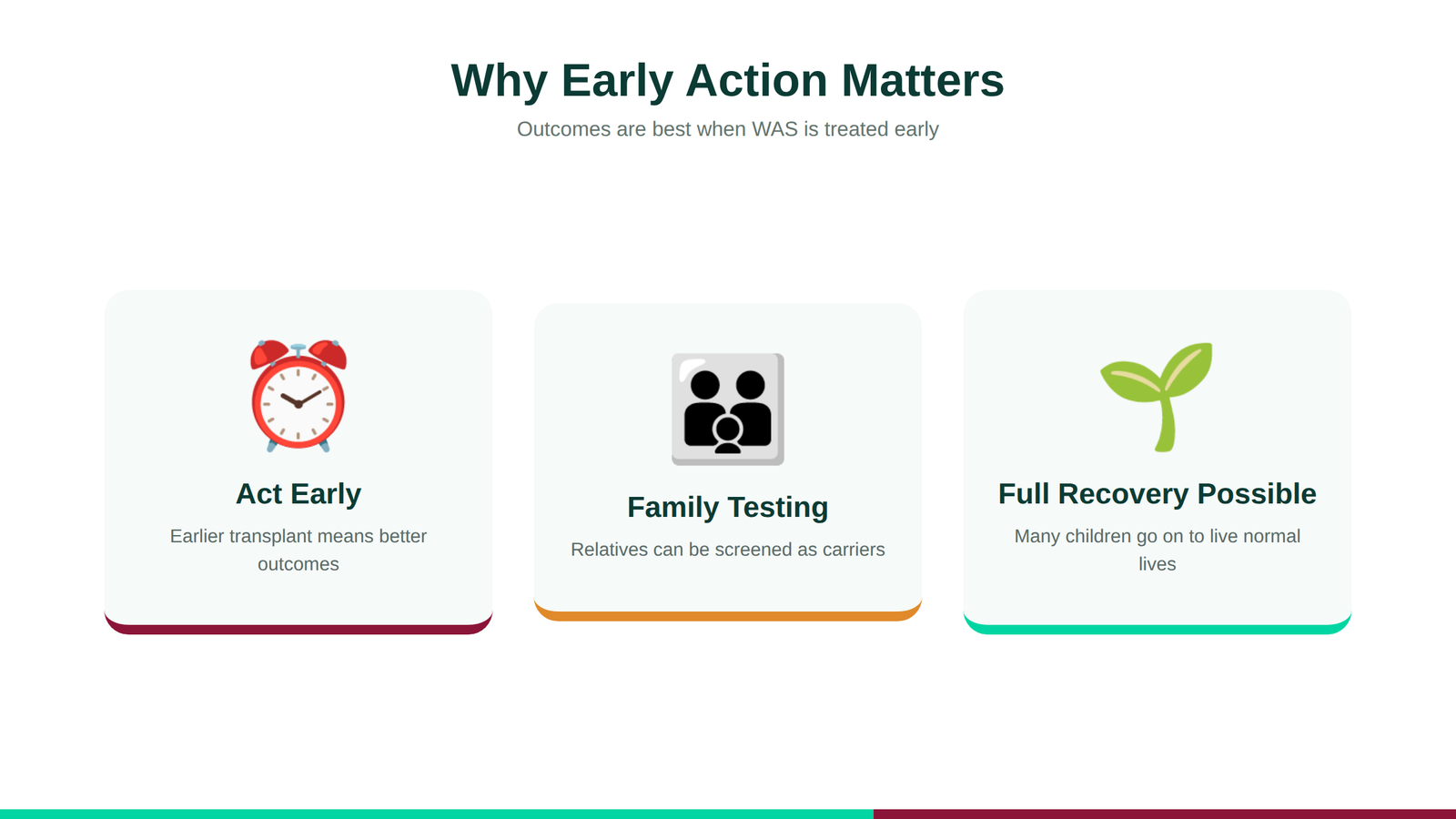
Hematopoietic Stem Cell Transplant (HSCT), also known as bone marrow transplant, is the only established curative treatment for classic, severe WAS. It works by replacing the patient’s faulty blood-forming stem cells with healthy ones from a matched donor, allowing the body to produce normally functioning platelets and immune cells going forward. Outcomes are generally best when the transplant is performed early in life, before serious infections or complications set in, and when a well-matched donor (sibling or unrelated) is available.
🚨 Life-threatening bleeding (such as intracranial hemorrhage) and overwhelming infection are the most serious complications of WAS — both are strong reasons why early diagnosis and, where appropriate, timely stem cell transplant are so important in severe cases.
🚨 When to See a Doctor
🔴 Seek prompt medical evaluation if a baby or young child has unexplained or excessive bruising, tiny red/purple skin spots, prolonged bleeding after a minor injury or vaccination, persistent eczema that won’t settle with usual treatment, or infections that are unusually frequent, severe, or slow to clear. A family history of similar symptoms in male relatives should also prompt discussion with a doctor, ideally a pediatric hematologist or immunologist.
📈 Prognosis
The outlook for children with WAS depends heavily on disease severity and how early treatment begins. Children with milder forms (mainly low platelets, few infections) can often be managed for years with supportive care alone. For classic, severe WAS, modern hematopoietic stem cell transplantation — particularly when performed in early childhood with a well-matched donor — has substantially improved long-term survival and quality of life for many patients, effectively correcting the underlying immune and platelet defects.
Satyug Healthcare partners with NABH/JCI-accredited hospitals in India that have dedicated pediatric hematology-immunology and bone marrow transplant units experienced in managing Wiskott-Aldrich Syndrome. Our team helps international families — from initial diagnostic work-up and donor matching to coordinating the stem cell transplant journey and post-transplant follow-up — navigate world-class, affordable care with dedicated support throughout their stay in India.
📞 International Patient Helpdesk: +91-8860606766 | +91-9910655125
This article is for general educational purposes and is not a substitute for professional medical advice, diagnosis, or treatment. Always consult a qualified pediatric hematologist or immunologist for evaluation of unexplained bruising, bleeding, eczema, or recurrent infections in a child.
Related Blogs

HAPPY PATIENTS
What Our Patients Are Saying







Our Gallery