Assistance
Consultation
Services
Opinion
Care Coordination
What will your treatment cost?
Solitary Thyroid Nodule treatment in India
Released Date: 2021-04-07

What is Thyroid Nodule?
A thyroid nodule is a lump that can develop in your thyroid gland. It can be solid or filled with fluid. You can have a single nodule(Solitary) or a cluster of nodules. Thyroid nodules are relatively common and rarely cancerous.
Your thyroid is a small butterfly-shaped gland located near your larynx (voice box) and in front of the trachea (windpipe). Thyroid nodules are classified as cold, warm, or hot, depending on whether they produce thyroid hormones or not: Cold nodules don’t produce thyroid hormones. Warm nodules act as normal thyroid cells. Hot nodules overproduce thyroid hormones. More than 90 percent of all thyroid nodules are benign (noncancerous). Most thyroid nodules aren’t serious and cause few symptoms. And it’s possible for you to have a thyroid nodule without even knowing it.Unless it becomes large enough to press against your windpipe, you may never develop noticeable symptoms. Many thyroid nodules are discovered during imaging procedures (such as a CT scan or MRI scan) done to diagnose something else.
Symptoms
- An enlarged thyroid gland, known as a goiter
- Pain at the base of your neck
- Swallowing difficulties
- Breathing difficulties
- Hoarse voice
If your thyroid nodule is producing excess thyroid hormones, you may develop symptoms of hyperthyroidism, such as:
- Rapid, irregular heartbeat
- Unexplained weight loss
- Muscle weakness
- Difficulty sleeping
- Nervousness
Symptoms of hypothyroidism include:
- Persistent fatigue
- Unexplained weight gain
- Constipation
- Sensitivity to cold
- Dry skin and hair
- Brittle nails
Causes
The cause of this overgrowth is usually unknown, but there is a strong genetic basis. In rare cases, thyroid nodules are associated with:
- Hashimoto’s thyroiditis, an autoimmune disease that leads to hypothyroidism
- Thyroiditis, or chronic inflammation of your thyroid
- Thyroid cancer
- Iodine deficiency
Risk Factors
You’re more likely to develop thyroid nodules if:
- You had X-rays performed on your thyroid in infancy or childhood
- You have a preexisting thyroid condition, such as thyroiditis or Hashimoto’s thyroiditis
- You have a family history of thyroid nodules
- You’re 60 years of age or older
Diagnosis
- Physical exam. Your doctor will likely ask you to swallow while he or she examines your thyroid because a nodule in your thyroid gland will usually move up and down during swallowing. Doctor will also look for signs and symptoms of hyperthyroidism, such as tremor, overly active reflexes, and a rapid or irregular heartbeat. He or she will also check for signs and symptoms of hypothyroidism, such as a slow heartbeat, dry skin and facial swelling.
- Thyroid function tests. Tests that measure blood levels of thyroid-stimulating hormone (TSH) and hormones produced by your thyroid gland can indicate whether you have hyperthyroidism or hypothyroidism.
- Ultrasound. This imaging technique uses high-frequency sound waves to produce images of your thyroid gland. A thyroid ultrasound provides the best information about the shape and structure of nodules. Doctors may use it to distinguish cysts from solid nodules or to determine if multiple nodules are present. Doctors may also use it as a guide in performing a fine-needle aspiration biopsy.
- Fine-needle aspiration biopsy. Nodules are often biopsied to make sure no cancer is present. During the procedure, your doctor inserts a very thin needle in the nodule and removes a sample of cells. The procedure is usually done in your doctor's office, takes about 20 minutes and has few risks. Often, your doctor will use ultrasound to help guide the placement of the needle. Your doctor then sends the samples to a laboratory to have them analyzed under a microscope.
- Thyroid scan. Your doctor may recommend a thyroid scan to help evaluate thyroid nodules. During this test, an isotope of radioactive iodine is injected into a vein in your arm. You then lie on a table while a special camera produces an image of your thyroid on a computer screen. Nodules that produce excess thyroid hormone — called hot nodules — show up on the scan because they take up more of the isotope than normal thyroid tissue does. Hot nodules are almost always noncancerous. In some cases, nodules that take up less of the isotope — called cold nodules — are cancerous. However, a thyroid scan can't distinguish between cold nodules that are cancerous and those that aren't cancerous.
Treatment
Treatment depends on the type of thyroid nodule you have.
Treating benign nodules
If a thyroid nodule isn't cancerous, treatment options include:
- Watchful waiting. If a biopsy shows that you have a noncancerous thyroid nodule, your doctor may suggest simply watching your condition. This usually means having a physical exam and thyroid function tests at regular intervals. It may also include an ultrasound. You're also likely to have another biopsy if the nodule grows larger. If a benign thyroid nodule remains unchanged, you may never need treatment.
- Thyroid hormone therapy. If your thyroid function test finds your gland isn't producing enough thyroid hormone, your doctor may recommend thyroid hormone therapy.
- Surgery. A noncancerous nodule may sometimes require surgery if it's so large that it makes it hard to breathe or swallow. Doctors may also consider surgery for people with large multinodular goiters, particularly when the goiters constrict airways, the esophagus or blood vessels. Nodules diagnosed as indeterminate or suspicious by a biopsy also need surgical removal, so they can be examined for signs of cancer.
Treating nodules that cause hyperthyroidism
If a thyroid nodule is producing thyroid hormones, overloading your thyroid gland's normal hormone production levels, your doctor may recommend treating you for hyperthyroidism. This may include:
- Radioactive iodine. Doctors use radioactive iodine to treat hyperthyroidism. Taken as a capsule or in liquid form, radioactive iodine is absorbed by your thyroid gland. This causes the nodules to shrink and signs and symptoms of hyperthyroidism to subside, usually within two to three months.
- Anti-thyroid medications. In some cases, your doctor may recommend an anti-thyroid medication such as methimazole (Tapazole) to reduce symptoms of hyperthyroidism. Treatment is generally long term and can have serious side effects on your liver, so it's important to discuss the treatment's risks and benefits with your doctor.
- Surgery. If treatment with radioactive iodine or anti-thyroid medications isn't an option, you may be a candidate for surgery to remove the overactive thyroid nodule. You'll likely discuss the risks of surgery with your doctor.
Treating cancerous nodules
Treatment for a nodule that's cancerous usually involves surgery.
- Observation. Very small cancers have a low risk of growing, so it may be appropriate for your doctor to closely watch cancerous nodules before treating them. This decision is often made with the help of a thyroid specialist. Observation includes ultrasound monitoring and performing blood tests.
- Robotic Thyroidectomy: Robotic thyroidectomy—a minimally invasive surgical technique to remove all or part of the thyroid—was developed by doctors in South Korea. It can also be called robot-assisted thyroid surgery, or robot-assisted endoscopic surgery. Robotic thyroidectomy would be the next step in thyroid surgery, especially for those who don't want a neck scar. Before its development, there were two main options for thyroid surgery: conventional open surgery or endoscopic surgery. Conventional open surgery involves a scar on the neck; endoscopic techniques might or might not involve a neck scar. Robot-assisted surgery has been done on other parts of the body; it's been used to do prostatectomies and hysterectomies, for example. However, robotic thyroidectomy is the first time robot-assisted surgery has been done in the head and neck.
How It Works
Robotic thyroidectomy eliminates the neck scar by accessing the thyroid gland through an incision under the arm. This is called an axillary approach. That incision is 5-7cm long, but it's hidden—not front and center, like neck scars from open or even most endoscopic thyroidectomies. There's another very small incision—5mm—in the chest. Robotic thyroidectomy is done using the daVinci Surgical System, a system that's been used in many other robot-assisted surgeries with much success. The daVinci system has:
- Four robotic hands: These are called EndoWrist instruments, and they do work just like hands. They can grab things, twist, and turn—and they're incredibly small. The robotic hands allow the surgeon to make very precise movements.
- 3D camera: This is a high-definition camera that gives the surgeon a 3D image of the thyroid. He or she can zoom in and get an even more detailed look; the camera includes magnification of 10x.
- Console: The surgeon sits at the console, where he or she controls the four robotic hands and sees images from the 3D camera. The four robotic hands and the 3D camera are inserted through the incisions. The surgeon can then accurately remove part or all of the thyroid, depending on what the patient needs. As a reassurance, the daVinci robot is completely under the control of the surgeon. The robotic hands cannot move on their own; they must be told what to do by the surgeon. The daVinci Surgery System also cannot be programmed; the surgeon must be there giving input and making decisions during the surgery.
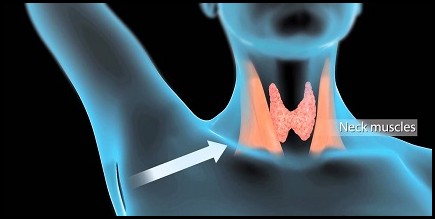
Advantages of Robotic Thyroidectomy
- No incision in the neck- In open surgery, you're looking at the thyroid from the top down, so it's a little difficult to see the deeper structures, such as the recurrent laryngeal nerve. The 3D camera gives you a magnified view in robotic thyroidectomy and enables you look at the thyroid directly."
- Better identification of critical structures: Due to the magnified 3D view, it is easier to identify critical structures, such as the recurrent laryngeal nerve (the nerve that goes to your voice box) and parathyroid glands.
- Better dexterity in certain areas: The robotic instruments give the surgeon a 6º freedom of motion, which enables manipulation of certain portions of the thyroid more easily.
Disadvantages of Robotic Thyroidectomy
- Robotic thyroidectomy right now is that it can't be used on every patient.
Who can haveRobotic Thyroidectomy?
- Are not overweight
- Have a smaller thyroid gland (4cm at the largest)
- Have smaller nodules (2cm at the largest)
- Have nodules on just one side of the thyroid gland
If you have any related query, you can send us your report on below mention email address or you can call us or whatsApp for any second opinion.
Video/tele consultation also available.
E-mail address- query@satyughealthcare.com
Phone number- +91888-242-4372, +91991-065-5125
Frequently asked questions
Q.When should I worry about thyroid nodules?
The vast majority — more than 95% — of thyroid nodules are benign (noncancerous). If concern arises about the possibility of cancer, the doctor may simply recommend monitoring the nodule over time to see if it grows. Ultrasound can help evaluate a thyroid nodule and determine the need for biopsy.
Q.Do thyroid nodules go away?
Although some thyroid nodules – especially smaller ones or those filled with fluid – can go away on their own, they tend to gradually grow, even when they're benign.
Q.Can stress cause thyroid nodules?
Stress alone will not cause a thyroid disorder, but it can make the condition worse. The impact of stress on the thyroid occurs by slowing your body's metabolism. This is another way that stress and weight gain are linked.
Q.What foods to avoid if you have thyroid nodules?
Goitrogens
- soy foods: tofu, tempeh, edamame, etc.
- certain vegetables: cabbage, broccoli, kale, cauliflower, spinach, etc.
- fruits and starchy plants: sweet potatoes, cassava, peaches, strawberries, etc.
- nuts and seeds: millet, pine nuts, peanuts, etc.
Q.At what size should a thyroid nodule be removed?
Previous studies had shown that between 11- 20% of cancerous nodules ≥ 4 cm may be misclassified as benign (false negative) and this has led to recommendations that all nodules > 4 cm should be removed.
Q.How long does a thyroid biopsy procedure take?
A fine-needle aspiration biopsy of the thyroid gland is an effective method to determine whether or not a thyroid nodule is cancer. The procedure is relatively simple procedure that is usually performed in a doctor's office and usually takes less than 20 minutes.
Q.How much time it will take to recover from Robotic surgery?
The recovery time for robotic thyroidectomy is about the same as it is for open or endoscopic surgery—a patient usually spends one day in the hospital following the surgery.
Related Blogs

HAPPY PATIENTS
What Our Patients Are Saying


























Our Gallery