A hip fracture is when the upper part of the thighbone (femur) breaks. The injury usually results from a fall or car accident. Hip fractures are more common in older people because bones weaken and become more brittle with age. Mostly, hip fractures cause severe pain and require surgery immediately. Some people need a total hip replacement after a hip fracture. Physical therapy (PT) can improve the outlook for people with hip fractures.
Hip fractures can occur in several areas of the upper femur. The most common types of hip fractures are:
Hemiarthroplasty is typically done immediately after a fall or other injury that caused a hip fracture, so there is usually little you can do to prepare. The procedure requires an in-hospital stay of at least a couple of days.
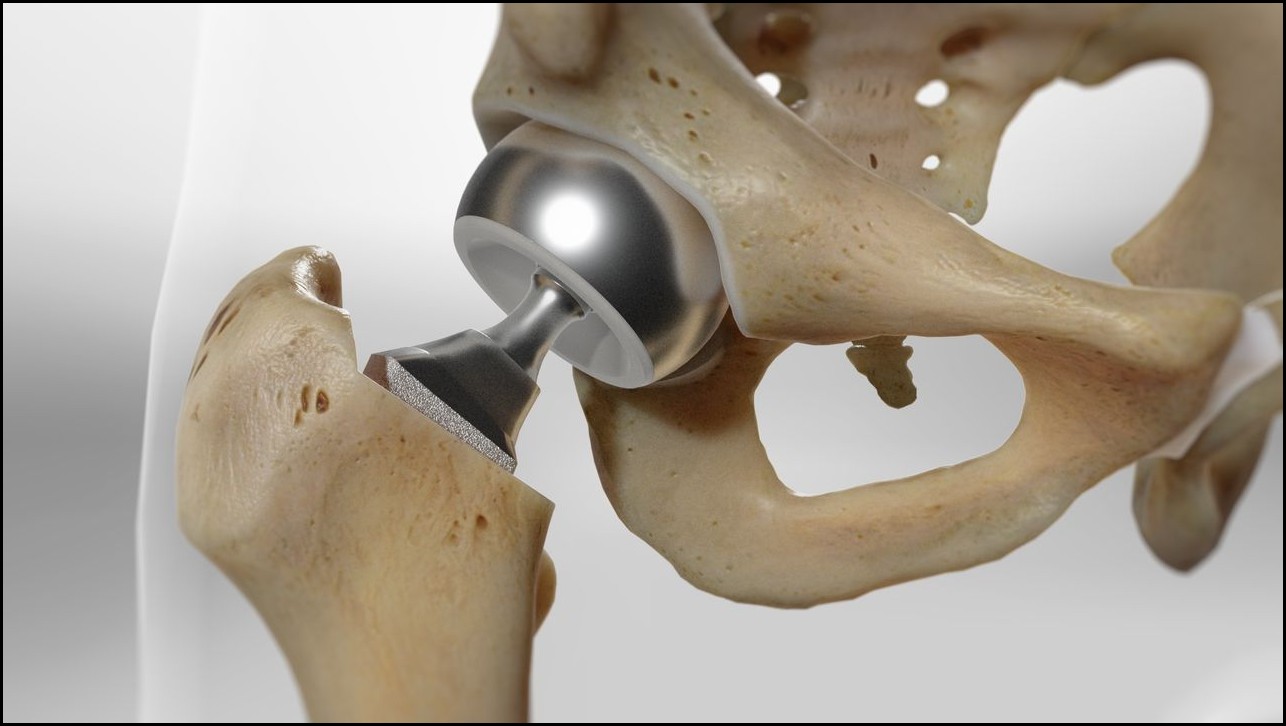
You may be given a general anesthetic, that means you will be asleep for the procedure. Or you may be given a regional anesthetic, like an epidural, where you are still awake, but your legs are numb. The operation starts with an incision on the side of the thigh near the hip. Once the surgeon can see the joint, the femoral head is removed from the acetabulum. A network of ligaments, tendons, and muscles keep the ball and socket in place. The femoral head is also detached from the rest of the femur. The inside of the femur is hollowed out and a metal stem is placed snugly inside the femur. A prosthetic or artificial femoral head, also metal, is placed securely on the stem. This may be attached to another head that is lined with polyethylene (plastic). This is called a bipolar prosthesis (a head within a head). The incision is then sewn up and bandaged. A drain may or may not be used to drain any minimal bleeding.
You will be prescribed pain medications immediately after your operation. You may have at-home therapy or follow-up appointments at a physical therapy facility. The duration of your therapy will depend on several factors, including your age and overall fitness. You may have to permanently avoid or reduce activities that require heavy lifting or lots of climbing. Your ability to run and play sports, such as tennis, may also be limited. However, low-impact exercise should be part of your lifestyle for all-around health.
If you have any related query, you can send us your report on below mention email address or you can call us or whatsApp for any second opinion.
Video/tele consultation also available.
E-mail address- query@satyughealthcare.com
Phone number- +91888-242-4372, +91991-065-5125
Frequently asked questions
Q. What is a bipolar hip replacement?
Treatment for femoral neck fractures can be successfully achieved through a bipolar hemiarthroplasty. Hemiarthroplasty is a surgical procedure that replaces one half of the hip joint with a prosthetic, while leaving the other half intact.
Q. How long does a hemi hip replacement last?
A successful hemiarthroplasty should last about 12 to 15 years or more. After that time or even earlier, the prosthetic hip may lose some of its connection to the bone. This is a painful complication and usually requires another surgery to fix it.
Q. What is the difference between a bipolar hip and a total hip?
This surgical procedure replaces the head of a damaged femur with an implant designed to stabilize the femur and restore hip function. Unlike total hip replacement, in which both the ball of the femur and the hip socket are replaced, in this procedure, only the ball is replaced.
Q. How long do hip surgeries take?
Total hip replacement surgery takes about one and a half hours. Most patients also stay in the hospital for one or two days after the procedure.
Q.What is the recovery for hip replacement?
Hip replacement recovery time varies from person to person. Most patients can walk with assistance the same day as surgery or the day after. They usually resume routine activities between 10 and 12 weeks after hip surgery. Full hip replacement recovery takes 6 to 12 months, but replacements can last 20 years.
Q. How do you poop after hip surgery?
Make sure you are drinking plenty of fluids — lots of water — and eating foods with fiber, like vegetables and beans. Feel free to use a stool softener, too. Any over-the-counter product will do. Also, remember that there is no set rule for how many bowel movements you should be having.
Q. How long will I be off work after hip replacement?
As for milestones like driving and returning to work, timeframes may vary by patient, but in general going back to desk jobs in as little as two weeks and to more active jobs (such as construction work) after six.