Refrective Surgery Cost in India
Assistance
Consultation
Services
Opinion
Care Coordination
What will your treatment cost?

| Surgery Name | Cost | Room | Hospitalization |
|---|---|---|---|
| Refrective Surgery Cost in India | $2000 to $2500 | Single | Patient - 2 days stay in a single room. |
✓ Inclusion
- Room Rent,
- Cost of Surgery,
- Consultation by Primary Team in Package days,
- Basic Investigations.
- Routine Pharmacy and Consumables,
- Patient Food.
- Surgeon’s Fees.
✗ Exclusion
1.Overstay more than package days,
2. Any other Specialty Consultations,
3. Special Equipment,
4. Additional Procedure/Surgery.
5. Blood Components.
Know More About Procedure & Surgery
🇮🇳 Medical Package — India
Refrective Surgery Cost in India
World-class treatment • NABH & JCI Accredited Hospitals • Save up to 80% vs USA/UK
What is Refrective Surgery?
Refractive eye surgery is non-essential eye surgery used to improve the refractive state of the eye and decrease or eliminate dependency on glasses or contact lenses. This can include various methods of surgical remodeling of the cornea (keratomileusis), lens implantation or lens replacement. The most common methods today use excimer lasers to reshape the curvature of the cornea.
Types of Referactive errors
- ✓Nearsightedness (myopia). Close objects appear sharp. But things in the distance are blurred. The eye is longer than normal from front to back. Or the cornea is curved too much. Images focus in front of the retina instead of on it.
- ✓Farsightedness (hyperopia). You can see distant objects clearly. But objects up close are blurred. The eye is shorter than normal. Or the cornea is too flat. Images focus behind the retina.
- ✓Astigmatism. Objects are blurred at any distance. The cornea, lens, or both are shaped so that images aren't focused sharply on the retina.
- ✓Presbyopia. This is also known as aging eye. The eye loses its ability to change focus on because of the natural aging process. This often occurs between ages 40 and 50. Refractive surgery can’t correct this problem. Surgery can make distance vision clearer. But it may make near vision worse.
Techniques to correct Referative Errors

- ✓Automated lamellar keratoplasty (ALK): The surgeon uses an instrument called a microkeratome to cut a thin flap of the corneal tissue. The flap is lifted like a hinged door, targeted tissue is removed from the corneal stroma, again with the microkeratome, and then the flap is replaced.
- ✓Laser-assisted in situ Keratomileusis (LASIK): The surgeon uses either a microkeratome or a femtosecond laser to cut a flap of the corneal tissue (usually with a thickness of 100–180 micrometres). The flap is lifted like a hinged door, but in contrast to ALK, the targeted tissue is removed from the corneal stroma with an excimer laser. The flap is subsequently replaced. When the flap is created using an IntraLase brand femtosecond laser, the method is called IntraLASIK.
- ✓Refractive Lenticule Extraction (ReLEx): A femtosecond laser cuts a lenticule within the corneal stroma. Afterwards, a LASIK-like flap is cut which can be lifted to access the lenticule. This is removed through manual dissection using a blunt spatula and forceps.
- ✓ReLEx "SMILE" (Small Incision Lenticule Extraction): A newer technique without a flap, a femtosecond laser cuts a lenticule within the corneal stroma. The same laser is used to cut a small incision along the periphery of the lenticlue about 1/5th the size of a standard LASIK flap incision. The surgeon then uses a specially designed instrument to separate and remove the lenticule through the incision, leaving the anterior lamellae of the cornea intact.
- ✓Photorefractive keratectomy (PRK) :This surgery is done with the same kind of excimer laser used for LASIK. PRK is done to reshape the cornea to correct mild to moderate nearsightedness (myopia). Laser beam reshapes the cornea by removing tiny amounts of tissue from the outer surface. The procedure uses a computer to map the eye's surface. It also calculates how much tissue to remove. This surgery generally takes a few minutes. Because the cornea surface is removed, it takes a few weeks to heal.
- ✓Radial keratotomy (RK): This procedure is used to correct mild myopia. Tiny cuts (incisions) called are made in the cornea with a diamond scalpel. The cuts cause flatten the center of the cornea and change its curve. This reduces refraction. Because the cornea is cut, it takes a few weeks to heal. This surgery was very common. But it has been nearly replaced by LASIK.
- ✓Astigmatic keratotomy (AK): Astigmatic keratotomy (AK) is similar to radial keratotomy (RK). This surgery is used to correct astigmatism. Instead of making radial incisions, the eye surgeon makes cuts in the cornea in a curved pattern.
- ✓Laser thermal keratoplasty (LTK): This method applies heat from a laser to the edges of the cornea. This shrinks the collagen fibers and reshapes the cornea. You must be age 40 or older to have this surgery.
- ✓Conductive keratoplasty (CK) : This surgery is used to correct mild to moderate hyperopia. It uses heat from low-level radio waves to shrink the collagen and change the cornea's shape. A probe smaller than a strand of hair is used to apply the radio waves around the outer cornea. This creates a tight band. The band increases the curve of the cornea and improves vision. You must be age 40 or older to have this surgery.
- ✓Intracorneal rings (Intacs): These are used to treat mild myopia. They are thin rings that are implanted into the cornea. They change the curve of the cornea and improve vision.
During and after Procedure
Refractive eye surgery involves minimal discomfort. The eye is often numbed with eye drops before surgery. You may be awake during the surgery. Your eye may be kept open with an eye speculum. This is a spring-like device that is placed between the eyelids. After surgery, you may take pain medicine and use eye drops to ease discomfort. The most common after-effects of surgery include:
- ✓Sensitivity to light
- ✓Blurry vision
- ✓Minor discomfort
- ✓Dry eyes
Recovery time from surgery varies depending on the surgery. Full recovery may take days, weeks, or months.
Free Medical Opinion
Expert review in 48 hours
Best Surgeon
Top specialists in India
Hospital Booking
NABH / JCI accredited
Visa Assistance
Invitation letter provided
Airport Transfer
Safe pickup & drop
Tele-Consultation
Video consult before travel
Hotel Booking
Near hospital, affordable
Multilingual Support
Arabic, French, English
📞 Get Started Today — It Is Free
Ready to Plan Your Treatment in India?
Send your medical reports and get a free expert opinion within 48 hours. Our coordinators speak Arabic, French and English.
Frequently Asked Questions
LASIK and PRK are types of refractive eye surgery. They treat vision problems like nearsightedness, farsightedness, and astigmatism. Both LASIK and PRK use a laser to reshape the cornea, the clear outer layer of your eye that focuses light so you can see clearly.
Top doctors for Refrective Surgery | Cost for Refrective Surgery |Book online appointment| Best Refrective Surgery in India. Search Results Web results for cost of Refrective Surgery treatment|





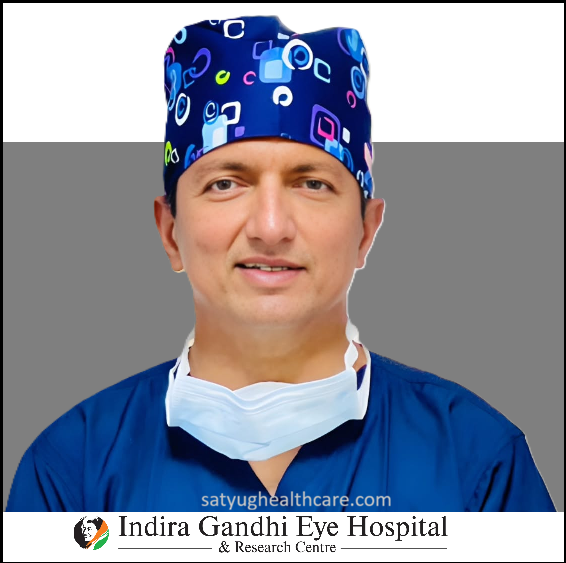
![Dr. Himanshu R. Mehta [MBBS, MS - Opthalmology, Fellowship - Vitreo Retinal Surgery] - Doctor at Satyug Healthcare](https://satyughealthcare.com/uploads/doctors/6441bec1edd180bbf9aadeb6db120e81.webp)


![Dr. Neha Sharma [MBBS, MS - Ophthalmology] - Doctor at Satyug Healthcare](https://satyughealthcare.com/uploads/doctors/63e03d42a36be56b81c9e71a8ac3ba98.webp)


TOP HOSPITALS
Special High-quality Hospitals


HAPPY PATIENTS
What Our Patients Are Saying





















Our Gallery