Not sure what your treatment will cost?Free, instant, itemised estimate -- treatment, visa, flights, hotel & food
What will your treatment cost?
Chat Assistance
Satyug Assistant
Online · usually replies instantly
Answers are informational, not medical advice.
Trauma & Emergency Department
What is Trauma & Emergency Care?
Trauma and Emergency Care refers to specialized medical services provided to patients who require urgent medical attention due to severe injury, sudden illness, or critical health conditions. These services are designed to stabilize patients quickly and provide lifesaving treatment during the “golden hour” — the first crucial hour after a traumatic injury or medical emergency.
Trauma centers and emergency departments are specially designed to handle:
Road traffic accidents
Head injuries
Fractures and trauma
Heart attacks
Stroke
Severe bleeding
Burns
Poisoning
Respiratory distress
Sudden unconsciousness
Organ failure
Medical emergencies
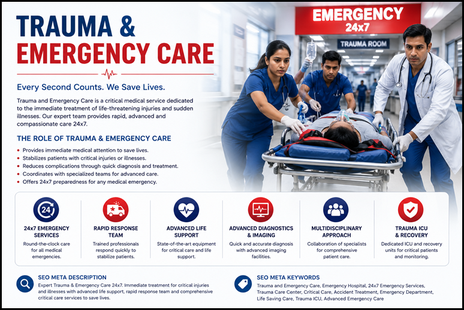
Role of Trauma & Emergency Department
The Trauma & Emergency Department plays a vital role in saving lives and reducing complications through immediate medical intervention.
Major Roles Include:
Rapid patient assessment and stabilization
Emergency life support and resuscitation
Management of critical injuries and trauma
Immediate treatment of heart attacks and strokes
Emergency surgeries and procedures
Critical care monitoring
Coordination with multidisciplinary specialists
24×7 emergency preparedness and response
Importance of Immediate Emergency Care
In medical emergencies, every second matters. Quick diagnosis and treatment can significantly improve survival rates and recovery outcomes.
Benefits of advanced trauma and emergency care include:
Faster medical response
Reduced risk of complications
Improved survival chances
Better recovery outcomes
Continuous monitoring and intensive care support
Access to advanced diagnostic and surgical facilities
Common Conditions Treated in Trauma & Emergency
Emergency departments handle a wide range of critical medical conditions including:
Trauma Cases
Road traffic accidents
Falls and fractures
Sports injuries
Head and spinal injuries
Burns and blast injuries
Medical Emergencies
Heart attack
Stroke
Seizures
Severe asthma attacks
Poisoning and overdose
Diabetic emergencies
Severe infections and sepsis
Surgical Emergencies
Internal bleeding
Appendicitis
Acute abdominal pain
Organ rupture
Emergency trauma surgeries
Advanced Technology in Emergency Care
Modern trauma and emergency departments are equipped with advanced medical technology to provide rapid and accurate treatment.
Key Facilities Include:
Advanced Trauma ICU
Ventilator Support
Cardiac Monitoring Systems
Portable Ultrasound & X-ray
CT Scan & MRI
Advanced Life Support Ambulances
Modular Emergency Operation Theatres
Point-of-Care Diagnostics
Trauma Team and Specialists
Emergency care requires a coordinated team approach involving multiple specialists including:
Emergency Physicians
Trauma Surgeons
Orthopaedic Surgeons
Neurosurgeons
Cardiologists
Critical Care Specialists
Anesthesiologists
Radiologists
Emergency Nurses & Paramedics
This multidisciplinary teamwork ensures immediate and comprehensive patient management.
24×7 Emergency Services
Trauma and Emergency departments operate round the clock to provide uninterrupted care for critically ill and injured patients. Emergency response systems, ambulance networks, and ICU backup services help hospitals manage high-risk situations effectively.