Spine Surgery
Assistance
Consultation
Services
Opinion
Care Coordination
What will your treatment cost?

| Surgery Name | Cost | Room | Hospitalization |
|---|---|---|---|
| Spine Surgery | $7500-$8500 | Twin Sharing | 5 day ( 1 ICU + 4 Ward) | Stay in India 1 Months |
✓ Inclusion
1.Room Rent
2.Cost of Surgery
3.Consultation by Primary Team in Package days
4. Basic Investigations
5. Routine Pharmacy and Consumables
6.Patient Food
✗ Exclusion
1.Overstay more than package days
2. Any other Speciality Consultations
3. Special Equipment
4. Additional Procedure/Surgery
Know More About Procedure & Surgery
🇮🇳 Medical Package — India
Transforaminal Lumbar Interbody Fusion ( 2 level TLIF) spine surgery in India
World-class treatment • NABH & JCI Accredited Hospitals • Save up to 80% vs USA/UK
What is Transforaminal Interbody Lumbar Fusion (TLIF)?
Transforaminal lumbar interbody fusion (TLIF) is a surgical procedure that involves decompressing nerves in the lumbar spine and inserting metal screws and rods to fuse the spine. In a TLIF, the surgeon accesses the lumbar spine through an incision(s) in the back. The nerves are decompressed by removing nearly all the disc and the facet joints (In a decompression alone, only part of the disc is removed and the facet joints remain intact). The patient’s own bone and cadaver bone are then placed around a plastic cage between the vertebral bodies in place of the disc. Screws and rods are inserted to stabilize the spine and allow the bones to fuse both in the front and back of the spine. Terming the procedure a “fusion” is a little bit of a misnomer because the bones do not immediately fuse during or after the procedure. Fusion, or growth of the bones together, does not actually occur for 6 to 12 months following the procedure.

●
Q. Who needs TLIF Surgery?
TLIF can be performed for serval spinal conditions degenerative disc disease, herniated discs, or spondylolisthesis, pain in the lower back . These conditions may cause spinal cord or nerve root compression, spinal instability, and weakness. The TLIF procedure is performed to decompress (remove the pressure from) the spinal cord and/or nerves, re-stabilize the spine, and prevent further movement and degeneration at the joints in question.
Q. diagnose the cause of his symptoms?
Your Doctor may recommendated :
- ✓magnetic resonance imaging (MRI)
- ✓computed axial tomography (CAT) scan.
Q. What is the Success Rates of TLIF Surgery ?
Studies indicate that after TLIF surgery approximately 90% to 95% patients are satisfied with the surgical result , although 5% of patients may develop implant failure , neurological deficit or recurrence of the symptoms. Smoking is strictly prohibited.
Q. How long does it take to recover from Tlif surgery?
after 4-6 week from the surgeyr , it is possible for you to return to work depending on what type of work and if it can be light duty desk work. It may take 6 months to a year for your back to get better completely
Q. Will I have any long-term limitations due to a TLIF?
The fusion portion of the TLIF is intended to prevent movement at a joint in the spine. Therefore, you will probably feel stiffness at the level of the TLIF. A fusion of two vertebrae will produce a smaller amount of stiffness; a longer fusion will produce a correspondingly longer section of stiffness.

Q. What do i need to do before Transforaminal lumbar interbody fusion(TLIF) SURGERY?
- 1Before the surgery patient advised to stop smoking, and you should not smoke for at least 12 months after.
- 2In order to prevent unwanted bleeding during or after surgery, Patient stop taking medications that can thin your blood such as aspirin at least 2 weeks before your surgery, tell your doctor if you have an allergy to any medications, food, or latex (some surgical gloves are made of latex).
- 3Stop eating and drinking the night before surgery. It is standard to stop all food and drink the midnight before your surgery, even if your surgery is not first thing in the morning. You may also be asked to stop certain medications as well. If you are allowed to take some of your medications, you may take them with small sips of water. Definitely no coffee or juices the morning of surgery.
- 4On the day of surgery, remove any nail polish or acrylic nails, do not wear makeup and remove all jewelry. If staying overnight, bring items that may be needed, such as a toothbrush, toothpaste, and dentures..
Q. What are the Risks and Complications in TLIF Back Surgery
1) Blood loss. Blood loss is usually very small. But as with any surgery, there is
the potential for major or even life-threatening blood loss.
2) Infection. Even with antibiotics and careful technique, there is still a small risk of
developing infection. This could require antibiotics or even further surgery to
resolve. Infections may result in residual pain or neurologic deficits including
weakness, sensory changes or bowel/bladder incontinence. Unfortunately this
could become permanent.
3) Reaction to anesthesia. Anytime you are given medications you can
experience an adverse reaction. Even if given medications you have tolerated in
the past, you can develop new reactions.
4) Cerebrospinal Fluid (CSF) leak. Your nerves sit in a sac, which contains your
nerves and spinal fluid. During surgery the sac may accidentally be punctured or
opened. When Dr. Smith observes this he will attempt to fix it during surgery. However
the fluid may still leak or Dr. Smith may not see it leaking. This may lead to
headaches after surgery. At the surgery site a bump under your skin may occur
or the fluid may even leak out of the incision. This could lead to infection or other
problems requiring further surgery.
5) Damage to the spinal cord or nerves. The surgery is performed around your
nerves. In the process of decompressing your nerves, injury to the nerves can
occur including pain, weakness, sensory changes or bowel/bladder incontinence.
Unfortunately this could become permanent. It may require additional surgery to
improve.
6) Pseudoarthrosis or hardware failure. After surgery the screws and rods could
break or loosen in the bone. This may prevent the bones from fusing, or growing
together. This is called pseudoarthrosis. Not everyone has symptoms if they do
not fuse, but some do including recurrence of pain or neurologic deficits.
Sometimes additional procedures are required to help the bones fuse.
7) Loss of range of motion. You will lose some range of motion.
8) Hematoma. There is always bleeding during surgery and unfortunately a small
amount of blood can collect and press into the nerves. This sometimes requires
further surgery to decompress.
9) Adjacent level disease. The surgery involves inserting rods and screws and
attempting to make the bones fuse together. This may result in other spinal
levels degenerating faster and need for additional surgery.
10)Failure to relieve symptoms. Dr. Smith will do everything possible to give you
the best results with the surgery. However, surgery may not relieve all or any of
your symptoms.
11)Reoperation. As listed above, there are numerous scenarios which may require
additional surgery in the future. Whether for reasons listed above or reasons not
listed, undergoing surgery now does not preclude you from potentially needing
surgery in the future.
12)Death. As with any surgical procedure, there is a risk of death. This is rare.
Q. What happens after the surgery?
- ✓Patients usually have to stay for 3 to 5 days in the hospital after TLIF surgery. For the first few days, intravenous narcotic medication is given to control pain. Blood counts are checked to determine whether a blood transfusion is needed.
- ✓On the first day after surgery, the patient begins a walking program with the help of a physical therapist. The physical therapist will help the patient learn how to get in and out of bed. The doctor may also suggest a walker and a back brace for walking.
- ✓The surgical drain is usually removed within two days of the surgery. When the patients are allowed to go home, they are given a prescription for oral narcotic painkillers.
Q. Who are The Top Spine Surgeon in India ?
|
Surgeon Name |
OPD Timing |
Specialties |
Available in the hospital |
View Profile |
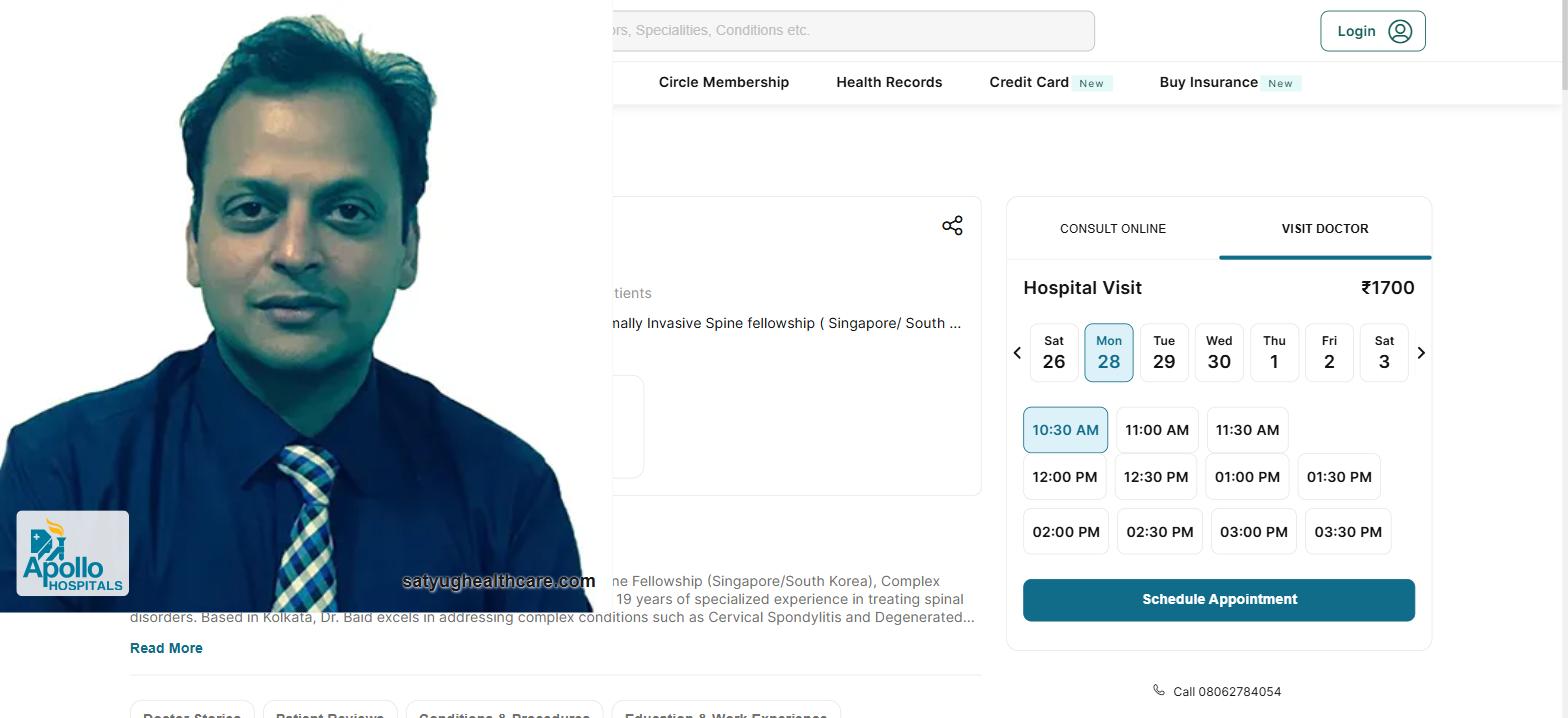
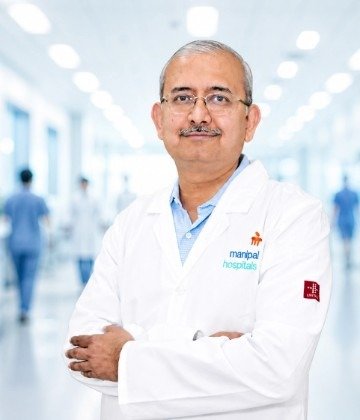
| Dr. Anil Kumar Kansal - Director & HOD | Days: Mon - Sat | Time: 10:00 am to 1:00 pm | Room No: OPD - 8 | NeuroSurgery & Spine Surgery | BLK Super Speciality Hospital , Pusa Raod , New Delhi | View Profile |
Success Rates for TLIF Back SurgeryTLIF spinal fusion operation is a salvage procedure. For patients with disabling back pain and leg pain significant benefits can be obtained with a successful spinal fusion. Studies indicate that the patient's pain is improved 60% to 70% after TLIF spinal fusion surgery and approximately 80% of patients undergoing TLIF spinal fusion surgery are satisfied with the surgical result.
Potential Risks and Complications for TLIF Back Surgery
The benefits of TLIF spinal surgery must be weighed against potential complications from the operation. Potential risks and complications include:
- ✓Anesthesia
- ✓Infection
- ✓Blood loss
- ✓Nerve injury
- ✓Possible re-operation
- ✓Lack of a solid fusion
- ✓Continued pain or (rarely) increased pain
If you have any related query, you can send us your report on below mention email address or you can call us or whatsApp for any second opinion.
Video/tele consultation also available.
E-mail address- query@satyughealthcare.com
Phone number- +91888-242-4372, +91991-065-5125
Free Medical Opinion
Expert review in 48 hours
Best Surgeon
Top specialists in India
Hospital Booking
NABH / JCI accredited
Visa Assistance
Invitation letter provided
Airport Transfer
Safe pickup & drop
Tele-Consultation
Video consult before travel
Hotel Booking
Near hospital, affordable
Multilingual Support
Arabic, French, English
📞 Get Started Today — It Is Free
Ready to Plan Your Treatment in India?
Send your medical reports and get a free expert opinion within 48 hours. Our coordinators speak Arabic, French and English.
Transforaminal Lumbar Interbody Fusion ( 2 level TLIF) spine surgery in India, Spine Surgery Cost , endoscopic spine surgery cost in india
























TOP HOSPITALS
Special High-quality Hospitals


HAPPY PATIENTS
What Our Patients Are Saying






























Our Gallery