Assistance
Consultation
Services
Opinion
Care Coordination
What will your treatment cost?
Polycystic Ovary Syndrome (PCOS): Causes, Symptoms, Treatment and Cost in India
Released Date: 2026-10-08
Polycystic Ovary Syndrome (PCOS) is one of the most common hormonal disorders in women of reproductive age. The World Health Organization estimates that it affects roughly 8 to 13 percent of women in this age group, and many of them do not know they have it. PCOS can cause irregular periods, acne, unwanted hair growth, weight gain and difficulty getting pregnant, and over the long term it raises the risk of type 2 diabetes, heart disease and endometrial problems. The good news is that PCOS is very manageable. With the right combination of lifestyle changes, medicines and, when needed, fertility treatment, most women with PCOS control their symptoms and many go on to have healthy pregnancies. India has some of the most experienced gynaecologists, endocrinologists and fertility specialists in the world, and treatment is available at a fraction of the cost charged in Western countries.
What is Polycystic Ovary Syndrome (PCOS)?
PCOS is a hormonal and metabolic condition in which the ovaries do not release eggs regularly (anovulation), the body produces higher than normal levels of androgens ("male" hormones that all women have in small amounts), and the ovaries often contain many small follicles that look like tiny cysts on ultrasound. Despite the name, these are not true cysts and they are not harmful in themselves; they are immature follicles that failed to release an egg.
Doctors usually diagnose PCOS using the Rotterdam criteria, which require at least two of the following three features after other causes have been ruled out:
- Irregular or absent ovulation, shown by infrequent, irregular or missed periods.
- High androgen levels, either on a blood test or through signs such as excess facial and body hair (hirsutism), acne or scalp hair thinning.
- Polycystic ovaries on ultrasound, meaning a high number of small follicles or an enlarged ovarian volume.
Types (phenotypes) of PCOS
Because different combinations of these features are possible, specialists describe several phenotypes. The "classic" form includes all three features and is usually associated with more severe metabolic problems such as insulin resistance. Other women have only irregular cycles and polycystic ovaries without raised androgens, a milder form. Some doctors also describe practical categories such as insulin-resistant PCOS, inflammatory PCOS and PCOS linked to stopping hormonal contraception, although these are descriptive terms rather than formal medical classifications.
🖼️ Understand It in Pictures
Normal monthly cycle vs PCOS

👀 Symptoms in Pictures
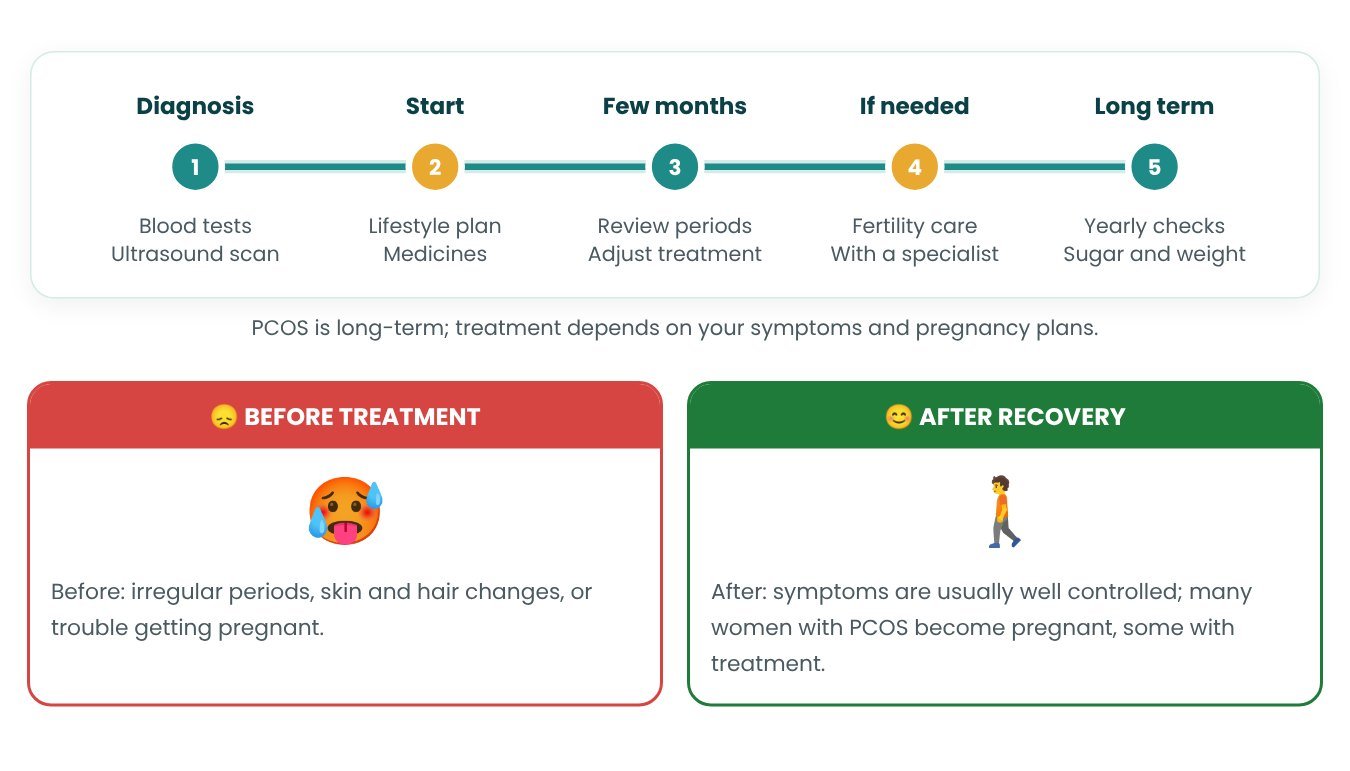
🎬 The Treatment Journey in Pictures

📅 Recovery at a Glance
Causes and Risk Factors
The exact cause of PCOS is not fully understood, but research points to a combination of genetic and environmental factors:
- Insulin resistance: Many women with PCOS, including some who are slim, have cells that do not respond normally to insulin. The body compensates by producing more insulin, which in turn stimulates the ovaries to produce more androgens and disrupts ovulation.
- Genetics and family history: PCOS often runs in families. A woman whose mother or sister has PCOS, or whose family has a strong history of type 2 diabetes, is at higher risk.
- Excess weight: Obesity does not cause PCOS on its own, but it worsens insulin resistance and makes symptoms more severe.
- Low-grade inflammation: Women with PCOS often have markers of chronic inflammation, which may stimulate androgen production.
- Ethnicity and lifestyle: Women of South Asian and Middle Eastern origin tend to develop insulin resistance and metabolic complications at lower body weights. Rapid urbanisation, sedentary lifestyles and calorie-dense diets in the Gulf region, South Asia and growing African cities are contributing to rising rates of PCOS-related diabetes and obesity.
Symptoms of PCOS
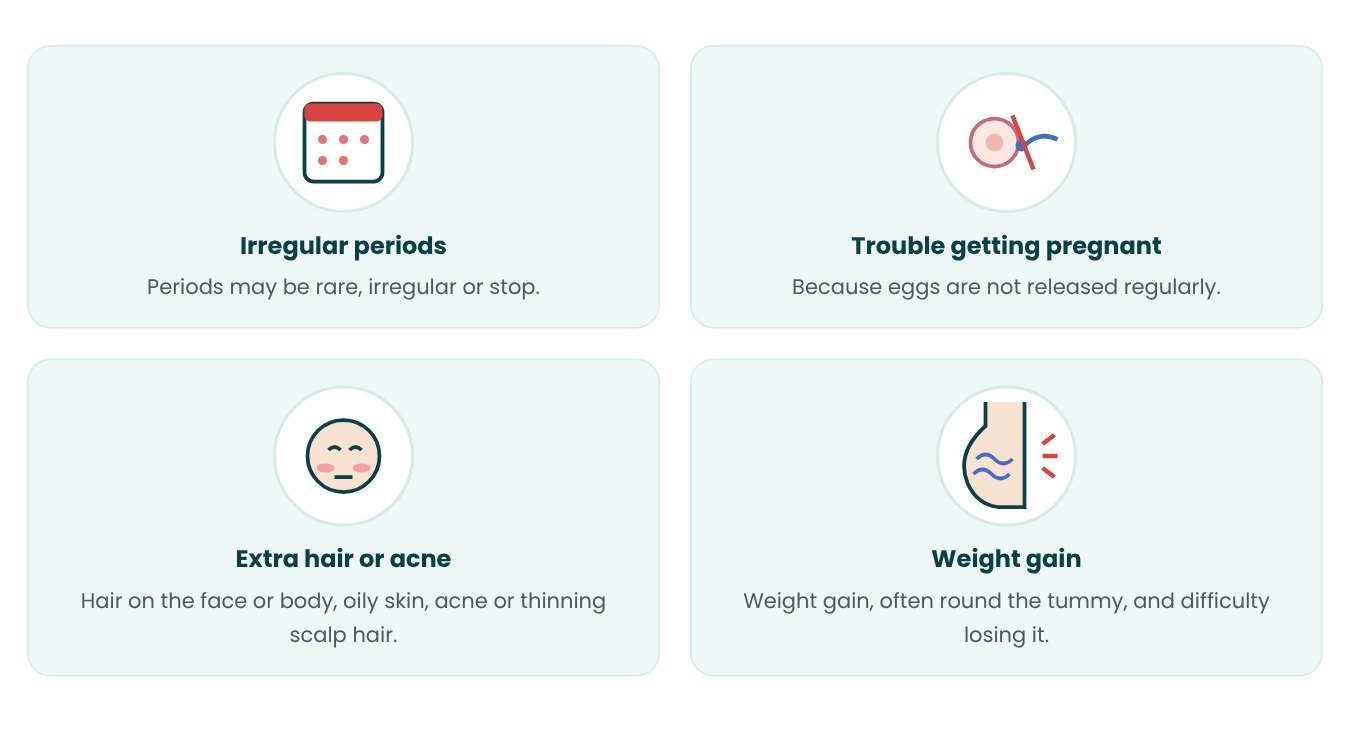
Symptoms usually begin around the time of the first period, but some women only notice them later, for example after weight gain or when trying to conceive. Common symptoms include:
- Irregular, infrequent, prolonged or absent menstrual periods
- Difficulty getting pregnant because of irregular or absent ovulation
- Excess hair on the face, chin, chest, back or abdomen (hirsutism)
- Persistent acne or oily skin, often on the face, chest and upper back
- Thinning of scalp hair or male-pattern hair loss
- Weight gain, especially around the abdomen, and difficulty losing weight
- Dark, velvety patches of skin on the neck, armpits or groin (acanthosis nigricans), a sign of insulin resistance
- Mood changes, anxiety, depression and poor sleep, including sleep apnoea
When to see a doctor urgently
Seek prompt medical attention if you have very heavy bleeding with dizziness or fainting, no period for several months combined with unusual pelvic pain, sudden severe one-sided lower abdominal pain (which may indicate ovarian torsion or a ruptured cyst), symptoms of high blood sugar such as extreme thirst and frequent urination, or signs of depression that affect daily life. Rapidly developing deepening of the voice or very fast-growing body hair should also be checked, as these may point to a hormone-producing tumour rather than PCOS.
Diagnosis of PCOS
There is no single test for PCOS. A gynaecologist or endocrinologist will take a detailed history, examine you and arrange tests to confirm the diagnosis and exclude conditions that can mimic it, such as thyroid disease, raised prolactin and congenital adrenal hyperplasia. Typical investigations include:
- Hormone blood tests: total and free testosterone, DHEA-S, LH and FSH, AMH (anti-Mullerian hormone), prolactin, thyroid function (TSH) and 17-hydroxyprogesterone.
- Metabolic tests: fasting glucose, HbA1c, an oral glucose tolerance test, fasting insulin and a lipid profile.
- Pelvic ultrasound: usually a transvaginal scan to count follicles and measure ovarian volume and check the thickness of the womb lining.
- Additional assessments: blood pressure, body mass index and waist measurement, liver tests for fatty liver, and screening for sleep apnoea and mood disorders where relevant.
In teenage girls, doctors are careful not to diagnose PCOS too early, because irregular cycles and multiple follicles can be normal in the first few years after periods begin.
Treatment Options for PCOS
PCOS cannot be "cured", but its symptoms and long-term risks can be controlled very effectively. Treatment is tailored to each woman's goals, for example regular periods, clearer skin, weight control or pregnancy.
Lifestyle changes
For women who are overweight, losing even 5 to 10 percent of body weight can restore regular ovulation, improve insulin sensitivity and reduce androgen levels. A balanced diet with fewer refined carbohydrates and sugary drinks, regular physical activity (at least 150 minutes a week), good sleep and stress management form the foundation of every treatment plan. Many Indian hospitals offer dedicated PCOS clinics with dietitians and lifestyle coaches.
Medicines
- Combined oral contraceptive pills regulate periods, protect the womb lining and reduce acne and hair growth in women not trying to conceive.
- Metformin improves insulin resistance and may help regulate cycles and weight.
- Anti-androgen medicines such as spironolactone reduce hirsutism and acne (they must not be used during pregnancy).
- Newer weight-management medicines, such as GLP-1 receptor agonists, may be considered under specialist supervision for women with obesity.
- Cyclical progestogens to trigger a regular bleed and protect the endometrium.
- Cosmetic treatments such as laser hair reduction and dermatology care for acne and pigmentation.
Fertility treatment
PCOS is one of the most common causes of female infertility, but it is also one of the most treatable. Options are usually offered step by step:
- Ovulation induction with letrozole (now the preferred first-line medicine) or clomiphene, with ultrasound monitoring of follicle growth.
- Gonadotropin injections for women who do not respond to tablets, with careful monitoring to avoid multiple pregnancy.
- Intrauterine insemination (IUI) combined with ovulation induction.
- Laparoscopic ovarian drilling (LOD), a keyhole procedure that uses heat or laser to treat a small part of the ovary and can restore ovulation in women resistant to medicines.
- IVF and ICSI, using modern antagonist protocols and agonist triggers that greatly reduce the risk of ovarian hyperstimulation syndrome (OHSS), to which women with PCOS are especially prone. Read more about ICSI treatment in India.
Leading Indian IVF centres also offer embryo freezing ("freeze-all" cycles), time-lapse embryo imaging and preimplantation genetic testing where medically indicated.
Cost of PCOS Treatment in India
India offers comprehensive PCOS care, from diagnosis to advanced fertility treatment, at accredited JCI and NABH hospitals in Delhi/NCR at much lower prices than in the USA, UK or the Gulf. The table below shows indicative starting prices:
| Treatment | Approximate Starting Cost (USD) |
|---|---|
| PCOS evaluation (gynaecology/endocrinology consultation, hormone panel, pelvic ultrasound) | USD 150 - 300 |
| Ovulation induction cycle with follicle monitoring | USD 200 - 400 per cycle |
| Intrauterine insemination (IUI) | USD 400 - 700 per cycle |
| Laparoscopic ovarian drilling | USD 1,800 - 2,500 |
| IVF / ICSI cycle | USD 3,000 - 4,500 per cycle |
These figures are starting estimates. The final cost depends on your test results, the number of cycles needed, medicine doses, the hospital and doctor chosen and the length of your stay. Contact Satyug Healthcare at +91-8860606766 / +91-9910655125 (WhatsApp) for a free medical opinion and cost estimate.
Living with PCOS and Preventing Complications
PCOS is a long-term condition, so ongoing care matters even after symptoms improve. Women with PCOS should:
- Have blood sugar (HbA1c or glucose tolerance test), cholesterol and blood pressure checked regularly, as the risk of type 2 diabetes and heart disease is higher.
- Ensure they have at least four periods a year, or take treatment to protect the womb lining, because long gaps between periods increase the risk of endometrial hyperplasia and cancer.
- Plan pregnancies with their doctor, as PCOS increases the risk of gestational diabetes, high blood pressure in pregnancy and miscarriage. Early screening and good control of weight and glucose reduce these risks.
- Maintain a healthy weight with sustainable diet and exercise habits rather than crash diets.
- Look after their mental health; counselling and support groups can be very helpful.
Although PCOS itself cannot always be prevented because of its genetic component, healthy habits from adolescence onward can significantly reduce the severity of symptoms and long-term complications.
Why Choose India for PCOS and Fertility Treatment?
- Experienced specialists: Indian gynaecologists, reproductive endocrinologists and IVF experts treat large numbers of women with PCOS every year.
- Accredited hospitals and fertility centres: JCI and NABH accredited facilities with modern embryology labs.
- Affordable care: treatment typically costs a fraction of prices in Western countries, without compromising quality.
- Integrated care: PCOS clinics bring together gynaecology, endocrinology, dermatology, nutrition and psychology under one roof.
- Short waiting times and support with visas, travel, interpreters and accommodation.
Step-by-Step Process to Travel to India for Treatment
- Share your reports - send your latest reports, scans/CD, angiography or echo films and passport copy to Satyug Healthcare on WhatsApp (+91-8860606766 / +91-9910655125) or email.
- Free medical opinion & cost estimate - within 24-72 hours we share opinions and written cost estimates from 2-3 JCI/NABH-accredited hospitals and specialists.
- Choose hospital & doctor - compare doctor experience, hospital, room category and total cost; we help you decide with no extra charge.
- Visa Invitation Letter (VIL) - the hospital issues a VIL for the patient and up to two attendants; we arrange it within 24-48 hours.
- Apply for Indian e-Medical Visa - apply online for the e-Medical Visa (patient) and e-Medical Attendant Visa (family) using the VIL; most approvals come in 3-5 working days.
- Book flights & accommodation - we suggest flights and arrange a guest house, service apartment or hotel near the hospital to suit your budget.
- Free airport pickup - our representative receives you at the airport and takes you to your hotel or directly to the hospital.
- Hospital admission & treatment - a dedicated coordinator and language interpreter stay with you for registration, tests, doctor consultations, the procedure and billing.
- Discharge & follow-up - you receive the discharge summary, prescriptions and fitness-to-fly certificate; follow-up checks are done before you fly.
- Return home & tele-follow-up - we arrange airport drop and stay connected for online follow-up consultations with your doctor in India.
Frequently Asked Questions
Can PCOS be cured permanently?
There is no permanent cure for PCOS, but its symptoms can be controlled very well. Many women find that weight loss, a healthy lifestyle and the right medicines restore regular periods and ovulation. Long-term follow-up is still recommended to monitor blood sugar, cholesterol and the womb lining.
Can I get pregnant if I have PCOS?
Yes. PCOS is one of the most treatable causes of infertility. Many women conceive with lifestyle changes and ovulation-inducing tablets such as letrozole. Those who do not respond may benefit from injections, IUI, laparoscopic ovarian drilling or IVF/ICSI.
Do I have PCOS if my ultrasound shows cysts on my ovaries?
Not necessarily. Polycystic-looking ovaries are seen in many women without PCOS. The diagnosis requires at least two of three features (irregular ovulation, high androgens and polycystic ovaries) after other conditions have been ruled out.
Does PCOS only affect overweight women?
No. Women of any body size can have PCOS. Slim women with PCOS can also have insulin resistance, and they also need regular metabolic screening.
Is surgery needed for PCOS?
Most women never need surgery. Laparoscopic ovarian drilling is considered only for women who want to conceive and do not ovulate with medicines. Bariatric (weight-loss) surgery may be considered in women with severe obesity who meet strict criteria.
How long should I stay in India for PCOS treatment?
A complete PCOS evaluation can usually be done in 3 to 5 days. An IVF/ICSI cycle typically requires a stay of about 3 to 4 weeks, while laparoscopic ovarian drilling usually requires about 5 to 7 days including recovery.
Can PCOS lead to cancer?
PCOS itself is not cancer, but long periods without menstruation can cause thickening of the womb lining, which increases the risk of endometrial cancer. Regular periods, either natural or induced with medicines, help protect against this.
Disclaimer: This article is for general information only and is not a substitute for a consultation with a qualified doctor.
Related Blogs



HAPPY PATIENTS
What Our Patients Are Saying









Our Gallery