Assistance
Consultation
Services
Opinion
Care Coordination
What will your treatment cost?
Knee Osteoarthritis: Causes, Symptoms, Stages, Treatment and Cost in India
Released Date: 2026-10-08
Knee osteoarthritis (OA) is the most common form of arthritis and one of the leading causes of pain and disability in adults worldwide. It usually affects people over 50, but it can begin earlier after injuries or in people who are overweight. Patients from Africa, the Middle East, Central Asia and South Asia commonly travel to India with painful, deformed knees that limit walking, prayer postures and daily work. The good news is that knee osteoarthritis can be managed effectively at every stage - from exercise and weight loss in early disease to modern knee replacement surgery that relieves pain and restores mobility for decades in advanced cases. India is one of the world's leading destinations for knee replacement, combining experienced surgeons, robotic technology and affordable costs.
What is Knee Osteoarthritis?
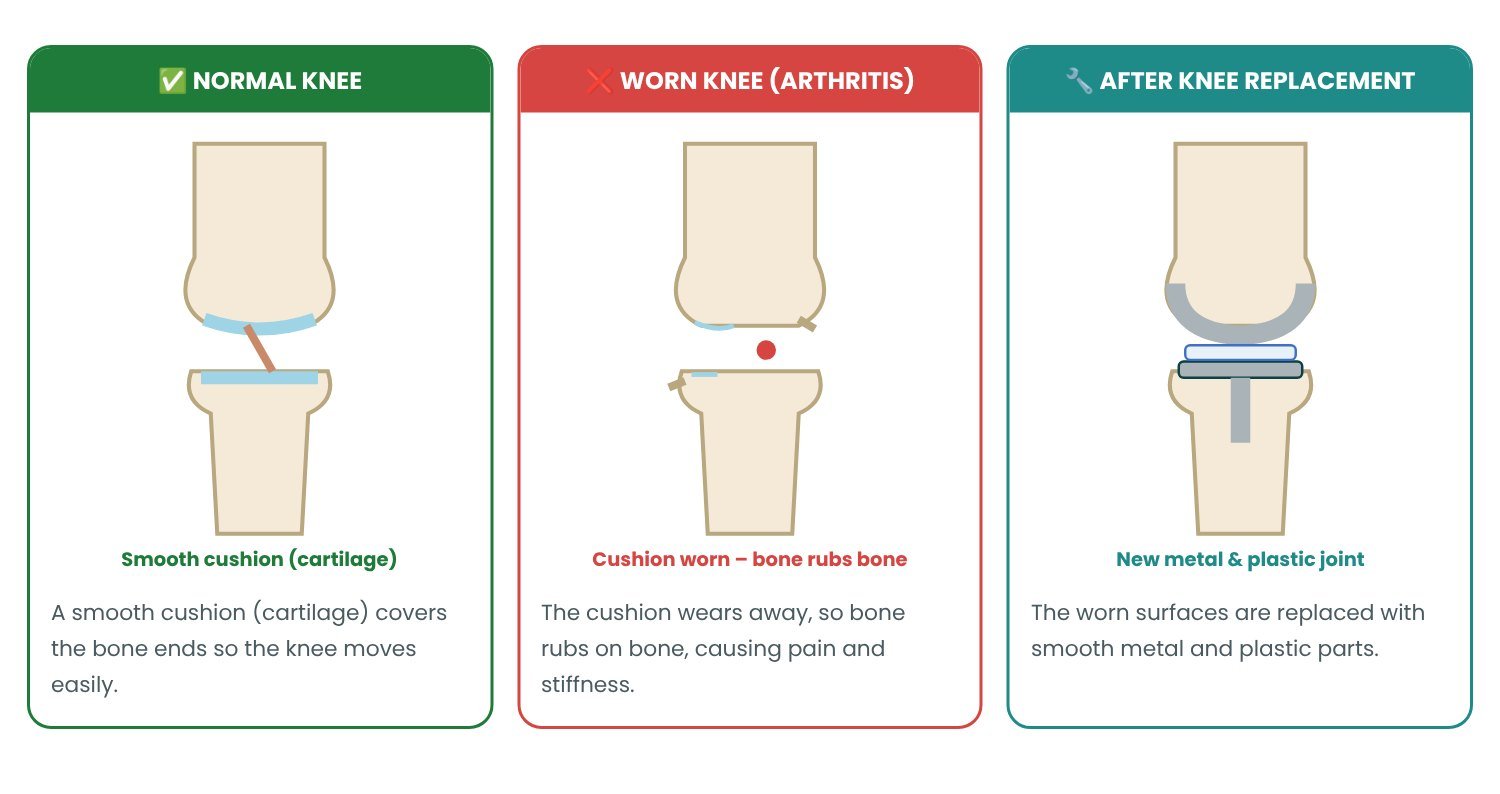
The ends of the thigh bone (femur), shin bone (tibia) and kneecap (patella) are covered with smooth cartilage that allows the joint to glide easily. In osteoarthritis, this cartilage gradually thins and wears away. The underlying bone thickens, bony spurs (osteophytes) form, and the joint lining becomes inflamed. The result is pain, stiffness, swelling and, over time, deformity such as bow legs (varus) or knock knees (valgus).
Types
- Primary osteoarthritis - related to ageing and wear without a specific cause.
- Secondary osteoarthritis - caused by a previous injury (ligament or meniscus tear, fracture), deformity, infection or inflammatory arthritis such as rheumatoid arthritis.
Stages of knee osteoarthritis (Kellgren-Lawrence grading)
- Grade 1 (doubtful) - minimal changes; possible tiny bone spurs.
- Grade 2 (mild) - definite bone spurs; joint space may be slightly narrowed.
- Grade 3 (moderate) - clear narrowing of joint space, multiple spurs, some bone hardening.
- Grade 4 (severe) - joint space largely lost, large spurs and deformity; bone rubs on bone.
🖼️ Understand It in Pictures
Normal vs worn knee
👀 Symptoms in Pictures
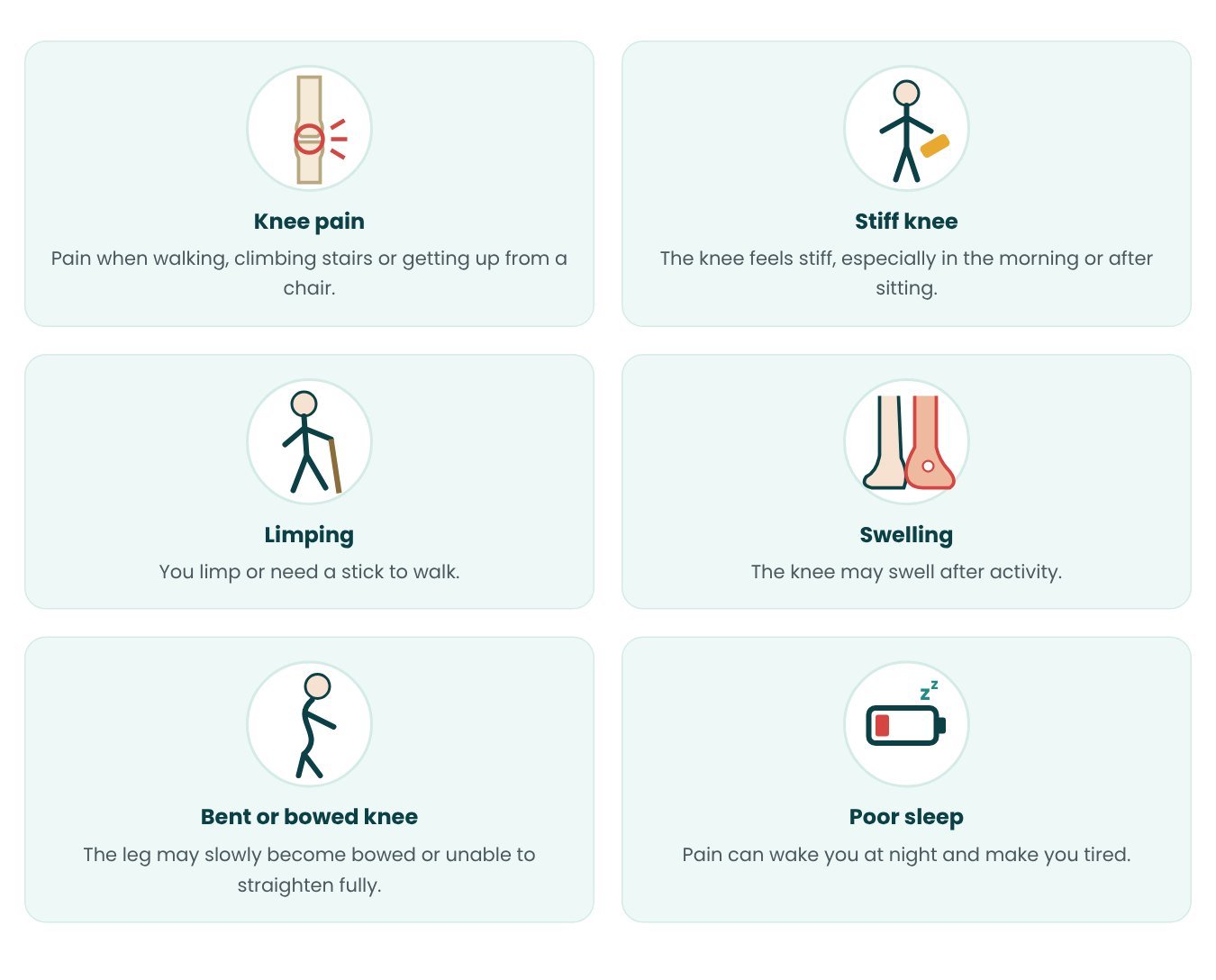
🩻 Scans & Tests — What Doctors See

🎬 The Treatment Journey in Pictures
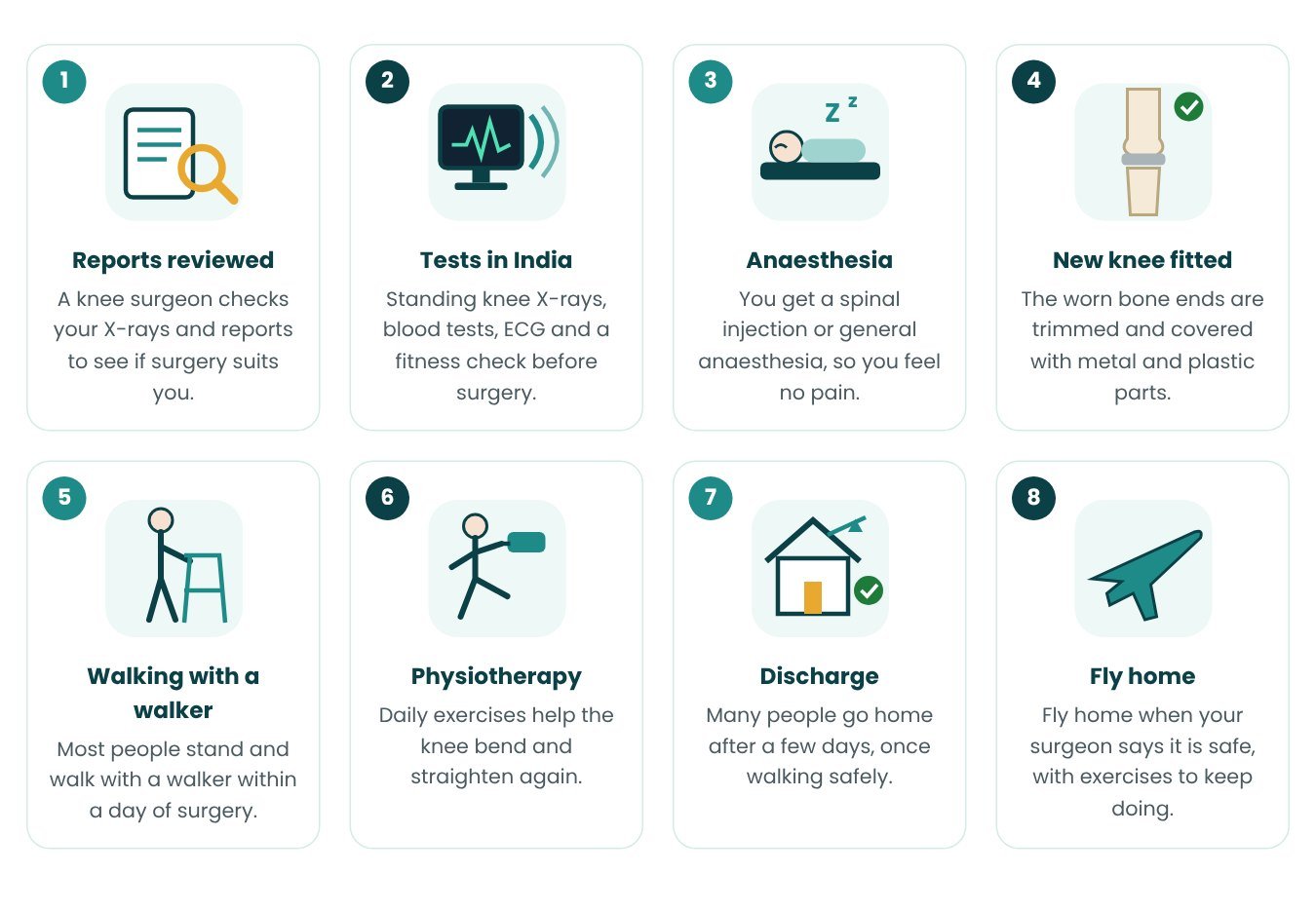

📅 Recovery at a Glance
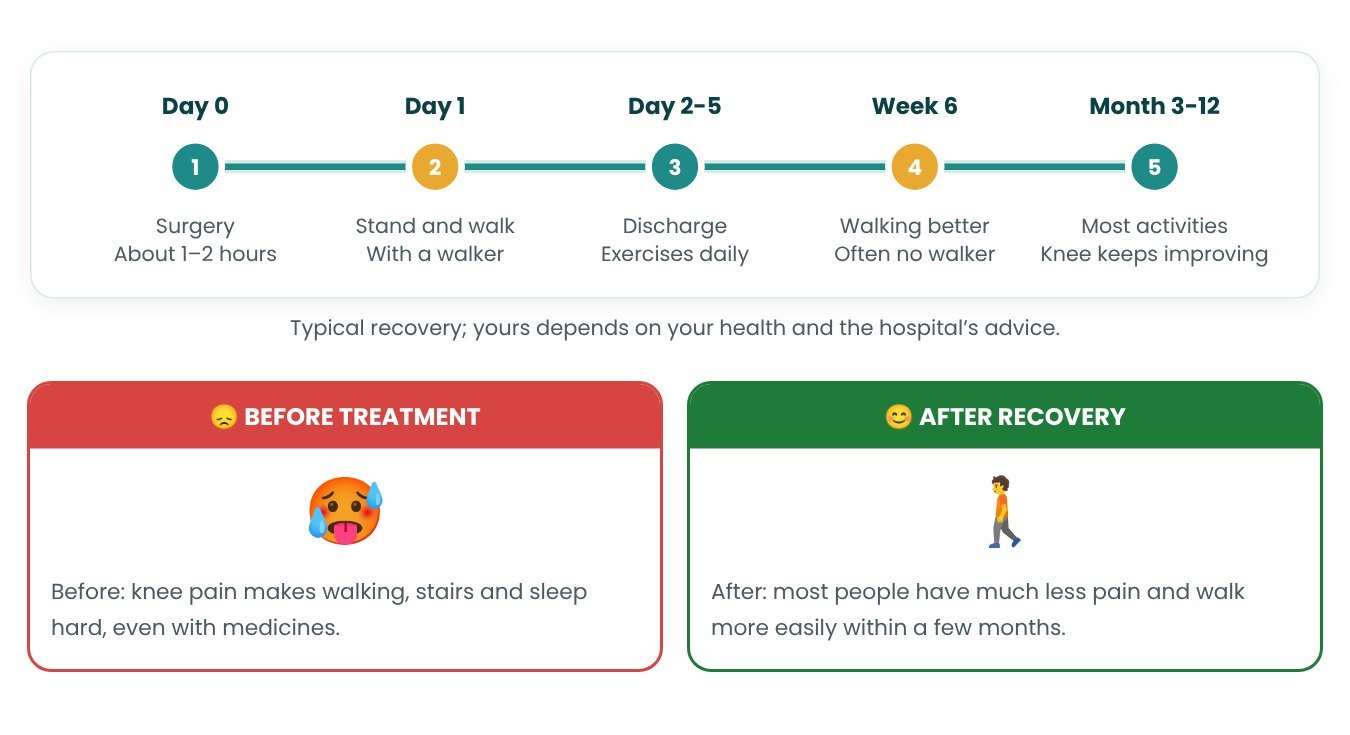
Drawings: Satyug Healthcare (simplified, not to scale). Photos: Wikimedia Commons; author and licence under each photo.
Causes and Risk Factors
- Age - risk increases steadily after 45-50 years.
- Female sex - women, especially after menopause, are more commonly affected.
- Obesity - every extra kilogram adds load across the knee; rising obesity rates in the Gulf, North Africa and South Asia are increasing knee OA.
- Previous knee injury - ligament (ACL) tears, meniscus tears and fractures.
- Repetitive kneeling, squatting and heavy lifting - common in farming, construction and some daily cultural and religious practices.
- Malalignment - bow legs or knock knees, including those left from childhood rickets.
- Genetics and family history.
- Other conditions - rheumatoid arthritis, gout, haemophilia, previous joint infection and sickle cell disease (through bone damage).
Symptoms of Knee Osteoarthritis
- Knee pain that worsens with walking, climbing stairs, squatting or standing up from a chair.
- Morning stiffness lasting less than 30 minutes, or stiffness after sitting.
- Swelling and a feeling of warmth.
- Grating or crackling sensation (crepitus).
- Reduced range of movement and difficulty sitting cross-legged or kneeling.
- Knee giving way or locking.
- Visible deformity - bow legs or knock knees - in advanced stages.
Warning signs needing urgent care
A hot, red, very swollen knee with fever could be a joint infection; sudden severe swelling after an injury, inability to bear weight, or calf swelling and pain (possible blood clot) also need immediate medical attention.
Diagnosis
- Clinical examination - assessment of pain, swelling, alignment, movement and stability.
- Standing X-rays of both knees - the main test to grade arthritis and plan treatment; full-length leg X-rays assess alignment.
- MRI - for early disease, meniscus or ligament problems, or when the diagnosis is unclear.
- Blood tests - to rule out rheumatoid arthritis, gout or infection and assess fitness for surgery.
- Joint fluid analysis if infection or gout is suspected.
Treatment Options for Knee Osteoarthritis
Non-surgical treatment (early to moderate disease)
- Exercise and physiotherapy - strengthening the thigh (quadriceps) and hip muscles is one of the most effective treatments.
- Weight loss - even a modest reduction significantly reduces pain.
- Pain relief - paracetamol, topical and oral anti-inflammatory medicines (used carefully, especially in older people and those with kidney or stomach problems).
- Walking aids, knee braces and proper footwear.
- Injections - corticosteroid injections for flare-ups; hyaluronic acid and platelet-rich plasma (PRP) injections may help some patients with early to moderate OA, though evidence is mixed.
- Genicular nerve radiofrequency ablation - to relieve pain in patients unfit for or wishing to delay surgery.
Surgical treatment
- High tibial osteotomy (HTO) - reshaping the shin bone to shift weight from the worn inner part of the knee to the healthier outer part. Suitable for younger, active patients with bow legs and arthritis limited to one side.
- Unicompartmental (partial) knee replacement - replaces only the damaged compartment, preserving healthy bone and ligaments; recovery is often faster.
- Total knee replacement (TKR) - the damaged surfaces are replaced with metal and high-grade polyethylene components. It is one of the most successful operations in medicine, with most implants lasting 15-20 years or more.
- Robotic-assisted knee replacement - robotic systems help plan and execute bone cuts and implant positioning with great precision, and are widely available in leading Delhi/NCR hospitals.
- Bilateral knee replacement - both knees in one sitting or a few days apart for suitable patients, reducing total hospital stay and travel.
Arthroscopic washout is generally not recommended for knee osteoarthritis because studies show little long-term benefit.
Choosing the right treatment
There is no single treatment that suits every patient. A younger, active person with early arthritis and bow legs may do best with exercise or an osteotomy that preserves the natural knee. A patient with arthritis limited to the inner compartment and intact ligaments may be suitable for partial knee replacement. Patients with severe arthritis involving the whole knee, marked deformity or constant pain at rest usually benefit most from total knee replacement. Before surgery, the team checks heart, lung, kidney and diabetes control, treats any dental or urinary infections, and checks haemoglobin levels to reduce risks. Patients with conditions such as sickle cell disease, haemophilia or previous knee surgery need additional specialist planning, which experienced Indian joint replacement units provide routinely.
Cost of Knee Osteoarthritis Treatment in India
Approximate starting costs at JCI/NABH-accredited hospitals in Delhi/NCR:
| Treatment | Approximate Cost (USD, starting from) | Hospital Stay |
|---|---|---|
| PRP / hyaluronic acid injection (per knee) | $200 - $500 | Day care |
| High tibial osteotomy (HTO) | $3,500 - $5,000 | 3 - 4 days |
| Partial (unicompartmental) knee replacement | $4,000 - $5,500 | 3 - 4 days |
| Total knee replacement (one knee) | $4,500 - $6,500 | 4 - 5 days |
| Bilateral total knee replacement | $8,500 - $11,500 | 6 - 8 days |
| Robotic knee replacement (one knee) | $6,500 - $8,500 | 4 - 5 days |
Final cost depends on the implant brand, deformity, medical fitness, choice of hospital and room category. Contact Satyug Healthcare at +91-8860606766 / +91-9910655125 (WhatsApp) for a free medical opinion and cost estimate.
Recovery and Living with Knee Osteoarthritis
After knee replacement, most patients start walking with a walker on the day of or the day after surgery. Physiotherapy begins immediately to regain bending and strength. International patients usually stay in India for 2 to 3 weeks for one knee and 3 to 4 weeks for both knees. Most people walk independently within 4 to 6 weeks and return to most normal activities within 3 months.
- Follow the physiotherapy programme strictly - it determines the final range of movement.
- Take blood-thinning medicines as prescribed to prevent clots, and stay mobile.
- Low-impact activities such as walking, swimming and cycling are encouraged; avoid running and jumping on replaced knees.
- Many patients can resume prayer and daily routines with suitable adaptations; discuss deep kneeling and squatting with your surgeon.
Prevention
Maintain a healthy weight, keep thigh muscles strong, protect knees from injury in sport and work, treat ligament and meniscus injuries properly, and stay active with low-impact exercise.
Why Choose India for Knee Treatment?
- High-volume joint replacement surgeons with excellent outcomes.
- Robotic and computer-navigated surgery, and internationally approved implants.
- Costs typically 70-80% lower than in the USA, UK or Gulf countries.
- No waiting lists and dedicated international patient support.
Step-by-Step Process to Travel to India for Treatment
- Share your reports - send your latest reports, scans/CD, angiography or echo films and passport copy to Satyug Healthcare on WhatsApp (+91-8860606766 / +91-9910655125) or email.
- Free medical opinion & cost estimate - within 24-72 hours we share opinions and written cost estimates from 2-3 JCI/NABH-accredited hospitals and specialists.
- Choose hospital & doctor - compare doctor experience, hospital, room category and total cost; we help you decide with no extra charge.
- Visa Invitation Letter (VIL) - the hospital issues a VIL for the patient and up to two attendants; we arrange it within 24-48 hours.
- Apply for Indian e-Medical Visa - apply online for the e-Medical Visa (patient) and e-Medical Attendant Visa (family) using the VIL; most approvals come in 3-5 working days.
- Book flights & accommodation - we suggest flights and arrange a guest house, service apartment or hotel near the hospital to suit your budget.
- Free airport pickup - our representative receives you at the airport and takes you to your hotel or directly to the hospital.
- Hospital admission & treatment - a dedicated coordinator and language interpreter stay with you for registration, tests, doctor consultations, the procedure and billing.
- Discharge & follow-up - you receive the discharge summary, prescriptions and fitness-to-fly certificate; follow-up checks are done before you fly.
- Return home & tele-follow-up - we arrange airport drop and stay connected for online follow-up consultations with your doctor in India.
Frequently Asked Questions
Can knee osteoarthritis be reversed?
Worn cartilage cannot be fully regrown, but symptoms can be controlled well with exercise, weight loss and medicines, and surgery can replace the damaged joint.
When do I need a knee replacement?
When severe pain, stiffness or deformity limits daily life and sleep despite several months of non-surgical treatment, and X-rays show advanced arthritis.
Is robotic knee replacement better?
Robotic surgery offers precise implant placement and alignment. Long-term outcomes are still being studied, and an experienced surgeon is the most important factor.
How long does a knee replacement last?
Most modern knee replacements last 15 to 20 years or longer, depending on activity level, weight and implant type.
Can both knees be replaced at the same time?
Yes, if your heart, lungs and general health allow. It means one anaesthesia and one recovery period, which suits many international patients.
Are stem cell injections effective for knee arthritis?
Evidence is still limited. They may be offered in early arthritis, but they do not replace lost cartilage in advanced disease.
How long should I stay in India for knee replacement?
About 2 to 3 weeks for one knee and 3 to 4 weeks for both knees, including physiotherapy and a check before travel.
Disclaimer: This article is for general information only and is not a substitute for a consultation with a qualified doctor.
Related Blogs



HAPPY PATIENTS
What Our Patients Are Saying



























Our Gallery