Assistance
Consultation
Services
Opinion
Care Coordination
What will your treatment cost?
Infertility in Men and Women: Causes, Symptoms, Tests, Treatment and Cost in India
Released Date: 2026-10-08
Infertility is far more common than many people realise. According to the World Health Organization, about one in six people of reproductive age experiences infertility at some point in their lives. In many societies in Africa, the Middle East, Central Asia and South Asia, childlessness carries heavy social and emotional pressure, and women are often unfairly blamed, even though male factors contribute to around half of all cases. The encouraging news is that most causes of infertility can be identified and many can be treated. India has some of the world's busiest fertility centres, offering advanced assisted reproductive technology (ART) such as IVF and ICSI at a fraction of Western costs, under a regulated framework.
What is Infertility?
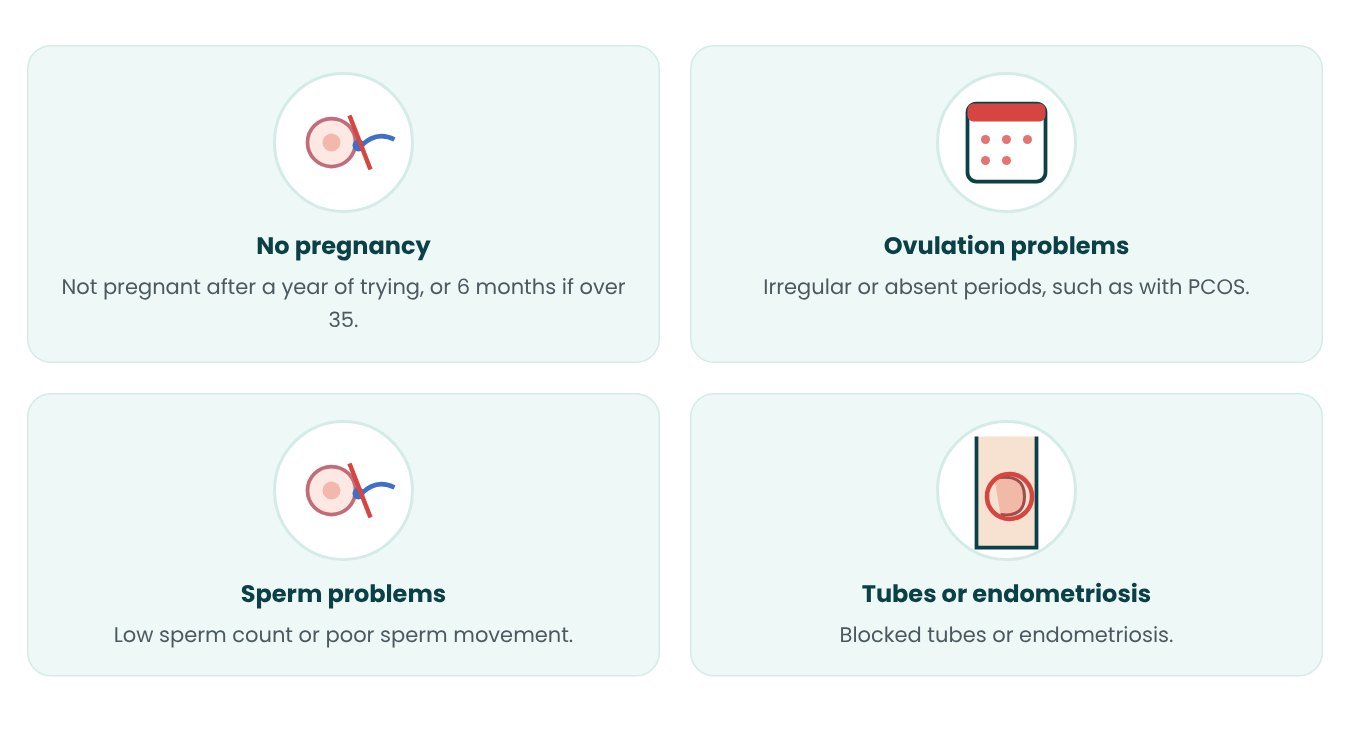
Infertility is defined as the failure to achieve a pregnancy after 12 months or more of regular unprotected intercourse. Women aged 35 or older are advised to seek evaluation after 6 months, and women over 40 or anyone with a known problem should seek help straight away.
Types of infertility
- Primary infertility - a couple has never achieved a pregnancy.
- Secondary infertility - difficulty conceiving after at least one previous pregnancy.
- Female factor, male factor, combined or unexplained infertility, where tests are normal but pregnancy does not occur.
🖼️ Understand It in Pictures
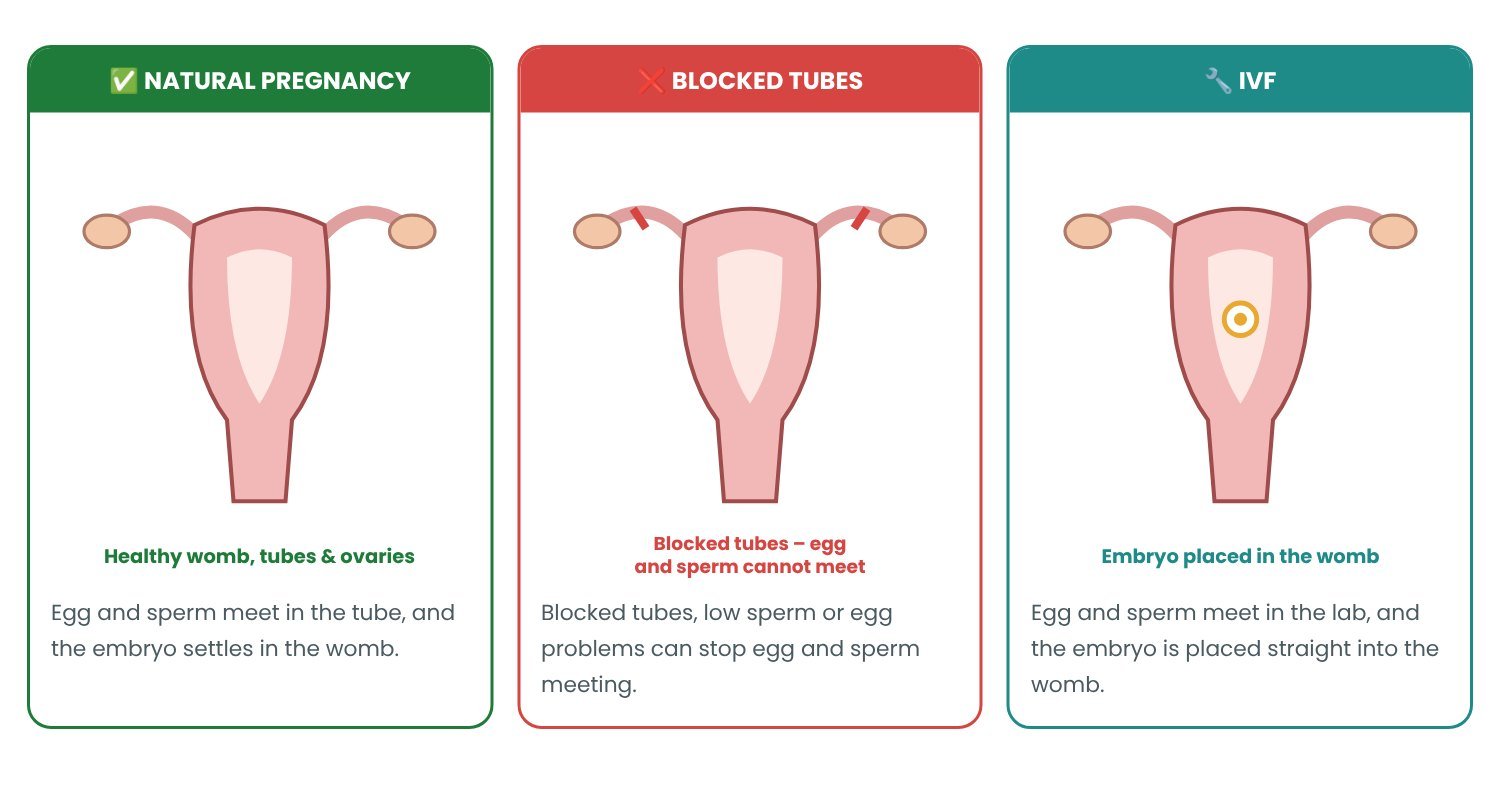
Normal conception vs IVF
👀 Symptoms in Pictures
🎬 The Treatment Journey in Pictures
📅 Recovery at a Glance

Causes and Risk Factors
Causes in women
- Ovulation disorders - polycystic ovary syndrome (PCOS) is the most common, along with thyroid disorders, high prolactin and premature ovarian insufficiency.
- Blocked or damaged fallopian tubes - often due to pelvic infections such as chlamydia or gonorrhoea, unsafe abortion or post-delivery infections, or genital tuberculosis, which is an important cause in India, Africa and other TB-endemic regions.
- Endometriosis - tissue similar to the womb lining growing outside the uterus, causing pain and reduced fertility.
- Uterine problems - fibroids (particularly common among women of African descent), polyps, adhesions (Asherman's syndrome) and congenital abnormalities.
- Age - egg quantity and quality fall steadily after the mid-thirties and sharply after 40.
Causes in men
- Low sperm count, poor motility or abnormal shape - often without an obvious cause.
- Varicocele - enlarged veins in the scrotum.
- Blockages in the sperm ducts from infections or previous surgery.
- Azoospermia (no sperm in semen) - due to blockage or testicular failure; mumps orchitis, undescended testes and genetic conditions such as Klinefelter syndrome or Y-chromosome microdeletions can be responsible.
- Hormonal problems and erectile or ejaculatory dysfunction.
- Anabolic steroid and testosterone use, which can stop sperm production.
Risk factors for both partners
Smoking, heavy alcohol use, obesity or very low body weight, diabetes, sexually transmitted infections, exposure to heat, chemicals and radiation, cancer treatment and chronic stress all reduce fertility.
Symptoms and Warning Signs
The main sign is not becoming pregnant. Other clues that suggest an underlying cause include:
- Irregular, very infrequent or absent periods.
- Very painful periods, pain during intercourse or chronic pelvic pain (possible endometriosis).
- Excess facial or body hair, acne and weight gain (possible PCOS).
- Milky nipple discharge.
- In men, reduced sexual desire, erection problems, small or swollen testicles, or reduced facial and body hair.
- Recurrent miscarriages.
Seek urgent care for severe one-sided lower abdominal pain with a positive pregnancy test (possible ectopic pregnancy), or severe abdominal swelling and breathlessness during fertility treatment (possible ovarian hyperstimulation syndrome).
Diagnosis
Both partners should be tested together from the start.
Tests for women
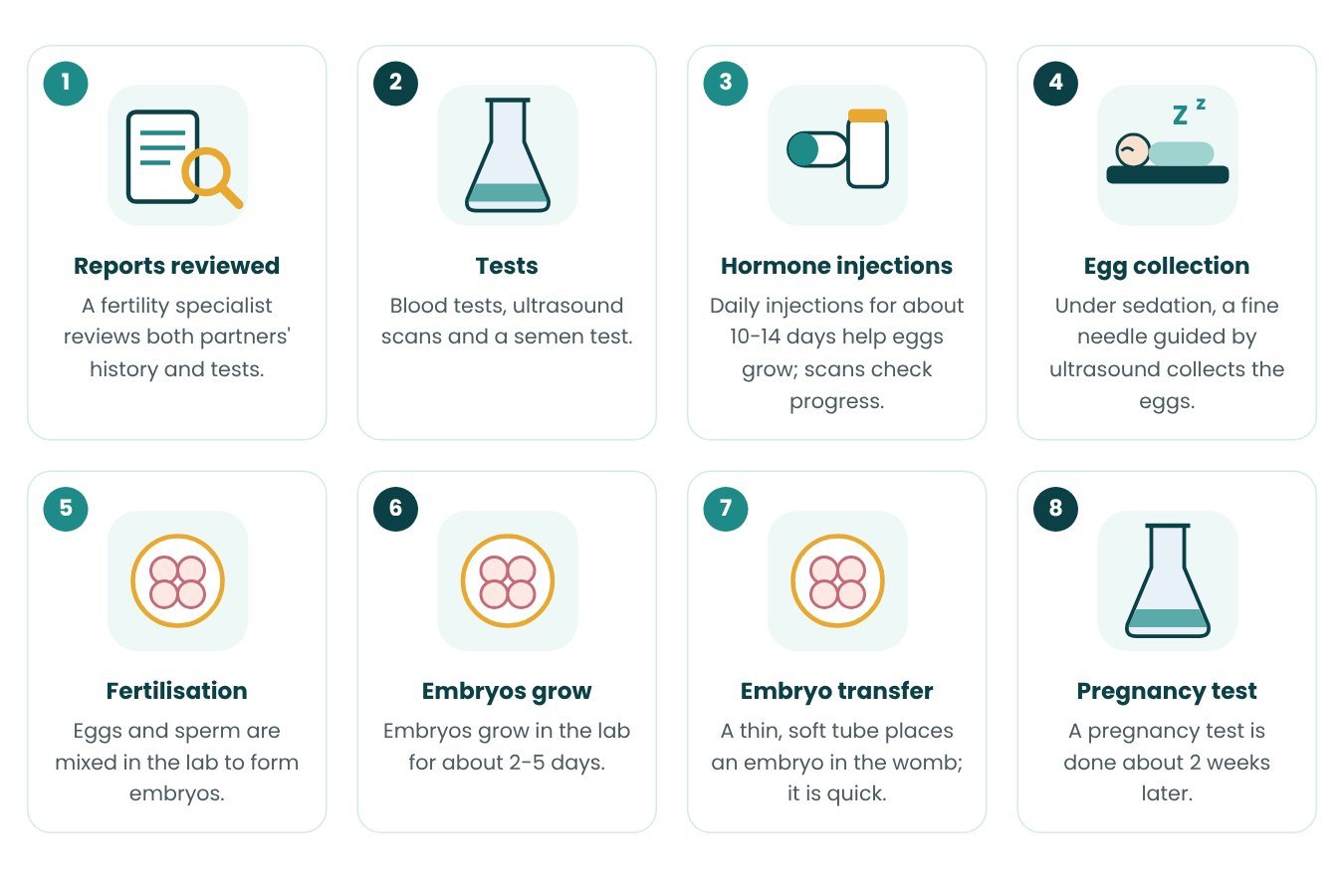
- Hormone tests - FSH, LH, AMH (egg reserve), thyroid, prolactin and progesterone.
- Transvaginal ultrasound - to check the uterus, ovaries and antral follicle count.
- Hysterosalpingography (HSG) or sonosalpingography - to check whether the tubes are open.
- Hysteroscopy and laparoscopy - to diagnose and treat problems inside the uterus and pelvis.
- Tests for genital tuberculosis where suspected.
Tests for men
- Semen analysis - count, motility and morphology, repeated if abnormal.
- Hormone tests - testosterone, FSH, LH and prolactin.
- Scrotal ultrasound - for varicocele and testicular problems.
- Genetic tests - karyotype and Y-chromosome microdeletion in severe cases; sperm DNA fragmentation in selected cases.
Treatment Options
Medical treatment
- Ovulation induction with letrozole, clomiphene or injectable gonadotropins, with ultrasound monitoring.
- Treatment of underlying conditions - thyroid disease, high prolactin, PCOS (with lifestyle change and metformin where appropriate) and genital TB.
- Hormone treatment for men with certain hormonal deficiencies.
Surgical treatment
- Laparoscopic surgery for endometriosis, ovarian cysts and tubal problems; see our endometriosis surgery package.
- Hysteroscopic surgery to remove polyps, fibroids, septum or adhesions.
- Myomectomy for fibroids affecting the uterine cavity.
- Varicocele repair in men with abnormal semen parameters.
- Surgical sperm retrieval - PESA, TESA or micro-TESE for men with azoospermia.
Assisted reproductive technology (ART)
- Intrauterine insemination (IUI) - washed sperm is placed directly in the uterus around ovulation; suitable for mild male factor, unexplained infertility and ovulation problems with open tubes.
- In vitro fertilisation (IVF) - eggs are collected after stimulation, fertilised in the laboratory and embryos are transferred to the uterus.
- ICSI (intracytoplasmic sperm injection) - a single sperm is injected into each egg; essential for severe male factor infertility. See our ICSI treatment package.
- Blastocyst culture, frozen embryo transfer, laser-assisted hatching and time-lapse embryo monitoring.
- Pre-implantation genetic testing (PGT) for couples with genetic disorders such as thalassaemia, sickle cell disease or spinal muscular atrophy, which are relevant for many couples from the Middle East, Africa and South Asia.
- Donor egg or donor sperm programmes and egg or embryo freezing.
Legal note: Fertility treatment in India is regulated by the Assisted Reproductive Technology (Regulation) Act, 2021 and the Surrogacy (Regulation) Act, 2021. Commercial surrogacy is not permitted, and surrogacy is not available to foreign nationals. Our team will explain the current rules for international couples before treatment.
Cost of Infertility Treatment in India
Approximate starting costs per cycle at accredited fertility centres in Delhi/NCR:
| Treatment | Approximate Cost (USD, starting from) | Stay in India |
|---|---|---|
| Complete fertility evaluation (both partners) | $300 - $600 | 3 - 5 days |
| IUI (per cycle) | $300 - $600 | 2 - 3 weeks |
| IVF (per cycle) | $2,500 - $3,500 | 3 - 4 weeks |
| IVF with ICSI (per cycle) | $3,000 - $4,000 | 3 - 4 weeks |
| Donor egg IVF | $4,500 - $6,000 | 3 - 4 weeks |
| Surgical sperm retrieval (TESA / micro-TESE) | $800 - $2,500 | 1 - 2 days |
Medicines, PGT, embryo freezing and additional cycles are charged separately; final cost depends on the diagnosis, the protocol and the clinic chosen. Contact Satyug Healthcare at +91-8860606766 / +91-9910655125 (WhatsApp) for a free medical opinion and cost estimate.
Success, Emotional Wellbeing and Prevention
Success rates depend mostly on the woman's age, egg reserve, embryo quality and the cause of infertility. Women under 35 have the best chances per cycle, and success falls with age. Several cycles may be needed, and frozen embryos from one stimulation can be used in later transfers. Infertility is emotionally demanding; counselling and support from your partner and family are an important part of care. Couples are encouraged to see infertility as a shared medical condition rather than the fault of one partner.
- Maintain a healthy weight and diet, and exercise regularly.
- Stop smoking, limit alcohol and avoid anabolic steroids.
- Practise safe sex and treat pelvic and sexually transmitted infections early.
- Consider egg freezing if planning pregnancy later in life.
- Take folic acid before trying to conceive.
Couples travelling from abroad are advised to bring all previous reports, including semen analyses, hormone tests, ultrasound and HSG reports, and details of earlier IUI or IVF cycles, so that the fertility specialist can plan the most suitable protocol quickly.
Why Choose India for Fertility Treatment?
- High-volume IVF centres with experienced embryologists and modern laboratories.
- Advanced techniques such as ICSI, blastocyst culture, PGT and micro-TESE.
- Costs typically 60-75% lower than in the USA, Europe or Gulf countries.
- Confidential, culturally sensitive care with interpreters available.
Step-by-Step Process to Travel to India for Treatment
- Share your reports - send your latest reports, scans/CD, angiography or echo films and passport copy to Satyug Healthcare on WhatsApp (+91-8860606766 / +91-9910655125) or email.
- Free medical opinion & cost estimate - within 24-72 hours we share opinions and written cost estimates from 2-3 JCI/NABH-accredited hospitals and specialists.
- Choose hospital & doctor - compare doctor experience, hospital, room category and total cost; we help you decide with no extra charge.
- Visa Invitation Letter (VIL) - the hospital issues a VIL for the patient and up to two attendants; we arrange it within 24-48 hours.
- Apply for Indian e-Medical Visa - apply online for the e-Medical Visa (patient) and e-Medical Attendant Visa (family) using the VIL; most approvals come in 3-5 working days.
- Book flights & accommodation - we suggest flights and arrange a guest house, service apartment or hotel near the hospital to suit your budget.
- Free airport pickup - our representative receives you at the airport and takes you to your hotel or directly to the hospital.
- Hospital admission & treatment - a dedicated coordinator and language interpreter stay with you for registration, tests, doctor consultations, the procedure and billing.
- Discharge & follow-up - you receive the discharge summary, prescriptions and fitness-to-fly certificate; follow-up checks are done before you fly.
- Return home & tele-follow-up - we arrange airport drop and stay connected for online follow-up consultations with your doctor in India.
Frequently Asked Questions
Is infertility always a woman's problem?
No. Male factors contribute to about half of infertility cases, so both partners should always be tested.
What is the difference between IVF and ICSI?
In IVF, eggs and sperm are placed together to fertilise naturally in the laboratory. In ICSI, a single sperm is injected into each egg, which is preferred when sperm count or quality is low.
Can a man with zero sperm count become a father?
Often yes. Sperm can frequently be retrieved surgically from the testis using TESA or micro-TESE and used for ICSI, depending on the cause.
How many IVF cycles might I need?
Some couples succeed in the first cycle, while others need two or three. Your doctor will estimate chances based on age, egg reserve and diagnosis.
How long do we need to stay in India for IVF?
Usually 3 to 4 weeks for one IVF/ICSI cycle. Some preliminary tests and medicines can begin in your home country.
Is surrogacy available for foreign couples in India?
No. Under the Surrogacy (Regulation) Act, 2021, surrogacy in India is limited to eligible Indian couples and commercial surrogacy is banned.
Does PCOS mean I cannot get pregnant?
No. Many women with PCOS conceive with lifestyle changes and simple ovulation-inducing medicines; IVF is used if these do not work.
Disclaimer: This article is for general information only and is not a substitute for a consultation with a qualified doctor.
Related Blogs



HAPPY PATIENTS
What Our Patients Are Saying


























Our Gallery