Assistance
Consultation
Services
Opinion
Care Coordination
What will your treatment cost?
Hearing Loss in Children: Causes, Signs, Diagnosis, Treatment and Cost in India
Released Date: 2026-10-08
Hearing loss in children is more common than many parents realise. A few babies in every thousand are born with permanent hearing loss, and many more children develop hearing problems later through ear infections, illnesses or injury. Because children learn to speak by listening, even mild or one-sided hearing loss can delay speech, language, learning and social development if it is not detected early. The good news is that today almost every child with hearing loss can be helped. Early screening, modern hearing aids, cochlear implants and specialised speech therapy allow many children who are born deaf to learn to listen, speak and attend mainstream school. India has well-established paediatric ENT, audiology and cochlear implant programmes that treat children from Africa, the Middle East, Central Asia and South Asia every year.
What is Hearing Loss in Children?
Hearing loss means a reduced ability to hear sounds in one or both ears. It may be present at birth (congenital) or develop later (acquired). Doctors classify it in several ways:
Types of hearing loss
- Conductive hearing loss: sound cannot pass properly through the outer or middle ear, for example because of fluid behind the eardrum (glue ear), wax, a perforated eardrum or a malformed ear canal. It is often temporary and treatable.
- Sensorineural hearing loss: caused by damage to the inner ear (cochlea) or hearing nerve. It is usually permanent and is managed with hearing aids or cochlear implants.
- Mixed hearing loss: a combination of conductive and sensorineural loss.
- Auditory neuropathy spectrum disorder (ANSD): the inner ear detects sound, but the signal is not transmitted properly to the brain.
Degrees of hearing loss
Hearing loss is graded as mild, moderate, moderately severe, severe or profound, depending on how loud a sound must be before the child can hear it. Children with severe to profound loss in both ears who gain little benefit from hearing aids are often candidates for cochlear implants.
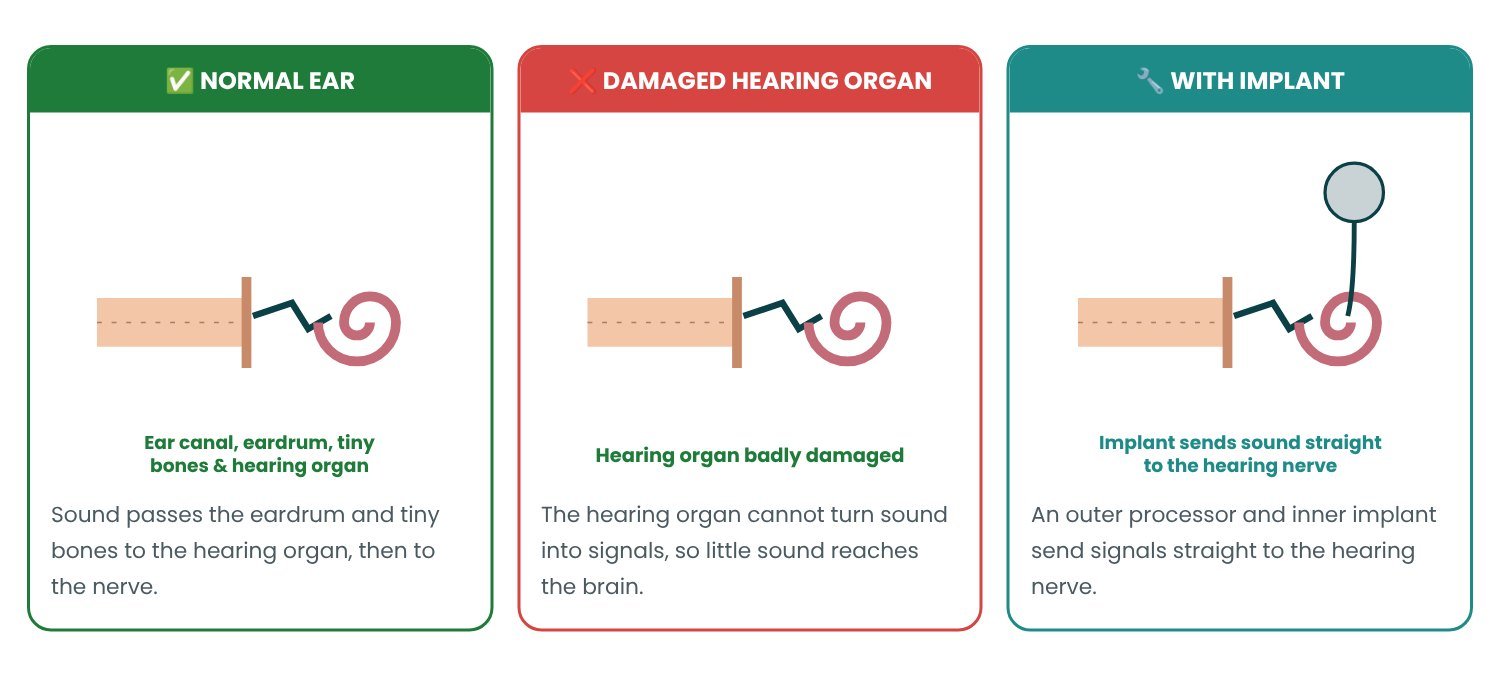
🖼️ Understand It in Pictures
Normal ear vs severe hearing loss vs implant
👀 Symptoms in Pictures
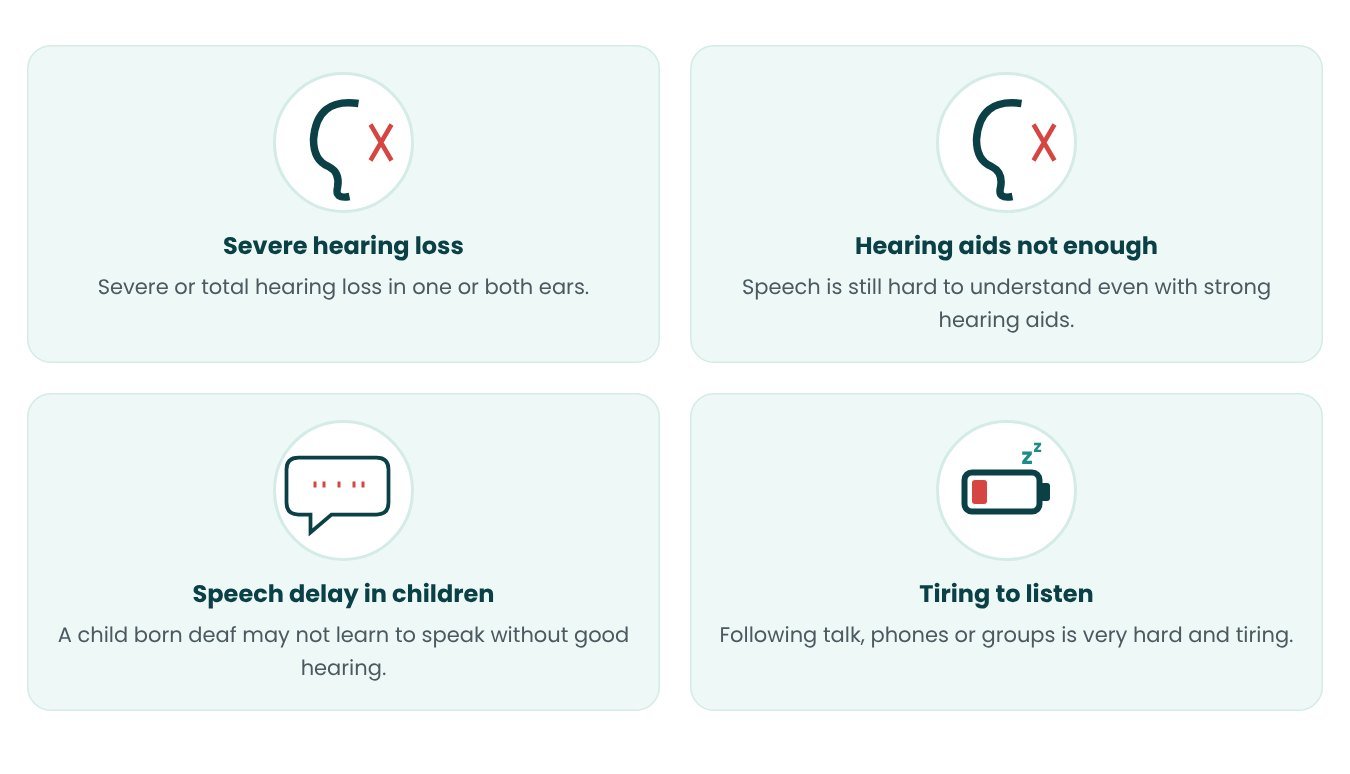
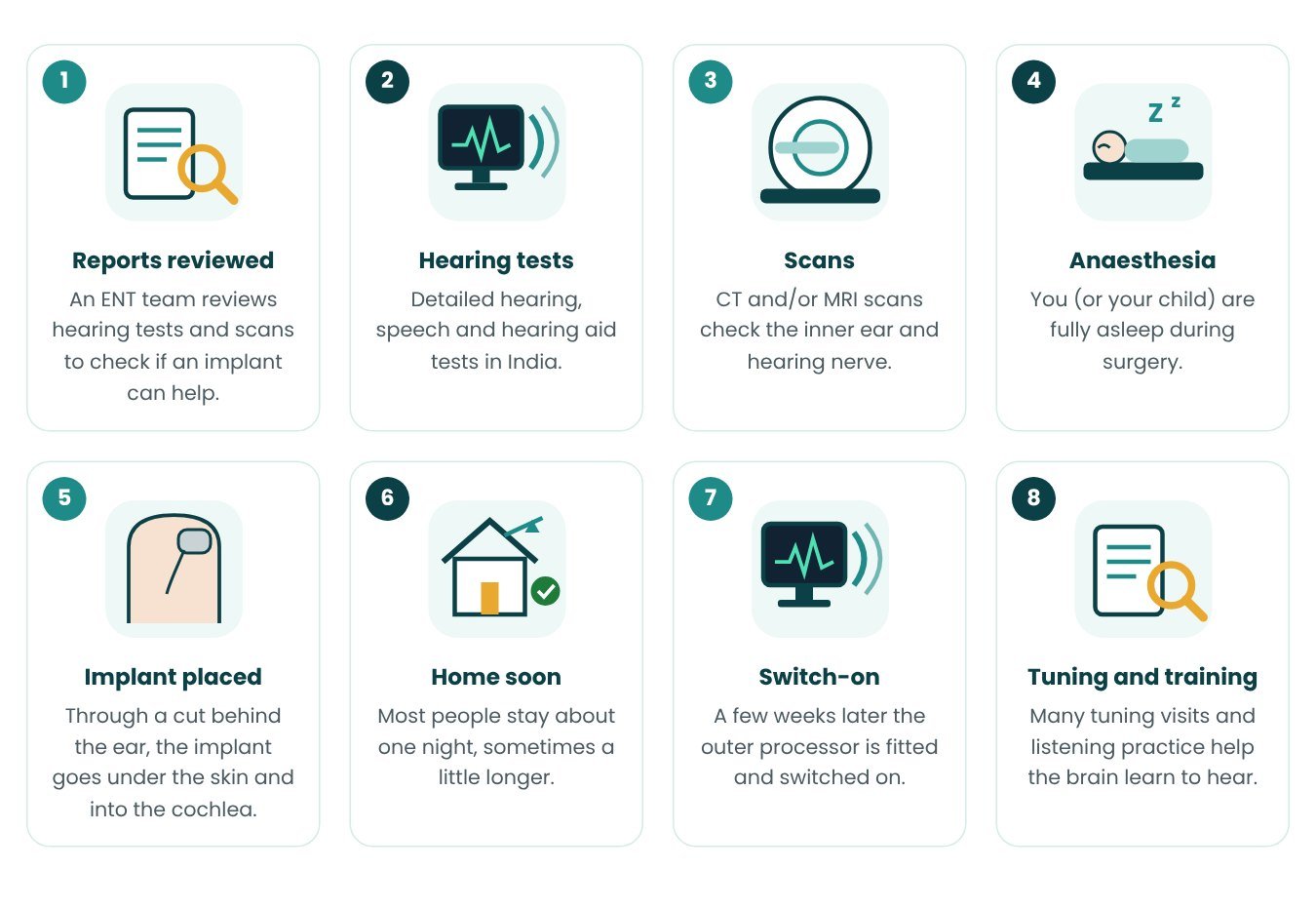
🎬 The Treatment Journey in Pictures


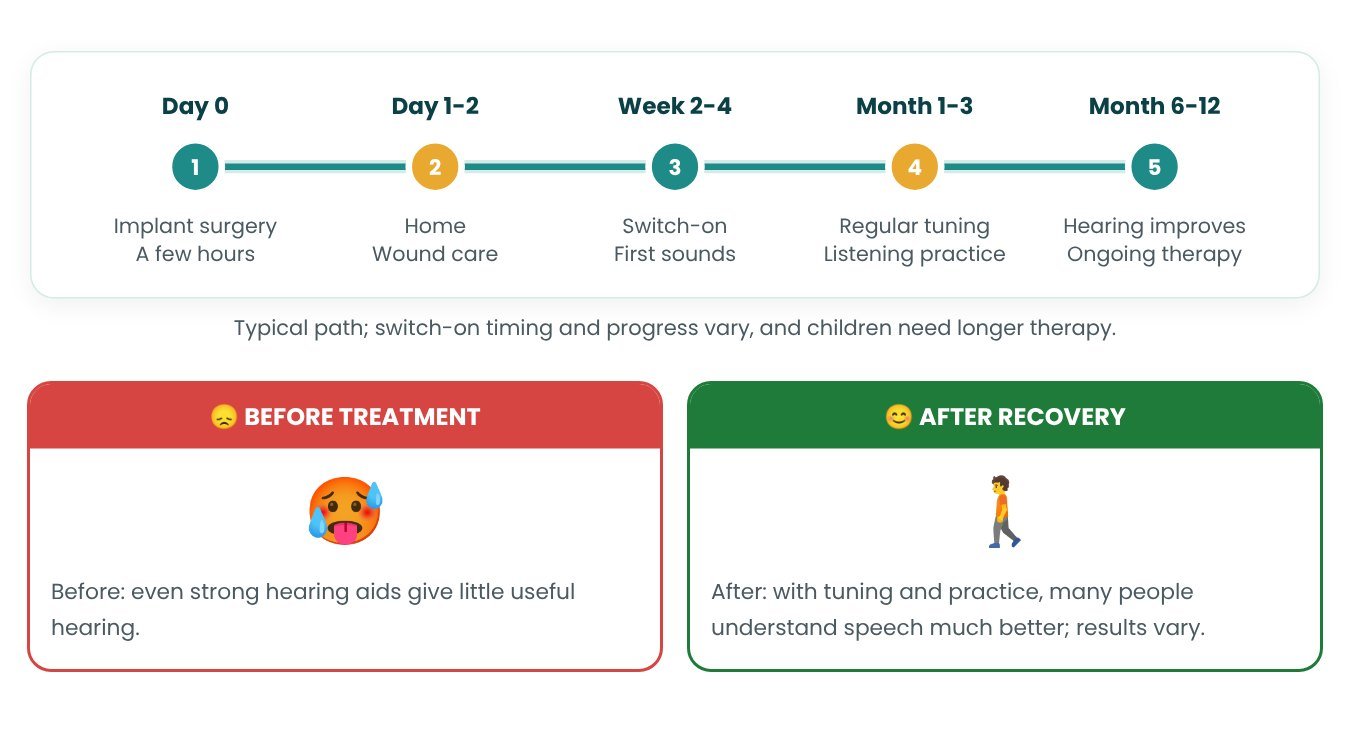
📅 Recovery at a Glance
Drawings: Satyug Healthcare (simplified, not to scale). Photos: Wikimedia Commons; author and licence under each photo.
Causes and Risk Factors
Congenital (present at birth)
- Genetic causes: around half of congenital hearing loss is genetic. Many cases are inherited in a recessive pattern, which is more likely where parents are related by blood, a practice found in some communities in the Middle East, North Africa and South Asia.
- Infections during pregnancy: congenital cytomegalovirus (CMV), rubella, toxoplasmosis and syphilis.
- Prematurity and low birth weight, and a stay in the neonatal intensive care unit.
- Severe jaundice needing exchange transfusion, and lack of oxygen at birth.
- Malformations of the head, face and ear, including cleft palate and syndromes such as Down, Treacher Collins, Waardenburg and Usher syndromes.
Acquired (after birth)
- Ear infections and glue ear (otitis media with effusion): the most common cause of hearing problems in young children. Chronic suppurative otitis media (a long-term discharging ear) remains common in many low-resource settings in Africa and South Asia.
- Meningitis, which can damage the cochlea and is an important cause of profound deafness in regions such as sub-Saharan Africa's "meningitis belt".
- Measles and mumps, preventable by vaccination.
- Ototoxic medicines, such as certain aminoglycoside antibiotics and some chemotherapy drugs.
- Head injury and exposure to very loud noise.
Children born with a cleft palate often develop fluid in the middle ear; correcting the cleft early helps protect hearing and speech. Learn more about cleft lip and palate surgery in India.
Signs and Symptoms
Babies and children cannot tell us they cannot hear, so parents should watch for these signs:
In babies
- Not startling at loud noises
- Not turning towards sounds or voices by around 6 months
- Not babbling or babbling that stops
- Not saying single words such as "mama" by around 12 to 15 months
In older children
- Delayed or unclear speech compared with other children of the same age
- Frequently saying "what?" or asking for repetition
- Turning the television up loudly
- Not responding when called, especially from another room
- Poor attention, behaviour problems or falling behind at school
- Ear pain, ear discharge or pulling at the ears
Warning signs needing urgent care
Sudden hearing loss in one or both ears, hearing loss after meningitis or head injury, a foul-smelling ear discharge with headache or fever, swelling behind the ear, dizziness or facial weakness need urgent medical attention. After meningitis, hearing should be tested promptly, because the inner ear can begin to harden (ossify), which can make later cochlear implant surgery more difficult.
Diagnosis of Hearing Loss in Children
Hearing can be tested accurately at any age, even in newborns. Tests include:
- Otoacoustic emissions (OAE): a quick, painless screening test commonly used for newborns.
- Brainstem evoked response audiometry (BERA / ABR): measures the hearing nerve's response to sound, often done while the baby sleeps or is sedated, to confirm the type and degree of hearing loss.
- Auditory steady state response (ASSR): gives frequency-specific hearing levels to help programme hearing aids.
- Tympanometry: checks middle ear function and detects fluid behind the eardrum.
- Behavioural and play audiometry: for older babies and children.
- High-resolution CT and MRI scans of the inner ear and hearing nerve, essential before cochlear implant surgery.
- Genetic testing, CMV testing and eye, heart and kidney checks where a syndrome is suspected.
Experts recommend the "1-3-6" goal: screening by 1 month of age, diagnosis by 3 months and intervention by 6 months.
Treatment Options
Medical treatment
Ear infections are treated with antibiotics where appropriate, and wax or foreign bodies are removed. Many cases of glue ear improve on their own and are monitored for a few months.
Surgery for conductive hearing loss
- Myringotomy with grommets (ventilation tubes): tiny tubes placed in the eardrum to drain persistent fluid and restore hearing; adenoidectomy may be done at the same time.
- Tympanoplasty and mastoidectomy: to repair a perforated eardrum or treat chronic ear disease and cholesteatoma.
- Canalplasty and reconstruction for congenital ear malformations in selected cases.
Hearing aids
Modern digital hearing aids can be fitted to babies from a few weeks of age. They amplify sounds and are programmed specifically for each child's hearing levels. Regular reprogramming and new ear moulds are needed as the child grows.
Cochlear implants
A cochlear implant is an electronic device that bypasses the damaged inner ear and directly stimulates the hearing nerve. It is suitable for children with severe to profound sensorineural hearing loss who do not benefit enough from hearing aids. Children implanted early, ideally before about 2 years of age, have the best chance of developing natural spoken language. Implants in both ears (bilateral) are increasingly recommended. Indian centres use devices from the leading international manufacturers.
Bone-conduction devices and auditory brainstem implants
Bone-anchored hearing devices help children with ear canal malformations or chronic ear disease. Auditory brainstem implants are an option for rare cases where the cochlea or hearing nerve is absent.
Auditory-verbal therapy and speech therapy
Devices alone are not enough. Intensive auditory-verbal and speech therapy, with strong family involvement, is essential to help the child learn to listen and speak.
Cost of Treatment for Hearing Loss in Children in India
Paediatric ENT and cochlear implant programmes at JCI and NABH accredited hospitals in Delhi/NCR offer excellent value. Indicative starting prices are:
| Treatment | Approximate Starting Cost (USD) |
|---|---|
| Complete hearing evaluation (OAE, BERA/ASSR, tympanometry, ENT consultation) | USD 150 - 300 |
| Digital hearing aids (pair, with fitting) | USD 800 - 3,000 |
| Myringotomy with grommet insertion (with or without adenoidectomy) | USD 800 - 1,500 |
| Tympanoplasty / mastoidectomy | USD 1,500 - 2,500 |
| Cochlear implant surgery (one ear, including device) | USD 10,000 - 20,000 |
| Bone-anchored hearing device | USD 5,000 - 8,000 |
These are starting estimates. The final cost depends on the child's diagnosis, the device brand and model chosen, whether one or both ears are treated, the duration of therapy and the hospital. Contact Satyug Healthcare at +91-8860606766 / +91-9910655125 (WhatsApp) for a free medical opinion and cost estimate.
Living with Hearing Loss and Prevention
With early support, children with hearing loss can thrive. Parents can help by:
- Making sure hearing aids or implant processors are worn during all waking hours.
- Talking, singing and reading to the child constantly, and continuing speech therapy at home.
- Attending regular audiology reviews and device programming (mapping) sessions.
- Working with teachers so the child sits near the front of the class and has classroom support.
Prevention includes vaccination against measles, mumps, rubella, meningococcus, pneumococcus and Hib; good antenatal care; treating ear infections promptly; avoiding ototoxic medicines where possible; protecting children from loud noise; and genetic counselling for families with a history of hearing loss. Every newborn should have a hearing screening test.
Why Choose India for Children's Hearing Treatment?
- Experienced paediatric ENT surgeons and audiologists with large cochlear implant programmes.
- Access to the latest implants and hearing aids from leading global brands.
- Complete care under one roof: diagnosis, surgery, switch-on, mapping and auditory-verbal therapy.
- Costs significantly lower than in Western and Gulf countries.
- Support for online follow-up and remote programming after families return home.
Step-by-Step Process to Travel to India for Treatment
- Share your reports - send your latest reports, scans/CD, angiography or echo films and passport copy to Satyug Healthcare on WhatsApp (+91-8860606766 / +91-9910655125) or email.
- Free medical opinion & cost estimate - within 24-72 hours we share opinions and written cost estimates from 2-3 JCI/NABH-accredited hospitals and specialists.
- Choose hospital & doctor - compare doctor experience, hospital, room category and total cost; we help you decide with no extra charge.
- Visa Invitation Letter (VIL) - the hospital issues a VIL for the patient and up to two attendants; we arrange it within 24-48 hours.
- Apply for Indian e-Medical Visa - apply online for the e-Medical Visa (patient) and e-Medical Attendant Visa (family) using the VIL; most approvals come in 3-5 working days.
- Book flights & accommodation - we suggest flights and arrange a guest house, service apartment or hotel near the hospital to suit your budget.
- Free airport pickup - our representative receives you at the airport and takes you to your hotel or directly to the hospital.
- Hospital admission & treatment - a dedicated coordinator and language interpreter stay with you for registration, tests, doctor consultations, the procedure and billing.
- Discharge & follow-up - you receive the discharge summary, prescriptions and fitness-to-fly certificate; follow-up checks are done before you fly.
- Return home & tele-follow-up - we arrange airport drop and stay connected for online follow-up consultations with your doctor in India.
Frequently Asked Questions
At what age can a child receive a cochlear implant?
Cochlear implants are commonly performed from around 9 to 12 months of age, and sometimes earlier, for example after meningitis. Early implantation, ideally before 2 years, gives the best speech and language results, but older children and adults can also benefit.
Can hearing loss in children be cured?
Conductive hearing loss caused by fluid, infection or eardrum problems is often fully treatable. Permanent sensorineural hearing loss cannot be cured, but hearing aids and cochlear implants allow most children to hear and develop spoken language.
How long will we need to stay in India for a cochlear implant?
Families usually stay about 3 to 4 weeks. This includes evaluation, surgery, healing and the switch-on and first programming sessions. Further mapping and therapy may be continued remotely or through local centres.
Is cochlear implant surgery safe for young children?
Yes. In experienced hands it is a safe, routine operation lasting a few hours under general anaesthesia. Children are usually discharged within 2 to 3 days.
Will my child be able to speak normally?
Many children who receive implants early and have regular therapy develop speech close to that of their hearing peers. Results depend on age at implantation, the cause of deafness, other health issues and family involvement in therapy.
Do all children with glue ear need grommets?
No. Glue ear often clears on its own within a few months. Grommets are recommended when fluid persists and affects hearing, speech or learning.
Can my child swim or play sports with a cochlear implant?
Yes. Children with implants can take part in most activities. The external processor is removed or protected with a waterproof cover for swimming, and helmets are advised for contact sports.
Disclaimer: This article is for general information only and is not a substitute for a consultation with a qualified doctor.
Related Blogs



HAPPY PATIENTS
What Our Patients Are Saying






























Our Gallery