Assistance
Consultation
Services
Opinion
Care Coordination
What will your treatment cost?
Colorectal Cancer: Causes, Symptoms, Stages, Treatment and Cost in India
Released Date: 2026-10-08
Colorectal cancer, also called bowel cancer, is cancer that begins in the colon (large intestine) or the rectum. According to the World Health Organization, it is the third most common cancer in the world and one of the leading causes of cancer deaths. For many years it was considered a disease of older people in Western countries, but doctors are now seeing more cases in younger adults and in countries across Africa, the Middle East and South Asia, where diets and lifestyles are changing quickly. The good news is that colorectal cancer is one of the most preventable and treatable cancers. Most cases start as small growths called polyps that can be found and removed during a colonoscopy long before they turn cancerous, and when the disease is diagnosed at an early stage, surgery alone can often cure it.
This guide explains what colorectal cancer is, why it happens, the symptoms to watch for, how it is diagnosed and staged, the treatments available in India and what they cost for international patients.
What is Colorectal Cancer?
The colon and rectum together form the last part of the digestive tract. The colon absorbs water and salts from digested food, and the rectum stores stool until it leaves the body. Colorectal cancer develops when cells in the inner lining of these organs begin to grow out of control. In most people this happens slowly over 10 to 15 years, usually through a pre-cancerous polyp called an adenoma.
Doctors often speak of colon cancer and rectal cancer separately because their treatment differs. Rectal cancer sits in the narrow pelvis close to the bladder, reproductive organs and the muscles that control bowel movements, so it is more often treated with radiotherapy before surgery. More than 90 percent of colorectal cancers are adenocarcinomas. Rarer types include carcinoid (neuroendocrine) tumours, gastrointestinal stromal tumours (GIST) and lymphomas.
Stages of Colorectal Cancer
- Stage 0 (carcinoma in situ): abnormal cells are confined to the innermost lining. Usually removed during colonoscopy.
- Stage I: cancer has grown into the deeper layers of the bowel wall but not beyond it.
- Stage II: cancer has grown through the bowel wall and may reach nearby tissue, but lymph nodes are clear.
- Stage III: cancer has spread to nearby lymph nodes.
- Stage IV: cancer has spread to distant organs, most commonly the liver, lungs or the lining of the abdomen (peritoneum).
Even stage IV disease is not always a death sentence. Selected patients whose spread is limited to the liver or lungs can still be cured with a combination of chemotherapy and surgery.
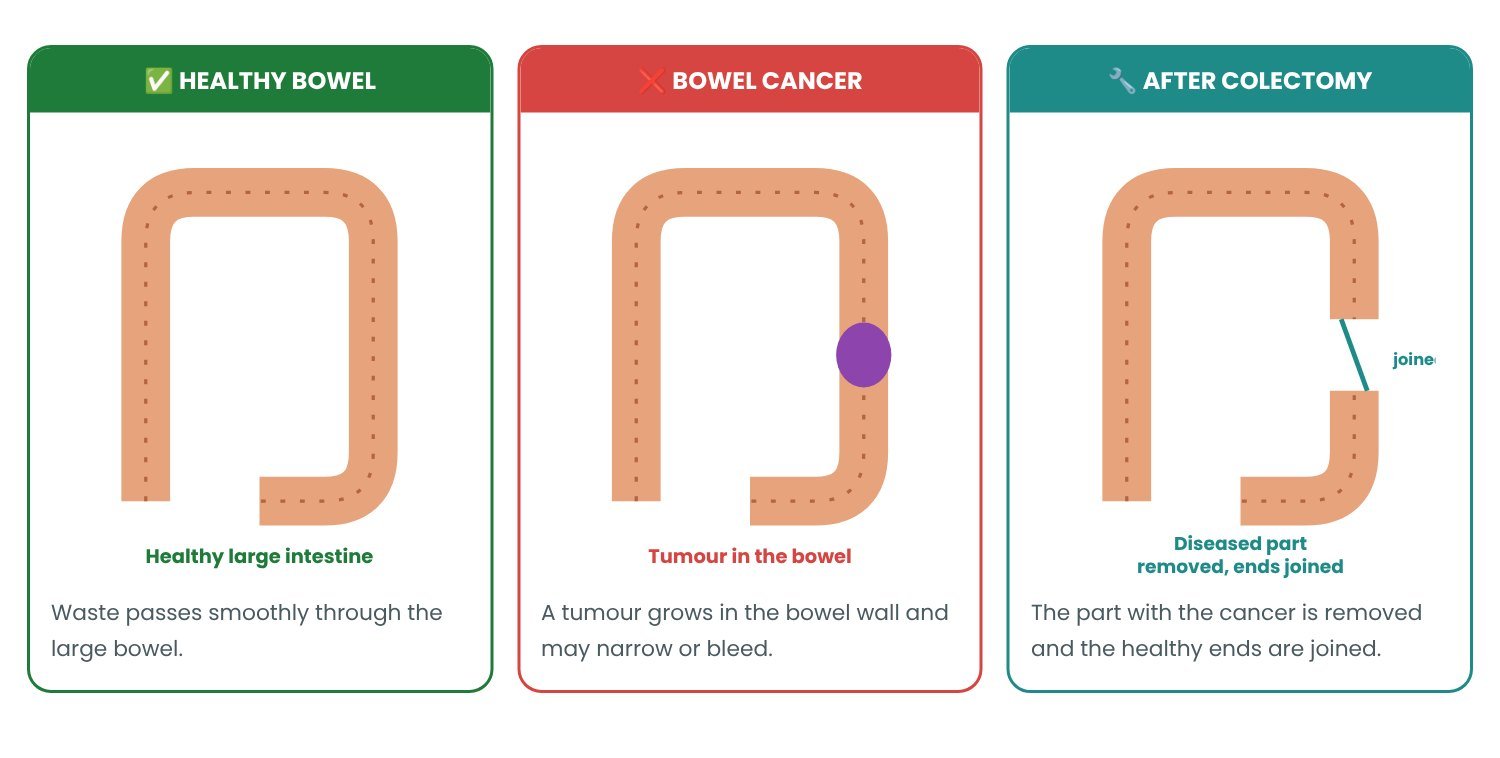
🖼️ Understand It in Pictures
Healthy bowel vs bowel cancer
👀 Symptoms in Pictures

🩻 Scans & Tests — What Doctors See


🎬 The Treatment Journey in Pictures
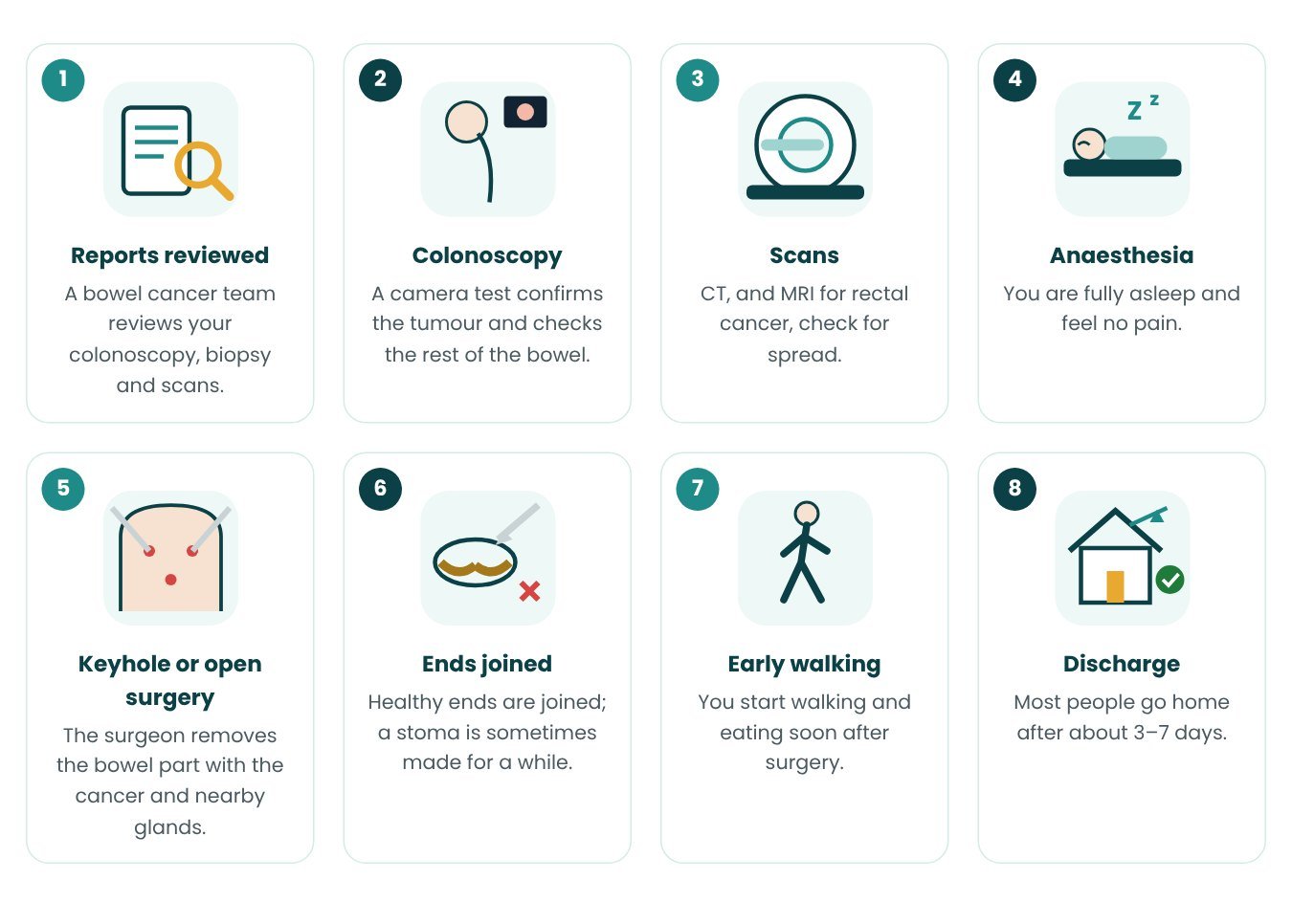

📅 Recovery at a Glance

Drawings: Satyug Healthcare (simplified, not to scale). Photos: Wikimedia Commons; author and licence under each photo.
Causes and Risk Factors
There is no single cause of colorectal cancer. It results from gene changes in bowel cells that build up over time. Factors that increase the risk include:
- Age: risk rises sharply after 45 to 50, although cases in people under 50 are increasing.
- Diet: diets high in red and processed meat and low in fibre, fruit and vegetables. The rapid shift to processed and fast food in Gulf countries and growing African and South Asian cities is thought to be one reason rates are rising there.
- Obesity and physical inactivity: both are strongly linked to bowel cancer, and obesity rates are high in several Middle Eastern countries.
- Smoking and alcohol.
- Type 2 diabetes.
- Inflammatory bowel disease: long-standing ulcerative colitis or Crohn's disease of the colon.
- Personal or family history of colorectal cancer or adenomatous polyps.
- Inherited syndromes: Lynch syndrome (hereditary non-polyposis colorectal cancer) and familial adenomatous polyposis (FAP). Communities with frequent marriages between relatives, common in parts of the Middle East and South Asia, may see inherited conditions more often within families.
Symptoms of Colorectal Cancer
Early colorectal cancer often causes no symptoms at all, which is why screening matters. When symptoms appear they may include:
- A lasting change in bowel habits such as diarrhoea, constipation or narrower stools
- Blood in the stool or bleeding from the rectum (bright red or dark, tar-like stool)
- A feeling that the bowel does not empty completely
- Abdominal pain, cramps or bloating that does not go away
- Unexplained weight loss and loss of appetite
- Tiredness and breathlessness due to iron-deficiency anaemia from slow, hidden bleeding
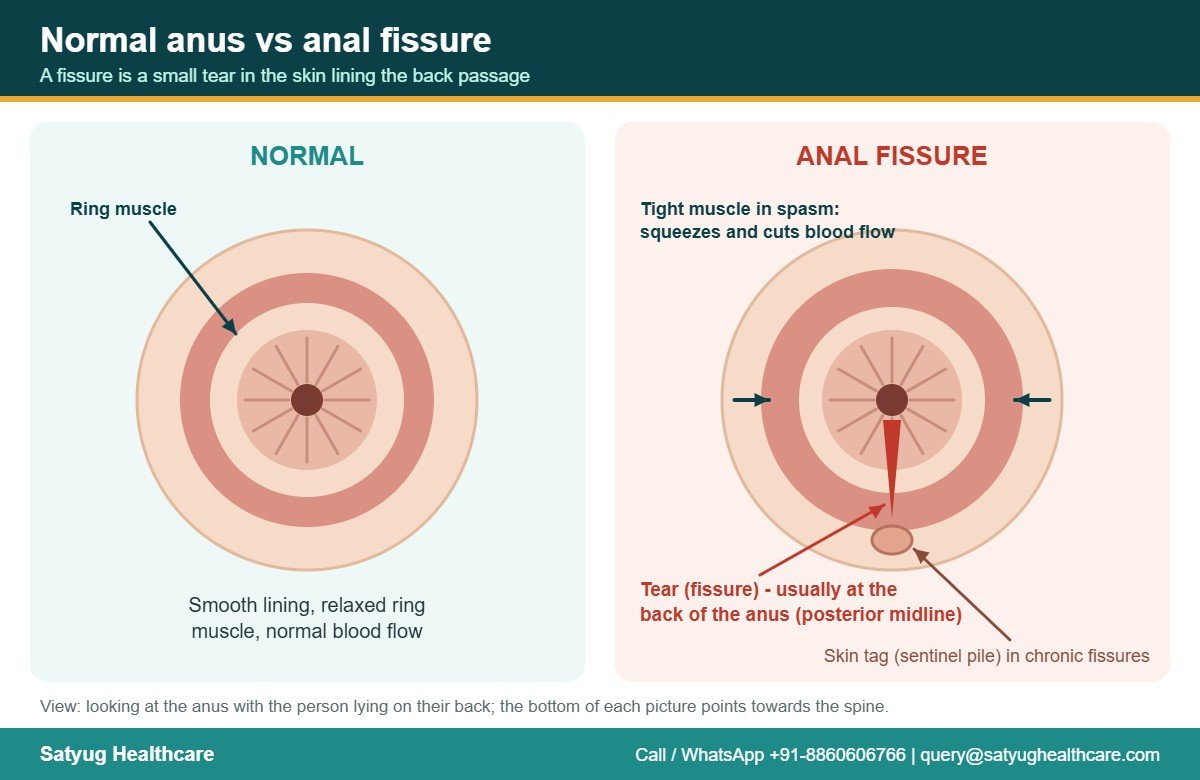
Many people assume rectal bleeding is due to piles (haemorrhoids). Piles are common, but bleeding should always be checked by a doctor, especially after the age of 40.
Warning Signs That Need Urgent Care
- Severe abdominal pain with swelling, vomiting and inability to pass stool or gas, which may mean the bowel is blocked
- Heavy rectal bleeding or passing black stools with dizziness
- High fever with severe abdominal pain, which may suggest a perforation
How is Colorectal Cancer Diagnosed?
- Colonoscopy: the most important test. A thin flexible camera examines the whole colon, and polyps can be removed and biopsies taken at the same time.
- Biopsy and histopathology: confirms cancer and its type.
- Stool tests: faecal immunochemical test (FIT) for hidden blood, used for screening.
- Blood tests: complete blood count for anaemia, liver function tests and CEA (carcinoembryonic antigen), a tumour marker used to monitor treatment.
- CT scan of the chest, abdomen and pelvis to check for spread.
- Pelvic MRI for rectal cancer, to plan radiotherapy and surgery.
- PET-CT in selected cases.
- Molecular tests: testing the tumour for MSI/MMR status, KRAS, NRAS and BRAF mutations helps doctors choose targeted therapy and immunotherapy.
Treatment Options for Colorectal Cancer
Treatment is planned by a multidisciplinary tumour board of surgical, medical and radiation oncologists, based on the location and stage of the cancer and the patient's general health.
Endoscopic Removal
Very early cancers and polyps can be removed during colonoscopy using polypectomy, endoscopic mucosal resection (EMR) or endoscopic submucosal dissection (ESD), avoiding major surgery.
Surgery
Surgery is the main curative treatment. Depending on the tumour site, the surgeon removes the affected part of the bowel along with its lymph nodes:
- Right or left hemicolectomy and sigmoid colectomy for colon cancer
- Anterior resection or low anterior resection with total mesorectal excision (TME) for rectal cancer, often saving the anal sphincter
- Abdominoperineal resection (APR) for very low rectal cancers, which needs a permanent colostomy
Leading Indian hospitals routinely perform these operations by laparoscopic (keyhole) and robotic surgery, which means smaller cuts, less pain and faster recovery. A temporary stoma (ileostomy) is sometimes made to protect the join and is usually closed after a few months. You can read more on our colorectal cancer surgery (colectomy) package page.
Chemotherapy
Chemotherapy is given after surgery (adjuvant) for stage III and high-risk stage II cancer to lower the chance of recurrence. Common regimens include FOLFOX, CAPOX and FOLFIRI. For advanced disease chemotherapy controls the cancer and can shrink liver deposits enough to make surgery possible.
Radiotherapy
For rectal cancer, radiotherapy with or without chemotherapy is commonly given before surgery to shrink the tumour. Modern techniques such as IMRT and IGRT target the tumour precisely while protecting the bladder and bowel. In some patients a newer approach called total neoadjuvant therapy is used, and a small group with a complete response may be offered careful watch-and-wait follow-up instead of surgery.
Targeted Therapy and Immunotherapy
Drugs such as bevacizumab, cetuximab and panitumumab are added to chemotherapy for advanced cancer depending on the tumour's gene profile. Patients whose tumours are MSI-high or mismatch repair deficient can benefit greatly from immunotherapy drugs such as pembrolizumab.
Treatment of Liver and Peritoneal Spread
Liver resection, radiofrequency or microwave ablation, SBRT/CyberKnife radiosurgery, and cytoreductive surgery with HIPEC (heated chemotherapy inside the abdomen) are offered in specialised Indian centres to carefully selected patients. See our CyberKnife radiosurgery page for more details.
Cost of Colorectal Cancer Treatment in India
India offers world-class colorectal cancer care at a fraction of the cost in the USA, UK or the Gulf. Indicative starting prices at JCI/NABH-accredited hospitals in Delhi/NCR are:
| Treatment | Approximate Cost (USD) |
|---|---|
| Diagnostic colonoscopy with biopsy | From USD 250 |
| Laparoscopic colectomy (hemicolectomy / anterior resection) | From USD 6,000 |
| Robotic colorectal cancer surgery | From USD 8,500 |
| Chemotherapy (per cycle, FOLFOX / CAPOX) | From USD 400 |
| Radiotherapy for rectal cancer (IMRT / IGRT course) | From USD 3,500 |
| Cytoreductive surgery with HIPEC | From USD 9,000 |
The final cost depends on the stage of the cancer, the type of surgery, the drugs used, the length of hospital stay and the patient's overall health. Contact Satyug Healthcare at +91-8860606766 / +91-9910655125 (WhatsApp) for a free medical opinion and cost estimate.
Recovery and Life After Treatment
After laparoscopic or robotic colectomy most patients walk within a day, start eating within a few days and leave hospital in about 5 to 7 days. International patients are usually advised to stay in India for about 2 to 3 weeks after surgery, longer if chemotherapy or radiotherapy is planned. Some chemotherapy cycles can be continued in the home country under guidance from the Indian oncologist.
- Follow-up: regular CEA blood tests, CT scans and colonoscopy for about 5 years.
- Stoma care: stoma nurses teach patients and families how to manage a colostomy or ileostomy; most people live normal, active lives with a stoma.
- Diet: a high-fibre diet with fruit, vegetables and whole grains, plenty of water and limited red and processed meat.
- Activity: regular exercise reduces the risk of recurrence and improves energy levels.
Prevention and Screening
Screening is the most powerful way to prevent colorectal cancer. Most guidelines recommend that adults at average risk begin screening at 45 to 50 years, with a colonoscopy or regular stool tests. People with a family history, inflammatory bowel disease or inherited syndromes need earlier and more frequent checks. Keeping a healthy weight, being active, avoiding tobacco, limiting alcohol and eating more fibre also lower the risk.
Why Choose India for Colorectal Cancer Treatment?
- Experienced surgical oncologists trained in leading centres worldwide, performing high volumes of laparoscopic and robotic bowel surgery
- JCI and NABH accredited hospitals with dedicated GI cancer units, PET-CT, modern linear accelerators and HIPEC facilities
- Treatment costs up to 60 to 80 percent lower than in Western countries
- Little or no waiting time for surgery and chemotherapy
- Easy medical visa process, English-speaking staff and interpreters for Arabic, French, Russian and other languages
Step-by-Step Process to Travel to India for Treatment
- Share your reports - send your latest reports, scans/CD, angiography or echo films and passport copy to Satyug Healthcare on WhatsApp (+91-8860606766 / +91-9910655125) or email.
- Free medical opinion & cost estimate - within 24-72 hours we share opinions and written cost estimates from 2-3 JCI/NABH-accredited hospitals and specialists.
- Choose hospital & doctor - compare doctor experience, hospital, room category and total cost; we help you decide with no extra charge.
- Visa Invitation Letter (VIL) - the hospital issues a VIL for the patient and up to two attendants; we arrange it within 24-48 hours.
- Apply for Indian e-Medical Visa - apply online for the e-Medical Visa (patient) and e-Medical Attendant Visa (family) using the VIL; most approvals come in 3-5 working days.
- Book flights & accommodation - we suggest flights and arrange a guest house, service apartment or hotel near the hospital to suit your budget.
- Free airport pickup - our representative receives you at the airport and takes you to your hotel or directly to the hospital.
- Hospital admission & treatment - a dedicated coordinator and language interpreter stay with you for registration, tests, doctor consultations, the procedure and billing.
- Discharge & follow-up - you receive the discharge summary, prescriptions and fitness-to-fly certificate; follow-up checks are done before you fly.
- Return home & tele-follow-up - we arrange airport drop and stay connected for online follow-up consultations with your doctor in India.
Frequently Asked Questions
Is colorectal cancer curable?
Yes. When found at stage I or II, colorectal cancer is very often curable with surgery alone. Stage III cancer can also be cured in many patients with surgery followed by chemotherapy, and some patients with limited spread to the liver or lungs can still be cured.
Will I need a permanent colostomy bag?
Most patients do not. Modern sphincter-saving surgery means a permanent colostomy is usually needed only when the cancer is very close to the anus. A temporary stoma, if made, is generally closed after 2 to 3 months.
How long do I need to stay in India for colon cancer surgery?
Usually about 2 to 3 weeks for surgery and initial recovery. If chemotherapy or radiotherapy is planned in India, the stay may be longer, from 6 weeks to several months.
Is robotic surgery better than laparoscopic surgery?
Both are minimally invasive and give similar cancer results. Robotic surgery offers better precision in the narrow pelvis and can be especially helpful for low rectal cancers. Your surgeon will recommend the best approach for your case.
Is blood in the stool always a sign of cancer?
No. Piles, anal fissures and infections are more common causes. However, rectal bleeding should always be checked by a doctor, as only a proper examination and colonoscopy can rule out cancer.
At what age should I get a colonoscopy?
People at average risk should start screening around 45 to 50 years of age. If a parent, brother or sister had colorectal cancer, screening usually starts at 40, or 10 years before the age at which the relative was diagnosed.
Can I continue chemotherapy in my home country?
In many cases, yes. After surgery and the first chemotherapy cycle in India, your oncologist can send a detailed treatment plan so that remaining cycles are given locally, with follow-up consultations by video call.
What documents should I send for a cost estimate?
Please share your colonoscopy and biopsy reports, CT or MRI scans, recent blood tests including CEA, and a short summary of your symptoms. Our team will arrange opinions from leading hospitals within 48 hours.
Disclaimer: This article is for general information only and is not a substitute for a consultation with a qualified doctor.
Related Blogs



HAPPY PATIENTS
What Our Patients Are Saying



























Our Gallery